Trailer for your Weekend: Horns

Buzz has been building around Horns (2013) for a fair while now, and it only increased after this trailer dropped at last month’s Comic Con. I love the very real grounding that the trailer starts with. Young love, the pain of it taken away and the suspicion immediately falling on the victim’s partner. So far so crime fiction. But then it flips and all of a sudden Harry Potter has devil horns growing out of his head and is understandably wondering what in the hell is going on. The film leaves it relatively unclear where the film will go from there and I am cool with that. I will definitely be avoiding spoilers before seeing this one, which I am ultra keen to do.
Related beermovie.net articles for you to check out: Worth Watching May 2012 (including a review of The Woman in Black) and Devil.
Like what you read? Then please like Beermovie.net on facebook here and follow me on twitter @beer_movie
MIFF 2014: Cheatin’

What’s a good film festival without at least one obscure animation film? Especially as, unlike many of the other films that play at MIFF and similar festivals, non-mainstream animation rarely receives a cinematic release.
Bill Plympton’s Cheatin’ (2013) was my MIFF obscure animation of choice. The first half or so is a really simple love story but told in a complex, bordering on avant-garde way. This part of the film is really engaging and retains a sense of fun, which so many avant-garde filmmakers refuse to allow in their pursuit of artistic seriousness. But then the film just turns on a plot point that is overwhelmingly silly. A doctored photo, that would absolutely never look real at all, convinces the happily married new groom (if the main characters had names, I missed them) that his wife has been cheating on him. Instead of asking his beloved what the deal is, he just turns around and starts sleeping with the multitude of women who are constantly throwing themselves at him. Obviously this is not a film that is aiming for realism. These turns in plot however just don’t work within the rules and logical expectations that have already been established in the world of the film. Another issue with all of this is that the film is really unfocused as to exactly what it is trying to say about adultery. At some points it feels like it is suggesting that as the audience we should be empathising with the groom and cheering his shagfest. In the end though, it is just befuddling the way the twists and turns are set up because he never discusses the photo with her. Then it gets even stranger when his wife gets a machine that allows her to teleport into the motel room each time he cheats on her and replace his current partner of choice. Maybe it was just me, but I had no idea what the message was there.
 One aspect of the film that I could definitely not fault is the visuals. Plympton’s very hand-drawn style is a world away from most feature animation with a definite artistic rough finish. The colouring is a little uneven with lines left in there and the effect is that even though the result is less realistic than other approaches, the imperfections in a way make it easier to relate to and feel deeply engrossed in the story. A long way from the uncanny valley basically. The exaggerated character design is another joy, with both male and female bodies, having delightfully absurdist bodies. The groom’s abs look as tiny as a toothpick, dominated by his hugely muscular upper body. Aside from the confusion, at least from my perspective, of what the film is trying to say about adultery another issue for me was that there were no interesting ideas presented by the film. Obviously not every animation, or any film for that matter, needs to tackle weighty subject matter. But on a couple of occasions Cheatin’ hints that it is going to do so, but then either stops rather abruptly or chooses to focus on superficial concerns. In fact the very opening of the film seems to suggest that an exploration of the male gaze is in the works, as the exaggerated body of the main female character leaves a barrage of men agog as she walks by. This continues for a short while and then is just abandoned. Later, she can’t help but dance and leap for joy at the site of clothes on sale whilst her poor husband is forced to wait around bored as she giggles giddily and tries on outfit after outfit. So much for any subversiveness or incisiveness basically.
When it was telling a simple love story in a really out there way, I was totally invested in Cheatin’. The shift into a bizarre, unfocused look at adultery though was unwelcome and unsatisfying, which is a bummer because the film is so original to look at and sit down to watch.
Verdict: Schooner of Carlton Draught
Related beermovie.net articles for you to check out: MIFF: Jimmy’s Hall and MIFF 2014: Human Capital
Like what you read? Then please like Beermovie.net on facebook here and follow me on twitter @beer_movie
MIFF 2014: Human Capital

Human Capital (2013), an adaptation of a novel by Stephen Amidon, was probably the most hyped film that I saw at this year’s MIFF. There definitely seemed to be a lot of people talking about the film leading up to it and an extra session was added such was the demand.
The film incorporates an episodic structure, with all except the last being told from the point of view of a single character. This structure tells one story, however the perspective means that each episode gives more attention to different aspects. One focuses on the high finance dealings of a couple of players, one on an affair that now that I think about it has very little to do with the overall narrative and one on what is the main aspect of the story – a car accident and its impacts on the various characters. The final chapter of the film unfortunately falls apart quite badly in my mind. Narratively I think it takes some really unbelievable and clunky turns. There is an email conveniently found that I think is far too obvious in terms of storytelling. Following that there is an extortion scene that tonally just does not sit with most of what has come before. I am usually not a huge fan of POV/chapter type structures in this film, but I think it is probably the highlight of Human Capital. It allows intrigue to be created during one chapter and then answered during the next, and refreshes the film at regular intervals. One issue that it does bring about though is that the story feels a little slight, as it is a relatively short one being told multiple times. But it has great benefits to the film as well, especially when focusing on more interesting characters. The structure really situates you firmly in the world of the film, finding out information along with the characters and being shocked by various revelations just as they are.

I would hesitate to promote Human Capital as a noir film, that most fluid of genres. It is more of invocation of noir tropes and iconography rather than a noir film in a plot sense. For me the lack of a femme fatale and the lack of a willing crime are two boxes the film does not tick. But much of what it tries to do comes from invoking and reinterpreting traditional noir tropes as well as keeping some of the generic iconography feeling like it came straight from the 40s. One of the main characters is an utter schmuck who gets himself into money trouble. There are affairs, forbidden loves, car crashes and gangsters of some form or another. Another way that the film attempts to update the traditional noir film is by including a high finance sub-plot, but I think this is less successful than the structure. There are laboured scenes of fatcats lounging about and high stakes meetings about finances. I also feel that the film invests quite a lot of time in this aspect of the film for only one very small outcome that could have been done a little more succinctly. The benefit of this is that it would have allowed more time to be spent on more interesting characters with more interesting dramas. It would have been a tauter experience if more time was spent on the central crime and the ramifications that it had on all the characters in the film. All that said though, the incorporation of this sub-plot does help to make the point toward the end of the film that in the end, the rich always sail through pretty comfortably.
As a neo-crime noir hybrid Human Capital does many things in a really interesting way from the structure of the film to the nature of the crime at the centre of it. I do sort of feel that this review has come off more negative that I would have liked. I do have issues with the film but it is also relatively rare to see classical style cinema and storytelling updated in this way.
Verdict: Stubby of Reschs
Related beermovie.net articles for you to check out: MIFF: Jimmy’s Hall and MIFF 2014: When Animals Dream.
Like what you read? Then please like Beermovie.net on facebook here and follow me on twitter @beer_movie
MIFF 2014: Jimmy’s Hall
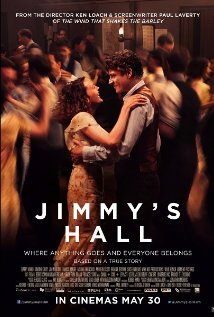
Jimmy’s Hall (2014) is Ken Loach’s 50th odd and apparently last feature film. Which sucks because the man still definitely has a lot to say and can say it better than basically anyone else.
This is a film that made by so many other people would just be tired, period film blandness. But one of Loach’s great gifts as an artist (in my admittedly limited experience) is his ability to inject a lot of life into his stories. There were times watching this when I felt like applauding at the end of a scene because it was so rousing. The film is based on the true story of Jimmy Gralton an Irish communist in the 1930’s. Returning from time exiled abroad he once again starts up the titular hall, inspired by the effect that being away from a place can have on a person. Fashioned on socialist principles, the hall aims to provide education and amusement for all who wish to come. Importantly and provocatively, especially in relation to education, far from the reach and influence of the all powerful church. The film tells the uplifting story of what happened inside the walls and the rather more sober reaction that it receives from the more conservative nearby neighbours, who come in both fascist and Christian guises.
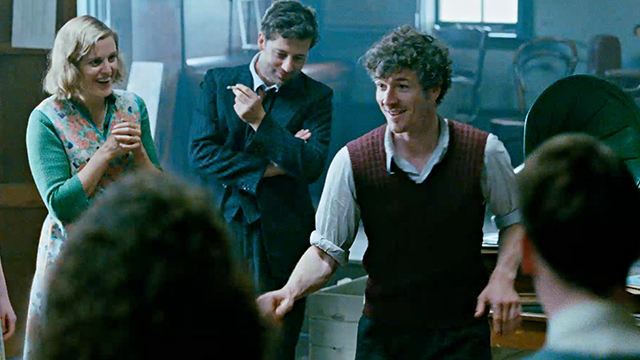 It is hard to pinpoint exactly why Loach can make this material work where others would fail. Which is not to say that what he is working with his bad. The slice of history, probably unknown to many outside of Ireland, is fascinating and the script by Paul Laverty is pretty insightful. Actually the script is a very smart piece of work as it connects day to day goings on in the film, a potential affair for example, with the societal structures that bring them about and influence how they play out. But there are many similar films about similar historical events and it is rare that they are this good or this engaging. Loach is also not really that much of a stylist. Jimmy’s Hall, like all of Loach’s work I have seen, looks good but nothing more noteworthy than that. It could be that Loach is unabashed to be political. He’s famously left wing, once withdrawing a film from MIFF because the festival was sponsored by the Israeli embassy and were refusing to cancel the sponsorship. So here he shows that the commies are the good guys, at least in this environment, and it is hard not to get swept up in cheering for them. This is especially true when they go against idiotic fascists and power hungry members of the clergy. On this front, and others, it would appear that Loach has the power to choose only those projects that he is going to be distinctly passionate about and Irish revolutionaries are right up the veteran director’s alley. Barry Ward’s turn as Jimmy does not hurt either, as he convinces you that he’s a dude that you would follow and buy into his personal ideology.

It is shocking that a film about Ireland in the 1930’s was made to feel relevant to 2014 Australia, but that is just one of Loach’s achievements with Jimmy’s Hall. Even if like me you have no idea who Jimmy Gralton was, you will still want to see this film and be inspired by the example that he set.
Verdict: Pint of Kilkenny
Related beermovie.net articles for you to check out: MIFF 2014: Creep and MIFF 2014: When Animals Dream.
Like what you read? Then please like Beermovie.net on facebook here and follow me on twitter @beer_movie
MIFF 2014: When Animals Dream

Festival programming is a major undertaking. As someone who has programmed a six feature festival program, I can attest that even something that small has exceptional inherent complexity in what to show and when. I can only imagine what it is like marshaling some coherence into three weeks and over a hundred films like at MIFF. All that said, I would be interested to know the rationale for programming When Animals Dream (2014) as an 11:30pm screening. I really like this film, but it is sloooooow. That late, a little pep is always appreciated.
Set on a small port town on the Danish coast, the film focuses on Marie who tends to her ailing mother, hand feeding her and taking her out for walks. Whilst this is a film concerned with the supernatural, these early sequences are particularly grounded in reality. The scenes of tending to a loved one, a shell of their old self, encapsulates fully the experience that I have witnessed people in my family go through. When Marie gets a job at the local fish processing factory she is immediately subjected to misogynist abuse and harassment. When Animals Dream is a film that is clearly looking at sexism and feminism, both in overt narrative points like that one and much more subtle ways too. In terms of pure cinematic enjoyment, this is a film that occasionally is guilty of being too slow and ponderous. But there are some great moments too and the practical effects are so fine and impressive in their rendering of a werewolf, that there is joy to be found in the appreciation of those. These storytelling and presentation aspects of the film create an enjoyable enough platform for the film to successfully dig a little deeper and say a little something more about present day society.

The film is soaked in mythology which is something that is not seen enough from contemporary horror. Much of it comes from the salt crusted Danish coastal setting, shot in lowish light with the colour seemingly washed away by the sea. That imbues so much of the action with a haunting quality that for me simultaneously invoked Dreyer’s Ordet (1955) and Stoker’s “Dracula”. The genetic lycanthropy of the film is similarly myth-like. Passed through the generations, to successive women who are then feared and ostracised by the community, it is grounded in real life tales of women having been accused of witchcraft and traditionally treated in similar ways. The film is overtly, delightfully feminist with readings that look back and those that are contemporary. This is how women are treated when they become too powerful, whether in the workplace or in this case, when they turn unto an utterly badass werewolf. They are feared by the men who surround them and they feel their dominant position has to be asserted. The narrative also is about empowerment and tellingly about who should have control over a woman’s body. A scene where there is a forcible attempt to medicate Marie sums up a perspective on a woman’s body and who should be making the choices about it. Even though I had issues with some of the film on a sheer enjoyment level, so many of the complex ideas in the film are really intelligently communicated, that I would really like to revisit the film soon.
In terms of narrative punch and enjoyment, When Animals Dream is a little up and down. It is a little slow and in terms of horror thrills it comes in at the lower end of the scale. But in terms of examining really interesting ideas through the prism of a traditional style werewolf narrative, the film definitely has a lot to say and it says it through a great central character.
Verdict: Stubby of Reschs
Related beermovie.net articles for you to check out: MIFF 2014: Creep and Ordet.
Like what you read? Then please like Beermovie.net on facebook here and follow me on twitter @beer_movie
MIFF 2014: Creep

Anyone who has read this site for any length of time will know I am an absolute sucker for a good high concept horror flick. In fact I am willing to forgive a lot of a film’s flaws if the starting point is something truly creative and ambitious.
All that probably explains why the Mark Duplass starring, Patrick Brice directed Creep (2014) was the first film I chose to see at MIFF. The concept sees a cameraman answering an ad for a day’s work. A day’s filming for a thousand bucks. To give away any more than that would ruin things, but needless to say, shit goes pear shaped pretty quickly and at times pretty frighteningly. Also on occasions pretty hilariously too as the film traverses the three genres of thriller, horror and comedy in a fun pulp style. Although for much of the second half of the film that comedic tone is replaced by some really well crafted tension. In my packed screening the film got a great response as well with huge laughs and a fair few gasps at the right times too. The main reason to watch this film is that it features a totally, delightfully, unleashed Mark Duplass. In a creepy role, he is clearly happy to be going big, not having to worry about conveying any angst or particular depth of emotion. I was a fan of his before this film, but here his charisma just totally lifts the film up.

Director (and co-star) Patrick Brice
All this sounds great and all would be great if it were not for the film’s one major, overwhelming flaw. The handheld shooting style is nigh on unwatchable, especially in the first half of the film. I know that so called ‘shaky cam’ really bothers some people, but I am generally not one of them and like quite a lot of films that employ the approach. I would go as far as saying that this is comfortably the most infuriated I have ever been at the utilisation of handheld cameras. And it is actually the first time that I have felt nauseous because of the way the camera is used. In horror films too, I often find the device to be a cheap one. It is easy to artificially create tension and fear if you are just arbitrarily cutting off the side of the shot and not showing all of what would traditionally be shown in a scene. This film is definitely guilty of repeatedly using that approach. The shame of this failed approach is amplified by the pretty awesome ending in which a stationary wide shot is utilised really creatively to deliver a great high point to end on. The fact that the most shocking shot is the one where the camera is not being used to obscure parts of the frame, makes all those other instances where it is so much more frustrating. In the end though, this stylistic choice made for acceptable narrative reasons, overshadows all that is good and fun about the film.
If a high concept horror-comedy with a bit of a hipster vibe sounds like your kind of thing, then Creep is quite possibly the film for you. Be warned though, even as someone who is almost never bothered by the use of handheld cameras, the first half is almost nauseating. Which is a bummer because, especially in the second half, the film does a heap right.
Verdict: Schooner of Carlton Draught
Related beermovie.net articles for you to check out: Melbourne International Film Festival coverage and Silent House.
Like what you read? Then please like Beermovie.net on facebook here and follow me on twitter @beer_movie
Trailer for your Weekend: Tusk
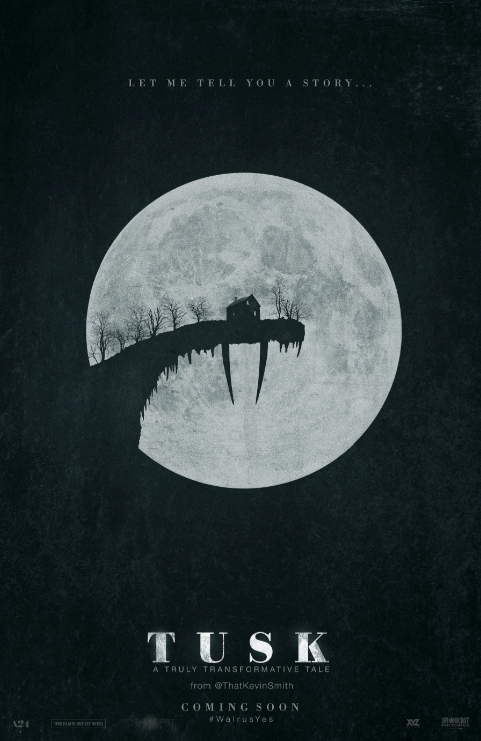
Kevin Smith is a divisive dude. He certainly has his acolytes and also his haters who will dismiss anything with his name on it. I am neither really, having only seen two of his films and liking but not loving both. Smith’s latest film Tusk (2014) looks to be a fair departure from his other work, even his first horror film Red State (2011). The trailer makes it look so batshit that it looks to be a fairly big departure from basically everything else. I have to say though, a horror film featuring a walrus feels all kinds of awesome to me. I just hope that it is treated somewhat seriously, because that is the tone I would prefer over something overtly jokey. Though I’m not sure how that desire will work out for me. Any thoughts on this trailer or Smith in general? Favourite films of his?
Related beermovie.net articles for you to check out: The Babadook and Interview with Redd Inc director Dan Krige.
Like what you read? Then please like Beermovie.net on facebook here and follow me on twitter @beer_movie
Melbourne Inernational Film Festival coverage
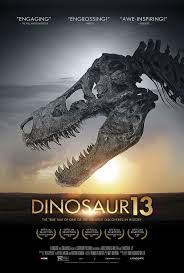
Just one of the great films showing at MIFF (unfortunately I won’t be catching it though)
I am just about to head out of the office on this Friday arvo and catch a flight to the Melbourne International film Festival (MIFF). I am pretty sure it is Australia’s oldest and definitely one of the biggest two festivals on the calendar. I was hoping to spend more time at the festival, but having just been overseas, money and leave considerations mean it is a quick seven film dash. Keep an eye out for reviews of all the films I catch. I will be witting as I go, but you probably won’t see any reviews until I am home on Sunday night. But hopefully there will be lots of cool stuff to chat about.
Like what you read? Then please like Beermovie.net on facebook here and follow me on twitter @beer_movie
A Hard Day’s Night

Whilst in London recently I was lucky enough to catch a screening of the famous Beatles film A Hard Day’s Night (1964) at the BFI at Southbank. I didn’t take extensive notes like I usually do, but thought I would share some thoughts in this quick review.
First up, the BFI in Southbank is a fantastic facility. With the Arc Cinema here in Canberra, an institution with ostensibly similar goals being gutted, it is great to see an archive cinema that is clearly booming and exceptionally popular. It was slightly disappointing to see that there was no real exhibition space at the facility, but in a city like London there are always other places to catch quality glimpses at film history.

The Beatles are of course an exceptional band. I have not explored their music as much as I probably should have, but even so I would say that “Revolver” is probably the most perfect album in pop music history and a work of art to stand against any created in the 20th century. Their work veered from the heartfelt, to the experimentalism of “Sgt Pepper’s Lonely Hearts Club” to the silly. It is the latter where the film A Hard Day’s Night comes in as the fab four rollick about onscreen in what is essentially a slapstick farce. It is far from the perfection that some of their music approaches, but that probably makes it all the more fun. It takes a certain level of charm for four not great actors dicking around onscreen to be acceptable cinema entertainment. Those four guys definitely had that charisma. The film also takes some wryly amusing pokes at the frustrations that the band must have felt with the stifling fever pitch of fame that surrounded their every move. As fun as the story – which is essentially a succession of skits – is, the songs when they come along absolutely stand out and are probably reason enough to watch the film alone.
Not everyone will get much out of this. I enjoyed it and if you have even the slightest interest in the band or even slapstick comedy then you probably will too. If you are Beatles nuts like my parents who went with me to see this, you will probably absolutely adore it.
Verdict: Stubby of Reschs
2014 Progress: 18/101 (wow, I am going to fall miserably short of this goal)
Progress: 114/1001
Related beermovie.net articles for you to check out: Steamboat Bill Jr and Singin’ in the Rain.
Like what you read? Then please like Beermovie.net on facebook here and follow me on twitter @beer_movie
Friday the 13th Part VIII: Jason Takes Manhattan

I had revised levels of hope heading into Friday the 13th Part VIII: Jason Takes Manhattan (1989) given the two films that preceded it were some of the strongest in the series. Not only that, but Jason Voorhees rampaging through Manhattan sounds like an exceptional way to once again reinvigorate the slasher conventions that are so tired in many of this series’ films.
 Unfortunately though, whilst not a total waste of time, this film is nowhere near as fun as the premise and title suggest it should be. Mainly because the action does not hit the big city until right near the end, and our hockey masked bad dude picking high school kids off on a boat does not feel as fresh as it should. Clearly ‘Jason on a Boat’ was not catchy enough a title so they have to trick us into thinking it mainly takes place in New York City. The first couple of shots are promising, situating the action very much in a big city and featuring a montage of rats, junkies and muggings. A real urban jungle that should be a really novel place for a film in this genre. It still would be, because from there the film spends a good hour in far less interesting locations. The film has some of that massive 80s-ness going on though. In this one it is quite endearing rather than just embarrassing. A girl with a killer guitar and a final showdown in a sewer, complete with toxic waste, scream 80s to me, rightly or wrongly.
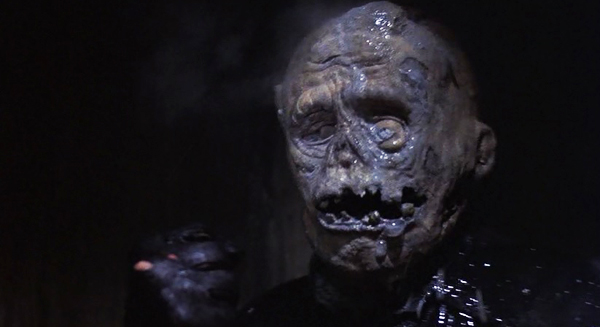
As a lover of practical effects… this is rubbish
One thing that Jason Takes Manhattan does better than a majority of the other films in the series is deliver highly original kills (although they are too far apart). A guitar to the skull, a sauna rock to the guts and a good ol’ fashioned ripping off of the head are three of the delightful ways that teens meet their end in this one. The film though continues what I feel is a certain mean-spiritedness that reoccurs throughout the whole franchise. Victims are constantly set up as admirable, wise or on the verge of genuine happiness before being killed. Conversely the film makes some (genuinely tame and misguided) attempts to humanise Jason Voorhees. It is strongly intimated that he lets a potential victim go, after a very realist drugging and rape scene, which is probably the most intense thing in the franchise to date. Later, the utterly woeful practical effects and strange elephant noises that Jason makes during the film’s conclusion are meant to endear the character at least somewhat in the minds of the audience. Slasher films often do this with varying levels of success. I don’t know of one that has done it particularly successfully though, because no matter how the killers have been victimised, in the end they are out and about killing teenagers who have most of their lives ahead of them.
Far from being offensively terrible, Jason Takes Manhattan is above all just terribly formulaic when the dual settings of a boat and NYC should allow it to rise above the norm. But in this film the cool settings do not result in very much narrative flair which is a shame because the series did seem to be on the way up. In short, this is the best of the bad films in this really patchy quality-wise franchise.
Verdict: Schooner of Carlton Draught
Series ranking thus far:
- Friday the 13th Part VII
- Friday the 13th Part 2
- Jason Lives: Friday the 13th Part VI
- Friday the 13th: The Final Chapter
- Friday the 13th Part VIII: Jason Takes Manhattan
- Friday the 13th
- Friday the 13th Part V: A New Beginning
- Friday the 13th Part III
Like what you read? Then please like Beermovie.net on facebook here and follow me on twitter @beer_movie
 Beermovie.net