SFF 2015: Slow West

Directed by the awesomely named John Maclean, Slow West (2015) is a rare festival Western. Somewhat surprisingly the film attempts to mix in a heavy dose of laughs along with the standard elements of the genre that we all know and love.
Slow West focuses on Jay played by Kodi Smit-McPhee, a young Scotsman travelling to the ol’ West to reconnect with his girlfriend who was forced to flee her homeland. The main body of the story focuses on Jay’s journey westwards across America under the ‘protection’ of Michael Fassbender’s Silas. The creation of this relationship is pretty clunky. The obvious switch from an almost silent, adversarial Silas, to a chummy father figure is not at all earned. You know it’s coming and sure enough it is simply plonked there to tick off a plot beat, rather than establishing it through storytelling. There is one interesting plot twist that comes really early on. But that is the highlight of the storytelling and does not particularly elevate the rest of the film along with it. Tonally, the film is hard to embrace as well, laden with a lot more humour than anticipated. Initially the humour felt like it was going to work. It was wry and reflected on the harshness of the environs. But it continues to get more and more shrill, culminating in a sight gag that would not have felt out of place in A Million Days to Die in the West (2014). That one was actually kind of funny, but the experience of being bombarded with more and more silliness whilst trying to care about the stakes of the plot did not work for me, and results in a film that feels far too light.

Aside from it being a festival Western, the main attraction for Slow West is the cast – Smit-McPhee, Fassbender and Ben Mendelsohn leading the way. Whilst no one is terrible, you could hardly say anyone is particularly excellent. Fassbender feels like he is just getting by being Michael Fassbendery and Schmidt-McPhee doesn’t feel like he has the gravitas to sell you on the cross-continental quest he is undertaking. Perhaps this is the script’s fault though, as the emotional setup of the film is very strange. Of the three, Mendelsohn is the best, typically looking like he is having an absolute ball as a mugging bad guy. Actually the only aspect of the film that particularly stood out to me was the score. It assists the journeying elements of the film and did a better job of conveying the adventurous westward march the men were on than the script did.
Verdict: Even a cast as good as this cannot overcome the film’s uneven tone. It simply cannot decide if it wants to be a silly Western comedy or a thriller with some real weight and emotion. Some people in my screening seemed to get a kick out of the humour onscreen, but I struggle to recommend this one at all. Schooner of Carlton Draught
Related beermovie.net articles for you to check out: SFF 2015: The Bolivian Case and CIFF 2014: The Salvation.
Like what you read? Then please like Beermovie.net on facebook here and follow me on twitter @beer_movie
SFF 2015: The Bolivian Case
It’s film fest time once again. The Sydney Film Festival is one of Australia’s biggest, and next weekend I’ll be attending for the first time since I lived there, a good eight years or so.

I have been lucky enough to be able to catch a couple of films in advance though, including The Bolivian Case (2015). This doco, focusing on a drug ring importing cocaine from Bolivia to Norway, comes out of the interesting production company United Notions. As well as a killer name, the company seems to have a unique perspective and goal in mind, based across Australia, Bolivia and the States and aiming to create challenging ideas driven cinema.
The Bolivian Case fits in nicely with this perspective, turning a story about three young Norwegian women into a discussion of justice, media morality and societal lust for tabloid trainwrecks. Even without all of that, the film would have been an interesting one – not one but two of the women escape whilst on bail, the dynamics of the ongoing case in Norway are delved into, the women fall in love and give birth in jail and there is the smarmiest, most punchable lawyer in the history of smarmy punchable lawyers. The behaviour of the Norwegian government is also examined. They seem content to leave one of the women to rot in Bolivia, whilst going out of their way to illegally assist the others escape. Occasionally, especially early on, it is a little difficult to follow who is who and keep up with the two strands of the story (one in Norway and one in Bolivia). And perhaps the two stories never quite come together entirely as it still almost feels like two films at the end. But once the characters back in Norway are built up in the same way that director Violeta Ayala does with those jailed in Bolivia, that strand of the film becomes more engaging. To the point where it possesses the film’s biggest emotional punches. The ‘action’ highlight of the film comes as one of the women, Stina, decides to flee whilst on bail, child in hand. Ayala finely crafts this period of the film, having it play like a bit of a heist or escape film.
 Another film may have solely focused on this spectacular escape, aided by shady government dealings and the media ‘paying’ to create news. The Bolivian Case has broader points in mind though. Even the escape is examined more from the point of view of what it says that a media organisation would hire mercenaries to get her out. They are essentially creating news by assisting someone to flout the laws in another country. Surprisingly, this behaviour seems to be met more or less with cheerleading in Norway, with Stina’s return apparently a triumphant one. I can understand that aspect if she proclaimed her innocence. But the way I read it was that these women were pretty clearly guilty. The film also focuses on the sensationalism that the case is met with in Norway especially when the women fall pregnant in jail. Australia has seen similar tabloid obsession in recent years, in particular with the case of Schapelle Corby, jailed in Bali for drug offences. There is clearly something universal about the plight of people, particularly young females, jailed overseas that brings the tabloid masses running. In fact the media seems able to craft the narrative of the case in Norway. One of the women is portrayed as the quiet religious girl from a rural area. The one stuck back in Bolivia is painted as the untrustworthy ringleader. The media is able to craft the heroes and the villains of the story. Class, status and even physical appearance all influence the tale that they are spinning. Which is problematic in itself, but when these artificially created notions seep into the ‘justice’ meted out in the court system, it goes from problematic to offensive. Unfortunately this kind of pre-judgement is all too common, whether aided by the media or not, in many places not just Norway.

Verdict: The Bolivian Case is a slick and timely doco that examines the seemingly universal tabloid obsession with pretty young women locked up abroad. It goes further than that though, making pertinent points about the issues of media influencing justice and the way that class and first impressions influence the way that criminals are treated. Thankfully though the film never becomes dreary or a bore to watch whilst doing all of that. Pint of Kilkenny
Related beermovie.net articles for you to check out: SUFF 2014: Freeload and CIFF 2014: Songs for Alexis.
Like what you read? Then please like Beermovie.net on facebook here and follow me on twitter @beer_movie
The Beermovie Podcast Ep 1: Paul Anthony Nelson and Ed Wood

This is something I’ve talked about for a long time, but it’s finally here. The first episode of The Beermovie Podcast. Part of the reason I haven’t been writing and commenting as much as usual has been my focus on this, so I hope you dig it. These are going to be monthly chats between someone involved in the film industry and yours truly. Each episode will focus on the work or interests of the special guest, before an in-depth look at a film of their choice.
The first episode features filmmaker and podcaster Paul Anthony Nelson. We cover off on a whole heap of topics (chapters outlined below if you want to skip to something in particular), including Paul’s films, microbudget filmmaking, the podcast Hell is for Hyphenates and finish off with a solid chat about Tim Burton’s Ed Wood. There were a few sound issues toward the end, but hopefully it’s not too much of a distraction.
If you’re keen to have a listen, you can download it on iTunes here or listen on Soundcloud here. If you like what you hear subscribe, let me know and if you can, take the time to leave a review.
Chapters:
0.00 – Intro and the slightly random question Paul’s favourite Paul Anthony Nelson film
5.34 – Paul’s highly successful podcast Hell is for Hyphenates
24.23 – Microbudget filmmaking
42.00 – Tim Burton’s Ed Wood
You can check out the work of Paul’s production company Cinema Viscera, including the films we chatted about here and his fantastic podcast Hell is for Hyphenates here. The Beermovie Podcast themesong is from Horenco. Check out his work here.
Related beermovie.net articles for you to check out: Forgotten Filmcast Episode 22 (featuring me) and The Film Brief podcast.
Like what you read? Then please like Beermovie.net on facebook here and follow me on twitter @beer_movie
Mad Max
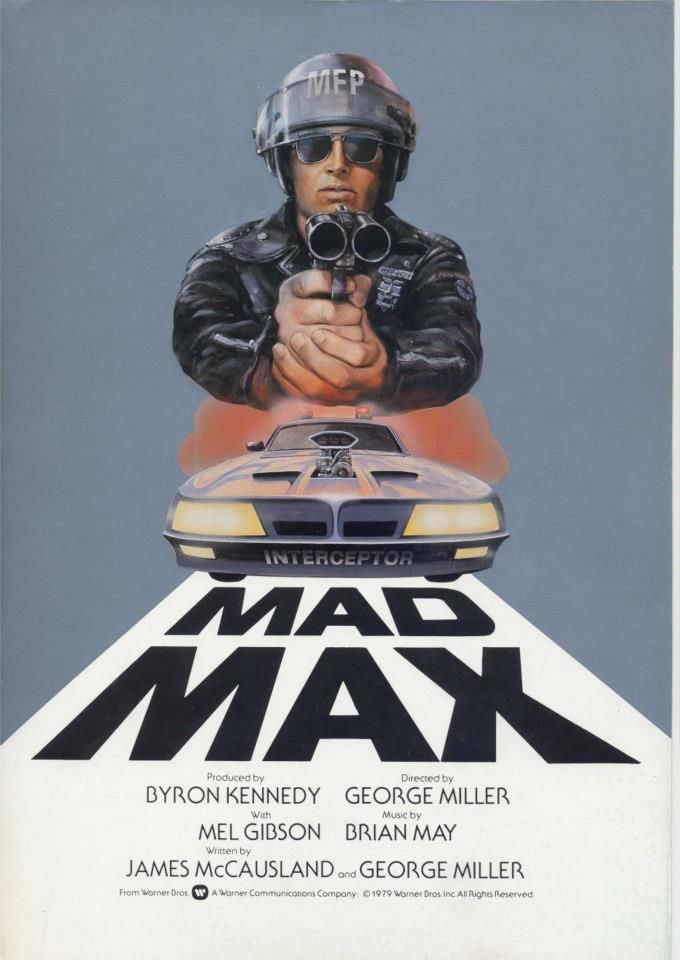
No film has ever dominated my twitter feed quite like Mad Max: Fury Road (2015) these last couple of weeks. Recognising that the series was a large gap in my personal filmography, I jumped back and took a look at the earlier films before checking out the new one, starting with Mad Max (1979).
 The first film is perhaps less well known that Mad Max 2: The Road Warrior (1981), especially in the States, but it’s a film that I much prefer and that I think has aged a lot better. There is a unique balance to proceedings, which are quite lightly plotted. Early there is constant action and kinetic energy being splashed all over the screen. Then the film settles, building out the world a little and focusing on the family elements of the plot, before kicking into overdrive for a really quite short final revenge sequence where Max turns very much from content, into mad. Up until that final part of the film, the main thematic propulsion simply comes from a dude struggling with what his job says about him as a person. A struggle many of us face and which helps to make this the most relatable film in the series. Indeed there is a universality to most of what is happening. The audience is happy to see Max bring his violent revenge to bear at the end of the film, due to the intimate understanding of what has been taken away from him by the villains of the film. Especially as it is brought about by one of the most coldly violent murders you will see on screen.
The word building in the film is simultaneously sparse and effective. Miller never feels bothered to overly flesh out the world with intricate levels of detail. As someone who grew up in rural Australia, the sparse, empty roads and fields were incredibly familiar. Thought the focus is not on effects or hi-tech futurism, the vision it builds is still pretty nightmarish. Some small flourishes – the search for fuel, a seemingly tiny population and ‘Prohibited Area’ signs – go a long way. This is a near future that is lawless, seemingly reigned over only by incoherence. Another aspect of this lawlessness is built up in the film through the invocation of the Western genre, which was so heavily focused on film’s most iconic ‘wild’ setting. The way people dismount their motorcycles, a focus on boots and jackets and the adjusting and removal of helmets are all lingered on, recalling Eastwood or similar riding in on a noble steed. These flourishes also feed in to the writing of the film which focuses heavily on building the psychology of the characters. On one level there are goodies and baddies, but dig a little deeper and what characterises a villain and what characterises a hero becomes far murkier. The performances support this, especially from Hugh Keays-Byrne as Toecutter, a character who has an aura and seeping malevolence which inspires his followers. Characteristics that Immortan Joe, played by the same actor in the franchise’s most recent, also has tons of. There is something towering, discomforting and ominous about both of those turns by Keays-Byrne. The baby faced Mel Gibson is also excellent, especially when turning and gaining his revenge. The actions sharply conflicting with the innocent face and family man of the film further detailing the psychological trauma that has been wrought upon him. And it’s always great to see Steve Bisley on screen as well.
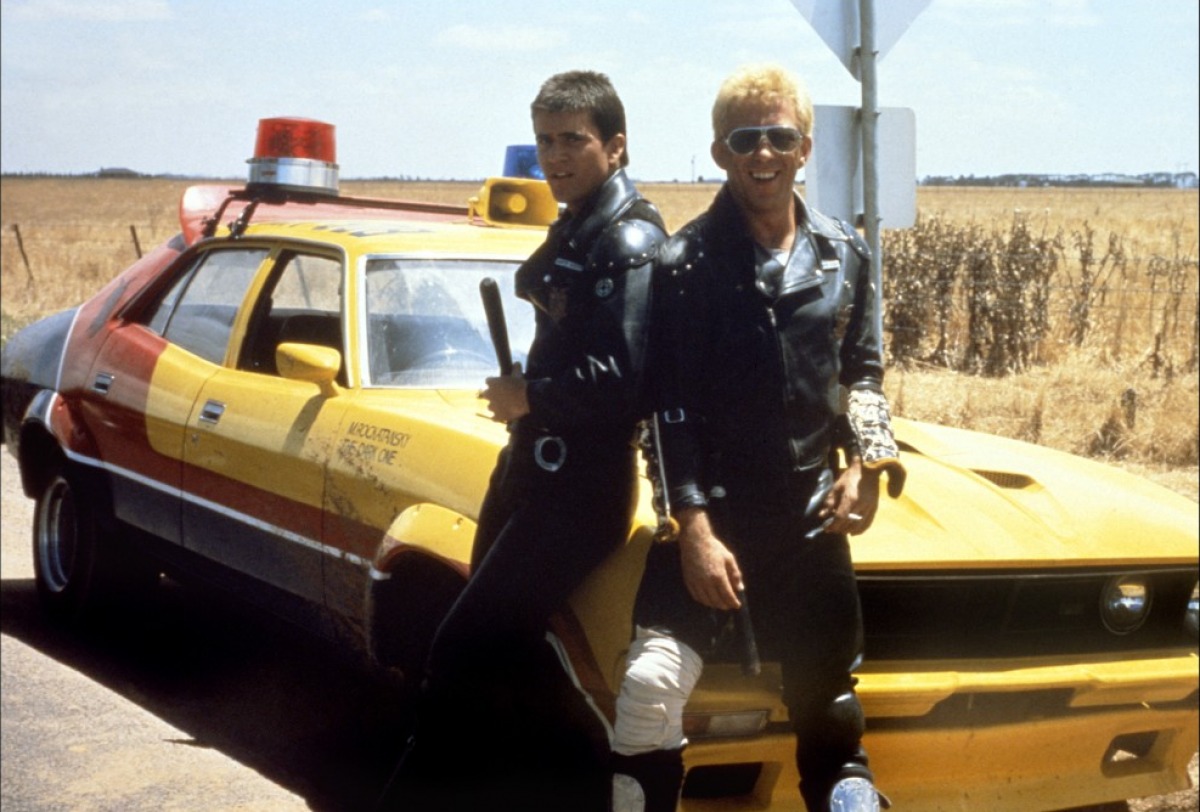
After seeing this film and Fury Road, it is fair to say that no one does vehicular mayhem quite like George Miller. Everything is so real feeling in this film and you feel the impact of every collision. It makes you wonder how on earth Miller got this film made really. The stunt work in the film is heart-stoppingly thrilling as cars and motorbikes converge violently over and over. Coupled with that is the camerawork, simply showing the action safe in the knowledge that the crowd will lap up every collision and explosion. The camera is also used to great effect to create tension. The sequence running from a forest, to a beach and then back to the forest is the tensest in the whole film, with nary a car in sight. Miller achieves this with slight movement of the camera, flitting in and out of the trees and masterfully controlling what is in the frame.
Verdict: Those taking a look at Mad Max for the first time, expecting the same level of freneticism Mad Max Fury Road delivered, may well be a little befuddled by what they find. But whilst it is different, it is no less unique and is a film that should be sought out by any action or sci-fi aficionados who have somehow never seen it til now. Pint of Kilkenny
Progress: 127/1001
Related beermovie.net articles for you to check out: The Great Escape and Quick Review: The Adventures of Priscilla Queen of the Desert.
Like what you read? Then please like Beermovie.net on facebook here and follow me on twitter @beer_movie
Borat

Upon release, Borat (2006) was something of a cultural phenomenon. The film introduced the antics of Sacha Baron Cohen to a far wider audience and threatened to unleash (or re-unleash) a style of comedy predominately focused on tricking unsuspecting bystanders into being part of the action. It also proved to be probably the most quotable film since Anchorman (2004), and there was a time there you couldn’t go anywhere without copping someone’s annoying as shit Borat impersonation.
Unlike Anchorman, at least to my mind, the cultural impact of Borat seems to have waned a fair bit. Revisiting the film now, it is easy to see why. When it was released, I was right in the film’s target audience, being a male in my late teens. Even then, I found the film quite mean spirited and a little wary of what it was trying to achieve. Fast forward nine years and those concerns have well and truly crystallised. This is an awful film. The way that Baron Cohen interacts with (predominately) well-meaning regular people, comes off as profoundly mean. The film is also far less satirically biting than I recall too. Really, the only part that lands is Borat’s interaction with the horrific jocky college bros on a road trip. Baron Cohen intelligently paints them into a corner, exposing their shocking prejudice and typical ‘white dude’ outlook on life. You can almost hear them wailing that women run the world and that the social justice warriors are ruining their comic books and rape jokes. That sequence is immediately followed by the only other sequence that threatens to deliver a similarly biting punchline, when Borat visits an evangelical mega church. But in reality, the salient points made here really only come from the sheer insanity of the parishioners, not anything to do with Baron Cohen’s skill as a performer.
 The major downfall of the film is that it never regularly achieves its goal of skewering American society. In that light, the film’s racism and misogyny becomes a little harder to ‘enjoy’. In fact, many of these aspects of the film (the portrayal of Kazakhstan for example) really add nothing to the supposed satire of the film. As horrible as all that is, the interactions that Baron Cohen has with members of the public leave me feeling the most uncomfortable. Most of the film is Borat annoying or triggering physical altercations with people going about their day. For every time that works and achieves a point, there are four or five examples of him harassing really quite sweet people, such as the driving instructor who goes totally out of his way to be polite and supportive of someone he thinks is new to the country. This same dude also totally subverts expectation when he launches an impassioned defence of women’s rights when fed lines you have to suspect were designed to elicit a different outcome. This is all the more frustrating as Sacha Baron Cohen is a distinctly skilled, not to mention ballsy, performer. He is just much more successful at displaying this skill in material that is not his own, Hugo (2011) and Talladega Nights (2006) the two examples that spring immediately to mind.
Verdict: Borat is less intelligent, satirical and funny than I recall. In fact, there is rather little of all three on display. It is an exceptionally mean spirited film too. To be clear though, that naked fight between Borat and his overweight, overhairy producer is still pretty funny. Schooner of Tooheys New
Progress: 126/1001
Related beermovie.net articles for you to check out: A Hard Day’s Night and Ghostbusters.
Like what you read? Then please like Beermovie.net on facebook here and follow me on twitter @beer_movie
Worth Watching April 2015
This started out as a pretty slow month watching wise. But a bout of sickness and getting Netflix toward the end of the month boosted my numbers. Even thought the quality looks relatively even on paper, I have to say overall it was a poor month. There is nothing here I downright loved, whilst quite a number of the ‘Not Worth Watching’ selections I utterly hated. Read on and share your thoughts in the comments below.
Worth Watching:
- The Master (2012), Paul Thomas Anderson – Only my second PTA film and I feel strangely ambivalent about this one actually. Anderson shoots in an old fashioned and expansive way, which surely looked amazing projected in 70mm. Phillip Seymour Hoffman is totally commanding and magnetic from the first glimpse. It’s easy to buy into him as a charismatic cult leader. The film is best when focusing on that character and the impact he has on his followers, as well as making the correlations with scientology more overt. Overall though, it didn’t quite come together as something I out and out loved.
- Atari: Game Over (2014), Zak Penn – Everyone knows the story of the T Atari cartridges buried in a desert landfill. It’s a strange decision to couple that story with a history of the early days of Atari and the video game industry. But in the end that history, the hedonism of the glory days & the role of the interactivity of early video games in ushering in the computer revolution, is actually very cool. In contrast the coverage of the attempted excavation of the cartridges feels pretty contrived. A fair celebration of geek culture overall though.

- Wyatt Cernac: Brooklyn (2014), Wyatt Cernac – For a stand-up special, this very Brooklyn-centric piece is quite funkily shot. The little puppet interludes are a lot of fun too. Initially I dug Cernac’s delivery style. But over time it starts to feel a little too smarmy. He’s all about pitter patter jokes rather than storytelling. It’s never too deep. But the reflections on being an African American male hit the funny bone a lot harder than the more domestic riffs on weddings and the like.
- The Good Wife Season 4 (2012), Robert & Michelle KIng – It’s not the best season, but this continues to be an ace show. A lot of the early part of the season gets bogged down in the storyline of Kalinda and her husband, which is confused and adds nothing to the overall show. Similarly, Cary is brought back into the fold but then barely seen. But a bunch of solid guest stars such as Amanda Peet and Cristina Ricci provide good performances whilst Alan Cummins is almost the star of the whole season in his ongoing role.
- Aziz Ansari Live in Madison Square Garden (2015), Aziz Ansari – I have become a huge fan of Ansari’s thanks to his work on Parks and Rec. He is a good storyteller as a stand-up, spitting jokes and seguing really smoothly between topics. He’s a relatively progressive dude as well and he interacts well with his audience. Apparently encores are a thing in comedy now.
- Unbreakable Kimmy Schmidt (2015), Tina Fey & Robert Carlock – This much hyped show started really slowly for me. But over the second half of the season it picks up a lot. It breezes by, though I felt like I missed something in the early episodes. There are a bunch of really fantastic performances which help to overcome scripting that falters pretty regularly. It’s often mildly amusing though, especially when it goes a little more farcical or absurdist. The way the show really finds its groove late in the season, means I will almost certainly be tuning in for next season.

Not Worth Watching:
- The Two Faces of January (2014), Hossein Amini – I’m a big fan of the three leads in this one. Kirsten Dunst is underrated and she proves it again here, flanked by Oscar Isaacs as a petty conman and Viggo as a big-time conman. It’s a very old fashioned and chatty film. Despite the characters being well set-up, it’s hard to care for the love triangle plot. A very picturesque slow burn that is really too slow with a story that is too simplistic for a thriller, as well as stakes that are never high enough. In the end it just feels tepid and lightweight.
- Insurgent (2015), Robert Schwentke – I quite liked the first in this series, but this is woeful. It’s totally incomprehensible if you haven’t seen the first in the last day. A script so bad it makes all of the really exceptional actors on board turn in really poor performances. It looks whack as well, so fake and awkwardly shot. A borderline inept film.

- Fast and Furious 7 (2015), James Wan – I have no idea why critical perception of these films has shifted. To me, they’re all awful and this is no different. Wan is brilliant, but he either can’t direct action or had his skills blunted by the studio. A baffling array of utterly illogical plot points culminates in a conclusion that is so loud, long and repetitive that you will be lulled to sleep. The script is frequently cringeworthy, which is a perfect complement to Vin Diesel’s performance. Credit where credit’s due, the tribute to Paul Walker the film ends on is absolutely pitch perfect. Look it up on Youtube rather than bothering with the film though.
- Elles (2011), Malgorzata Szumowska – I was hoping this would delve into some interesting issues, but all it delved into were the deepest depths of my sheer boredom. Juliette Binoche plays a journalist writing an article about student prostitution. I think she is meant to be challenged and changed by the experience. That doesn’t really come out onscreen though. About as tired and cliché a dramatic film experience as you could hope to have. None of that is helped by the erotic reminisces, flashback as exposition and attempts at sensual shots of food.
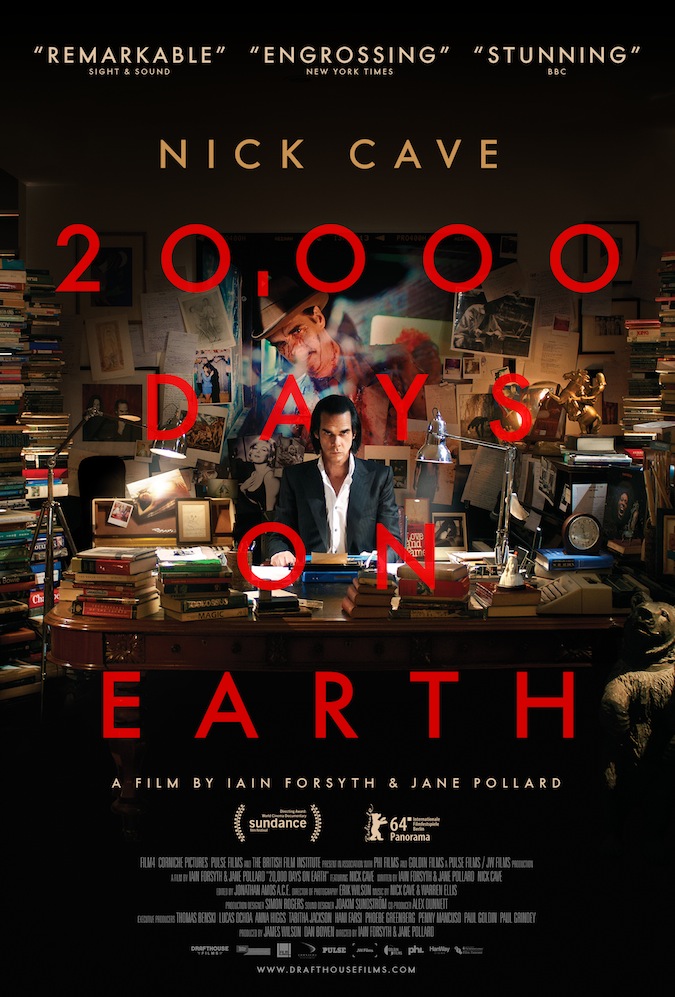
- 20,000 Days on Earth (2014), Iain Forsyth & Jane Pollard – I just could not penetrate the veneer of wankiness and pretentiousness that seeped out of this doco. Perhaps Nick Cave is an artist that just doesn’t resonate with me. I know it is not solely his creative baby. But this feels so exceptionally self-indulgent it’s hard to imagine anyone but Cave himself enjoying it. Perhaps Cave fans would get a kick out of seeing him work and construct his music. Outside a couple of sequences of Cave chatting in his car to Ray Winstone or Kylie Minogue, nothing here pleased me at all.
- Frozen (2010), Adam Green – No not that one. This is a B movie with an awesome premise that is utterly, utterly wasted. Three totally annoying college students get stuck on a frigid chairlift overnight. Shattered bones poking out of legs, skin getting stuck to the frost laden poles and wolves ensue. Despite that sounding so exceptionally awesome, it is an unrelentingly suckful experience. Terribly forced and populated by three characters, all of whom happen to be morons.
If you only have time to watch one Unbreakable Kimmy Schmidt
Avoid at all costs Frozen
Related beermovie.net articles for you to check out: Worth Watching April 2014 and Worth Watching April 2012.
Like what you read? Then please like Beermovie.net on facebook here and follow me on twitter @beer_movie
Infini

There has been a steadily growing stream of low-budget Australian sci-fi over recent years, helping to complement our strong horror output. With streaming finally making some decent headway, that looks set to continue. That is the path that Infini (2015) has taken, with a streaming focused release, coupled with a few select cinema screenings, helping to get the film out there.
Infini takes a relatively old fashioned approach to the genre. Back story is conveyed via text onscreen, which actually functions quite well. Much better than if they had tried to flesh out the timeline more, which would have just stretched the budget too thin you suspect. The text states that in the 23rd century poverty is overwhelming, with the poor forced out of necessity to take low paying jobs and exceptionally dangerous jobs. Many are subjected to slipstreaming, which is a highly dangerous form of transport, that more or less looks like teleporting. This is all simple, but well constructed worldbuilding that allows the film to jump more or less straight into the action of the plot, after a brief moment lingering on the main character’s family life. The story that follows is a nice mishmash of common sci-fi elements, themes and sub-genres. There’s an isolated planet in deepest darkest (coldest) space, a rescue team and a crazy person. It’s very survival horror, with more than a dash of influence from zombie films too. The script does get a little scrappy in the final act when it tries to ramp up the delirium of the characters and the situation, but that is sort of saved by the unlikely element of sound design. The cacophony of voices in the heads of the characters does a much better job of conveying the descent into chaos that is taking place.
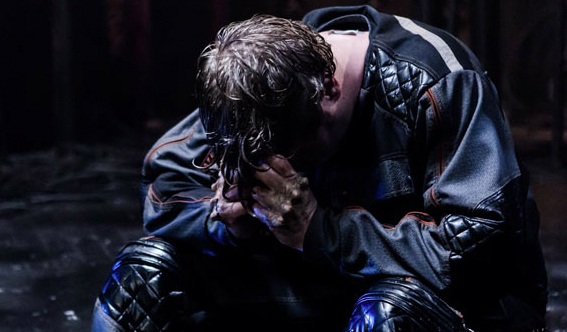
Visually, the filmmakers have done a really good job here. Nothing ever looks cheap and they manage to render a slick looking dystopian vision really well. It’s apparent that they’ve used a fair few ‘household’ style items (corrugated iron seems to feature a fair bit), which they manage to combine into sets that well and truly serve the purpose of the film, which is especially true on the isolated planet. Likewise the CGI is really good in the film, mainly because they don’t use that much, focusing more on practical effects. But when they do throw in a bit of CGI, generally to flesh out an expansive background, there are none of those distinctive cheap looking effects so common in sci-fi. Actually I barely even noticed the CGI at all, which is about the biggest compliment you can pay it. On the acting front, the film is populated with a relatively diverse cast and a bunch of Aussie character actors. Daniel MacPherson, best known for appearing on a fair few soapies out here is in the lead role and does it well. He has enough gravitas, at least in a genre sense, to buy into him as a hero. There is the odd patchy performance, but they thankfully never take you out of the film for too long.
Verdict: If old fashioned sci-fi is your thing, then the creative throwback style of Infini will be to your taste. There are patchy moments, but the loving manner in which traditional genre tropes are combined makes this a nice ride. If you’re still on the fence, it also contains the phrase “primordial ooze”, so 10,000 bonus points for that. Stubby of Reschs
Related beermovie.net articles for you to check out: Patrick and The Infinite Man.
Like what you read? Then please like Beermovie.net on facebook here and follow me on twitter @beer_movie
Ex Machina
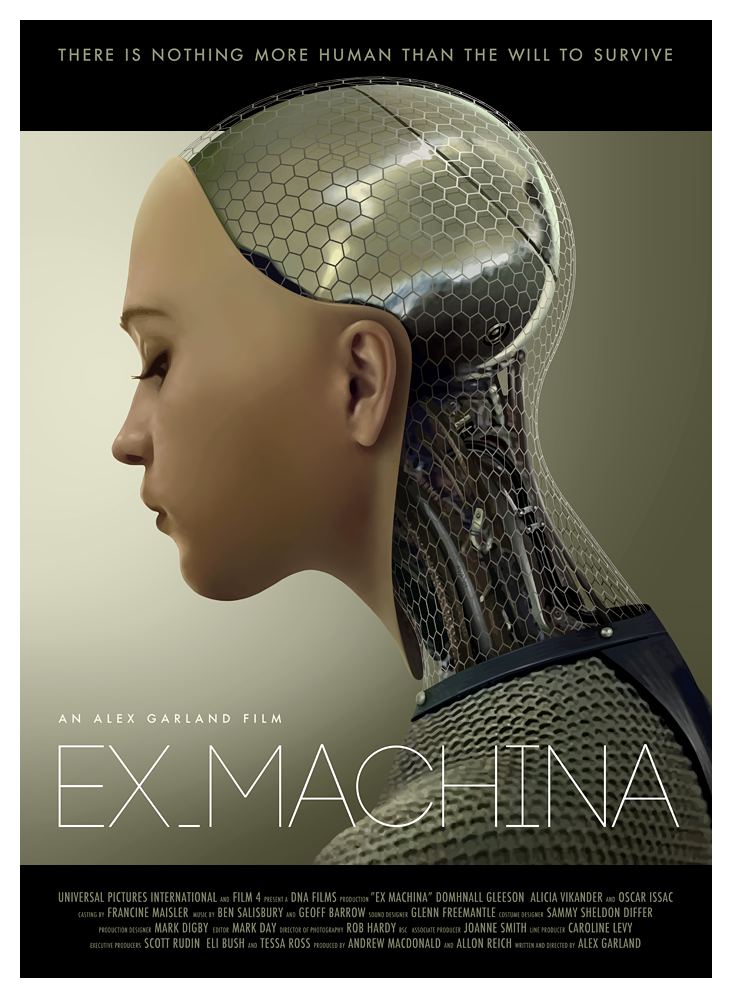
Ex Machina (2015) is the far less hyped of the two films currently doing the rounds about looming artificial intelligence. But what it lacks in hype, it makes up for in smarts and is a much more satisfying and thought provoking experience than Avengers: Age of Ultron (2015). Less explosions and witty banter though.
The film is the directorial debut of accomplished novelist and screenwriter Alex Garland, he of 28 Days Later (2002), Sunshine (2007) and Dredd (2012) fame. It sees timid boffin Caleb (Domhnall Gleeson) visiting the palatial home of the owner of the company he works for Nathan (Oscar Isaacs). Caleb is there to help the exceptionally clever and calculating Nathan test the proficiency of a new form of A.I. that he has developed. You can possibly hazard a guess at the intrigue that is to follow, thought that is not to say that it is predictable. There is a familiarity to it all coupled with an edge of intrigue as you can sense that perhaps you are not totally all over where this is headed. Garland’s script is chiefly responsible for this and it’s a very clever piece of work. There is a denseness to the scientific language that never feels too oblique or conversely jokey in its use of jargon. The script smartly guides the action and feels at times like a tightly crafted mystery almost rather than a sci-fi script. Its relatively talky, as most of the plot and themes come out in the conversations between Caleb and the feminine A.I. Ava. This includes the exploration of Ava as a sexual being, Caleb’s interest in that side of her as well as her fear of ‘death’. Interesting to see that last rather specific theme reappear so soon after Chappie (2015), which I thought (probably in the minority here), explored that pretty interestingly.
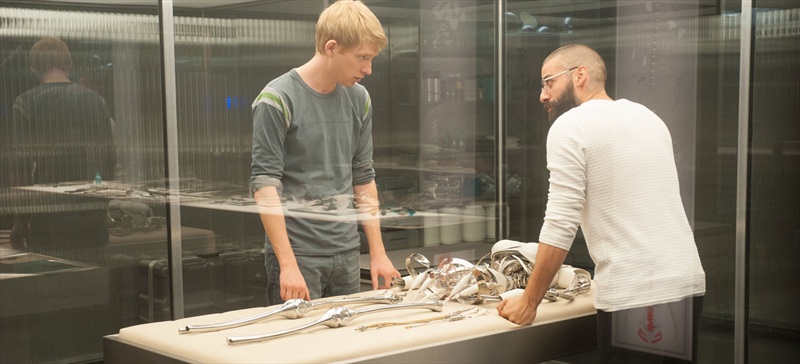
For a film by a first time director such as Garland, Ex Machina is remarkably assured. Perhaps it helps that he has been around sets so often and worked with so many maestros. It probably also helps that he wrote himself a darn good script. Despite the slow pace, there is an economy to the storytelling in the film. The first scene rapidly establishes the backstory to the film and quickly whisks the viewer off to the expansive ice covered and lush greenness of Nathan’s property. This economy never really leaves the film, with non-disclosure agreements, small chips in glass panels and much more conveying so much of the exposition that in the hands of a lesser filmmaker would be in the form of throwaway dialogue. Even the construction of the story is pretty bare bones. Alicia Vikander, as the A.I. Ava, joins Isaacs and Gleeson as the only three really key players in this story. Vikander is exceptional too, nailing that so close to human but not quite vibe that is so intrinsic to her character and the themes of the film. All three of the central performances are very good, Isaacs makes you believe in the brash, arrogant genius of Nathan whilst Gleeson, after initially overplaying the awkward overwhelmed geek aspect of Caleb, makes you really believe in the interactions between him and Ava. To see three skilled performers and have so much of the film’s success, both in terms of themes and buying into the plot, dependent on their skill is part of what makes Ex Machina so satisfying.
Verdict: If you like your sci-fi thoughtful and very smart, you will probably not be faced with a better choice at the cinema this year than Ex Machina. From what I’ve heard, Alex Garland is not all that keen to direct again after this one. Which is a shame, because if he keeps writing scripts with as much thematic depth and clarity as this one, he could have brought us a bunch more ace films. Pint of Kilkenny
Related beermovie.net articles for you to check out: Avengers: Age of Ultron and CIFF 2014: The Congress.
Like what you read? Then please like Beermovie.net on facebook here and follow me on twitter @beer_movie
The Texas Chainsaw Massacre
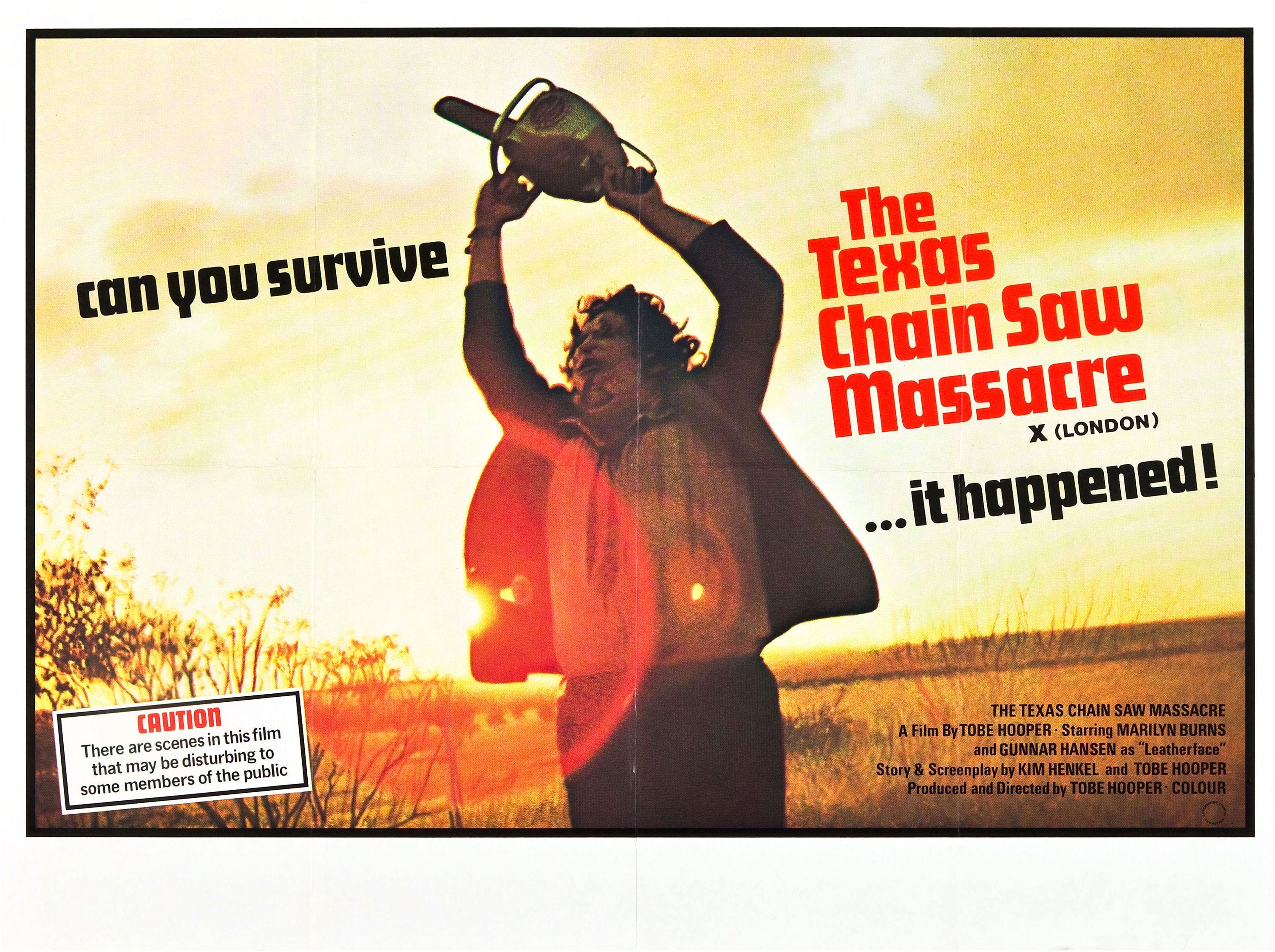
Amongst horror fiends, perhaps no film is more oft cited as a personal favourite or film that got people into the genre at a young age than The Texas Chainsaw Massacre (1974). Even if it perhaps does not hold up artistically as the absolute pinnacle of the genre, it is plain to see why the film has been so impactful for so many people.
If The Exorcist (1973) is one of the finest and most artistic films ever made that also happened to be a horror film, then The Texas Chainsaw Massacre is a short, sharp punch right in the face. Clocking in at 83 minutes, the film takes its time building up before unleashing a physically imposing villain upon a group of unsuspecting and essentially defenceless teens. The very last act slows down a little, trying to peel back the layers of motivation, and as a result the ferocious narrative force of the film tapers off a little. It also makes some silly, almost slapstick tonal choices that jar when juxtaposed with the intensity of the middle section. Though to its credit, the phenomenal final shot restores the feeling of terror that the middle section so chillingly creates. Right from the get-go of the film there is a feeling that something is not quite right, a disconcerting feeling that the world onscreen is off-kilter compared to the normality of our own. The voice-over that opens the film commenting on events to come and the utterly gross imagery that assault your eyes will immediately make you feel ill at ease. Thrown from there into a trip past a slaughterhouse and some detailed chat about the horrific ways cattle are slaughtered, it’s an atmosphere that never lets up, still underpinning events as they go from the eerie to the quick paced and shatteringly violent. It’s difficult to describe the feeling actually, occasionally it feels like you’re watching something whilst high, or that everyone in it is high. A gonzo horror film if you will, though that aspect of the storytelling does pass as the film progresses.
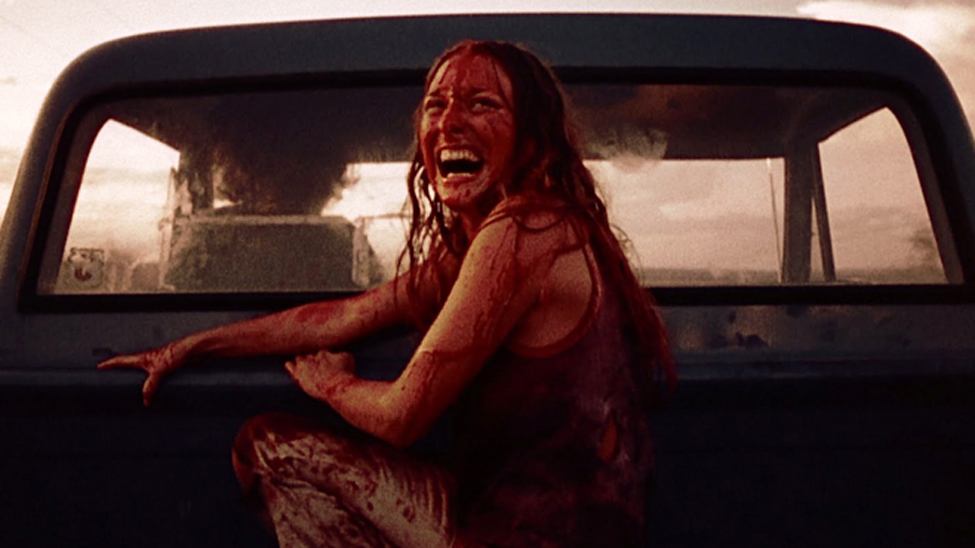
Contrary to some aspects of its reputation, The Texas Chainsaw Massacre is a very well made film. It is shot really nicely, with a pretty active camera, rather than a propensity for stationary shots favoured by many horror films. The camera is never frustratingly dynamic in its movements though, it always helps to add to the tension in the film, rather than aiming to cheaply build tension through obscuring parts of the action. The film relies a lot on fast paced editing to amp up the stakes as well as push the action pace-wise to a fever pitch. That editing is largely responsible for perhaps the best moment in the film, a chase scene which quickly flits between the fleeing heroine and Leatherface, culminating in a little chainsaw on door action. Thematically, the film makes some interesting connections between animal slaughter and the slaughter of the teen characters, which helps to hold interest through the first period before the murders start up. Once they do though, this theme is rife, reinforced by costuming, the method of the murders and how the bodies are disposed of. The brutality of the film takes on a new layer when considered in relation to the themes of animal slaughter, perhaps explaining why the film and some of the actions in it are so crushingly brutal and seemingly devoid of all purpose. Killing in the film feels wholly unnecessary. This aspect of the film is the one that has stayed with me since I saw the film and is one that I think is neglected in a lot of discussion of the film. As a villain, Leatherface is perhaps a little overshadowed by his reputation, in the fact that despite the violence he unleashes, he is plot-wise somewhat inconsequential. But he’s a terrifying physical presence and his jerky and inhuman movements are totally chilling.
Verdict: The Texas Chainsaw Massacre is as terrifying as its reputation promises. At one point after a particularly unexpected slaying I was peeking behind my couch to double check Leatherface wasn’t back there. There are some missteps for sure, but it’s a classic of the genre and feels a lot more modern than the mid-70s proto-slasher that it is. Pint of Kilkenny
Progress: 125/1001
Related beermovie.net articles for you to check out: Halloween Special… Halloween and The Exorcist.
Like what you read? Then please like Beermovie.net on facebook here and follow me on twitter @beer_movie
Secrets and Lies

Mike Leigh is known as one of the leading lights of British social realism and Secrets and Lies (1996) is generally considered to be his best film. The film was feted at Cannes upon release and continues to be discussed and revisited extensively inside film culture and criticism.
Secrets and Lies is a film of two totally separate halves, clearly delineated by a single scene. I’m not sure I’ve ever felt so differently about two halves of the same film. The first feels very domestic and at times like an episode of a soap opera, with a strange over-acting, mugging style of performances. This half of the film is almost totally without incident, setting up the three disparate storylines you know will cohere in the end, but seeming to take an interminable amount of time getting there. However just when you feel destined for a mind-numbing experience, Leigh, along with actors Brenda Blethyn and Marianne Jean-Baptiste deliver one of the better scenes of film history. I’ll avoid giving away too much detail for fear of spoilers, but it’s is a first meeting in a cafe, apparently mostly improvised in a single take. They meet and run the gamut of emotions – apprehension, awkwardness, comfort, relief and cautious affection. The two performers establish a great dynamic and blow everything up to this point away. This scene is perhaps the single greatest argument against the notion that realist films somehow equal boring. From there, the film seems to breeze by. Not because it has gotten ‘lighter’ in any sense. If anything the heavy themes are explored in more depth from this point on. But because the film has some much needed dynamism to it as new relationships are formed and impact on all of those built up so slowly in the first half of the film. This all culminates in a family BBQ that takes up most of the film’s last half hour. Just like the cafe scene, here is a sequence that is riveting on the surface level, but which also sits atop of untold depth both thematically and in terms of wrapping up the film’s plot.

The obvious thematic concern of Secrets and Lies is a focus on identity, but the concept of class and class relations is also prevalent. Notions of identity are examined through the prism of a family, like so many, straining at the seams or already broken. Part of this is an establishment by Leigh of an example of intense familial loneliness that is actually quite devastating to behold. From there it interrogates age old themes such as what defines a person and how that definition comes in opposition to those around them. Typical themes that are examined through what I think is a relatively atypical manner (again, I’m trying hard to avoid spoilers here). Similarly traditional notions of class are both parodied via exaggeration and inverted throughout the film, always reflecting and challenging those themes of identity. There is a third, very simple theme of the film too: families are totally fucked up. The film totally nails that one. Performance-wise, the film dispenses with much of the understatement so prevalent in realist film. Brenda Blethyn’s performance is a brilliant, if strange one. Through the first half, her over the top, dottering and mentally fragile mother is frequently distracting. But seeing that aspect of the performance in a new light after the rest of the film suggests it’s an effective approach as a whole. At times she is crushingly tough to watch as newfound emotions overtake that earlier dottering quality. Timothy Spall is equally good in what is perhaps a less-showy role, his photographer character provides a unique lens for the film to be seen through, as well as attempting to provide a sense of stability to the mess of a family swirling around him. And he slays an almost Shakespearean soliloquy toward the end of the film that in lesser hands would have been cringe worthy, but here it recounts the concerns of the film as well as provoking additional consideration about them.
Verdict: In the end, the achingly dull first half of Secrets and Lies is well worth enduring for the exceptional craft and heart of the second. Perhaps on a repeat viewing, the first will actually enhance what comes after it. For a thematically dense, but not tiresome drama you can do much, much worse than this. Pint of Kilkenny
Progress: 124/1001
Related beermovie.net articles for you to check out: MIFF 2014: Jimmy’s Hall and CIFF 2014: Eastern Boys.
Like what you read? Then please like Beermovie.net on facebook here and follow me on twitter @beer_movie
 Beermovie.net