Quick Review: The Sixth Sense
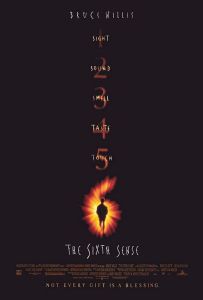
I caught The Sixth Sense (1999) for the first time the other day. As I was holding my baby at the time, I couldn’t take notes as I usually do, hence this shorter than average collection of thoughts.
The Sixth Sense is of course the film that saw a relatively young M. Night Shyamalan burst onto the scene. From there, he has turned into one of the most interesting directors working today with a range of well-received thrillers sitting alongside other works considered amongst the worst ever screened in a cinema. Of course it is basically impossible to watch the film now, even as a first-timer like me, without knowing the big twist at the end. It would have been great to have seen the film without knowing it, and having that knowledge does influence every aspect of watching the film. But that simply means the film operates on a different plane than it did when breaking out in ’99. No longer is it a buzzed about film that is going to blow your mind. Now it is a well made, vaguely Hitchcockian thriller, but with bonus supernatural overtones. It is predicated on a rather stupid central premise though, which the filmmaking team does a good job of overcoming.
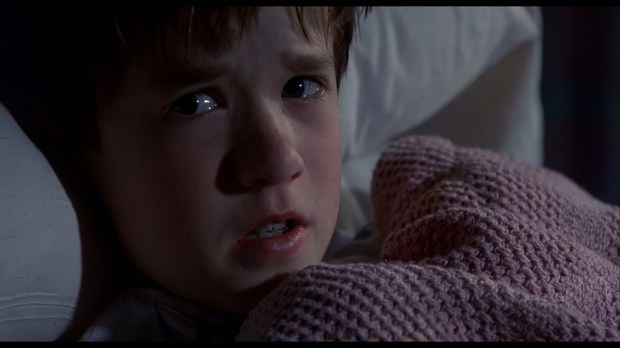
Bruce Willis gives an excellent performance here, perhaps the best of his career. There’s something heightened and otherworldly about what he is doing, which plays well in retrospect. Haley Joel Osmond is likewise excellent, nailing the big lines of the film and sucking you right into the ‘creepy kid’ elements of the story, which are the best parts of the film. The script is good at establishing Osmond as a troubled kid, though overall it is a little up and down. Those creepy kid bits are also enhanced because they give Shyamalan license to really show off his stylistic chops as a visual storyteller. Overall the film is a throwback in terms of both tone and look, in particular recalling The Omen (1976) for me.
Verdict: There is no denying that watching the film for the first time today, knowing full well where it is going, dilutes the experience of this story. It certainly doesn’t make it a bad film. But it reduces it from classic status to atmospheric, slickly made thriller but no more. The elements are all there. But it’s just a touch too contrived to totally cohere into awesomeness. Stubby of Reschs
Progress: 131/1001
Related beermovie.net articles for you to check out: The Omen and The Happening.
Like what you read? Then please like Beermovie.net on facebook here and follow me on twitter @beer_movie
Holding the Man

Holding the Man (2015) is an Australian drama based on the true story of Timothy Conigrave and his long-term partner John Caleo. The story previously reached the stage in a play written by Conigrave himself, and here it is Neil Armfield of Candy (2006) fame bringing it to the big screen.
The film takes place 70s and 80s Melbourne and Sydney. Needless to say attitudes toward homosexual relationships have changed a great deal in that time. Holding the Man succeeds on some levels at bringing that out, but also falls short on a few key parts of it. The film is quite slow to get going and the pace of the narrative is laborious throughout unfortunately. It struggles to establish a sense of place, the school environment for young gay men never feeling fleshed out or explained. Conigrave and Caleo’s connection and love story is the major strength of the film early on. But just when this is being established really well, the story jumps ahead a decade or so. This calls to attention the major issue with the film’s structure, namely the time-shifts. In a film covering a timeframe as long as this, it is inevitable that they will be required but they don’t work. The initial jump strips away a lot of the power in the love story, which to that point was the best part of the film. There is too much time between the shifts, so you forget if the story has gone forward or back, leaving the viewer (well this viewer), confused. The aspects of the film played with a lighter touch play well. It’s cool to see a funny gay sex scene, where there is not a need to portray it as overtly sexy or serious, whilst the fun times with the university gay rights advocacy group channel the joyful spirit of Pride (2014) for a time.
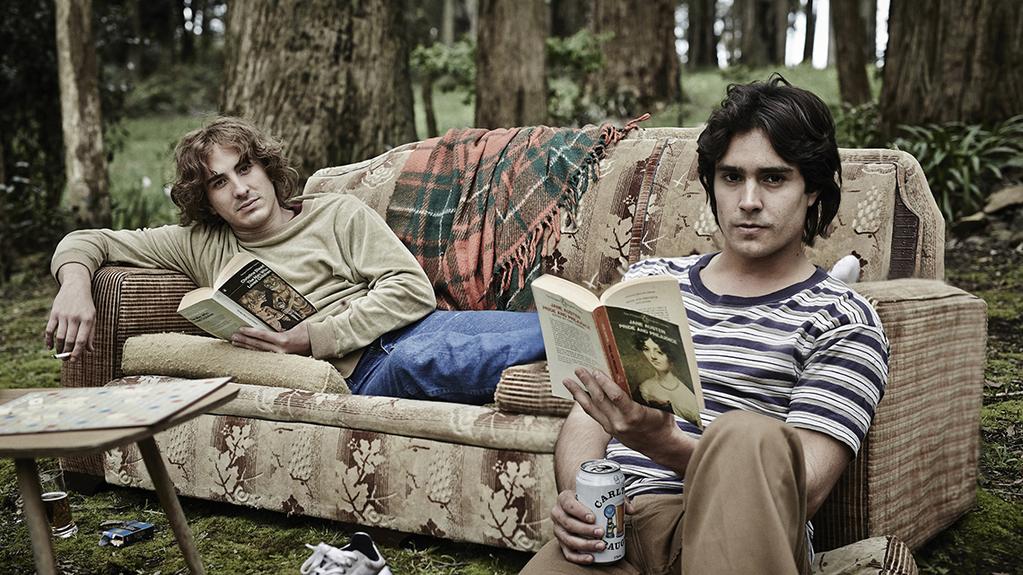
As well as being a love story, the film also presents the devastating impact of AIDS during this time period. We see this in the connection between Timothy and John, how this evolves as the disease plays a greater role in their lives, but also more broadly, in the depiction of other men with the disease and the hospitals they spend their final weeks. The portrayal of the disease, and its bearing on the men that contract it, is truly crushing. Although it’s a minor part of the film, it is inspirational to see the doctors and social workers, working on the frontline of AIDS services back in the day. At other times though, the film struggles to find the tenderness and emotion that should be so plain. Eventually the film lands that with its finale, but moments throughout the film like the wedding dance between Conigrave and his dad, played by Guy Pearce, which is tender and gets to the heart of the story, are far too rare. If there is one overwhelming reason to see Holding the Man, it is the performance of Ryan Corr. Initially, he does a great job of establishing the world of the film. He is an awkward teenager, seemingly comfortable in his sexuality, though not so much in life more generally (like 95% of teens I guess). There is a mixture of confidence and insecurity in Conigrave and Corr is able to draw both of those aspects out and occasionally combine them in a really impressive way. Aside from some slightly dusty turns in minor roles, the cast is excellent overall. It is so good to see Anthony Lapaglia doing his thing. The dude has gravitas and we don’t see him in enough. Sarah Snook and Guy Pearce are both excellent, as they pretty much are in everything, though both of their characters are very minor in terms of screen time.
Verdict: Even though it’s not really a story that has been told a lot, Holding the Man often feels pretty tired in its telling. However the performance from Ryan Corr is borderline transcendent and worth the price of admission alone, not to mention that the film is legitimately affecting when it manages to eventually find the heart of the story. Stubby of Reschs
Monty Python’s Life of Brian
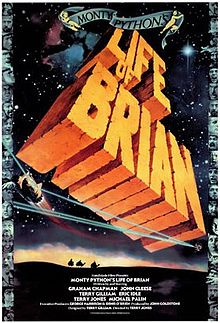
Monty Python is one of those institutions you were either introduced to at a young age and you join in the obsession, or they completely pass you buy. Given watching Monty Python’s Life of Brian (1979) was my introduction to the troupe, you can guess where I land on that spectrum.
The film takes a more is more approach to the joke count. The jokes bombard the viewer and it is hard to keep up. To be sure, many of them don’t land, in fact I would say most of them don’t. But every so often something stands out from the base level of silliness, with a level of inspiration that makes it plain why the Monty Python crew are held in such high regard by many. Unlike many of the great comedies, the jokes are really only on one level though. They mainly come from the witty silliness of the script. There is the occasional thematic hit, on religion for example, but even these are kept very light rather than genuinely subversive. This lack of subversion does date the film somewhat though with jokes using Jewish slurs, focused on a potentially trans character and some iffy rape jokes sticking out. This is not to say they were designed to offend, but they feel more dated because there is little attempt to make subversive points through the use of these ideas.

Despite the comedic writing being quite tight, perhaps the most endearing element of Monty Python’s Life of Brian is the slapdash, slightly anarchic quality that it has. Random storylines come and go with nary a care in the world, the comical Judean People’s Front takes centre stage and actors play a procession of different roles. It’s not really the kind of film where performances particularly stand out. But John Cleese’s manic energy and effort in each scene is tops. In addition, Graham Chapman as Brian, brings a charming boyish naiveté to that role. There are a couple of cracking tunes as well. I loved the opening theme whilst the final song, “Always Look on the Bright Side of Life” which accompanies perhaps the film’s best visual joke, brings back personal memories as it was the song that closed my pop’s funeral.
Verdict: All things considered, Monty Python’s the Life of Brian did make me giggle a fair bit. So on one level, mission accomplished. But beyond that, there is not really that much there, which is perhaps why this review is on the slightly short side. It’s a very well done, silly comedy. Not much more to say than that really. Stubby of Reschs
Progress: 129/1001
Related beermovie.net articles for you to check out: Mr Hulot’s Holiday and Groundhog Day.
Like what you read? Then please like Beermovie.net on facebook here and follow me on twitter @beer_movie
SFF 2015: Love and Mercy

There are many Beach Boys fans out there and I suspect that these days there are even more Brian Wilson fans. So a biopic like Love and Mercy (2014) seems a no-brainer. Thankfully though, this film for the most part eschews the tired structure and beats of the music biopic.

There is no attempt to cover Wilson’s life from cradle to grave. Instead the film flits back and forth between two periods of Wilson’s life. In one, Wilson is played by Paul Dano, as he progresses from teen surf-pop hearthrob, to “Pet Sounds”/”Good Vibrations” sheer musical genius, to man struggling with a multitude of demons. In the second part of the film Wilson, this time played by John Cusack, is under the hold of rogue psychiatrist Eugene Landy (played with cartoon villain glee by Paul Giamattti) and finds hope through Melinda Ledbetter played by Elizabeth Banks. The narrative is a little patchy and occasionally it pitches into the other story thread just as you were getting really engrossed by the first. Despite those quibbles though, it is such a relief that the story is told with an attempt to tell something different to the biopic norm and to really get deep into the details of two parts of Wilson’s life. The film also ends on a totally pitch perfect note. As the credits roll, so does a live performance of Wilson singing the song that the film takes its name from. Not his most famous track, but the simple beauty of it pierces through and reaffirms that all the horrible things that took place in the film, all the exploitation of a mentally ill man, happened to a real person. A really beautiful person with really beautiful art inside of him.

So much of the attention that Love and Mercy has attracted has focused on Paul Dano and John Cusack. With good reason as well, they are both excellent. It is Dano who grabs you first. His paunch and haircut are the perfect mimic of Wilson circa “Pet Sounds”. Dano is such an incredible actor that he immediately recalls Wilson, but thankfully does not simply lazily impersonate him, instead building the aura surrounding the musical genius, through his wild and utterly brilliant work in the studio. Conversely, Cusack as Wilson jars initially. Partly it’s because we have already seen Dano, so the initial reaction is a simple ‘that dude looks nothing like Brian Wilson’. But if anything, Cusack’s performance is even better than Dano’s. Without overplaying it or resorting to histrionics, Cusack conveys a broken man. One ravaged by mental illness who is desperate for a way out and sees it in Melinda. One who has creative brilliance and heart, but it is buried under decades of abuse. As good as both of those men are, for me this is Elizabeth Banks film. She is an utter star in it, taking what could have been a side character and turning her into the powerhouse heart of the film. An emotional, strong and resilient woman who literally saves the life of one of the greatest musicians of our time.
Verdict: Anchored by three strong performances from Dano, Cusack and the incredible Banks, Love and Mercy is well worth your time, especially as it does away with at least some of the formula you may expect. An affinity with the music of Wilson or the Beach Boys may help to engage you, but it is certainly not a prerequisite. Stubby of Reschs
Related beermovie.net articles for you to check out: SFF 2015: Tangerine and SFF 2015: The Assassin.
Like what you read? Then please like Beermovie.net on facebook here and follow me on twitter @beer_movie
SFF 2015: Tangerine

Tangerine (2015) was one of two official competition films that I saw at the Sydney Film Festival. The film was shot entirely on an iPhone 5, a fact that frankly filled me with a fair bit of trepidation. For every interesting stylistic experiment we see released, it feels there are three or four gimmicky flicks that just look ugly.
Thankfully on that front the trepidation was unfounded. The film looks surprisingly good, dynamically shot, avoiding too much (or indeed really any) gimmicky shaky-cam. And indeed, the use of the iPhone is more than just a gimmick in this case. Director Sean Baker elected to use the everyday piece of technology in order to help put the inexperienced cast more at ease with what was going on. Initially the performances do feel a touch stilted. But I think it is actually more part of the audience getting used to the dialogue. It is not the overwritten, honed-to-perfection pitter patter we are used to. Rather, this feels authentic, the characters seemingly talking in their own voices, using their own lingo in conversational rhythm which is true to life, if not always true to cinematic convention. The use of the iPhone adds an additional layer of authenticity as well, with the grainy finish of the shots (that are never distractingly low in quality) feeling like it suits the story perfectly. The film doesn’t look boring either. The toying with shooting technique feels refreshingly playful, rather than being the point of the entire experience. Some scenes set to energetic music feel like really great music videos while the camera is sped right up in a couple of sequences to enhance what is taking place onscreen.

The main plot of the film follows transgender sex worker Sin-Dee, who has just been released from prison, only to discover her boyfriend is having an affair with a ‘fish’ (a derogatory term in the trans community for a cis-woman). What follows is essentially a day long journey to try and find this woman and confront Sin-Dee’s boyfriend. Along for the ride is her friend Alexandra, an aspiring musician trying to keep Sin-Dee from getting herself into too much trouble, whilst attempting to drum up support for a gig she is playing that night. In terms of writing, the film is really well done. It elicited many a laugh from the big audience at the State Theatre, predominately through the building of characters and getting the crowd to love them or their approach to life. There is also a subplot involving an Armenian/American cab driver, who pays for sex with Alexandra and Sin-Dee. On the surface, an Eastern European family man frequenting transgender sex workers feels like it could be an overwhelmingly cloying narrative strand. It never plays out like that though. It is a really well written part of the film, and we get a sense of his journey beyond the span of this single day. He is also part of some of the best scenes in the film, including a sex scene in a carwash that is loaded with meaning to the plot. The result is that the film has three main characters to feel invested in and want a positive outcome for. There is an occasional emotional element that does not entirely ring true with what has come before. But that is a minor storytelling quibble in a narrative that is dominated by an original approach.
Verdict: Sharply shot and with a level of lightly drawn authenticity that is pretty rare, Tangerine is one of my most recommended films of the festival. To wrangle the elements together to something that looks so great without ever feeling the slightest bit gimmicky, is a pretty darn good achievement by Baker and co. Stubby of Reschs
Related beermovie.net articles for you to check out: SFF 2015: Necktie Youth and SFF 2015: The Assassin.
Like what you read? Then please like Beermovie.net on facebook here and follow me on twitter @beer_movie
SFF 2015: Necktie Youth

As one part of this year’s event, Sydney Film Festival director Nashen Moodley delivered a focus on South African cinema. The only film of this program stream I managed to catch was Necktie Youth (2015) from young director Sibs Shongwe-La Mer.
The film focuses on a group of young affluent Johannesburg residents, going about their relatively shallow day to day lives, though with a pall cast over them following the suicide of a friend a year earlier. A suicide that was live streamed online no less. The film sets up the stark social strata of present day South Africa with a clear good and bad side of the tracks. Most of the film is spent with wealthy youth, essentially whiling their day away, drinking, smoking drugs and having sex. Some of the film consists of the various characters recounting memories of their dead friend direct to the camera. This allows a contrived air to seep into some of the film, dropping into cliché where there had been an aggressive lack of it before. There is also a struggle in that many of the characters in the film are really unlikeable, which when combined with some sections having that contrived feeling, means that some of this is a bit of a slog. Overall though, the story is not afraid to show the toughness that life can bring, to lay it out in the open before the viewer. It is at times an unflinchingly tough watch. It finishes on a bold note too. One that shocks initially and then leaves you contemplating the structure of the film and how the story came to be told.

There are some incredibly striking sequences in the film. It is shot in black and white which somehow makes the film feel more realistic, placing the viewer on the street with the characters without distraction. On a number of occasions Shongwe-La Mer employs the technique of having a succession of beautiful shots scroll through the screen whilst someone delivers something approaching a soliloquy via voiceover. Dialogue pieces such as these are incredibly hard to write, but they never feel tiresome or like they are trying to hard to convey a depth that is not there. At times they feel like a rapper at the top of his game, delivering an artistic, rapid-fire summation of life. But they always progress the story and the characters, never just being there for the writer-director-star to show off his chops. Overall the writing is both the major strength and weakness of the film. The quality of the writing in regard to the characters varies quite a lot. The best ones feel totally natural and engaging. But others feel overtly scripted and stilted. So when the film is following what I guess you would call the two lead characters, September and Jabz, it is utterly engaging and the writing so sharp that just chilling with them going about their day is worthwhile. Unfortunately the sections of the film focused on other characters feel like a chore in comparison.
Verdict: The best sequences of Necktie Youth were amongst the best I saw at the Festival. Unfortunately the writing is not able to maintain this level of excellence for the entire running time. But the lasting impression, due to the creative quality of what is on offer, is that Sibs Shongwe-La Mer is a talent to keep an eye out for. Stubby of Reschs
Related beermovie.net articles for you to check out: SFF 2015: 54 Director’s Cut and SFF 2015: Goodnight Mommy.
Like what you read? Then please like Beermovie.net on facebook here and follow me on twitter @beer_movie
SFF 2015: 54: The Director’s Cut
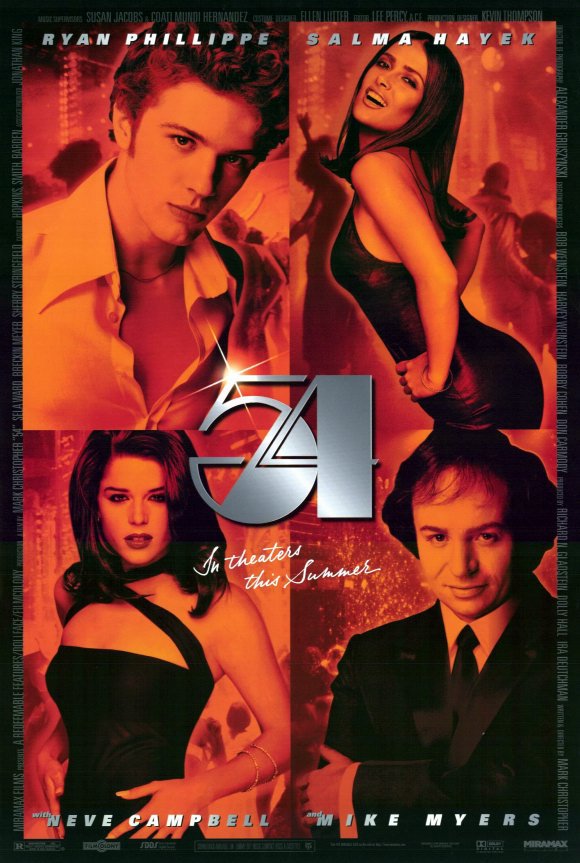
Many people will recall the original version of 54 (1998), and even more will recall the theme song “If you could read my mind” which was a huge hit. Well now 54: The Director’s Cut (2015) has surfaced and gotten a fair bit of festival buzz. Let’s face it, Director’s Cut is more often than not a meaningless term. But from what I understand, this truly does reinstate director Mark Christopher’s more sexually complex original vision that was butchered by the studio.
 Having never seen the original release, I was not entirely sure what to expect from this director’s cut, or even if it was worthwhile for me to see. Turns out that it really was a worthwhile film to make time for at the festival. For starters, this version of it is a bit of an interesting experiment. The film quality differs wildly between the sequences in the original release and those new to the director’s cut. As such, each new sequence is loudly announced by a pronounced drop in film quality. Whether or not this was a budgetary issue in putting out this version, or a conscious choice, the result is that the film feels almost experimental, a commentary on the concept of director’s cuts. At first the technique did not work at all for me, taking me out of the world of the film. That never really changes, but the announcing of the new scenes by the end of the film had me leaning a little closer to the screen, anxious to see what the studio had vetoed the first time around, in the knowledge that it would either be interesting in and of itself or at the very least, worthwhile to ponder more.
The very New York centric story follows Shane O’Shea, played by Ryan Philippe. At the start of the film, Shane moves from the much more suburban Jersey, to New York. There he finds himself right in the middle of the hottest club in the 70s, Studio 54, run by Mike Myers’ drug addled Steve Rubell. On one level the film tracks Shane’s fun and disco coming of age alongside the ups and eventual downs of the club. But it’s also about a societal awakening, a breaking down of barriers of sexuality, a time when a new paradigm was fast overtaking the tired old one. Though this pace would obviously slow, as we are still facing some of these tired old attitudes and perceptions today. The characters encompass sexual fluidity and ambiguity that is rarely seen in mainstream film and this is clearly something that has been re-emphasised by this cut. Thankfully too, because it is what sets the film apart from more conventional coming of age stories.
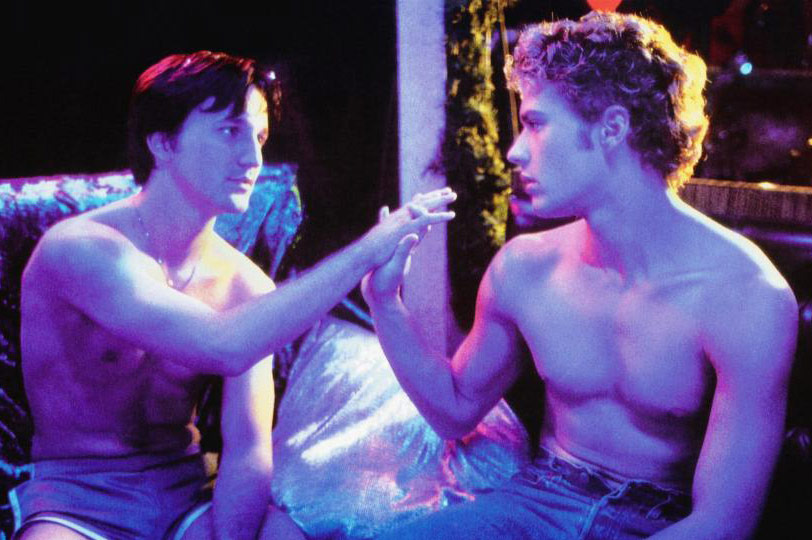
Ryan Phillipe seems to be a relatively maligned dude, despite the fact he has done good work in films such as The Lincoln Lawyer (2011) and Stop-Loss (2008). But this is certainly his best performance. He nails that late-teen awkwardness, wanting to party and experiment but not being sure how. The character is a really well constructed and written one, the audience sympathising with his naiveté no matter how daft some of his life choices occasionally appear. Selma Hayek and Breckin Meyer are also good as the young couple who are Shane’s guides through this very new part of his life. They show him the ropes, invite him into their homes and prove staunch allies no matter what. Mike Myers and Neve Campbell were probably the biggest names on the cast, though their roles are smaller than the marketing of the time would have you believe. Both are good though, especially Campbell as a star who threatens to sweep in and provide the film with a much more conventional third act.
Verdict: Has this new cut of the film unearthed a long lost, stone-cold classic? No. But it does deliver a coming of age story you rarely see (read a bisexual one basically). It also delivers laughs, great music and the odd heartbreaking moment. A worthy watch, both for those who have seen the previous cut and folks like me who come to it having never seen the originally released version. Stubby of Reschs
Related beermovie.net articles for you to check out: SFF 2015: The Forbidden Room and SFF 2015: Corn Island.
Like what you read? Then please like Beermovie.net on facebook here and follow me on twitter @beer_movie
Avengers: Age of Ultron

In any other year, Avengers: Age of Ultron (2015) would be the biggest release by far. This year there is another franchise looming large on the horizon that comfortably takes that honour away. But an early-ish release date on the calendar and a close to perfect Marvel track record has expectation sky high for this one.
Unlike the first film, there’s no easing in to be had here. Instead, we find the crew already together, mid-battle in Eastern Europe. Being thrown in the deep end engages straight away, ramping up the exhilaration. However it also takes away a lot of the charm that was in The Avengers (2012) as the new characters were introduced and relationships established. Obviously that level of origin story grounding was never going to be required in this film. It suffers as a result though and perhaps it would have been better to have some new members of the gang to introduce from the start. In addition to the action, the overwhelming take away from the first sequences is that this will be a fun film. The gang are all cracking jokes and taking the piss out of one another. The packed screening lapped up basically every one-liner, drawing at least guffaws and on occasion applause. In the end, I actually feel this film has too many quips and jokes for its own good. Particularly toward the end, this element of the film takes over and tonally what should be a tense action packed payoff instead feels like a buddy comedy, which can’t help but lower the stakes. Ultron is a very strong villain. Even when he looks like a knock off Iron Man, the robot has a chilling presence. Following the character’s creation, the film inevitably shifts its focus elsewhere, which leaves the villain a little undercooked and the film a little slighter as a result. A similar criticism can be made of the film’s thematic focus. Stark’s creation of Ultron recalls the depth of Captain America: Winter Soldier (2014), but that is all too quickly done away with for buddy fun and the LOLs.

In comparison to most Marvel films, the action in Avengers: Age of Ultron is exceptionally fast and kinetic and not just when Quicksilver is involved. There are a bunch of great, big action sequences here and for the most part, everyone gets their chance to show off and shine a little. However, it is strange to pinpoint why Whedon chose to accelerate the action like he did, because it makes a lot of it difficult to follow. Indeed right from dropping the audience in from the get-go, the film doesn’t let up, with a huge action set piece teased in the trailers coming remarkably early. It’s a little too much, which is why when the film slows down to actually bother telling some story, some of the best sequences of the film arrive. In particular one sequence focused on Hawkeye revealing a secret side is a definite welcome change. Actually the increased presence of Jeremy Renner as Hawkeye is a major plus for this film over the first one. He brings a very human vibe to a superhero tale and his self-deprecating humour stands apart in a sea of zingy one-liners. One of the other standouts is Aaron Taylor-Johnson as Quicksilver, probably outshining Elizabeth Olsen’s Scarlet Witch to some degree. It’s good to see Johnson returning with a little of the charisma and charm that his Godzilla (2014) everyman was totally devoid of.
Verdict: In the end, Avengers: Age of Ultron works well as fun geek fan service and as a continuation of the Marvel Cinematic Universe. But it’s no more than that from a studio that we have come to expect more from, as the more interesting ideas (politics, bold sci-fi plotting) are dispensed with too quickly. Stubby of Reschs
Related beermovie.net articles for you to check out: Captain America: The Winter Soldier and Guardians of the Galaxy.
Like what you read? Then please like Beermovie.net on facebook here and follow me on twitter @beer_movie
It Follows

In these days of VOD release dominance for genre films, it’s great to see an indie horror film like It Follows (2014) getting such a solid release around the world. Here in Australia it’s playing in a fair few cities and I know it has performed very well in the States too.
The film follows Jay, a young woman infected with a malady following sex with her new boyfriend. A lot has been made of the fact ‘it’ is transmitted through intercourse, resulting in an expected focus on the theme of STDs and claims that the film is anti-teen sex. The latter is not really supported by the film, but there is no doubt there is a cautionary aspect to the film in relation to STDs, though it never feels like uber-obvious preaching. On one level this thematic concern is an extension and amplification of the sexual politics of classic 80s slashers, where intercourse was usually quickly followed by a brutal death. But It Follows also reinterprets this notion and updates it for today. The film accepts that teen sex happens and that it can be really fun and grand. That can be true and ‘it’ can still be transferred through the act. On this front, and a range of others, the film feels perfectly attuned to teen life. We barely see any parents in the film, which emphasises the teen focus, not being distracted by the potential passing of judgement from the disapproving olds. And just as teenagers often do, it’s a really nice touch that most of her band of friends believe Jay’s plight pretty much straight away with very few questions asked, when there is not that much evidence to support her. Stripping away the subtext, on a surface level the threat at hand is awesomely creepy, an enemy that is slowly walking toward its prey at all times. It might not be there today or tomorrow, but it will arrive eventually. Unfortunately though, the ‘rules’ of the threat are never fully established. Occasionally ‘it’ sort of just stops, and at others it seems to slightly cheat on the walking only policy. They are minor quibbles, but once that distract from the tightness of the film and its concept.
In terms of pacing, this is surprisingly slow, and a little patchy. It actually feels a little plotless to me, not functioning as a smooth long sweep of a story, but rather hopping from one incident to the next. Wait for ‘it’ to show up, scare the bejeesus out of you, move to a new location, ‘it’ shows up again. This is totally terrifying, but it also just feels aching for a richer incidence to the narrative. However director David Robert Mitchell is totally in control of his audience, deftly placing them where he wants them. I noticed one sequence where the dialogue felt especially stilted and the atmosphere had been sucked right out of the film. Then ‘it’ all of a sudden shows up and all of the atmosphere rushes back into the film with a greater force given that Mitchell had made you complacent with the preceding scene. The camerawork is a little over-done at times, especially a repeated fondness for the camera wheeling around in a wild circle. It’s a gimmicky, too funky touch that does nothing to dial up the tension.

Whilst overall it is a little difficult to see why the film particularly necessitates the hype it has garnered (though as a fan of the genre I’m not complaining), there is no doubting there is a level of detail and artistry that sets It Follows apart. The look of the suburbia is just slightly off, adding to the whole vibe of the film. Little touches such as the furnishings all seemingly being a combination of retro and futuristic looking pieces for example. Whilst I would characterise the film is a very good one, I feel that the soundtrack is flat out great. The approach taken is a risky one and could have so easily distracted from the film or ‘signposted’ events a little too much. Instead the soundtrack by Disasterpeace lends a totally jarring and disconcerting backdrop to the imagery. In that way it is both a little similar and totally different, to Hans Zimmer’s score for Interstellar (2014). The score seems to assault you, not through sheer volume, but because there seems to be a raw physicality to it. It’s one of those soundtracks I rush straight home and look into if I buy a vinyl copy (turns out you can, though it’s a pretty limited run). The soundtrack feeds into what I would label the film’s denseness. Also fitting this mould is the incorporation of pieces of literature throughout, chiefly Dostoyevsky’s “The Idiot” and a parade of old sci-fi films on black and white telly. On a first viewing, it is hard to take in and incorporate exactly what is being said by these elements. But they function as nice window-dressing that I would like to unpack on a re-watch.
Verdict: It Follows is a really quite good and creepy as balls horror flick, albeit an overly hyped and definitely flawed one. However, if you have even the slightest interest in the use of soundtrack in film, it instantly rises to a must see experience. It may well end up being a modern classic in terms of horror soundtracks. Plus, get out there and support indie horror in cinemas. Stubby of Reschs
Related beermovie.net articles for you to check out: The Babadook and Patrick.
Like what you read? Then please like Beermovie.net on facebook here and follow me on twitter @beer_movie
Memento

Christopher Nolan is an exceptionally divisive cinematic figure. But before The Dark Knight Rises (2012) and Interstellar (2014) split opinion of him, he was beloved. And perhaps no film was more responsible for his adulation by cinephiles than the non-linear murder mystery Memento (2000).
At its simplest level, Memento is the story of Leonard, a man trying to solve the mystery of who killed his wife. The film is perhaps most famous for the manner in which its non-linear narrative literally unfolds. Leonard, who has amnesia, slowly pieces together what happened to his beloved and records the memories he needs to hold on to in tattoos. This structure, along with the performances, are the chief joys of the film. One issue for me is that both the structure of the film, and the establishment of Leonard as a character, means the success or otherwise of the film is predicated totally on the twist that is obviously coming. In the end it fell slightly flat for me, perhaps because I had seen similar before (though admittedly, they may have been made after this film). Having said that though, whilst the main twist has been seen plenty of times before, there is plenty of embellishment around that which satisfies here.

Coming relatively close to L.A. Confidential (1997), Memento represents the golden age of Guy Pearce as a Hollywood leading man. He continues to ply his craft in a range of really good supporting roles, but in terms of carrying a film, he is seemingly not held in the same regard these days. Here, Pearce conveys a man obsessed with routine and structure, two things he considers to be his salvation from the existential weight of his condition. Along with the excellent Carrie-Anne Moss, Pearce also brings a strong emotional core to his character which drives the narrative along and pushes it in different directions. I always like it when a film approaches a genre in a totally different way. Memento is a police procedural encased in a structure you would more associate with sci-fi. It’s a combo that works really well, even making the tired Groundhog Day (1993) style structure feel ingenious. Nolan chooses to start the film with the central mystery (seemingly) being solved and unfolding back from there, which to any fan of crime fiction, immediately invokes our favourite reveals at the end of crime stories. But the director toys with those expectations throughout, always a step or two ahead of us.
Verdict: Perhaps seeing it for the first time in 2014 has diminished the impact of Memento for me. On one level, I don’t quite see the hype. But on another level, this is a very good film, which feels nicely quirky and small in comparison to much of Nolan’s later work. Stubby of Reschs
Progress: 119/1001
Related beermovie.net articles for you to check out: House of Caine: The Dark Knight and The Rover.
Like what you read? Then please like Beermovie.net on facebook here and follow me on twitter@beer_movie
 Beermovie.net