Quick Review: The Sixth Sense
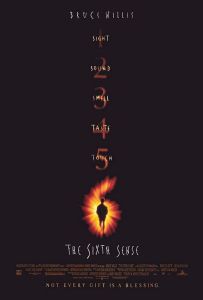
I caught The Sixth Sense (1999) for the first time the other day. As I was holding my baby at the time, I couldn’t take notes as I usually do, hence this shorter than average collection of thoughts.
The Sixth Sense is of course the film that saw a relatively young M. Night Shyamalan burst onto the scene. From there, he has turned into one of the most interesting directors working today with a range of well-received thrillers sitting alongside other works considered amongst the worst ever screened in a cinema. Of course it is basically impossible to watch the film now, even as a first-timer like me, without knowing the big twist at the end. It would have been great to have seen the film without knowing it, and having that knowledge does influence every aspect of watching the film. But that simply means the film operates on a different plane than it did when breaking out in ’99. No longer is it a buzzed about film that is going to blow your mind. Now it is a well made, vaguely Hitchcockian thriller, but with bonus supernatural overtones. It is predicated on a rather stupid central premise though, which the filmmaking team does a good job of overcoming.
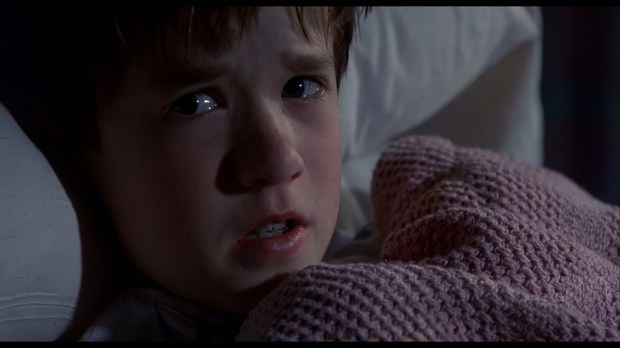
Bruce Willis gives an excellent performance here, perhaps the best of his career. There’s something heightened and otherworldly about what he is doing, which plays well in retrospect. Haley Joel Osmond is likewise excellent, nailing the big lines of the film and sucking you right into the ‘creepy kid’ elements of the story, which are the best parts of the film. The script is good at establishing Osmond as a troubled kid, though overall it is a little up and down. Those creepy kid bits are also enhanced because they give Shyamalan license to really show off his stylistic chops as a visual storyteller. Overall the film is a throwback in terms of both tone and look, in particular recalling The Omen (1976) for me.
Verdict: There is no denying that watching the film for the first time today, knowing full well where it is going, dilutes the experience of this story. It certainly doesn’t make it a bad film. But it reduces it from classic status to atmospheric, slickly made thriller but no more. The elements are all there. But it’s just a touch too contrived to totally cohere into awesomeness. Stubby of Reschs
Progress: 131/1001
Related beermovie.net articles for you to check out: The Omen and The Happening.
Like what you read? Then please like Beermovie.net on facebook here and follow me on twitter @beer_movie
Spectre
The James Bond movies were among the most formative of my film journey, hence making the effort to get out and see Spectre (2015) on opening day. I didn’t take notes as I wasn’t planning on writing a full review, so hopefully these thoughts aren’t too scattered.
 A lot of reviews of the film seem to boil down to, ‘well it’s no Skyfall (2012).’ It’s not, and that’s not the worst thing in the world if you ask me. Don’t get me wrong, I’m a huge fan of that film, despite feeling that it doesn’t deserve a lot of the plaudits that it received. But what Spectre does so well is return to the roots of the series. Roots that have been more or less ignored since Daniel Craig assumed the tux (which you may think is a good thing, and which I don’t think is wholly bad). The pre-credits sequence is an absolute cracker, Mexico City playing host to explosions, a Day of the Dead foot-chase and a duel in a tumbling helicopter that is legitimately breathtaking. Perhaps no sequence in the rest of the film is a slickly constructed and executed as this.
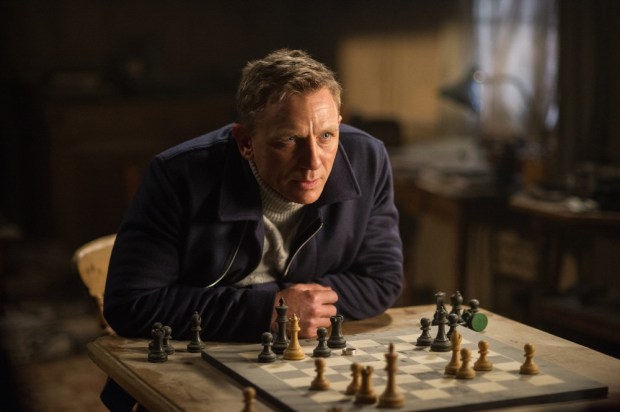
Where the film falls down, if anywhere, is a pretty patchy script. It does some things well. The Bond nerd in me adored the origin story the film lays down for an iconic villain I won’t name. In fact there are numerous little homages to Bond flicks past for fans to pick up on, without them ever feeling too wink wink or taking you out of the world of the film. But the script does lag at points and the film lacks narrative thrust for much of the run time. The film is hurt by being too long and for the plot being a pretty underwhelming retread of ideas we have seen in other films of late. For me though, this just felt like such a fun remix of so many of the past films I adored so much. There is a fast car, quips, Q, creative chases, silly henchman and a really excellent central villain. Though the film is hamstrung by trying to shoehorn that villain into the mythology that the series has been building up throughout the Craig era. It is unnecessary, and frankly part of what makes the film stand apart is that it is not wedded particularly to the Bond character built up over the last few films, one that does not really resonate with the folklore of the character.
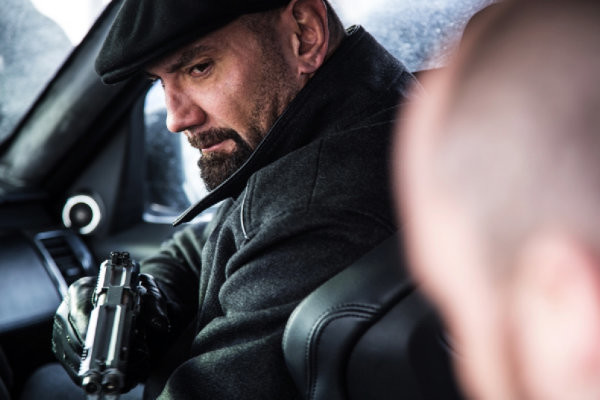 Performance wise it is the villains who stand out. Christoph Waltz is really good, especially given he has begun to feel like he is constantly playing the same character of late and here he offers something a little different. Dave Bautista wordlessly brings his pro-wrestling physicality to bear on the film in a couple of excellent sequences, including one aboard a train that is one of the better hand to hand combat sequences the series has ever offered up. Elsewhere, Andrew Scott is his typical excellent self, though it does feel like he is channelling his Moriarty from the Sherlock TV show a little too much. Lea Seydoux is very good as Dr Madeline Swann, a Bond girl straight out of the 60s. In the world of this film, that does not really bother me. You don’t watch this series for the progressive politics (though the film is an extended, though simplistic, jab at surveillance culture), but what frustrates me is the marketing obsession every time one of these films rolls around to assure us this is a very different Bond girl. Make no mistake Seydoux’s character is exactly the same as a majority of the Bond girls the series has ever brought to the screen. Ralph Fiennes as M and Naomi Harris as Moneypenny continue to impress as reinterpretations of those classic stock characters and I’m hoping they continue to play bigger parts in future films.
Verdict: This is the most Bondy feeling Bond film of all the Daniel Craig entries into the series. The story is neither here nor there. But the characters are fun, the chases thrilling enough and the set-pieces, though perhaps needing one more, are certainly thrilling enough. Pint of Kilkenny
Related beermovie.net articles for you to check out: Bondfest: Thunderball and Bondfest: Moonraker.
Like what you read? Then please like Beermovie.net on facebook here and follow me on twitter @beer_movie
Worth Watching September 2015
Well this Worth Watching is exceptionally late. As you may have seen, my beautiful son Theodore arrived recently, meaning writing and viewing is on the backburner for now. But I did manage to get through a fair amount of really good stuff in September, including digging into the filmography of Wes Craven. His passing really motivated me to explore his work more and I am loving it. There are a couple of 1001 reviews of his films in the pipeline too. Hope you’re all well and watching some cool stuff.
Worth Watching
- The People Under the Stairs (1991), Wes Craven – I adore the title and poster for this, and the film functions as a throwback in a similar vein. The genre mishmash hybrid of classic adventure, comedy and horror works much better than it really should. It is an interesting and highly political world Craven is operating in. Predatory landlords, the woes of capitalism, racial inequality and the American health system are all dealt with in a reasonable amount of depth. The film is simultaneously very grounded in reality, yet much of it takes place in a house of heightened gothic ludicrousness. Legitimately one of Craven’s best.

- Dial M for Murder (1954), Alfred Hitchcock – This is very classical, and very fun Hitchcock. Much plotting intrigue, an inversion of thriller conventions. As far as Hitchcock thrillers go, this is very much at the lighter end of the spectrum. Functions perhaps more as a mystery film than thriller. There is an extended murder sequence that shows his mastery – lurking in the curtains leading to sheer violence. Grace Kelly is luminous onscreen, a classical mysterious woman at the heart of the story.
- Deep Red (1975), Dario Argento – My intro to Argento. The synthy 70s soundtrack is as ace as advertised. This is a trippy film, plunging you into a totally different (and frightening) world right from the start. It’s a strange tonal experience, descending into almost slapsticky comedy at some points. The acting is a little patchy as well. But this is utterly stylish. A thrillingly put together fish out of water detective story. With much blood. Disturbing and otherworldly.

- Cursed (2005), Wes Craven – I am a sucker for a werewolf film and this teen take on the genre did just enough for me. There is plenty of roughness, especially with the script. But Craven clearly has a reverence for classical Hollywood horror which results in some decent imagery. The creature looks cool which is such a plus for a werewolf film and it is stylish on the whole. The acting in particular is really overtly stylised, a decision that does not uniformly succeed but makes for a point of interest at least. Rather uneven, with plenty of teen film silliness (a mirror maze anyone?), but Craven pulls it out.
- Persepolis (2007), Vincent Paronnaud & Marjane Satrapi – Gotta love this style of animation – feels hand drawn, playful, artistic and nicely unrealistic. The film combines a background rich with historical fact with a great burgeoning revolutionary for a central character. Coupled with the animation style, scenes seem to surf through events. Without ever feeling dry, it’s an insider’s view of the shifting atmosphere and tone of life in Iran. Nicely weaves in whimsical elements to better convey very real emotion and feelings. Autobiography in fleeting memories and experiences rather than a point A to B plot.
- The Town that Dreaded Sundown (1976), Charles B. Pierce – Really is an ace title for a horror film. Set in immediate post WWII, the film combines pseudo-documentary seriousness with exceedingly silly slapstick. The result is something that feels surprisingly modern. There is some great direction and iconography around the murderer, which makes it surprising that the character has not become more of a classic. The comedy interludes jar with the callousness of the killer and their murders. Much of it plays like a really good crime procedural novel. Also astute regarding how a community reacts to a killer in its mist.
- Focus (2015), Glenn Ficarra & John Requa – Starts off with a funky old school vibe, cool soundtrack and cityscapes. That sort of passes in the second half, but the film still gets by mainly due to the charm of Will Smith and Margot Robbie in the lead roles. Is good to see Smith playing a smooth, suave old school Hollywood type. There is a lot of fun banter between him and Robbie, who is utterly excellent. She conveys such a sense of fun and takes you along with her. It’s silly. But fun and frothy silly.
- Mission Impossible 2 (2000), John Woo – Starts off more as campy comic book film than spy flick. Russians, evil pharmaceutical companies and borderline super powered Tom Cruise. An interesting franchise in that it allows individual directors to retain their own style – Woo really works the slow-mo and some very non-blockbustery arty shots in here. Stylish as. Some great set-pieces as you would expect, the highlight being a hybrid chase/fight on motorcycles. There is also some cool plotting throughout in a charming throwback kind of way.
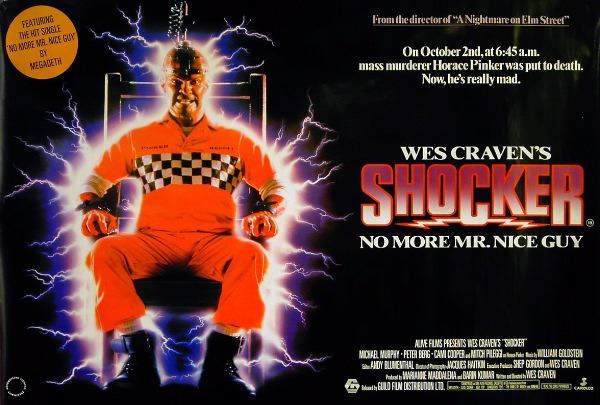
- Shocker (1989), Wes Craven – Starts with a power ballad and really hammers that teen film vibe early. Much of this feels like Craven remixing the tropes and hallmarks of Nightmare on Elm Street (1984), just not as successfully. So 80s, though more psychologically brutal than something I’d expect from the era. I like the idea of the villain being able to pass from one physical body to another. The last act is kinda bad. I’m a fan of this, though it has dated more than most of Craven’s filmography.
- The Town that Dreaded Sundown (2014), Alfonso Gomez-Rejon – So meta man. Mimics the structure of the first film as well as the real life reception of that film and its yearly screenings. Don’t like the change to the mythology, with the killer talking. Pretty frightening and looks great though. Stylish angles and shots. But that creativity does take you out of the world of the film a bit. Love the way it engages with the original and real life. Has quite a lot of resonance and heart to it. There is so much tension and genuine horror throughout that unfortunately the reveal at the end sort of clunks in comparison. Still, a great way to revitalise a long-dead property.
- The Great Beauty (2013), Paolo Sorrentino – This is mad arty and shit. About beauty in all its forms, including the horrific. Also pretensions and the breaking down of them. It’s quite funny too, in the way it skewers convention. Makes you stop and consider the themes, talent and the gulf between those that have it and those that really don’t. At some level, the imagery and situations depicted are quite disturbing. Sorrentino has a hell of an eye for cool looking shit. Exquisite, painterly, but unique. A dark comedy about maintaining a distancing facade and the inevitability of that crumbling.

- Red Eye (2005), Wes Craven – Rachel McAdams plays the world’s most uber-capable hotel receptionist. Script is a little shitty, especially at the start. Though the film does a food job of invoking national security concerns and using the airport/plane settings to heighten that. Craven does tension so well and he shoots even the arbitrary scenes in this film in a way that enhances that. Almost his take on a Hitchcock film. The switch in Cillian Murphy’s character is chilling. It’s a great performance, one that could have been too silly. A cracking little thriller.
- The Visit (2015), M. Night Shyamalan – A collision between a funny film about film and some relatively standard found footage scares. It’s well acted, the two young Aussie leads are really talented. Even if it never entirely works as a classical horror film, Shyamalan invokes a lot of classical tropes. But the doco stylings, unforced found footage conceit and the fact it never takes itself too seriously means this is his best film for an age (not that hard I know).

- Sicario (2015), Denis Villeneuve – A lean & brutal coiled spring of a film. It occasionally loses its story. In large part cause the characters we go into the film through are essentially powerless. Functions excellently as a rumination on the nature and fulfilment of violence. The fact that violence inevitably gives rise to violence. Also the willingness of America to export violence. Acting is really good, especially from Brolin & Del Toro. Blunt is good but it’s an awful female character really. It’s a dark essay shot in bloody glorious widescreen. Will leave you pretty battered and downbeat.
- Community Season 5 (2014), Dan Harmon – Acting is so strong, helps to pick back up these characters and this world so easily. Everything, including the performances, is delightfully meta. Alison Brie is a super underrated comedic performer. Perhaps no show has ever interacted with pop culture as well as this one. Most of the episodes are pretty creative stylistic exercises, toying with the form. Combines silly and pathos so well.
Not Worth Watching
- Mission Impossible (1996), Brian De Palma – Can really see the Bond influence on this one. Haven’t seen it in 15 odd years. Recalled not liking it, but decided to revisit after loving this year’s. It still doesn’t really work for me. Loads of clunky dialogue and dumb plotting. It’s not all bad. The score elevates the extended espionage sequences, the casting is super interesting and there are three excellent set-pieces. The approach is just not there as a whole though.
- Everest (2015), Baltasar Kormakur – Frankly this is a pretty appalling piece of storytelling, failing at the most basic level to spin a yarn. The film is unable to keep track of its characters and tell a cohesive narrative. It’s a film that should look cool in 3D and there are some cool images, but it’s dim and washed out to the point of being almost unwatchable. There are some good performances, Josh Brolin and Jason Clarke especially. But it also really wastes talent such as Keira Knightley and Sam Worthington. A strangely uneventful film with basically nothing to recommend it.

- Adult World (2013), Scott Coffey – An unbearably twee and hip chronicle of a pretentious wannabe artist. That’s hard to watch, even if it is someone I like as much as Emma Roberts playing the part. The film reflects its protagonist too much. The writing is really bad, comedic beats fall flat and the occasional insightful note about the creative process is more than drowned out. Gets a little more genuine as more characters are introduced and her self-centredness strips away to some extent. But there is no flow to what should be a breezy story. Quite labourious.
If you only have time to watch one The People Under the Stairs
Avoid at all costs Everest
Related beermovie.net articles for you to check out: Worth Watching September 2014 and Worth Watching September 2012.
Like what you read? Then please like Beermovie.net on facebook here and follow me on twitter @beer_movie
A joyous announcement & Back to the Future awesomeness
Hi All,
Just dropping in for a quick post here. Some of you may have already seen this news on my twitter or if you have on my personal facebook, but just wanted to share with you the exciting news that my wife gave birth to our first son Theodore Roy early on 16 October. Here is the happy and healthy little dude and me. All is going really well, though obviously plenty of adjusting going on.

Now obviously getting to the movies and writing reviews isn’t really my focus right now. I am hoping to get Worth Watching for September sooner rather than later and I have two podcasts recorded and half edited. But I won’t be writing here too much or visiting other people’s sites too regularly for the next little bit.
Though like many people I was taken in by all the buzz around the Back to the Future trilogy last week. They were pretty formative films for me, and the below two videos I really enjoyed as a big fan. You’ve probably already seen them, but if not, enjoy.
I hope you are all well, watching plenty of cool stuff and loving life.
Tim
Worth Watching August 2015
August turned out to be another fairly busy month on the film front. Patchy though, there were a lot of films I did not dig this month. 2015 releases were the focus, running the gamut from perhaps the best big budget film of the year so far, to more stuffy dramatic dross in a year that has seen its fair share. Be sure to share some thoughts in the comments section below. Also, this is a very late worth watching entry. Training for my first half marathon and getting ready for the impending arrival of my first child, has taken up plenty of my time (both delightful pursuits).
Worth Watching:
- Wet Hot American Summer: First Day of Camp (2015), David Wain & Michael Showalter – What an idiotic delight. Love how some of them are clearly older, but they stick with the pretence that this is a prequel. There is something so endearing about seeing Josh Charles rocking three popped collars, and the show as a whole actually. They did so well to get this cast back together, many are huge names now. New additions such as Michael Cera and Chris Pine revel in the silliness as well. Bradley Cooper is having a great time yucking it up. Utterly, deliriously joyful.
- The Big Lebowski (1998), The Coen Brothers – I don’t quite see the hype on this one, but I’m also not the hugest Coen Brothers fan in general. The astutely written script is very wordy, but also very funny with some eccentric storytelling. The performances, especially from Goodman, Bridges and Buscemi are really excellent. There is a quite formal construction to the narrative underneath the silliness. For all the clever wordiness, it was actually the more slapsticky moments that stood out a little for me.
- Girlhood (2014), Celine Sciamma – So refreshing to see a film set far outside the world of what we usually see onscreen. The film is at its best in its refusal to embrace the orthodoxy of what we expect from characters. The central character of Marieme is one of the most complex I have seen in a while. Film does not always flow as well as it could have, and it does feel like there were too many endings. In fact the main story seems to finish like 40 minutes from the end and the rest feels a little tacked on. But it’s great as a portrait of sisterhood and just a little lesser when it moves on from that.
- Mission Impossible: Rogue Nation (2015), Christopher McQuarrie – I’ve never really warmed to this series at all. But this is my kinda spy film. It’s serious, but doesn’t take itself too seriously. There is nothing too revolutionary, but it borrows happily from the best of the genre. Really just a succession of very good set pieces strung together, some of which (the underwater one, Cruise hangin off a plane) will live long in the memory. And then it ends on a boldly ‘small’ feeling note that feels so original in an era of huge samey climaxes. Simon Pegg’s presence works better here than in past films, whilst Rebecca Ferguson is the clear star.
- The Gift (2015), Joel Edgerton – Almost an unbearably tense film. At times plays like a horror flick, mostly a good thing, though I could have done without the jump scares. It’s a little wordy and slow to get going. Bateman is excellent, especially in the second half. This is probably his strongest dramatic performance. Edgerton has done very good work here. In his debut, the directing is serviceable, but the writing is excellent and responsible for a large part of the tension. Perhaps his best performance too. His character Gordo the Weirdo is difficult to pin down thanks to his performance and it makes the film. Love the old school thriller vibe to the sountrack, which heightens the genre elements.

- Sawdust and Tinsel (1953), Ingmar Bergman – Damn pretty. The framing and shot composition. Interesting tone, both absurd or heightened, but also grounded on a very strong emotional basis. A story of how theatre folk look down on circus folk. It’s an interesting Bergman entry rather than an all together essential one. Dreams, flashbacks and fantasies are all weaved in with the main narrative. At times a tough watch. Bergman not afraid to denigrate these characters in pretty blunt ways.
- The Woman in Black 2: Angel of Death (2014), Tom Harper – Does a good job, through sound and set design, of situating the story in WWII. Which is a great setting for a horror flick. Doesn’t just feel like window dressing either, but influences the narrative. There’s a reason big scary houses, lamps and staircases are horror staples and they all frighten here. Cool to see a female lead and Phoebe Fox is fine in the role, but her character lacks the magnetism of Daniel Radcliffe who really elevated the first. It certainly lacks some of the filmmaking polish and storytelling clarity of the first too. But the film gets by on its iconography.

- Last Cab to Darwin (2015), Jeremy Sims – Really excellent. Not sure why this has not gotten more love. The ‘road to death ‘ plot is conventional, but the relationships eschew convention and any shred of tweeness. Euthanasia angle is handled well for the most part. But it’s the relationships and commentary on Aussie identity that are where the film totally excels. Michael Caton has never been better, whilst Mark Coles Smith and Ningali Lawford are also really great. I don’t usually go in for guitar driven scores, but Ed Kuepper does an incredible job here.
- Friday Night Lights Season 5 (2010), Peter Berg – It’s not a good or a bad thing. But this season feels like more of the same. And a little like a show winding down. Expands the circle of characters well. Gives some decent plotlines to secondary characters too – Mindy has some great moments for example. Fells like a mad scramble to wrap up all the story threads. Once again they sorta fumble the state final too. Montage doesn’t deliver and again it looks really glossy. The very ending is a winner though, and satisfies as a close to what came before.
Not Worth Watching
- Begin Again (2013), John Carney – The man behind Once (2006) delivers a film far inferior to There is a decided lack of spark here, despite the cast. Feels very twee, Ruffalo’s early epiphany where he hears music in his head and a laborious shared iPod jaunt around London the some of the worst examples. Occasional flash of life from the script but it is very occasional. The relationships are all basically a cliché. Adam Levine surprisingly impresses on the acting front and his singing stands out. There are some rich ideas, but they are drowned in interminable the setups to get to each good idea. Then they skip over a lot of the best parts in a fucking montage. Dross.
- Project Almanac (2015), Dean Israelite – So hard for a found footage film not to feel contrived. This fails. Boring start, film doesn’t seem to bother trying to hook you. The jargon heavy script is uber dumb, confusing dudes just screaming ‘SCIENCE WORD, SCIENCE WORD’ for intelligence and world-building. The plot is illogical, weighed down by a lack of stakes and so much expository dialogue. Slapdash storytelling feels like an afterthought whilst they don’t bother at all with creating characters for you to care about. I kept waiting for the tension to ramp up but… nope.

- The Man From U.N.C.L.E (2015), Guy Ritchie – Much less fun than it should be, thanks mainly to a really flat feeling plot. Uninteresting characters, despite decent performances especially from Cavill and Vikander. The fact that more character development takes place in the closing credits than the rest of the film gives you a hint as to the issues. The dilution of Guy Ritchie’s style is continuing too, with nothing really telling you the film is one of his. No personal touch. As an accompaniment to action, the score is a high point though, heightening the proceedings in a very classical way. Feels like a lot of potential not realised basically.
- Home (2015), Tim Johnson – I think Dreamworks animation films are often underrated. Not this one though. The made up kiddie language of the alien Boos is annoying beyond imagination. After 90 odd minutes, it renders the film essentially unwatchab;e. The humour is tired – we have seen far better variations on an alien trying to eat CDs or brush teeth in the toilet. Though let the record show I did get a laugh out of how the world is imperilled by someone accidentally hitting ‘reply-all’. Aside from that, this is really dumb stuff. I want to punch this movie in the face.
- The Imitation Game (2014), Morten Tyldum – Tis the year of stuffy, mind-numbing British based biopics. This never quite reaches the ‘heights’ of The Theory of Everything (2014) but is a dirge nonetheless. Starts clunkily with an arrest, an allegation that “Alan Turing has something to hide” and then flashbacks. Cumberbatch is good, and others are decent. But they cannot overcome bland writing, including a succession of attempted twist style reveals that land with a thud whilst the story is told simplistically and in a totally uninteresting way. The explanation of anything complex is so dumbed down, they shouldn’t have bothered. It’s twee crap really, which is unfortunate given how exceptional the true story it is based on is. Everything impactful comes from the real-life history, not the filmmaking which totally fails to convey Turing’s genius.
- Dope (2015), Rick Famuyiwa – Most of this just felt like hipster artifice to me, that obscured some kinda cool stuff. The film only shows heart for a few fleeting moments and they are the best parts. The rest is just silly nothingness with a ‘too cool for school’ artifice about it. There are a couple of great moments – a white dude lamenting he can’t use the N bomb and the main character’s socially conscious Harvard essay. Those moments are actually about something. Film is also guilty of massively wasting Zoe Kraits. She totally shines but goes missing for a good hour or so. A stupid decision.
- Fantastic Four (2015), Josh Trank – Incredible to believe this is as bad as the hype. But from the awfully acted kiddie beginning to a conclusion that feels like an ep of the Power Rangers, this is one of the worst comic book films ever. And there have been some shockers. Not sure where the talk of the first half being decent came from. It’s equally as bad as the second. Though the whole conclusion feels awfully rushed. Storytelling map feels really off balanced. Some mildly ok performances from really talented actors Teller, Mara and Michael B. Jordan. But they are massively hamstrung by the writing, especially the latter who lands the worst of the lines. Y’know, perhaps this is a property ill-suited to film.

If you only have time to watch one Last Cab to Darwin
Avoid at all costs Home
Related beermovie.net articles for you to check out: Worth Watching August 2014 and Worth Watching August 2012.
Like what you read? Then please like Beermovie.net on facebook here and follow me on twitter @beer_movie
Jason Goes to Hell: The Final Friday
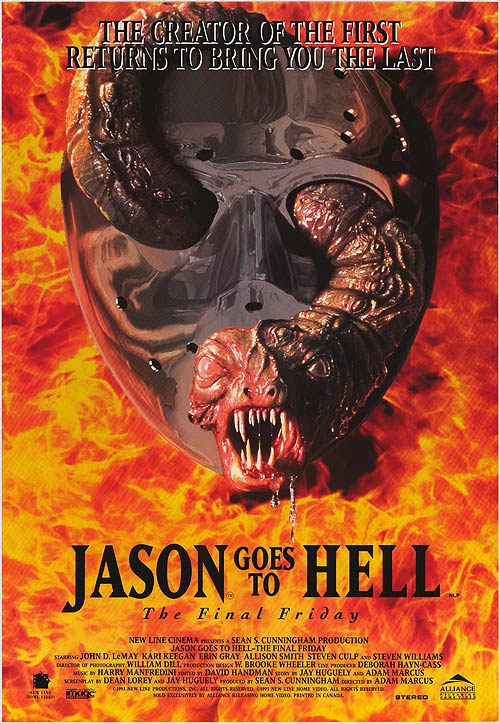
Such a shitty poster
You may have noticed my reviews of the Friday the 13th films stopped rather abruptly. I thought this was a couple of months ago, but was shocked that it has been 12 months. Basically, I was struggling to get my hands on a copy of Jason Goes to Hell: The Final Friday (1993). Luckily for me it reappeared on DVD here not so long ago and I was able to snaffle a copy. This was especially lucky, because this is a cracking slasher entry and continues the strange theme of the later entries in this series generally exceeding the earlier ones.
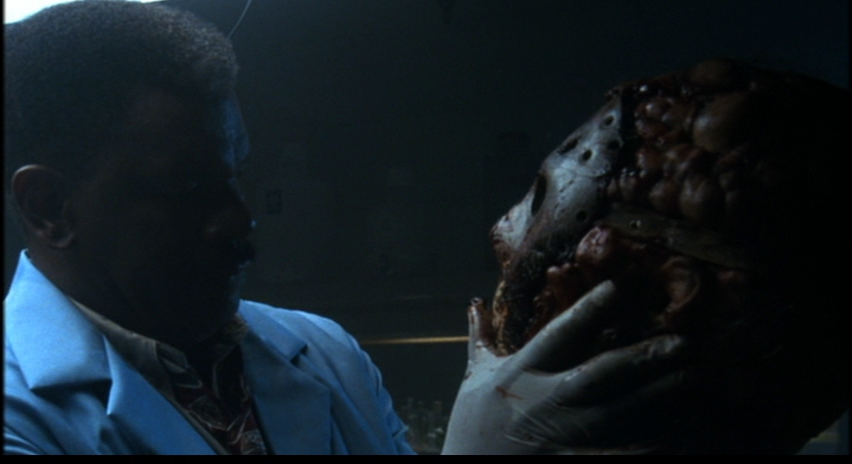
Right from the start Jason Goes to Hell is a much creepier effort than the rest of the series. The isolated atmosphere is really well done in the prologue style opening, blown light bulbs shading a frightening return to Crystal Lake. The culmination of this prologue is a smile inducing early twist that sets the plot off in a unique direction for the franchise, though it is reminiscent of Shocker (1989) and perhaps one of the Nightmare on Elm Street sequels (but I can’t recall which one). Changing of mythology in a series can really rub people up the wrong way and that has often been the case for me. But this change to the Jason formula felt like a real regeneration. All of the initial set-up is great, moving from Crystal Lake to an autopsy scene that changes up the rhythm you would expect from a slasher, with a literal black heart beating strong. The narrative approach, diverging more than you would expect from the slasher formula, is one of the chief joys of the film. There is some nice reflective ideas, a current affairs program reporting on Jason’s murders, without ever going into over the top meta territory.
One of my major criticisms of this franchise is that the films are not particularly frightening. But this is easily the scariest of the lot. There is far more tension here than any of the other films, despite (or perhaps because of) the fact that Jason as we know him featuring less prominently. That lends an unpredictability to the action and narrative that is thankfully not overused by the plot. Tension also comes from the quality of the writing, especially of the characters, which is better than average. We care about these characters more than in most of these films and as a result, care a lot more about what happens to them. None of these films are overly stylish, but Jason Goes to Hell looks and feels better than most of them. There is a charming quality to most of the style, with funky looking camera movements and unnerving angles used, whilst the soundtrack joins Jason Lives: Friday the 13th Part VI (1986) as one of the best in the franchise. It is used really well too, foreboding tunes setting up the atmosphere initially and helping enhance the many scares.
Verdict: Jason Goes to Hell is the scariest film in this iconic series, and one of the best too. The narrative conceit feels original, boldly giving us less of ‘Jason’ as we perceive him, but making the story beats feel different to what have come before. And if you don’t know of the final scene in this film, then whatever you do go in cold – it’s a cracker and I wish I didn’t know what was coming. Stubby of Reschs
- Friday the 13th Part VII
- Jason Goes to Hell
- Friday the 13th Part 2
- Jason Lives: Friday the 13th Part VI
- Friday the 13th: The Final Chapter
- Friday the 13th Part VIII: Jason Takes Manhattan
- Friday the 13th
- Friday the 13th Part V: A New Beginning
- Friday the 13th Part III
Like what you read? Then please like Beermovie.net on facebook here and follow me on twitter @beer_movie
Gayby Baby

Having a debut film play both Sydney and Melbourne film festivals, as Gayby Baby (2015) did this year, is an impressive feat and bound to generate a bit of buzz. However an ugly media storm around the film being played in schools, leading to a cowardly NSW Government decision to ban it, means that the current limited theatrical release of the film has a lot more buzz behind it than it would have otherwise.
For those international readers not aware, essentially a number of schools had planned to show the film as part of Wear it Purple day. A day designed to acknowledge LGBTI youth, particularly important given the rates of suicide amongst those people. The Daily Telegraph, the main right wing tabloid, found out and went about doing some hatemongering. The peak of this was Piers Ackerman, known to some as Jabba the Hut, bleating about how one of the 11 year old participants was not “normal”. Classy. The conservative liberal state government stepped in, did the bidding of the Telegraph and banned the film. With such horrid pervasive attitudes the norm and endorsed at a government level, it is little wonder that LGBTI suicide rates remain high.

Part of the stated objectives of the filmmakers is to illustrate that people in same sex relationships having kids, has nothing to do with the current swirling and idiotic debate around same sex marriage. Conservative Australian politicians such as Eric Abetz and *shudder* Cory Bernardi constantly raise the point that a child should have a mother and a father during debates on marriage equality. But the simple fact of the matter is that there are a number of avenues for gay couples to have children in Australia, through adoption, “spam” donors (as one of the kids in the film puts it), foster care and other ways. The film begins with images of ‘traditional’ families with statements from some of these bigoted politicians. The film simply focuses in on four different kids with same sex parents. The only way in which the film can be considered political, is if you feel those in same sex relationships having kids is fundamentally political. Otherwise, these are normal kids, each bravely facing up to unique challenges. Whether it be the pressure to perform to get into a performing arts school, the struggle of overcoming learning difficulties, agonising over one’s faith or learning to reconcile a passion for pro-wrestling with the real world (I still struggle with this last one). These kids are simultaneously as normal, and incredible, as other kids. The film also plainly shows the incredible job done by these parents, often stepping in where others had previously fallen away to provide the love, support and nurture required.
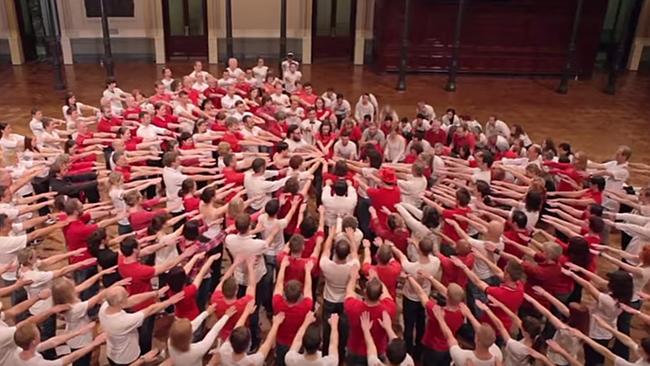 Stylistically, director Maya Newell chooses not to insert herself into proceedings at any point, even though as a 27 year old product of a same-sex relationship, she would have undoubtedly brought a great perspective to it. Instead, the children really do get the chance to speak for themselves, conveying four diverse stories. They are great characters, some of them with intelligence and deep thought beyond their years, others with a habit of cracking up the large audience I saw the film with. The approach taken by the film is a smart one. Rather than trying to tell the entire story of the kids or their families, it hones in on one aspect of their personality or one challenge they are currently attempting to overcome. That makes the film more thought provoking too I think. Showing the commitment of one kid’s parents as they attempt to overcome the horrible learning situation he faced in his first 5 years before coming into their care. Or another kid confronting a priest about why he considers his mum (a parishioner) a sin in the eyes of God. These situations will make you recall similar ones from your own life. The main takeaway for me had nothing to do with the fact these kids had same-sex parents. Rather, as a prospective parent the film made me ponder pretty deeply about how difficult it will be to protect and guide my son in the pressures of this world. I can only imagine what it would be like if he had to read that he was ‘abnormal’ in one of the widest read newspapers in the country. Shameful.
Verdict: By presenting four unique stories, Gayby Baby ensures that there will be something you connect with personally in the film. Rather than a thesis or idea being rammed down people’s throats with the film, there is a beauty and normality to it. Or perhaps a beauty in the normality. Showing that these kids face many of the same issues that all others face. And hopefully one day soon they will be the only ones they face. Pint of Kilkenny
Related beermovie.net articles for you to check out: Hunter: For the Record and Holding the Man.
Like what you read? Then please like Beermovie.net on facebook here and follow me on twitter @beer_movie
Holding the Man

Holding the Man (2015) is an Australian drama based on the true story of Timothy Conigrave and his long-term partner John Caleo. The story previously reached the stage in a play written by Conigrave himself, and here it is Neil Armfield of Candy (2006) fame bringing it to the big screen.
The film takes place 70s and 80s Melbourne and Sydney. Needless to say attitudes toward homosexual relationships have changed a great deal in that time. Holding the Man succeeds on some levels at bringing that out, but also falls short on a few key parts of it. The film is quite slow to get going and the pace of the narrative is laborious throughout unfortunately. It struggles to establish a sense of place, the school environment for young gay men never feeling fleshed out or explained. Conigrave and Caleo’s connection and love story is the major strength of the film early on. But just when this is being established really well, the story jumps ahead a decade or so. This calls to attention the major issue with the film’s structure, namely the time-shifts. In a film covering a timeframe as long as this, it is inevitable that they will be required but they don’t work. The initial jump strips away a lot of the power in the love story, which to that point was the best part of the film. There is too much time between the shifts, so you forget if the story has gone forward or back, leaving the viewer (well this viewer), confused. The aspects of the film played with a lighter touch play well. It’s cool to see a funny gay sex scene, where there is not a need to portray it as overtly sexy or serious, whilst the fun times with the university gay rights advocacy group channel the joyful spirit of Pride (2014) for a time.
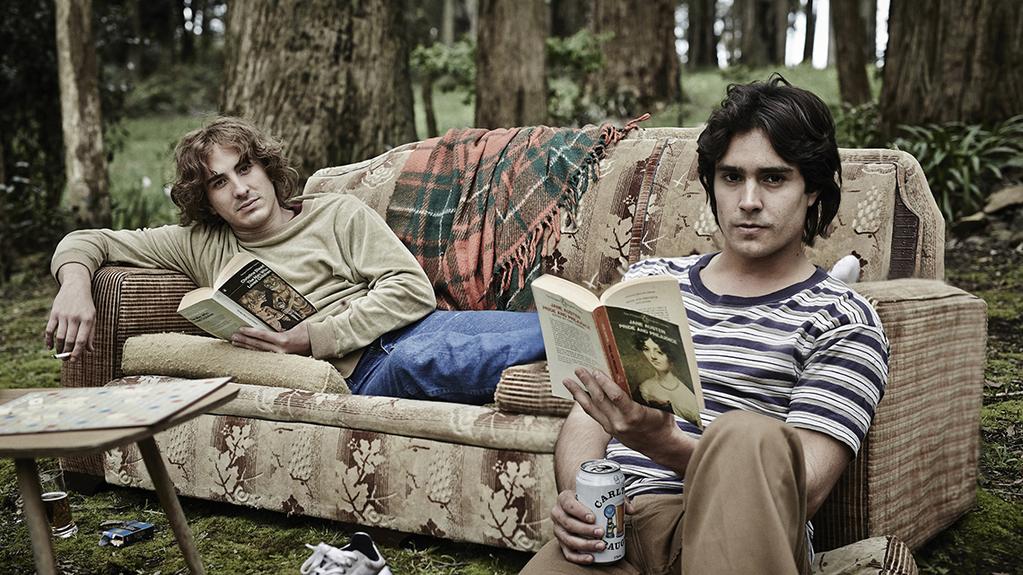
As well as being a love story, the film also presents the devastating impact of AIDS during this time period. We see this in the connection between Timothy and John, how this evolves as the disease plays a greater role in their lives, but also more broadly, in the depiction of other men with the disease and the hospitals they spend their final weeks. The portrayal of the disease, and its bearing on the men that contract it, is truly crushing. Although it’s a minor part of the film, it is inspirational to see the doctors and social workers, working on the frontline of AIDS services back in the day. At other times though, the film struggles to find the tenderness and emotion that should be so plain. Eventually the film lands that with its finale, but moments throughout the film like the wedding dance between Conigrave and his dad, played by Guy Pearce, which is tender and gets to the heart of the story, are far too rare. If there is one overwhelming reason to see Holding the Man, it is the performance of Ryan Corr. Initially, he does a great job of establishing the world of the film. He is an awkward teenager, seemingly comfortable in his sexuality, though not so much in life more generally (like 95% of teens I guess). There is a mixture of confidence and insecurity in Conigrave and Corr is able to draw both of those aspects out and occasionally combine them in a really impressive way. Aside from some slightly dusty turns in minor roles, the cast is excellent overall. It is so good to see Anthony Lapaglia doing his thing. The dude has gravitas and we don’t see him in enough. Sarah Snook and Guy Pearce are both excellent, as they pretty much are in everything, though both of their characters are very minor in terms of screen time.
Verdict: Even though it’s not really a story that has been told a lot, Holding the Man often feels pretty tired in its telling. However the performance from Ryan Corr is borderline transcendent and worth the price of admission alone, not to mention that the film is legitimately affecting when it manages to eventually find the heart of the story. Stubby of Reschs
Dirty Wars
“If they kill innocent children and call them al Qaeda,
then we are all al Qaeda.
If children are terrorists,
then we are all terrorists.”
The above is spoken by a Yemeni man, who arrived at the scene of a U.S. drone strike, and it encapsulates much of what makes the Rick Rowley directed, Jeremy Scahill driven Dirty Wars (2013) such an important film. It is a film that Scahill remarks at the beginning is “about the seen, and the unseen”. But most of what it is doing is bringing the unseen to the light where it should be viewed.

Dirty Wars focuses on how the U.S. led ‘War on Terror’ has spiralled out of control, into a worldwide style war. A war that America wages on many fronts, in many different countries. But war has not been declared in a vast majority of them. The film really sheds a light on the clinical coldness of American operations and the overwhelming secrecy in which they are allowed to be carried out. Aspects of the war that on the surface are so surreal they must be conspiracy theories – Obama calling the Yemeni President to ensure a journalist stays imprisoned – are easily shown to be true by Rowley and Scahill. Through some really horrific personal stories, the filmmakers very simply outline the horrors being perpetuated in the ongoing American War on Terror. They talk to people, initially at one site in Afghanistan far from Kabul, where the media rarely roams. The film picks the thread of this secretive American raid with a number of innocent victims, until the whole larger story falls wide open. This is the approach that the film takes in a number of different countries, gaining personal stories into the wrongheadedness of American undertakings.
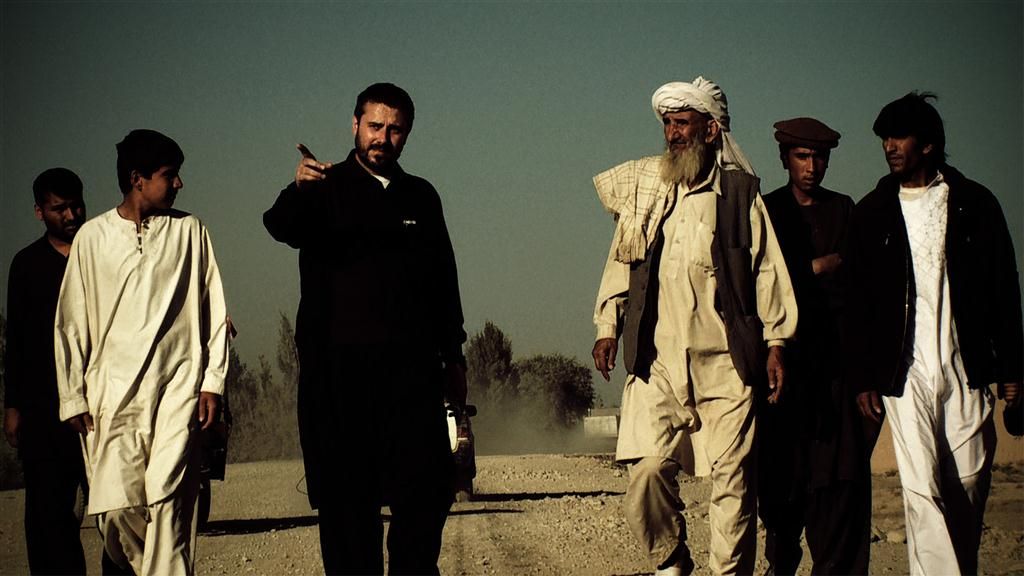
Scahill’s voiceover is pretty much ever-present and gets the balance right between providing a lot of information, without having it feel like a uni lecture. At times, the imagery onscreen is exceptionally confronting, we see dead children, the acceptable ‘collateral’ damage that the war is bringing. The filmmaking duo, combine to invoke a Michael Moore style approach in some ways, though without a lot of his gimmickry and histrionics (note: I love Michael Moore and his films). But the incendiary passion and determination is there. Rowley is unseen, guiding the film from behind the camera. He leaves the in front of camera work to the charismatic Scahill. Together, the two of them shine a harsh, often embarrassing light on the inadequacy of the American military approach – see for example the commander who can’t be bothered to learn how to pronounce the name of the tribe he is working with on a daily basis. Or the manner in which Scahill is totally fobbed off when he presents damning evidence to congress. Scahill is a great frontman for the material – captivating without ever threatening to overwhelm the material. It is not the most cinematic doco you will ever see. The editing is pretty good, but at times there is a struggle weave together the great info. To find interesting images to match the exceptional story being told through the voiceover. So we are occasionally left with pretty contrived imagery, poignant close-ups of nothing in particular, while Scahill lays down some truths.
Verdict: Jeremy Scahill is a fuckin brave badass, and the film kind of reflects that. It may not be all that cinematic. But it is informative, challenging and a ‘call to arms’ of sorts. Just not the sort depicted repeatedly in this film. Pint of Kilkenny
Related beermovie.net articles for you to check out: SUFF 2014: American Arab and The Act of Killing.
Like what you read? Then please like Beermovie.net on facebook here and follow me on twitter @beer_movie
Stranger by the Lake
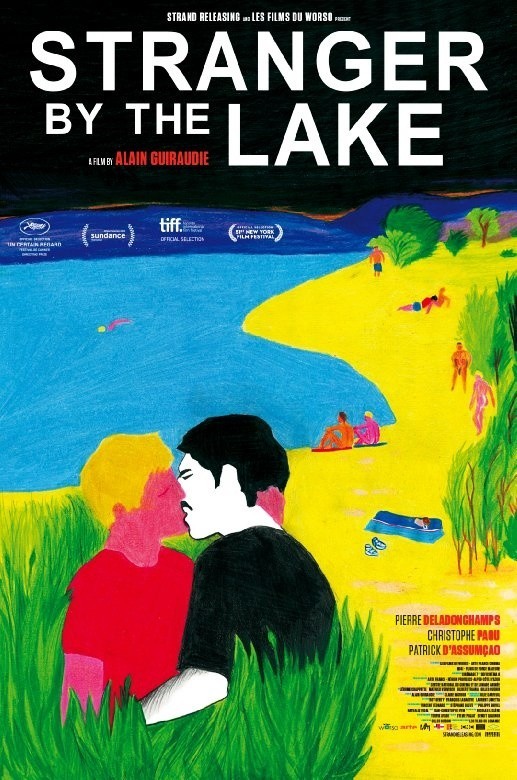
We still live in an age where sexually explicit films stand out firstly, and often only, on account of that explicitness. Think Gaspar Noe’s recent Love 3D (2015) and Lars von Trier’s wildly uneven Nymphomanic (2013). Alan Guiraudie’s Stranger by the Lake (2013) is certainly one of the most sexually explicit films I’ve ever seen, but the film’s style and economical storytelling linger a lot longer than the sex.
Stranger by the Lake opens with a slow first half, focused very much on the process of daily life. It begins with an almost silent sequence of a man arriving at a cruising spot, laying down the actions of being there – driving up, parking his car, walking to the beach through a forest, swimming and chatting to a couple of other men. The other predominant focus of the first part of the film is the establishment of character, which Guiraudie does in a very economic manner. In a way, what are being set up are archetypes, though that term does a disservice to the skill involved. Especially effective is the character of Henri, a man who sits apart from the rest of the cruising scene. This distance, his awkwardness and frumpy polo shirt, tell the audience everything they need to know about the character. It’s exposition through costume and placement of characters in space, rather than resorting to dialogue driven backstories. Similarly, with his moustache, tan and Adonis like body, we sense the alluring nature and dangerous physicality of Michel from the start, an element of that character that will haunt the main character Franck for the rest of the film.
Through the second half of Stranger by the Lake, two genres – thriller and crime – influence the film heavily. This part of the film begins with a murder, seen from a high angle, stationary shot, allowing the action to unfold just as it would be viewed in real life, but with the audience helpless to intervene. The crime aspects are the weaker of the two and perhaps some of the weakest parts of the film overall. The questioning of the various men at the lake by a lone detective is bland and laboured with no spark to the writing. The viewer never feels that the detective is serious about solving the case and there is no police-procedural style detail. The presence of the detective does help to provoke paranoia amongst some of the characters. But that could probably be generated in other ways. Thankfully though these sequences don’t take up much of the film and as a result do not affect its quality overall. In terms of the thriller aspects though, the film succeeds heartily, with an unconventional approach. Much of it is a creation of tension through omission. A body lies in the lake but doesn’t wash ashore or show up. The tension of if, and will it show up looms over the characters at the cruising spot. Similarly the simple fact of a character ceasing to show up creates tension as to their whereabouts and what they have done. The reflection of moments and interactions from the first half of the film, as well as the way Guiraudie strings those moments out, is another way in which major tension is elicited.

The widescreen shooting of the film looks totally spectacular. Much of the setting is established by a succession of glorious shots of the lake shimmering in the late evening light. The beautiful shots do not simply deliver on a visual level either, Guiraudie uses them as an integral part of his storytelling approach. The position, and especially the stationary nature of the camera, gives a sense of space and perspective. Late in the film, a shot mimics the set up when the murder was committed, building a serious amount of tension through this simple yet creative repetition, especially as it renders the audience feeling doubly powerless to intervene. Clouds rolling ever so slowly across the screen show the passing of time, as does the repeated shot of Franck’s car arriving each day, the only identifier that another day at the lake has begun. These shots are a structural tic that gives the film rhythm and progression. It’s not just time passing on a simple level, but also the advent of change – both change in a seismic life altering sense and also slow and infinitesimal change, which goes unnoticed until it is too late.
Verdict: Stranger by the Lake is a damn pretty thriller. One where the tension comes from very astute writing and the manner in which moments from the first half of the film are reflected and folded back on themselves. It all leads to an ending that, whilst a touch signposted, tears the emotional heart of the film asunder, albeit still in its understated way. Pint of Kilkenny
Related beermovie.net articles for you to check out: Locke and Tom at the Farm.
Like what you read? Then please like Beermovie.net on facebook here and follow me on twitter @beer_movie
 Beermovie.net