Friday the 13th Part VII: The New Blood

Sadly dear readers, Friday the 13th Part VII: The New Blood (1988) is an awesome slasher film, ruining my bulletproof Friday the 13th franchise being the inverse of the Elm Street franchise theorem you’ve been hearing so much about. Not only is this the best odd numbered film in the series, it is the best film in the series fullstop.
One noticeable feature of the ultra-enjoyable Jason Lives: Friday the 13th Part VI (1986) was the incorporation of more supernatural elements than the series had featured up until that point. This film not only maintains that, but expands on it greatly, resulting in the strongest ‘final girl’ of the franchise so far. Initially the character of Tina Shepard feels like ‘Carrie White lite’, a nondescript teenage girl with the power of telekinesis that she cannot control as yet. The introduction of Tina is not promising. In one of her first scenes, she manages to reanimate Jason whilst her nose glows bright red… yes like Rudolph. However for the most part, her character provides something original for the film, interacting with what is a pretty cliché cabin in the woods partyin teens style set-up. Just as Tina provides the best central (non-Jason) character of the series, her love interest Nick is the best male teen character as well. There is a real care in his actions toward her and a genuineness to their interactions that is shockingly assured. This film and the previous one are less obsessed with mindless Jason murders and actually bother with a dash of story which is quite refreshing. They also get the tone both unique and right. Part VI had humour that hit the mark regularly whilst this one adds in a heap of supernatural elements and a main character that you genuinely care about.
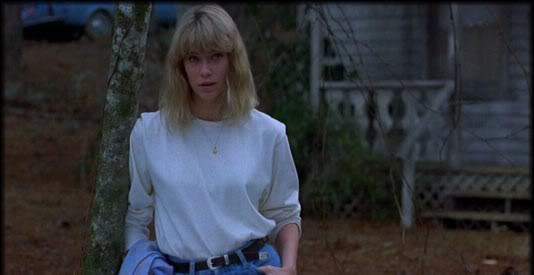
The brilliant Tina
In many ways, Tina Shepard is the first real ‘final girl’ of the series. There is a point toward the end where she actually runs toward Jason to take him on, going full Carrie on his arse. For me it was one of the most rousing moments of the entire franchise. She was the first really strong and forceful female character that stuck with me from all of these films. I think it is a shame that they did not build more entries in the series around the character as she is the most fully formed character we have seen and brought to life well by Lar Park-Lincoln. The design of these films has rarely been something I have felt the need to comment on. Credit where it is due though, the design of Jason in this one is utterly badass. His shirt is ripped and his spine and the back of his ribs are showing, which really plays up the supernatural aspects of this somewhat new Jason.
The supernatural powers of the character of Tina are a real point of difference for this film and help to make this film comfortably the most satisfying of the series so far. I have to say, I didn’t think any of these films would be as compelling as this film. But not only is Friday the 13th Part VII: The New Blood one of the most compelling 80s slashers I have seen it is also one of the most downright fun to watch.
Verdict: Pint of Kilkenny
Series ranking thus far:
- Friday the 13th Part VII
- Friday the 13th Part 2
- Jason Lives: Friday the 13th Part VI
- Friday the 13th: The Final Chapter
- Friday the 13th
- Friday the 13th Part V: A New Beginning
- Friday the 13th Part III
Like what you read? Then please like Beermovie.net on facebook here and follow me on twitter @beer_movie
Frank
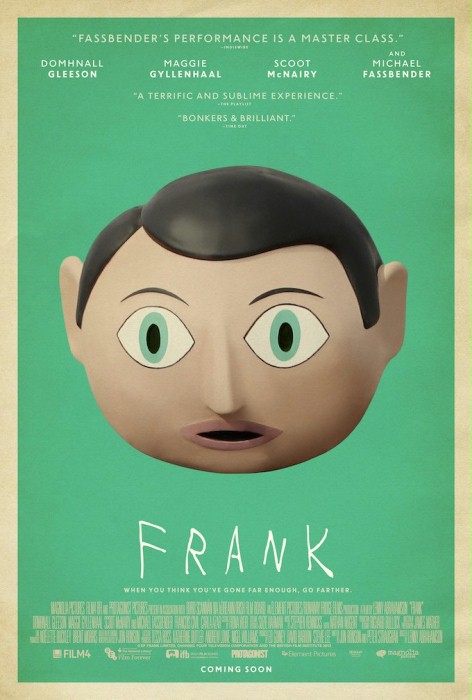
Frank, otherwise known as the Michael Fassbender in a giant papier mache head movie, is delightfully one of the weirder films that will hit (kinda)mainstream cinemas this year. Which is kind of good, because anything less than that level of weirdness would have been a bit of a let-down given all the giant head stuff going on.
You wouldn’t know it from the marketing material, but Fassbender’s Frank is not really the film’s protagonist, or at least not the audience’s window into the film. That would be Jon, played by Domhnall Gleeson, a struggling songwriter and keyboard player who lands himself a one-off gig with Frank’s band. The gig does not exactly go well, but a few weeks later Jon finds himself working on an album with the band in an isolated Scottish wilderness. Jon’s journey is one about the desire and passion to do well and is also very much about the creative process. It is something that must be laboured at, but it also requires a certain ‘magical’ spark to ignite that work. One of the great strengths of the film is that it does a good job of telling this journey, whilst also establishing quite different ones for other characters. I was a little taken aback by just how funny Frank was because for some reason I thought the film was a drama. I laughed more in the first half of this film than I have watching any other 2014 release, with its array of really clever scriptwriting and a fair splash of over the top idiocy too. It is so refreshing to see an indie film (whatever that means these days) be unafraid to trade in a little jauntiness and rambunctiousness to accompany its brooding. It is a shame then, that the more serious second half is not quite as successful as the more straight up comedy of the first. Part of this is the imposition of something approaching a traditional ‘final act’ onto the film where the stronger earlier half of the film was not really concerned with story as such.
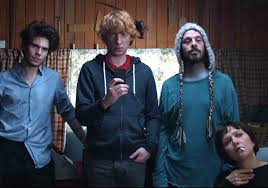
The rest of Frank’s band
As well as being hilarious, aspects of Frank are quite serious and dark. The second half of the film, set predominately around the SXSW festival brings the themes of the creative process and ‘selling out’, to their more serious conclusion. Not only more serious, but a little more familiar as well. Some of the beats here are ones that it seems every single band biopic needs to hit, even if this does hit some of them with more originality than most. On the ‘dark’ front, Scoot McNairy spearheads a subplot of a man struggling to subdue his sexual urges to “fuck mannequins.” This subplot was confronting but simultaneously both funny and boundary pushing. It got me pondering what passes as bold or crass comedy in cinema these days. Every film that thinks dropping a rape joke in a film makes it edgy (which is close to every comedy I’ve seen this year), should watch Frank for a lesson in how to push the boundaries, be uncompromising in your film and not resort to utter crassness or offensiveness. The ending is both dark and serious, engaging in the theme of mental illness in a way that is thoughtful but also perhaps the slightest bit unsatisfying. As a big fan of Monsters (2010) it has been awesome to see Scoot McNairy in not one, but two films of late. He appeared in The Rover (2014) as well as this film. Hopefully we keep seeing more of him, because at the very least he is a really effective supporting character actor and creates something pretty complex in this film with his limited screen time. Domhnall Gleeson continues to hone his somewhat malleable onscreen presence, which I think works in this role and it also helps you forget this is Brendan Gleeson’s son. The much-written about performance from Fassbender is downright impressive as well, conveying so much through his voice and occasional tics underneath that giant head.
It is always so lovely to see a distinctive and weird film garner both buzz and a decent release. Sure having a gimmicky papier mache head containing Fassbender helped. But Frank is much more than just that and is especially worth checking out in a year that is shaping as being pretty devoid of decent comedies. It also culminates in a rousing musical moment that is like no other.
Verdict: Pint of Kilkenny
Related beermovie.net articles for you to check out: Searching for Sugarman and Hold Me While I’m Naked.
Like what you read? Then please like Beermovie.net on facebook here and follow me on twitter @beer_movie
Fitzcarraldo

“The land where God did not finish creation” – Fitzcarraldo.
Recently when I reviewed The Omen (1976) I mentioned the cursed production that film endured. The production of Fitzcarraldo (1982) whilst not cursed in the same way was probably a more tortured production, one which spawned the infamous making of doco Burden of Dreams (1982). Of course that old cliché that there is a fine line between genius and insanity probably holds more truth than many of us would care to admit. Director Werner Herzog and his leading man Klaus Kinski straddled that line through their whole careers and in reality probably spent large swathes of time on either side of it, which is certainly a recipe for on-set fireworks.

Molly, played by Claudia Cardinale
In reality though, little of Herzog and Kinski’s on-set warring permeates the film on screen which is assuredly made with none of the raggedness you would expect from such a production. The story focuses on the character of Brian Sweeney ‘Fitzcarraldo’ Fitzgerald, played by Kinski, a man who desires above all else to build an opera house deep in the Amazon. He wants it with such a manic fervour that his desire has in a way broken him and sent him over the edge. For Fitzgerald, opera “gives expression to our deepest feelings” and that is something he is desperate to be able to share with all those he comes into contact with. In a get rich quick scheme he decides to travel up the Amazon in order to claim a patch of rubber trees. It is an arduous journey which culminates in transporting his huge ship straight over a huge mountain. So much of Fitzcarraldo feels like a Western. Iquitos is referred to as a frontier town. Brian and his lover Molly, who runs a bordello are very much the new outsiders in this slightly lawless place. Not only because they are not locals, but because they also do not fit in with the other blow-ins who are mostly ultra-rich rubber barons. Then there is the long perilous journey into the unknown where the ‘natives’ pose a serious threat. Not only that, the journey is for territory that can hopefully be exploited for wealth.
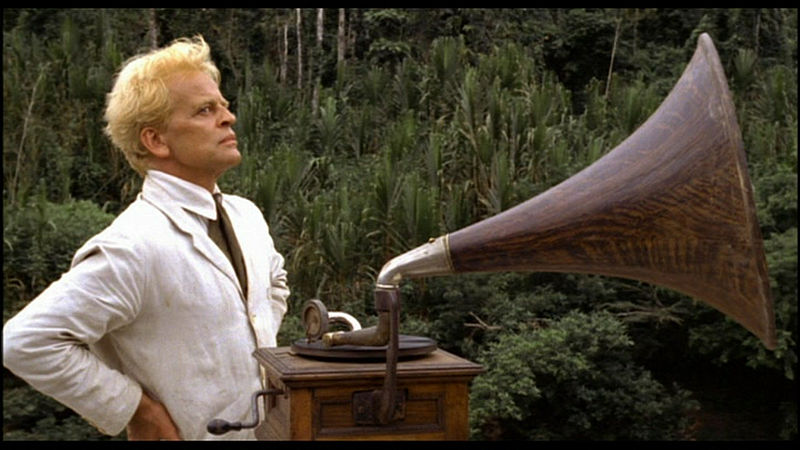
Having said all of that though, there is no doubting that the psychological side of this film is like no Western that has ever been made and in a good way, it is kind of hard to work out exactly what Fitzcarraldo is truly about. Going into it, I thought it was about a dude trying to carry a boat over towering mountains. That is part of it, but it takes over an hour and a half to get to that part of the story. It is also I guess a film about opera, a form I know next to nothing about. Or perhaps it is more-so about the transformative power of art. Sometimes I feel a similar fervour for film that Fitzgerald feels for opera. The quote above is one from right near the start of the film and accompanies a wide shot of the jungle, which is immediately contrasted with a palatial house. This is also in part what the film is about, the clash of cultures and the exploitation of cultures by Western influences. There is for so long in the film a forcing of ideas on the indigenous population of the Amazon. But in a crushing sequence, probably not in the way you would expect, the locals have their stark revenge when both the viewer, and the characters in the film, perhaps least expect it. In the end though, the film is a nigh on indescribable fever dream simultaneously serious, psychological, weird, absurdist and bold whilst all these elements crash into and tear at one another.
Fitzcarraldo is essential viewing for any fan of Herzog and is one of his best fictional features. The film is complete with stunning visuals as the massive, battered vessel travels first along the river and then over a mountain. These visuals are the backdrop for a psychologically challenging journey that will make you think, ponder and puzzle.
Verdict: Pint of Kilkenny
2014 Progress: 17/101
Progress 113/1001
Related beermovie.net articles for you to check out: Jack Reacher and POV: The Loneliest Planet.
Like what you read? Then please like Beermovie.net on facebook here and follow me on twitter @beer_movie
The Omen
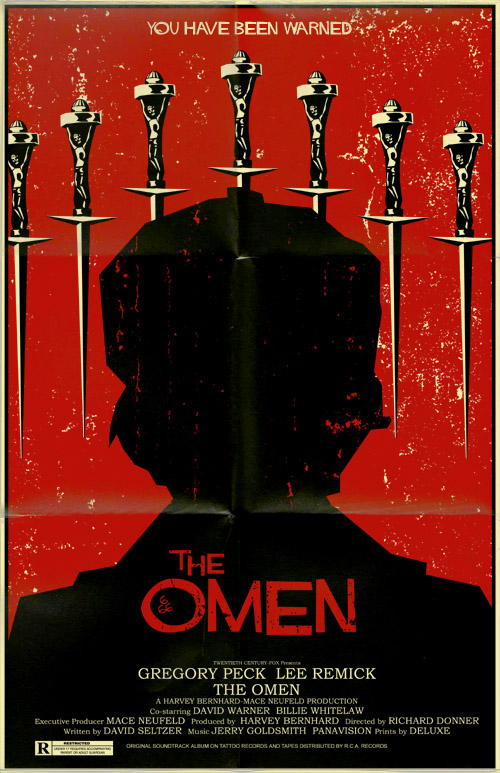
There is something distinctly 70s about The Omen (1976). That is not to say it has dated, but it has a sort of aura about it that only films from that decade such as Don’t Look Now (1973) seem to share. Just as many of our most beloved slasher films are distinctly and fundamentally 80s as well.

One hallmark of the 70s horror film, and indeed great horror films of other decades, that The Omen nails is the genuinely creepy opening credits sequence. Church chanting and singing as well as aggressive music form the backdrop to a kid casting a crucifix shadow. From there, the early parts of the film focus on the successful American diplomat Robert Thorn played by Gregory Peck and his wife Katherine played by Lee Remick. Desperate for a baby, Katherine devastatingly delivers a stillborn child. A dodgy priest in the Italian hospital where this is taking place convinces Robert to adopt a replacement kid, without her ever knowing. Especially through the first half of this film there are a number of really atmospheric set pieces that are genuinely shocking. The most confronting of all, in one of the most shocking moments I think I have seen in a film, takes place at a child’s birthday and really sets up the course of the film. A large black dog appears to one of the party guests shortly before a truly outrageous death. In a chilling finale to the sequence the same large dog appears to Damien, the child of Robert and Katherine. There are other similarly wonderful sequences that take place in a zoo and then later in a cemetery. The latter lifts the film from a bit of a second half funk, as it had run out of some of the steam of the first half, before finishing strongly.
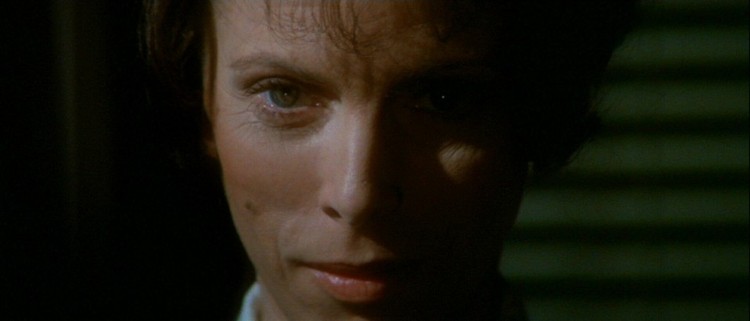 I have already mentioned Nicholas Roeg’s Don’t Look Now and it is a film my mind kept returning to as I was watching this one. They both share a very washed out colour palette, a dank fogginess that seems to permeate the furthest reaches of the plot and characters. I think that is the intent behind the palette as well, to convey a definite mood, not just a British locale that rarely sees the sun. Biblical symbolism and elements are the other elements that permeate the entire film. Much of the core of the film’s plot comes from a contemporary interpretation of the bible and the antichrist, whilst priests, crucifixes, Satan and even a little of the redemptive power of Christ make their way into the film. And whilst I did not find the second half of the film as engaging as the first, I quite liked how it shifted into an almost Indiana Jones-esque adventure flick for a time even rocking a little globetrotting and archaeology. Also, if you are into reading behind the scenes accounts of films, do some snooping around on The Omen. It was one of those creepy cursed productions where the cast and crew had planes they were in hit by lightning, there were near misses with IRA bombings, creepy car crashes with links to the plot of the film and plenty more horrid luck afflicting those who worked on the film and their loved ones. A real life curse on a horror film can only improve it in my estimation.
The Omen is a hell of an atmospheric horror film but it also brings a fair bit more than that to the screen, with a whole bunch of quite shocking scenes. Grounding the plot in much symbolism, Christian and otherwise, means there is plenty there to mull over if you so desire. If not, a dude gets his head sheared straight off by a massive piece of plate glass in a slasher kill par excellence that comes a decade before its time, so there is always that.
Verdict: Pint of Kilkenny
2014 Progress: 16/101
Progress 112/1001
Related beermovie.net articles for you to check out: The Black Cat and The Masque of the Red Death.
Like what you read? Then please like Beermovie.net on facebook here and follow me on twitter @beer_movie
The Incredible Shrinking Man
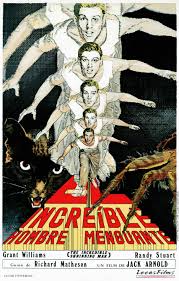
The title The Incredible Shrinking Man (1957) screams awesome B-movie schlock. However the reality of this Richard Matheson penned, Jack Arnold directed film is a little more contemplative and thought provoking than that.
 Don’t get me wrong, there are still awesome battles between our shrunken hero and a ‘giant’ spider, but this is a fair way from Honey I Shrunk the Kids (1989) territory. The film wastes no time breaking with the convention you might be expecting, as a borderline meta voiceover is revealed to be the Shrinking Man himself, speaking in the past tense, so I guess we can presume that he survives the ordeal. We see the main character Scott Carey exposed to a kind of mist whilst lounging around on a boat and then the action shifts to six months later. There is a subtlety to the start of his change as initially his clothes do not fit right, he loses his appetite and then his wife no longer has to get on tip toes to kiss him. From there Carey endeavours to find a medical cure for his predicament, with mixed results. The film has that 50s sense of a great emotional scene. At one point as Scott is down about things and concerned his wife should leave him and she responds ‘as long as you’ve got that wedding ring, you’ve got me. Then right at that moment Scott’s wedding ring clatters off his shrinking finger. The second part of the film morphs into more of an adventure film as Scott becomes trapped in the basement, facing many tense dangers, not the least of which is a spider which resides in the same room. I like this latter section of the film, it is a nice change-up from the almost domestic drama feel to the first half. The entire film, even this more adventurous later period is played very straight. So what could have been a very light hearted look at a man shrinking becomes a cerebral look at the terror that would surely invade your psyche if you were literally shrinking. Where would it end?

The Incredible Shrinking Man comes from that era of film where such care was taken with each aspect of production before a film was released. This is evident right from the opening credits, which have a distinct James Bond feel to them, as a silhouette of a man gradually shrinks as a song plays. Perhaps not as common for the time was the presentation of the main character. His physical condition really affects him emotionally (in a very realistic way) which leads to him lashing out increasingly at his ever-loving wife Louise. So great is the strain on Scott, that he explicitly contemplates suicide which is pretty forward and shocking for a film of this vintage and is part of a seriousness that makes the film so original. The effects are a mixed bag watching them today. The parts where Scott is onscreen by himself, dwarfed by his former everyday surroundings, look great and were presumably achieved through practical and set dressing techniques. Also impressive, but more dated, are those instances where the shrinking man is onscreen with another person or an animal. There is a ghosting on many of these effects, with Carey appearing see-through at times. It is not particularly distracting, but I guess in an age where CGI would make that sort of thing exceptionally simple, it does stand out. Without a doubt the boldest and most shocking part of this film, one which bucks convention throughout, is the ending. The tension through the second part of the film builds and all the while I was expecting a conventional Hollywood ending. Instead, without giving too much away, the film delivers possibly the most un-Hollywood ending ever. Rather, it is an introspective and philosophical end that leaves you thinking about it in the days after the film finishes. I loved it, would have to be one of my favourite endings ever actually.
This is well worth checking out for any sci-fi fan or hell, even any fan of philosophical and thought provoking films. Didn’t think I would be writing that. It has some minor issues, but overall it is easy to see why it is considered such an all time classic.
Verdict: Pint of Kilkenny
2014 Progress: 15/101
Progress: 111/1001
Related beermovie.net articles for you to check out: King Kong and A Very Different Idiot (featuring reviews of The Forbidden Planet and The Naked Gun).
Like what you read? Then please like Beermovie.net on facebook here and follow me on twitter @beer_movie
Quick Review: The Adventures of Priscilla, Queen of the Desert
The Adventures of Priscilla, Queen of the Desert (1994) is my fiancee’s favourite film in the entire world. So even if I didn’t like it, I would lie and say I did. But I did like it. And that is not a lie.
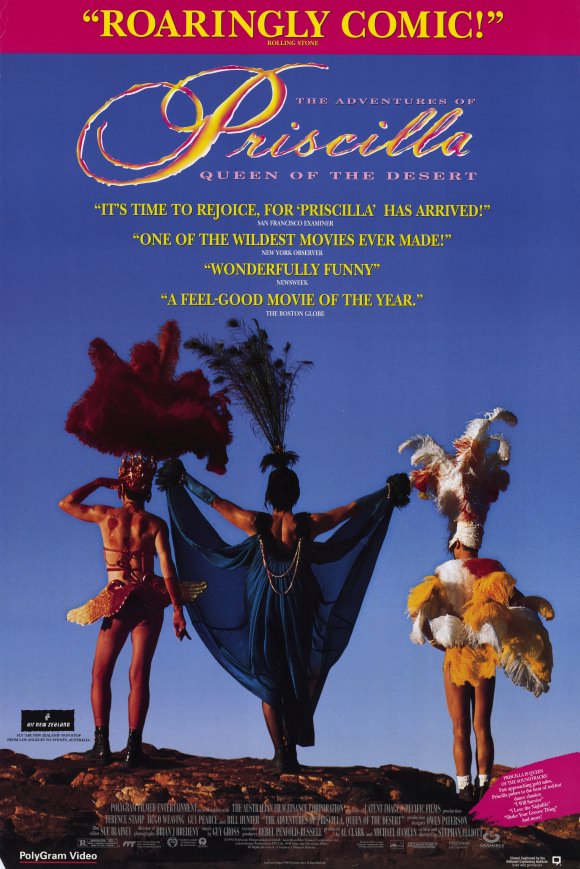
It is easy to see why the film has become one of the most popular ‘contemporary’ Australian films, hovering somewhere between being a cult classic and an all out mainstream one. The film follows three drag queens as they traverse Australia from Sydney to Alice Springs to put on some shows. Or so they think. As with any road film, as the journey unfolds, the reasons for it become more complicated. And as with all of the best road films the journey is not merely a physical one as all three go on major internal journeys as they travel along in their titular bus Priscilla. The film is simultaneously wonderfully rambunctious but also quite considered in both the narrative and how it is telling it. One of the major selling points of the film is the costumes and it deservedly won an Oscar for costume design. The costumes are totally over the top but also so well thought out and at the service of the character. It is not a case of just slapping the silliest, biggest, wildest drag queen costume on the actors. It is about reflecting the character, where their arc is up to and the current situation of the film. I heard the other day that they tried, but unfortunately failed to make a dress made entirely of Vegemite toast (do you guys even know what Vegemite is?). That would have been a real sight to see!

The performances are all excellent. Hugo Weaving and Guy Pearce really launched there careers with this film, careers that would take them from an Aussie drag queen comedy all the way to blockbusters such as The Matrix (1999) and Iron Man 3 (2013). Without this film it is highly doubtful that they would have made it there. Both of them are excellent and they bring to life two totally different characters that thankfully illustrate that the film is more than happy to eschew drag queen cliche for three dimensional characters. Cast against type, Terence Stamp is along for the ride, helping no end to launch the careers of these two and make this film into the classic it is is. His character is probably the most minor of the three leads in terms of screen time but it is arguable that this character and this performance are the most important to the overall success of the film. The Adventures of Priscilla, Queen of the Desert is a musical but it is far more than a collection of songs linked together with a little backstory. It engages with issues such as LGBTI rights and sets them against a specific time and place in Australia. Mind you there is a feeling watching this today that a lot of it is still more than relevant.
As a massive proponent of Aussie film, I highly recommend you catch this one if you never have. It is a hilarious and touching classic not afraid to push boundaries and you can’t ask for too much more in a film.
Verdict: Pint of Kilkenny
Progress: 104/1001
2014 Progress: 8/101
Related beermovie.net articles for you to check out: Patrick and Goddess
Like what you read? Then please like Beermovie.net on facebook here and follow me on twitter @beer_movie.
Quick Review – Grease
I generally write super long reviews, partly because I take a lot of notes whilst watching. But I don’t always feel like taking a whole bunch of notes and in those cases I will be writing these quick reviews for 1001 flicks from now on. They will be far less fully formed and detailed, but hopefully still interesting enough.

It had been a long time between viewings of Grease (1978) for me when the fiancee and I chucked this on a couple of weeks ago. I thought I knew the film pretty well, but aside from some of the better known songs, there was actually a whole lot in here that I had absolutely no recollection of.
 The songs are what generally stick in the mind when thinking about Grease or at least they were for me . I remember “Grease Lightning” and some form of ‘supermix’ of all the tracks being played endlessly at high school socials. Events where teenage boys (not me of course) would attempt to sing the John Travolta part from “Summer Lovin” to impress a girl and end up looking like a tool and impressing no one. But watching the film now, it is clear that there a lot more to it than that. For starters, despite most of the actors looking 20 years too old to be in high school, the film quite accurately charts the feelings that high school brings. The desperation to fit in, to retain some sense of originality and to impress the one you like enough to score a date. Refreshingly, the main points in this regard are made not by the portrayal of the new to town, goody two shoes Sandy, but by the suave and cool Danny played famously by John Travolta. He is the one who is not comfortable enough in his own skin to be himself around her. Rather he has to put on a greaser facade so as to save face with his mates. As for the songs though, they still hold up really well and there are a couple of singalong classics in here. That said though, there are a couple of them that I had totally forgotten that are really quite flat and suck a lot of the momentum out of the film.
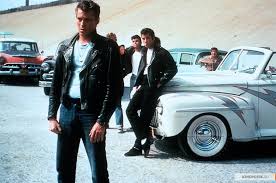
John Travolta is generally the actor who gets the most credit from this film. Either that, or it just seems that way because he is the one with the most prominent (though spluttering) ongoing career. The best performance though, and the one most integral to the film is from Olivia Newton-John as Sandy. It is her journey that the audience goes on, her conflicting emotions that we rollercoaster along with. And when both characters undergo a metamorphosis at the end, hers is by far the more meaningful of the two. She is changing and embracing the change happily whereas Danny is doing it begrudgingly (the character does most things begrudgingly throughout the film actually). Watching this film with my fiancee was a nicely interactive experience. This is one of those films best watched with a big crowd that is really into it I think, much like Rocky Horror Picture Show (1975) in that regard. And I still got that experience even with just the two of us as she sang every word to every song and whacked my arm repeatedly to exclaim “oh my God, coolest car ever”.
Grease is actually a film that holds up better than I thought it would and is much more than some catchy tunes. The depiction of high school here felt pretty relevant to me, even though I attended high school on an entirely different continent, 25 odd years later.
Verdict: Pint of Kilkenny
Progress: 103/1001
2014 Progress: 7/101
Related beermovie.net articles for you to check out: Cabaret, A Few Best Men
Like what you read? Then please like Beermovie.net on facebook here and follow me on twitter @beer_movie.
Guest Post: Rush
I was one of the few that was not really a big fan of Ron Howard’s Rush. However, with the film recently being released on DVD and Blu-ray in these parts of the world, guest reviewer extraordinare ‘my cousin Damo’ thought he would take a look.
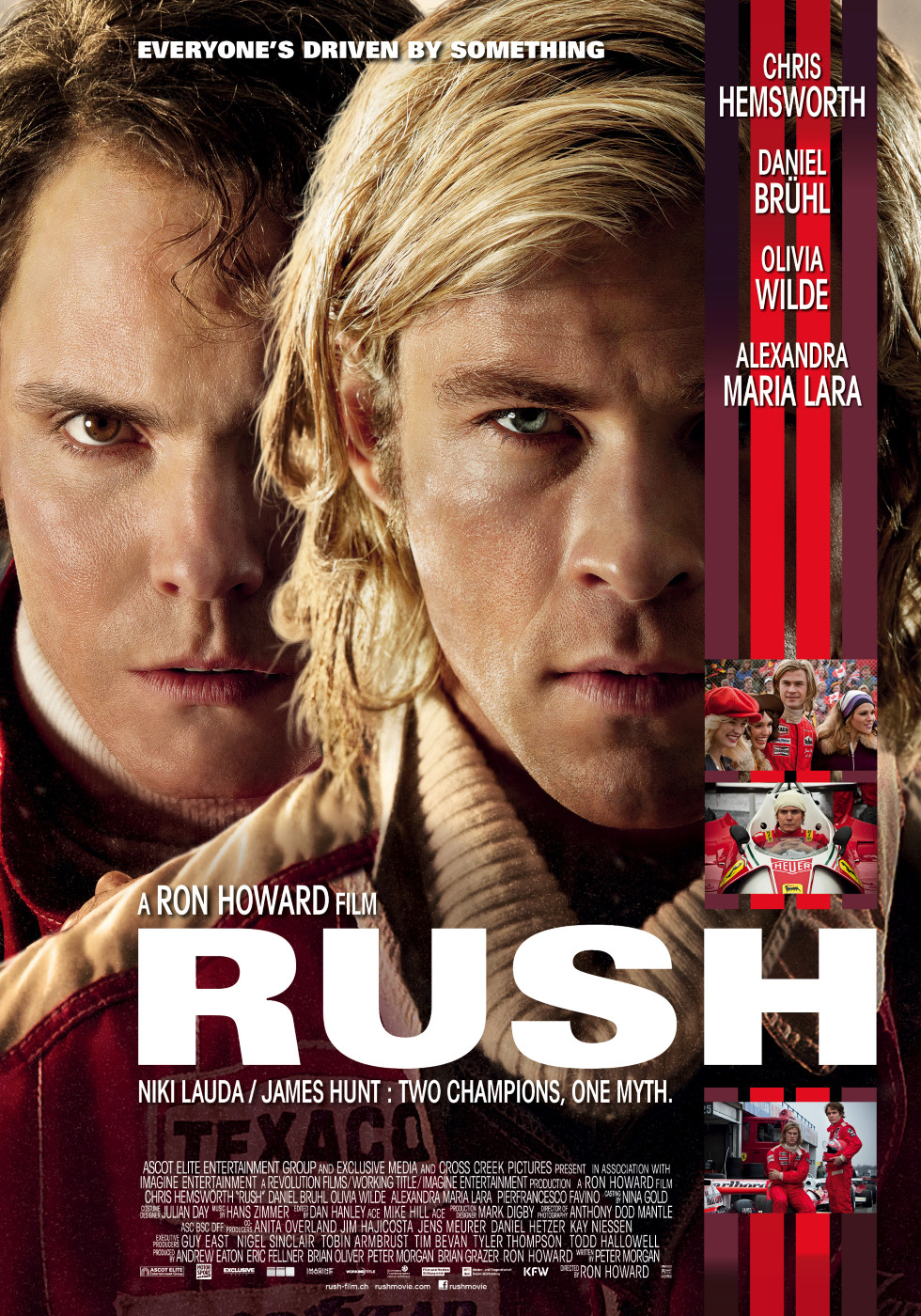
Rush (2013) is a biographical drama that depicts the six year rivalry between Niki Lauda (Daniel Bruhl) and James Hunt (Thor), two Formula One drivers and the events leading up to the 1976 Formula 1 final at the Japanese Grand prix.
Honestly, I was a little wary to watch this movie; the only credits I could remember for director Ron Howard were Happy Days (had some good times with that show) and that horrible movie about the Grinch…. If you want to check that out; don’t. Ever. Seriously. So given my knowledge of his track record – car racing themed pun, hahah – I wasn’t sure what to expect.
 I was pleasantly surprised with this film though. For anyone unaware of the story, Lauda’s comeback is really the most awe-inspiring thing I’ve ever heard about, (won’t give anything away but it really is amazing). The way the film depicts the drivers’ rivalry is done quite effectively. The comparisons of their Yin and Yang personalities; Lauda and Thor – I mean James Hunt – are done in a way that highlights the events and happenings that caused the friction between the two.
The clash of Lauda’s “its all business” mindset and Hunt’s “lets do whatever we want, drink as much as we want and do naughty things with girls whenever we want” outlook on life made it hard for me to choose who I liked more. Whether to choose Hunt’s unmatched passion for racing and cheating death whenever he could, or Lauda’s neutral outlook on the sport he was so good at paired with his unabashed confidence in himself and his abilities. I’ll leave you guys to decide that one.
Hemsworth’s job at playing James Hunt was well done, but jeez it unfortunate that his English accent made him sound just like Thor the whole time.All we needed was the switch to Shakespearian language and I would have been asking “Doth Mother know you weareth her drapes?”
Yes I know that line by heart; and yes I enjoy a bit of The Avengers (2012), what of it!?
As for Bruhl – a guy who I don’t even remember in Inglorious Basterds (2009)_– I thought his performance made the film. His ability to portray Lauda so close to perfect left nothing to be desired. I loved every aspect of his portrayal and it was really just flawless.
There are some great action shots during some of Lauda and Hunt’s races, some metaphoric visuals of Hunt’s heart beating in time with his F1 car before a race and the mutual respect they both felt towards each other is all depicted really well, although neither driver would willingly admit that respect to the other. One thing I didn’t find particularly good, was the introductive narrations by Lauda and Hunt. I found them a little too re-tell and reminiscent, like the ones in the beginning of Sin City (2005).

I enjoyed Rush, Ron Howard did a good job; Daniel Bruhl created a stunning reflection of one of F1 racing’s most well-known names; and though Hemsworth will forever remind me of Thor, known from movies like Thor (2011), Thor: The Dark World (2013) and Thor: The Christmas Special (forthcoming), he held his own well in a good performance. This film hit me on an emotional level and I enjoyed it even though there were small setbacks that occurred in the film for me. Just a heads up, though this film is an essential and should be seen by all; there are some specifically graphic scenes from which I cringed (cough cough hospital scenes including some old 70s way of vacuuming a guy’s lungs out instead of giving him a needle of sleepy stuff). But this is coming from a kid who has chosen to not see most scary movies and who even got scared in Life of Pi (2012), so on second thoughts, you should be right.
Verdict: Pint of Kilkenny
Damo is my first cousin carrying on the family trade with his film reviewing chops. Damo is also a killer singer-songwriter, so give his stuff a play right here and like his music facebook page here.
A Trip to the Moon
I thought I would kick off my 2014 journey toward the 101 goal by reviewing the first film listed in the 1001 Movies To See Before You Die book, A Trip to the Moon (1902), or Le Voyage Dans La Lune to use the original French title. This film is a true landmark of world cinema as it captures the time where the form was expanding out from the short, slice of life films that had been pioneered by the Lumiere Brothers in the late 19th Century.
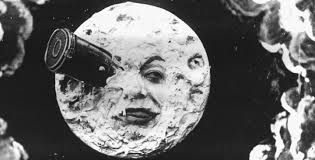
Georges Melies is one of the genuine fathers of film as we know it. He was also perhaps film’s first genius and that is well and truly on display in A Trip to the Moon. The story, based on a novel by Jules Verne, occupies the same space that so much of Verne’s work did – the intersection between the adventure story and more fantastical elements. The simple story of brave men who journey to the moon, find aliens there and beat them to death with Earth’s most awe-inspiring and powerful weapons (umbrellas of course) is proof positive that you don’t need dialogue or even intertitles to convey narrative. The film feels fantastical from the start and it also feels more ‘big budget’ than other films of the time. The cast is large, even if most of the bit parts are indeterminable from one another, and the costuming is opulent.
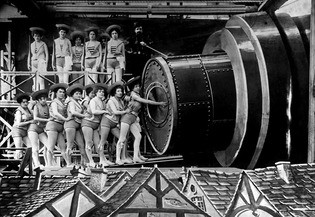 Despite my love for classic film, I am not one of those, ‘movies were better back in the day’ kind of guys. But there is no doubting that something totally lacking in film today compared to the silent era is the loving attention to detail that went into the construction of a movie. For an exceptional example, look no further than this film. The sets, props and design are all so lovingly detailed that practically any director working today could learn a whole lot from this film. In Melies day, technology bred creativity. Today, improved technology seems to only breed complacency and laziness when it comes to storytelling. Except in all too rare instances such as Alfonso Cuaron’s Gravity (2013). As well as the attention to detail, like so many other cinema innovators, Melies was on the cutting edge of improving the technical presentation of film stories. The editing in this film is pretty amazing, seeing the kind of fades that Melies was using over 110 years ago.
A Voyage to the Moon, despite its age, takes you somewhere truly fantastical. No doubt if you are a fan of silent and classic cinema, you would have already caught this. If not though, no matter your cinema preferences, take the short time required to check it out.
Verdict: Pint of Kilkenny
Progress: 97/1001
2014 Progress: 1/101
Like what you read? Then please like Not Now I’m Drinking a Beer and Watching a Movie on facebook here and follow me on twitter @beer_movie.
A Trip to the Moon is an open source film which means it is widely available in various forms. Here is a decent copy of the film that I watched on Youtube. Take a look and let me know what you think in the comments section below.
The Tunnel
I have been having a lot of issues with my internet of late, plus I have also been away a lot (and am heading off again tomorrow), so I have been a little quiet with my writing and reading of other folks work, so sorry about that. Seem to have found a small window of slooooow internet though, so thought I would chuck this review up.
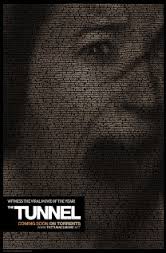
Australian horror flick The Tunnel (2011) got a lot of attention both here and internationally during its conception. Whilst it may not appear so innovative now only a few years removed, some of the tactics adopted by the producers of the film to get it off the ground and get it seen by as many people as possible, were pretty groundbreaking. Before crowd-sourcing was really a thing, they attempted to essentially crowd-source this film by selling of each frame of the film for a dollar. Whilst they did not end up selling all the frames they required, this approach got them enough notice to ensure sufficient funding was forthcoming to complete the film. Outside of that, the distribution model that was taken, and that continues to get the film out there, has ensured that the film has been seen by far more people than would have otherwise been the case. The film can be downloaded legally for free through a number of file sharing services, the film’s official website, watched on a number of VOD platforms, or purchased on DVD or Blu-ray (I personally took the Blu-ray option). I think these kind of left of centre approaches are becoming more common, which I think is great to see. I also think that as these approaches are used more and more they will become more refined and hopefully help smaller filmmakers cover the costs of their film and turn enough of a profit to ensure they can make their next one.
Outside of all that though, does The Tunnel actually work as a horror film? I say most definitely. The film starts slowly, struggling early on to get over the top of some of the more average performances and getting sucked into some of the trappings of its chosen mockumentary style. After this flat opening though, the action ramps up and the film turns into one of the more tense and frightening local horror films (or just horror films in general) that I have seen in recent times. The plot sees the NSW government planning to use the abandoned network of tunnels underneath Sydney for a water recycling plant. Suspicions are raised amongst the media however when for some reason, the Government simply drops the idea with no explanation whatsoever. Rumours abound as to the reasons why, including that homeless people who live in the tunnels for shelter have been disappearing at an alarming rate. To investigate, a news crew sets off below ground to investigate what the hell is taking place underneath the train network of Sydney.

For starters, how bloody amazing is a network of abandoned tunnels as a setting for a horror film? Instant atmosphere right there. The film makes good use of it as well, without ever really being cheap about it. There are some spectacular scares in this film. It is best at creating tension, using atmosphere and action onscreen to have you freaking out a bit at what is to come next. Perhaps through the first half the film is a little better at creating this tension than actually delivering on it. But that changes throughout the latter part of the film, with the conclusion and last 15-20 minutes being especially satisfying. I was concerned that the action and tension would disappear when the true nature of the sinister force below the surface was revealed. The filmmakers though use this to their advantage and if anything make things tenser following the reveal. Whilst I have written before about how tired the mockumentary genre can get, The Tunnel does a pretty good job of keeping it fresh. It is helped by the fact that those taking the footage are a news crew, which is something a little different and it also gives those in the action a reason to comment on it, without having it feel too contrived. There are also interviews with a couple of those who were involved which helps to break up the shaky-cam (which actually isn’t too prevalent in any case). The performances are all good from the main cast members, however none of these performances is the real focus. Rather they are there to serve the creation of tension and fear, and they manage that. First time feature director Carlo Ledesma brings a lot to this film though. It is not a film that is entirely straightforward to marshal and convey, but Ledesma does a very good job.
Insanely tense with some awesome scares The Tunnel is highly recommended for aficionados of low-budget horror. It will perhaps not win over too many from outside that fan base, but as an example of what can be created when driven and innovative people put their mind to it, it is really excellent.
Verdict: Pint of Kilkenny
Like what you read? Then please like Not Now I’m Drinking a Beer and Watching a Movie on facebook here and follow me on twitter @beer_movie.
 Beermovie.net