Monty Python’s Life of Brian
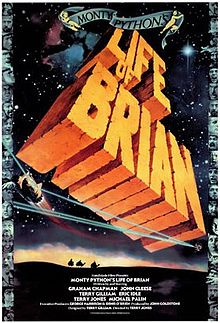
Monty Python is one of those institutions you were either introduced to at a young age and you join in the obsession, or they completely pass you buy. Given watching Monty Python’s Life of Brian (1979) was my introduction to the troupe, you can guess where I land on that spectrum.
The film takes a more is more approach to the joke count. The jokes bombard the viewer and it is hard to keep up. To be sure, many of them don’t land, in fact I would say most of them don’t. But every so often something stands out from the base level of silliness, with a level of inspiration that makes it plain why the Monty Python crew are held in such high regard by many. Unlike many of the great comedies, the jokes are really only on one level though. They mainly come from the witty silliness of the script. There is the occasional thematic hit, on religion for example, but even these are kept very light rather than genuinely subversive. This lack of subversion does date the film somewhat though with jokes using Jewish slurs, focused on a potentially trans character and some iffy rape jokes sticking out. This is not to say they were designed to offend, but they feel more dated because there is little attempt to make subversive points through the use of these ideas.

Despite the comedic writing being quite tight, perhaps the most endearing element of Monty Python’s Life of Brian is the slapdash, slightly anarchic quality that it has. Random storylines come and go with nary a care in the world, the comical Judean People’s Front takes centre stage and actors play a procession of different roles. It’s not really the kind of film where performances particularly stand out. But John Cleese’s manic energy and effort in each scene is tops. In addition, Graham Chapman as Brian, brings a charming boyish naiveté to that role. There are a couple of cracking tunes as well. I loved the opening theme whilst the final song, “Always Look on the Bright Side of Life” which accompanies perhaps the film’s best visual joke, brings back personal memories as it was the song that closed my pop’s funeral.
Verdict: All things considered, Monty Python’s the Life of Brian did make me giggle a fair bit. So on one level, mission accomplished. But beyond that, there is not really that much there, which is perhaps why this review is on the slightly short side. It’s a very well done, silly comedy. Not much more to say than that really. Stubby of Reschs
Progress: 129/1001
Related beermovie.net articles for you to check out: Mr Hulot’s Holiday and Groundhog Day.
Like what you read? Then please like Beermovie.net on facebook here and follow me on twitter @beer_movie
The Thing
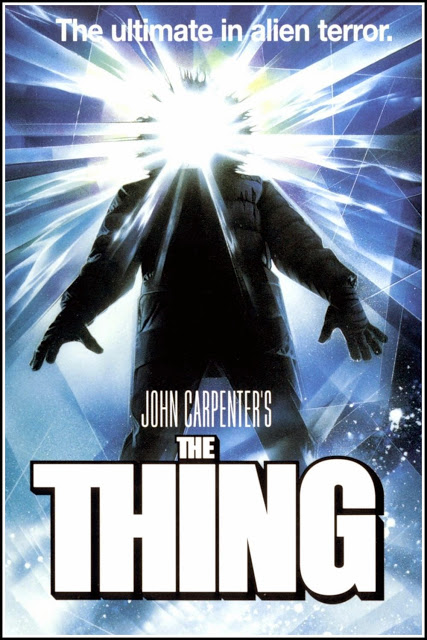
John Carpenter is one of the great genre filmmakers of all time with The Thing (1982) sitting alongside Halloween (1978), Big Trouble in Little China (1986), Assault on Precinct 13 (1976), Escape from New York (1981) and a bunch of others in his filmography. It is such a shame that he is not really working and as someone called for on Twitter we need a studio to give him a fat wad of money so he can pull a George Miller for us.
The set-up for The Thing is close to classic sci-fi 101, but in no bad way. Kurt Russel with one of cinema’s all time great beards and some other dudes are working in the harsh brutal isolation of the Arctic. Some ancient aliens get dug out of the ice and before you know it people are turning into slathering sorta alien things. But in the Animorphs/Body Snatcher style way where, at least initially, they look totally human. The plot is the classic sci-fi ‘aliens walk among us’ filtered through a proto-slasher structure. It trades nicely in that classical paranoia of who is human, and who is compromised. The lack of trust just totally eats away at people, all the while the audience is straining to guess who will be the next to die or to turn into some slathering bloody semi-human contraption. The opening shots, panning across the ice, establish the dual isolation and claustrophobia of the Arctic setting. As does a humourous early interaction between Russel’s R.J. Macready and a chess computer he derides as a “cheating bitch”. It’s a light and funny moment but it also captures the mental strain of where these men are working. The film does have some issues story-wise. The big bad is never established as well as it should have been and at one point the story seems to devolve into blokes just blowing shit up. However despite not possessing anything approaching the best horror narrative or even delivering the best horror ‘experience’, the film is still deserving of classic status, because the bits that are good are just so damn good.

Two technical aspects of the film elevate The Thing from assured genre film into the realm of classic – the practical effects by and Ennio Morricone’s work on the soundtrack. My notes for the film summed up this shift, with this extract capturing it: “oh yeah, once those effects started flying about, this got kinda awesome”. It did and it pretty much continues for the rest of the film. Indeed prior to the effects work raising up the film, it had been struggling to totally enrapture me. I was being kept at arm’s length by the assured, cool scientific feel to the story and script. The effects here are probably the best practical effects ever onscreen. But if not, then they are certainly the grossest, and yep I’m including The Fly (1986) in that discussion. My mouth literally dropped on a number of occasions, with moments like the autopsy scene or the dog metamorphosis being totally repulsive artistry. The effects are legitimately terrifying, even to this day. This is both on a visceral, gross level but also on an existential, body snatchin’, being absorbed level. As for the soundtrack, as great as Morricone is, I was a little bummed initially when I saw that he, and not Carpenter, was on scoring duties. I needn’t have worried though, because just as with the effects, Morricone’s work is quite simply about as good as it gets. From the very get-go the iconic composer brings gnarly atmospherics, plunging you into the isolated arctic freeze. The result of his score is that everything onscreen is amplified, the isolation or the visual beastly horror for example, without unnecessarily diverting the attention from the imagery at hand.

So beardy
Verdict: At times The Thing plays like an effects highlight reel scored by Ennio Morricone. Even just by itself that is no bad thing whatsoever, but throw in a little of Carpenter’s expert genre chops and Kurt Russel action leading man presence and beard, and you can easily see why this film is one of the 80s most beloved. A really fun genre experience. Pint of Kilkenny
Progress: 128/1001
Related beermovie.net articles for you to check out: Halloween Special: Halloween and A Fortnight of Terror Guest Post: The Evil Dead vs. The Thing.
Like what you read? Then please like Beermovie.net on facebook here and follow me on twitter @beer_movie
Mad Max
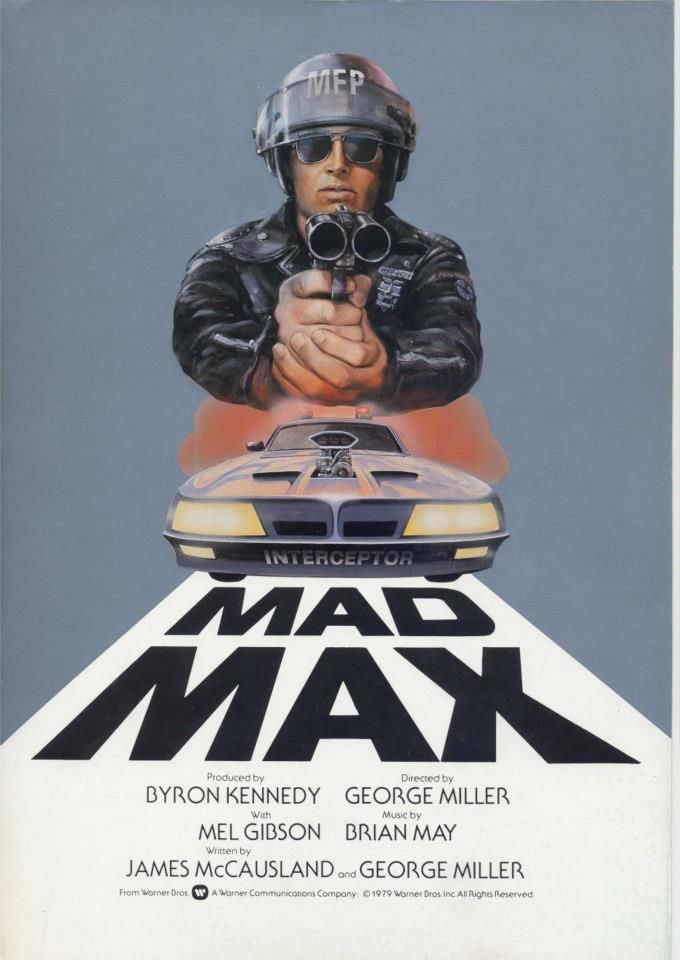
No film has ever dominated my twitter feed quite like Mad Max: Fury Road (2015) these last couple of weeks. Recognising that the series was a large gap in my personal filmography, I jumped back and took a look at the earlier films before checking out the new one, starting with Mad Max (1979).
 The first film is perhaps less well known that Mad Max 2: The Road Warrior (1981), especially in the States, but it’s a film that I much prefer and that I think has aged a lot better. There is a unique balance to proceedings, which are quite lightly plotted. Early there is constant action and kinetic energy being splashed all over the screen. Then the film settles, building out the world a little and focusing on the family elements of the plot, before kicking into overdrive for a really quite short final revenge sequence where Max turns very much from content, into mad. Up until that final part of the film, the main thematic propulsion simply comes from a dude struggling with what his job says about him as a person. A struggle many of us face and which helps to make this the most relatable film in the series. Indeed there is a universality to most of what is happening. The audience is happy to see Max bring his violent revenge to bear at the end of the film, due to the intimate understanding of what has been taken away from him by the villains of the film. Especially as it is brought about by one of the most coldly violent murders you will see on screen.
The word building in the film is simultaneously sparse and effective. Miller never feels bothered to overly flesh out the world with intricate levels of detail. As someone who grew up in rural Australia, the sparse, empty roads and fields were incredibly familiar. Thought the focus is not on effects or hi-tech futurism, the vision it builds is still pretty nightmarish. Some small flourishes – the search for fuel, a seemingly tiny population and ‘Prohibited Area’ signs – go a long way. This is a near future that is lawless, seemingly reigned over only by incoherence. Another aspect of this lawlessness is built up in the film through the invocation of the Western genre, which was so heavily focused on film’s most iconic ‘wild’ setting. The way people dismount their motorcycles, a focus on boots and jackets and the adjusting and removal of helmets are all lingered on, recalling Eastwood or similar riding in on a noble steed. These flourishes also feed in to the writing of the film which focuses heavily on building the psychology of the characters. On one level there are goodies and baddies, but dig a little deeper and what characterises a villain and what characterises a hero becomes far murkier. The performances support this, especially from Hugh Keays-Byrne as Toecutter, a character who has an aura and seeping malevolence which inspires his followers. Characteristics that Immortan Joe, played by the same actor in the franchise’s most recent, also has tons of. There is something towering, discomforting and ominous about both of those turns by Keays-Byrne. The baby faced Mel Gibson is also excellent, especially when turning and gaining his revenge. The actions sharply conflicting with the innocent face and family man of the film further detailing the psychological trauma that has been wrought upon him. And it’s always great to see Steve Bisley on screen as well.
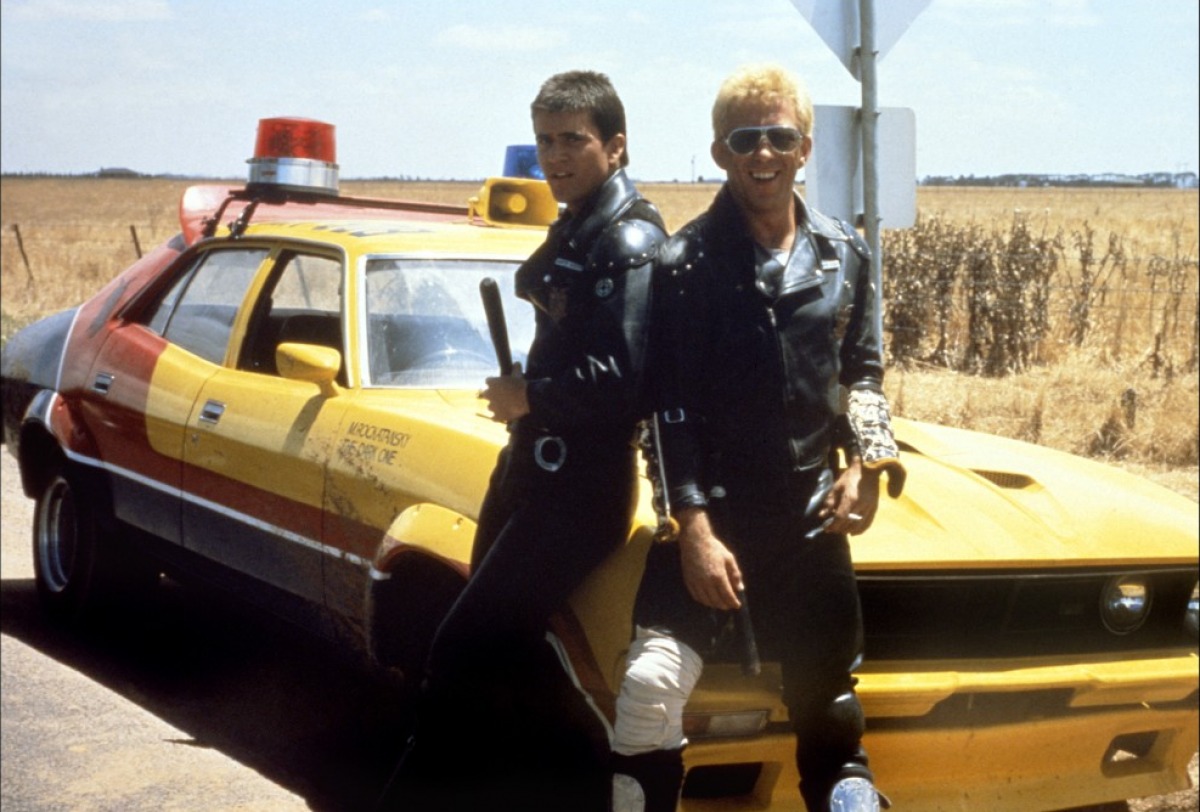
After seeing this film and Fury Road, it is fair to say that no one does vehicular mayhem quite like George Miller. Everything is so real feeling in this film and you feel the impact of every collision. It makes you wonder how on earth Miller got this film made really. The stunt work in the film is heart-stoppingly thrilling as cars and motorbikes converge violently over and over. Coupled with that is the camerawork, simply showing the action safe in the knowledge that the crowd will lap up every collision and explosion. The camera is also used to great effect to create tension. The sequence running from a forest, to a beach and then back to the forest is the tensest in the whole film, with nary a car in sight. Miller achieves this with slight movement of the camera, flitting in and out of the trees and masterfully controlling what is in the frame.
Verdict: Those taking a look at Mad Max for the first time, expecting the same level of freneticism Mad Max Fury Road delivered, may well be a little befuddled by what they find. But whilst it is different, it is no less unique and is a film that should be sought out by any action or sci-fi aficionados who have somehow never seen it til now. Pint of Kilkenny
Progress: 127/1001
Related beermovie.net articles for you to check out: The Great Escape and Quick Review: The Adventures of Priscilla Queen of the Desert.
Like what you read? Then please like Beermovie.net on facebook here and follow me on twitter @beer_movie
Borat

Upon release, Borat (2006) was something of a cultural phenomenon. The film introduced the antics of Sacha Baron Cohen to a far wider audience and threatened to unleash (or re-unleash) a style of comedy predominately focused on tricking unsuspecting bystanders into being part of the action. It also proved to be probably the most quotable film since Anchorman (2004), and there was a time there you couldn’t go anywhere without copping someone’s annoying as shit Borat impersonation.
Unlike Anchorman, at least to my mind, the cultural impact of Borat seems to have waned a fair bit. Revisiting the film now, it is easy to see why. When it was released, I was right in the film’s target audience, being a male in my late teens. Even then, I found the film quite mean spirited and a little wary of what it was trying to achieve. Fast forward nine years and those concerns have well and truly crystallised. This is an awful film. The way that Baron Cohen interacts with (predominately) well-meaning regular people, comes off as profoundly mean. The film is also far less satirically biting than I recall too. Really, the only part that lands is Borat’s interaction with the horrific jocky college bros on a road trip. Baron Cohen intelligently paints them into a corner, exposing their shocking prejudice and typical ‘white dude’ outlook on life. You can almost hear them wailing that women run the world and that the social justice warriors are ruining their comic books and rape jokes. That sequence is immediately followed by the only other sequence that threatens to deliver a similarly biting punchline, when Borat visits an evangelical mega church. But in reality, the salient points made here really only come from the sheer insanity of the parishioners, not anything to do with Baron Cohen’s skill as a performer.
 The major downfall of the film is that it never regularly achieves its goal of skewering American society. In that light, the film’s racism and misogyny becomes a little harder to ‘enjoy’. In fact, many of these aspects of the film (the portrayal of Kazakhstan for example) really add nothing to the supposed satire of the film. As horrible as all that is, the interactions that Baron Cohen has with members of the public leave me feeling the most uncomfortable. Most of the film is Borat annoying or triggering physical altercations with people going about their day. For every time that works and achieves a point, there are four or five examples of him harassing really quite sweet people, such as the driving instructor who goes totally out of his way to be polite and supportive of someone he thinks is new to the country. This same dude also totally subverts expectation when he launches an impassioned defence of women’s rights when fed lines you have to suspect were designed to elicit a different outcome. This is all the more frustrating as Sacha Baron Cohen is a distinctly skilled, not to mention ballsy, performer. He is just much more successful at displaying this skill in material that is not his own, Hugo (2011) and Talladega Nights (2006) the two examples that spring immediately to mind.
Verdict: Borat is less intelligent, satirical and funny than I recall. In fact, there is rather little of all three on display. It is an exceptionally mean spirited film too. To be clear though, that naked fight between Borat and his overweight, overhairy producer is still pretty funny. Schooner of Tooheys New
Progress: 126/1001
Related beermovie.net articles for you to check out: A Hard Day’s Night and Ghostbusters.
Like what you read? Then please like Beermovie.net on facebook here and follow me on twitter @beer_movie
The Texas Chainsaw Massacre
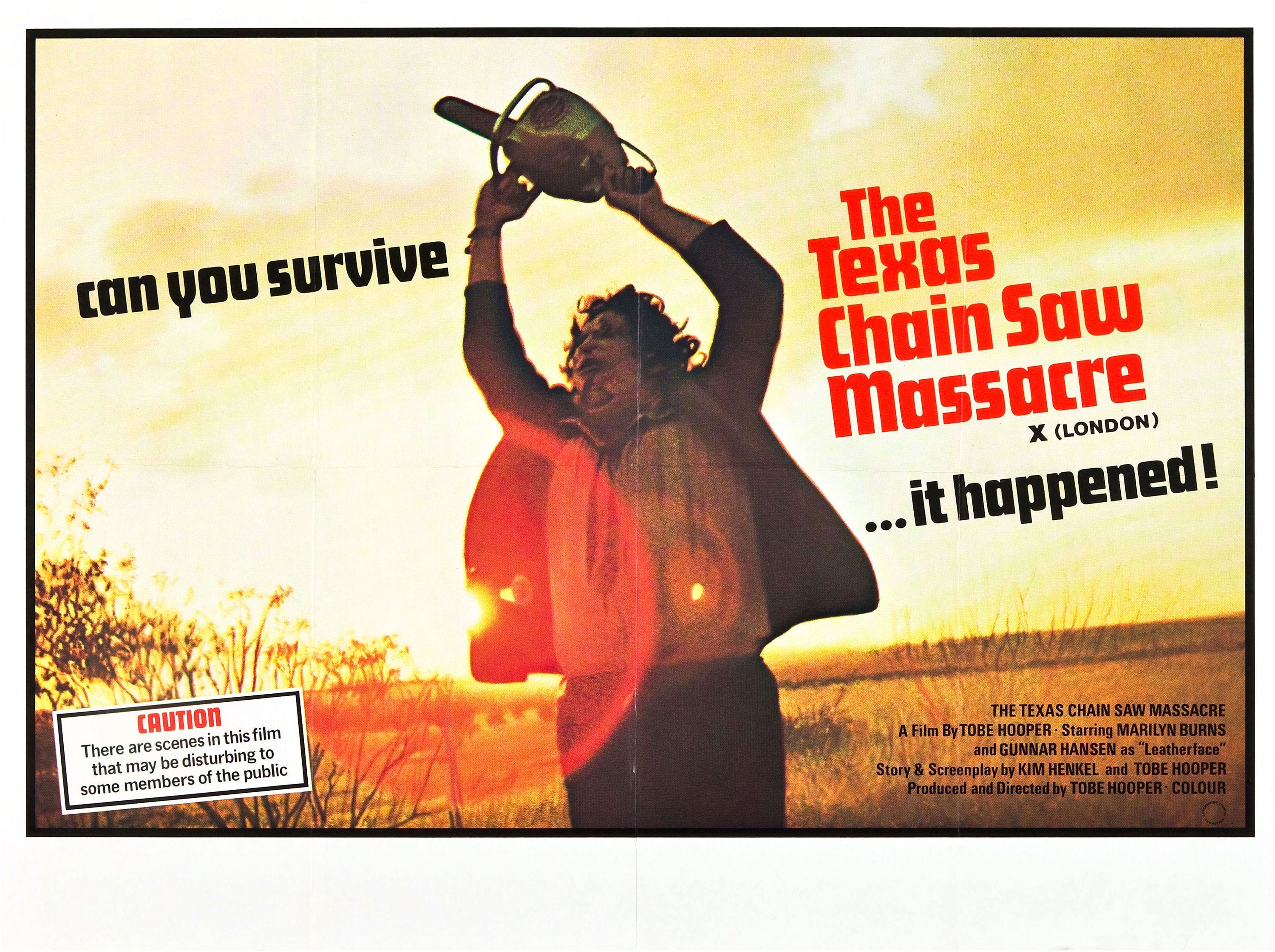
Amongst horror fiends, perhaps no film is more oft cited as a personal favourite or film that got people into the genre at a young age than The Texas Chainsaw Massacre (1974). Even if it perhaps does not hold up artistically as the absolute pinnacle of the genre, it is plain to see why the film has been so impactful for so many people.
If The Exorcist (1973) is one of the finest and most artistic films ever made that also happened to be a horror film, then The Texas Chainsaw Massacre is a short, sharp punch right in the face. Clocking in at 83 minutes, the film takes its time building up before unleashing a physically imposing villain upon a group of unsuspecting and essentially defenceless teens. The very last act slows down a little, trying to peel back the layers of motivation, and as a result the ferocious narrative force of the film tapers off a little. It also makes some silly, almost slapstick tonal choices that jar when juxtaposed with the intensity of the middle section. Though to its credit, the phenomenal final shot restores the feeling of terror that the middle section so chillingly creates. Right from the get-go of the film there is a feeling that something is not quite right, a disconcerting feeling that the world onscreen is off-kilter compared to the normality of our own. The voice-over that opens the film commenting on events to come and the utterly gross imagery that assault your eyes will immediately make you feel ill at ease. Thrown from there into a trip past a slaughterhouse and some detailed chat about the horrific ways cattle are slaughtered, it’s an atmosphere that never lets up, still underpinning events as they go from the eerie to the quick paced and shatteringly violent. It’s difficult to describe the feeling actually, occasionally it feels like you’re watching something whilst high, or that everyone in it is high. A gonzo horror film if you will, though that aspect of the storytelling does pass as the film progresses.
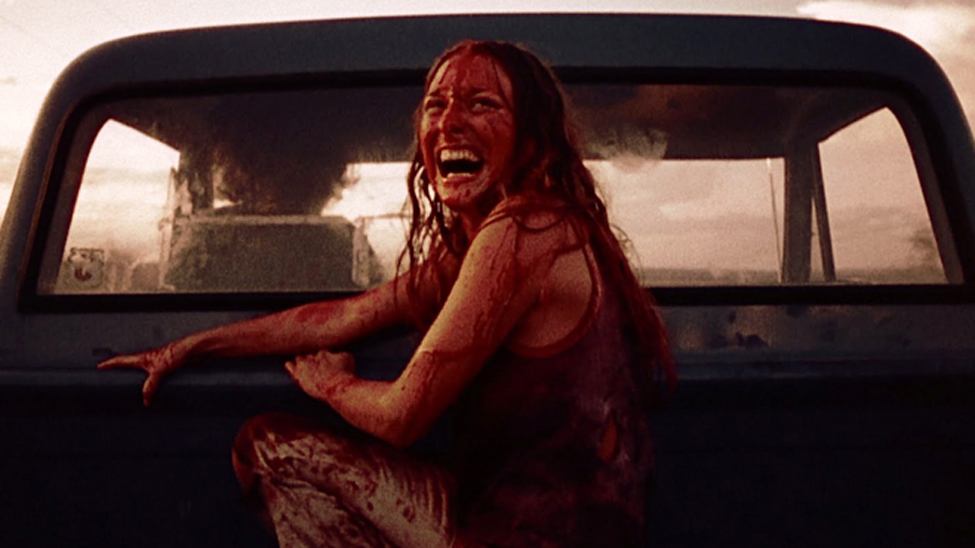
Contrary to some aspects of its reputation, The Texas Chainsaw Massacre is a very well made film. It is shot really nicely, with a pretty active camera, rather than a propensity for stationary shots favoured by many horror films. The camera is never frustratingly dynamic in its movements though, it always helps to add to the tension in the film, rather than aiming to cheaply build tension through obscuring parts of the action. The film relies a lot on fast paced editing to amp up the stakes as well as push the action pace-wise to a fever pitch. That editing is largely responsible for perhaps the best moment in the film, a chase scene which quickly flits between the fleeing heroine and Leatherface, culminating in a little chainsaw on door action. Thematically, the film makes some interesting connections between animal slaughter and the slaughter of the teen characters, which helps to hold interest through the first period before the murders start up. Once they do though, this theme is rife, reinforced by costuming, the method of the murders and how the bodies are disposed of. The brutality of the film takes on a new layer when considered in relation to the themes of animal slaughter, perhaps explaining why the film and some of the actions in it are so crushingly brutal and seemingly devoid of all purpose. Killing in the film feels wholly unnecessary. This aspect of the film is the one that has stayed with me since I saw the film and is one that I think is neglected in a lot of discussion of the film. As a villain, Leatherface is perhaps a little overshadowed by his reputation, in the fact that despite the violence he unleashes, he is plot-wise somewhat inconsequential. But he’s a terrifying physical presence and his jerky and inhuman movements are totally chilling.
Verdict: The Texas Chainsaw Massacre is as terrifying as its reputation promises. At one point after a particularly unexpected slaying I was peeking behind my couch to double check Leatherface wasn’t back there. There are some missteps for sure, but it’s a classic of the genre and feels a lot more modern than the mid-70s proto-slasher that it is. Pint of Kilkenny
Progress: 125/1001
Related beermovie.net articles for you to check out: Halloween Special… Halloween and The Exorcist.
Like what you read? Then please like Beermovie.net on facebook here and follow me on twitter @beer_movie
Secrets and Lies

Mike Leigh is known as one of the leading lights of British social realism and Secrets and Lies (1996) is generally considered to be his best film. The film was feted at Cannes upon release and continues to be discussed and revisited extensively inside film culture and criticism.
Secrets and Lies is a film of two totally separate halves, clearly delineated by a single scene. I’m not sure I’ve ever felt so differently about two halves of the same film. The first feels very domestic and at times like an episode of a soap opera, with a strange over-acting, mugging style of performances. This half of the film is almost totally without incident, setting up the three disparate storylines you know will cohere in the end, but seeming to take an interminable amount of time getting there. However just when you feel destined for a mind-numbing experience, Leigh, along with actors Brenda Blethyn and Marianne Jean-Baptiste deliver one of the better scenes of film history. I’ll avoid giving away too much detail for fear of spoilers, but it’s is a first meeting in a cafe, apparently mostly improvised in a single take. They meet and run the gamut of emotions – apprehension, awkwardness, comfort, relief and cautious affection. The two performers establish a great dynamic and blow everything up to this point away. This scene is perhaps the single greatest argument against the notion that realist films somehow equal boring. From there, the film seems to breeze by. Not because it has gotten ‘lighter’ in any sense. If anything the heavy themes are explored in more depth from this point on. But because the film has some much needed dynamism to it as new relationships are formed and impact on all of those built up so slowly in the first half of the film. This all culminates in a family BBQ that takes up most of the film’s last half hour. Just like the cafe scene, here is a sequence that is riveting on the surface level, but which also sits atop of untold depth both thematically and in terms of wrapping up the film’s plot.

The obvious thematic concern of Secrets and Lies is a focus on identity, but the concept of class and class relations is also prevalent. Notions of identity are examined through the prism of a family, like so many, straining at the seams or already broken. Part of this is an establishment by Leigh of an example of intense familial loneliness that is actually quite devastating to behold. From there it interrogates age old themes such as what defines a person and how that definition comes in opposition to those around them. Typical themes that are examined through what I think is a relatively atypical manner (again, I’m trying hard to avoid spoilers here). Similarly traditional notions of class are both parodied via exaggeration and inverted throughout the film, always reflecting and challenging those themes of identity. There is a third, very simple theme of the film too: families are totally fucked up. The film totally nails that one. Performance-wise, the film dispenses with much of the understatement so prevalent in realist film. Brenda Blethyn’s performance is a brilliant, if strange one. Through the first half, her over the top, dottering and mentally fragile mother is frequently distracting. But seeing that aspect of the performance in a new light after the rest of the film suggests it’s an effective approach as a whole. At times she is crushingly tough to watch as newfound emotions overtake that earlier dottering quality. Timothy Spall is equally good in what is perhaps a less-showy role, his photographer character provides a unique lens for the film to be seen through, as well as attempting to provide a sense of stability to the mess of a family swirling around him. And he slays an almost Shakespearean soliloquy toward the end of the film that in lesser hands would have been cringe worthy, but here it recounts the concerns of the film as well as provoking additional consideration about them.
Verdict: In the end, the achingly dull first half of Secrets and Lies is well worth enduring for the exceptional craft and heart of the second. Perhaps on a repeat viewing, the first will actually enhance what comes after it. For a thematically dense, but not tiresome drama you can do much, much worse than this. Pint of Kilkenny
Progress: 124/1001
Related beermovie.net articles for you to check out: MIFF 2014: Jimmy’s Hall and CIFF 2014: Eastern Boys.
Like what you read? Then please like Beermovie.net on facebook here and follow me on twitter @beer_movie
The Exorcist
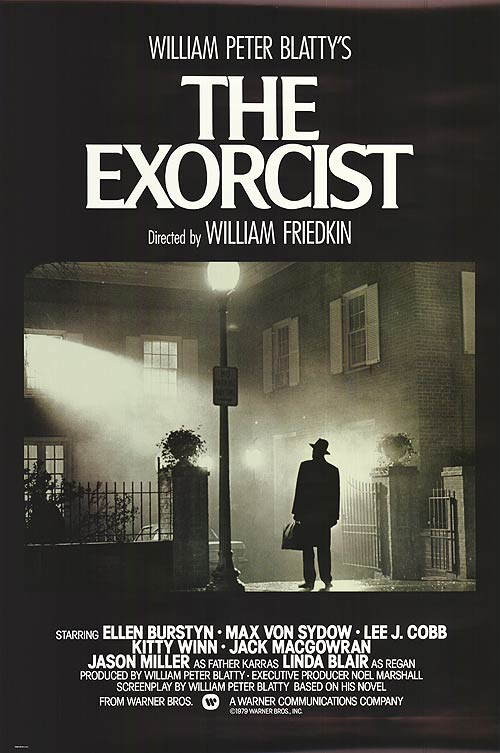 William Friedkin’s The Exorcist (1973) may well be the most iconic horror film of all time. Everyone has a story of the first time they saw it, or shudders at the mere mention of the film, refusing to ever watch based on its reputation. My mum often talks about how petrified she was when my old man took her to see it when she was about 17.
Everything you’ve heard about the film don’t prepare you for just how strange it is. I was expecting a pretty mainstream horror film. But after the chilling credits music and opening shot, the film heads off for an extended Northern-Iraq set prologue. These scenes in the desert almost feel like they could be from a Terrence Malick film. The most shocking thing about watching The Exorcist for the first time for me was the ethereal and not at all mainstream vibe of the film which was so different to my expectations and so refreshing as a result. It’s unapologetically a big swirling mass of a film.
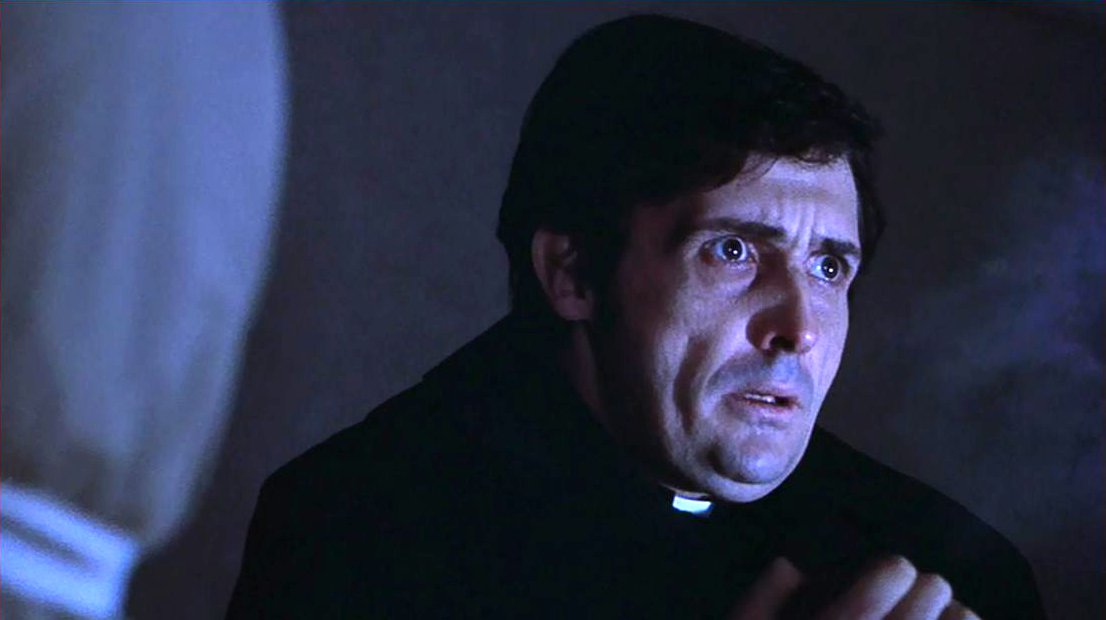 So much discourse around The Exorcist centres on the religious facets, which is unsurprising given the title. However what struck me whilst watching the film was the fact that it unfolds really through a medical prism. It is assumed by all of the characters that the issues besetting Regan are medical in nature. When Regan’s mum first approaches Father Karas regarding an exorcism (at the suggestion of doctors), even he steers her enquiries away from the spiritual realm. One part of why, despite the strangeness of the film, The Exorcist has become such a beloved horror classic, is the imagery that Friedkin and co were able to produce. Regan scuttling down the stairs, her head turning right around, or even just her appearance towards the end of the film, these are some of the most arresting and iconic images that the genre has ever brought to life. The film progresses methodically along for much of its lengthy running time, but then explodes with intensity and never lets up afterwards. The assured craftsmanship of the writing and directing ensures that none of the events of the film ever feel ludicrous or silly. The culmination of this build-up comes as a distinct pall comes over the film throughout the climactic exorcism, in as gripping a half hour odd of cinema you will ever come across.
Watching the film, you can see the similarities it has with films of a similar vintage, most notably for me The Omen (1976) – the presence of priests, a washed out colour palette and a similar feel to the domestic settings. It wheels out some traditional horror tropes as well, including the freaky attic. But having said that, by the end of the film it is plain why The Exorcist is held in such high regard, because it takes everything its contemporaries were doing, does them better and then does a whole bunch of things those other films never even attempted. The film is very classically and beautifully shot, trading in silhouettes, shadows, low and high angle shots. All of which look damn beautiful on the sharp blu-ray release that I watched. Friedkin is able to place the camera in such a way that it gets not only really pretty shots, but also creates a whole lot of tension, without ever feeling gimmicky. 
One of the hallmarks of so much, but not all, really classic horror cinema is the quality of the performance. And with Linda Blair, Jason Miller and Ellen Burstyn, The Exorcist can legitimately lay claim to having three of the best the genre has ever seen. So much of the religion/medicine divide is summed up through Jason Miller’s world weary turn as Father Karras (incredibly his debut film performance), Ellen Burstyn is ultra-believable as a mother going through an absolute living nightmare, but it is Blair’s film. As the possessed Regan, she is so totally in control of her performance. Remarkably so in fact for someone of her age. The range of content she handles, innocent/inquisitive child, totally possessed force of nature, explicit sexual references and profanity, is all so well done that not once are you taken out of the world of the film.
Verdict: Not only does The Exorcist deserve its exalted reputation, it probably deserves more. I was unprepared for just how strange and iconic an experience watching this film would be, as well as blown away by the density of the material and the themes. This is a pretty great and truly unique piece of cinema. Longneck of Melbourne Bitter
Progress: 123/1001
Related beermovie.net articles for you to check out: The Omen and Frankenstein. Like what you read? Then please like Beermovie.net on facebook here and follow me on twitter @beer_movie
Groundhog Day
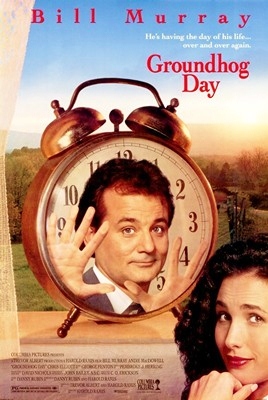
If there’s a film I see named by comedians as being influential more than any other, it’s Groundhog Day (1993). Similarly, the film’s director Harold Ramis and star Bill Murray, have an aura that seems to hold sway more in the comedian community compared to the broader public sentiment.
Often the exact reasons as to why these differences in standing preserve are intangible. But Groundhog Day also makes plain many of the reasons why. Whilst zany and offbeat, the film is impeccably and very tightly structured. The repeating structure is a framework from which Ramis and Murray can weave their magic. To achieve this, the script from Ramis and Danny Rubin cleverly builds slight layers on top of itself. It references and slightly tweaks aspects from the ‘day’ before. This is a major reason why the simple plot of Murray’s egotistical and rude TV weatherman Phil being stuck in a time loop, waking every day in a two-bit town that he despises, never becomes numbingly boring like so many of the film’s imitators. The script reflects the film as a whole. It is boisterous and thoughtful, as is the way the film is put together and progresses through musical choices and the editing. Not only that, what is such a tired plot structure actually feels very fresh here, with the script exploring all the nooks and crannies that the concept presents. The structure is used to novel ends, with the generic ‘arc’ or change of a character we expect in basically all films, technically compressed into a single day span.
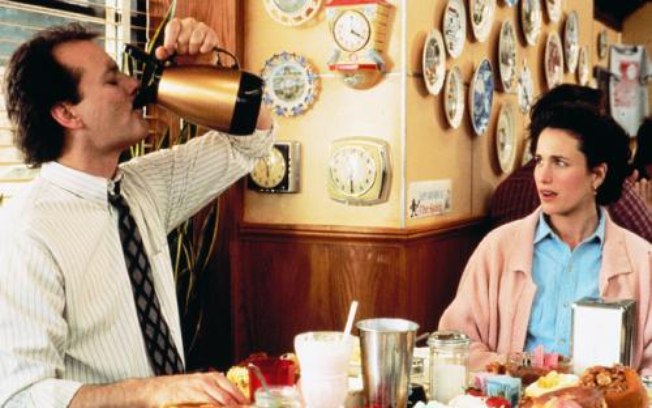
There is little doubt that a couple of the film’s plot points jar a contemporary sensibility (or perhaps just my contemporary sensibility). For a time that Murray’s character simply uses his predicament to bed women. At one point he practically tries to rape his love interest, and whilst he does in a way get his comeuppance for these acts, it is not as direct as it maybe could have been. Later on though, the manner in which Phil respectfully interacts with Andie MacDowell’s Rita and uses his ability to re-live the same day in their relationship, feeds into the core arc of the film. Those earlier moments, simply using his ‘skill’ to get into the pants of hot women around town, don’t serve the same narrative purpose. Murray’s reputation as one of the supreme comic performers is supported by this film. Right from the get-go, you can sense his comedic timing and rhythm. His whole body conveys that, his subtle movements and just the way he carries himself. These talents allow him to have the audience in the palm of his hand, whether he’s being the jerk you love to hate or the silly clown making you roar with laughter. Whilst she does not do much of the comedic heavy lifting in a ‘straight’ role, MacDowell has a really nice naiveté to her character that suits the plot and allows the audience to better appreciate the arc of Phil. The other standout performance is Michael Shannon in a wonderful two scene or so effort, mainly because it involves a Wrestlemania reference.
Verdict: This really is an exceptionally funny film and perhaps career best work from Ramis and Murray. Whilst there are occasional beats that are now a little dated, this is one of the smartest comedy scripts ever brought to life and is one of those classics that you need to track down if you’ve never seen. Pint of Kilkenny
Progress: 122/1001
Related beermovie.net articles for you to check out: The Trials of Muhammad Ali and Fightville.
Like what you read? Then please like Beermovie.net on facebook here and follow me on twitter@beer_movie
Edward Scissorhands
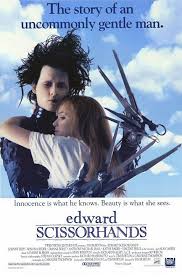
Tim Burton and Johnny Depp have becoming increasingly known as the filmmaking team of unintentional nightmares. However that is certainly not the case when the highly influential cult classic Edward Scissorhands (1990) is involved.
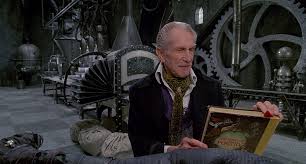
Influences haunt the film throughout, the first straight off the bat as the creation by the The Inventor (awesomely Vincent Price) of Edward openly suggests Frankenstein, both in Mary Shelley and numerous other iterations. The grandmother relating the kid the film in the form of a bedtime story recalls The Princess Bride (noting that is a trope with origins far longer than that book/film). There is a Blue Velvet (1986) era Lynchian sheen to the hyper-suburbia settings. It takes a lot of storytelling skill to be so openly influenced by greats that have come before, but to never feel derivative or lesser as a result. Like a great musical cover, homage such as this, whilst not necessarily surpassing the source, can provide something different and equally worthwhile. This even extends to the central character of Edward, who evokes the character of Pinocchio, with his exaggerated boyishness and the sense that while close, he’s not quite human.
 Living in an age of films with exhausting, lengthy set-ups (hell, that’s the entire function of some films), this sort of floors you with how quick it gets rolling. Edward is on his way home with his adoptive family within about the first 15 minutes. From there, a lot of the early joy of the film comes from the domestic minutiae, such as Edward attempting to put his pants on. Throughout the entire film, but especially in these parts, Johnny Depp gives a performance with a physicality that borders on slapstick. Happily, going back 25-odd years means that the performance is not weighed down by his atmosphere sucking shtick. The other lead, Winona Ryder gives what is also probably the best performance of her career. She brings a whimsy and teenage hard-headedness to her role and quickly accelerates the strong bond between her Kim and Edward, which does not really get going til a fair way through the film.
For a relatively modern film, Edward Scissorhands has exceptional reach. The film is a big (borderline obsessive) touchstone for the goth and emo subcultures, as well as being a formative film for a huge range of people outside of that. Given I don’t and never have belonged to either of those subcultures, I won’t presume to know the entire connection. Part of it would be the presentation of notions of ‘right’ and how that does not always represent the nicest or most humane thing to do. But I would also guess the fact that the film is something of a portrait of an outsider plays a major role. The film both works and doesn’t on this front, with Edward’s difference accepted and feeling slightly exploited throughout. Though what it does capture very well is how if you’re different, any mistake will have you judged completely, through the prism of magnifying and demonising one’s quirks.
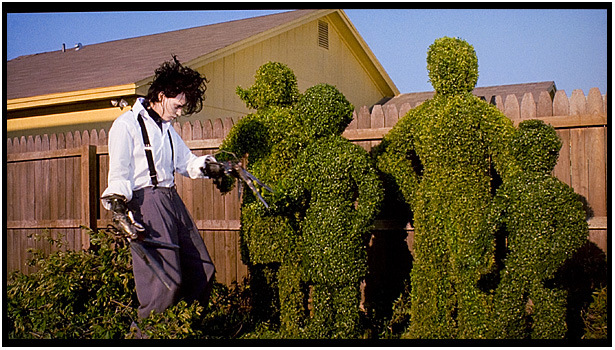
There is something distinctive about the aesthetic design of the film. Sure there is a dash of the Lynchian as I mentioned earlier, but Burton possesses that and turns it into something of his own. Predominately this is achieved by splashing light gothic elements and tone throughout the visual look, providing an old fashioned contrast to the sheen. This combination suits the character of Edward perfectly. Even the casting seems to tap into this vibe, especially that of Vincent Price, who cooped up in that scary house on the hill, channelling Dr Frankenstein, functions as both an aesthetic choice and smart piece of casting. Throughout, the filmmakers seem to be toying with the look of it all, the house on the hill for example looks intentionally fake. This toying with form, across a range of the aspects of the film, is something Burton seems far beyond now. On some rare occasions, the film does feel a little over-stylised. But unlike Burton’s later films it never feels as though the showy style has become the point of the film, the attention to story and emotion is never overwhelmed. Danny Elfman is a composer indelibly linked to Burton’s work. I can’t say I have seen all of the films they collaborated on, but I struggle to imagine any of the scores being better than this one. Like so much else in the film, there is a playful interaction with something of the past, in this case classical music. The result simultaneously evokes the suburban and just as importantly deftly emphases that light gothic sensibility which makes the film so unique.
Verdict: Tim Burton is so often a maligned filmmaker that it is genuinely illuminating to go back and see what made him a visionary in the past. As far as film fables go, Edward Scissorhands is a genuinely great piece of cinema, whimsical yet laden with meaning. As strange as it is on some levels the film has such a huge following, it makes a whole lot of sense on plenty of others. Longneck of Melbourne Bitter
Progress: 121/1001
Related beermovie.net articles for you to check out: A Tribute to Dennis Hopper: David Lynch’s Blue Velvet and Live Tweet Review: Batman.
Like what you read? Then please like Beermovie.net on facebook here and follow me on twitter @beer_movie
Once

Once (2006) was one of those strange films for me, where a bunch of people I respect all recommend it to me, and yet I still can’t get enthused about checking it out. Tis probably time I learned my lesson, because I often end up being a big fan of such films, and this is no exception.
I knew that this film had a small budget, but this is truly micro-budget stuff and it is so invigorating to see a film like this have such a monumental following. This is not a particularly nice looking film. It often looks quite cheap and digitised, which is a further testament to how the filmmaking on display has connected with many, many people. Given the way it combines love story and musical though, perhaps the following is not such a surprise. The non-professional actors do occasionally stick out. But as soon as another song is weaved seamlessly into the film, you will stop caring. And reflecting back on the film, the acting is not something that negatively impacts on being able to appreciate the film.
Of course such a focus of the film is the music and there are some great tunes right from the start. Not the usual catchy twee rubbish you are used to from films musicals either. The songs are genuine too, not looking to subvert anything or be ironic at all. The opening stages of the film are so music heavy that it almost functions like an ambitious music video. The frequency tapers off, but the way that the songs naturally land as part of the narrative means they never feel like they stick out or that the director felt it was time to squeeze another one in simply for the sake of it. The more scripted aspects of the film did feel a little clunky and even trite initially. But as the story progresses and goes a bunch of places, both wholly expected and totally not, these sequences bothered me less and less. The basic plot points are quite stock standard, but the thematic and psychological approach taken to them separates Once from the pack.
Verdict: Once feels as much like a concert film as anything else, which is no bad thing. The film starts slow but as it grows into its unconventional storytelling, you will gladly go along for the ride. Especially as the really beautifully done musical interludes come thick and fast. Pint of Kilkenny
Progress: 120/1001
Related beermovie.net articles for you to check out: MIFF 2014: Jimmy’s Hall and Hunter: For the Record.
Like what you read? Then please like Beermovie.net on facebook here and follow me on twitter @beer_movie
 Beermovie.net