Snowpiercer

Nothing gets me excited like a film that has truly split opinions. So by the time I finally got around to watching Snowpiercer (2013) a couple of weeks ago, my expectations were pretty high. I don’t particularly fit into the love or hate camps for this film, but that is not to say that the experience was a letdown.
 The film is set in a frigid near-future, where attempts to reverse the effect of global warming have backfired spectacularly. Only a very small amount of people survive, circling the earth perpetually on a train known as the “rattling ark” (a name I love as a piece of imagery, but which is never really utilised as it could be). The class system sees the poorer people contained at the back of the train, with the hedonistic rich folk up front. The rebellious underclass decides to fight back, which involves battling their way to the front of the train to take control. From this initial set-up, there is a charmingly natural video game level style progression along the train. For me, the best moments of the film were the action beats. They utilise the train setting best, as it is in those moments that you really feel the claustrophobic surrounds of the train pressing in on the combatants. The action also gives us the most riotously enjoyable silly moments of the film, such as the set-piece involving a night-vision massacre in a tunnel. Snowpiercer is best when it keeps it simple early, focusing on the journey to the front of the train, rather than as the action reaches the front of the train, where things get a little silly and focused on clumsy attempts at showing the hedonism of the rich.
There is more than a hint of old school sci-fi to Snowpiercer. It opens with images of chemtrails, and the music over the image definitely invokes an 80s Cold War paranoia vibe. Much of the film seems like an affectionate nod to that era of the genre. The presentation of the film, its high-concept construction and especially the class concerns that are so prevalent in much of classical sci-fi. There is little subtlety to how these class themes are drawn. But for the most part they work well, hitting there mark a lot more than the ham-fisted barbs thrown the way of organised religion which just seem a far too simplistic, superficial and tacked on to be at all satisfying.
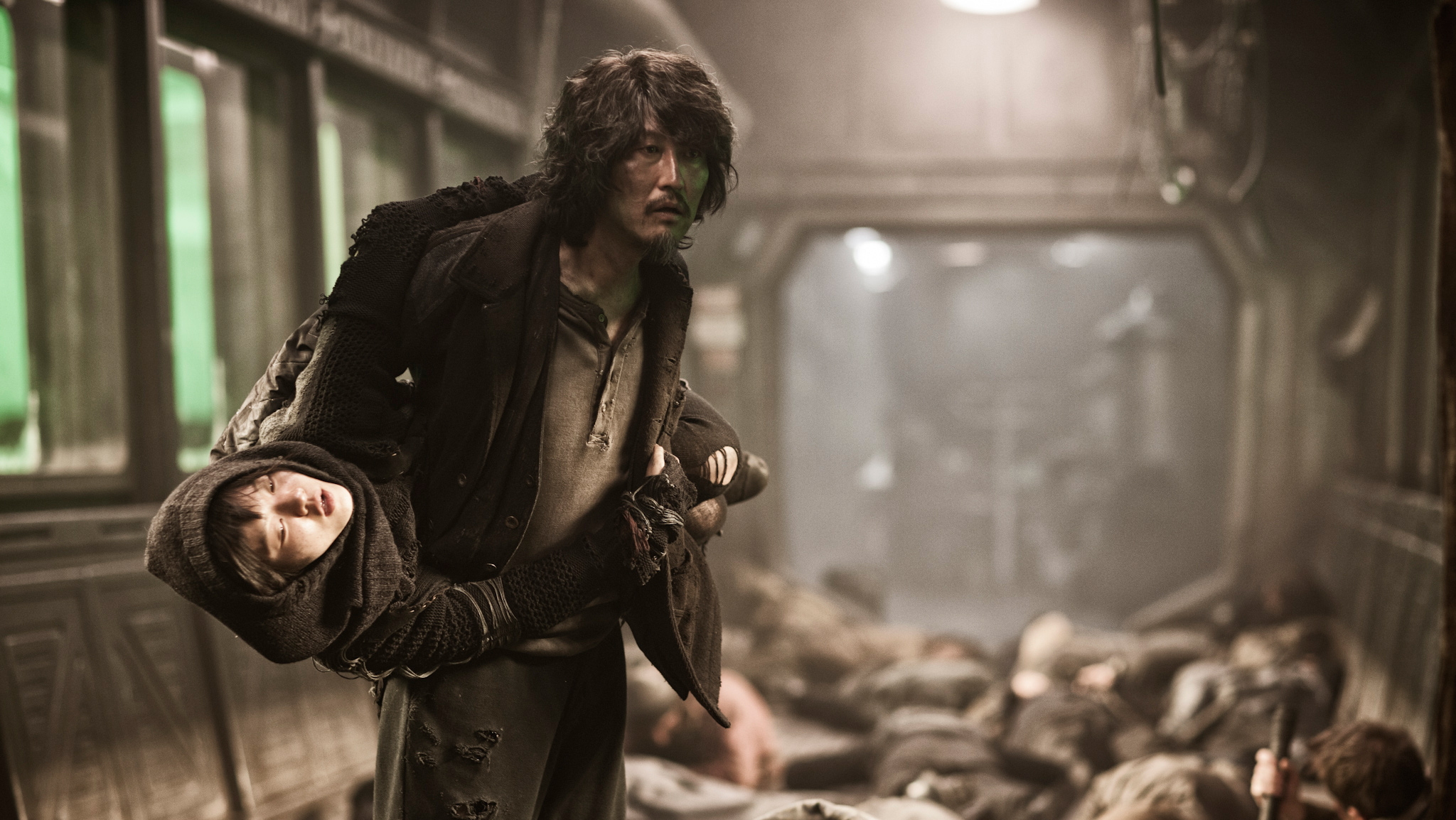
It is quite strange to consider a film such as Snowpiercer a performance piece, but there are a lot of fantastic talents plying their trade here in what is a refreshingly multicultural cast. Chris Evans delivers a very different everyman hero to his combination of hyper-masculinity, hyper-everyman shtick from the Captain America films. It’s much more of a real character than Cap, with an inherent weakness that bubbles over throughout the film. Tilda Swinton is spectacularly over the top as an early villain, though it has to be said, she feels like she is in a completely different film… almost certainly one directed by Terry Gilliam. Actually the aesthetic of the film overall gradually shifts from a griminess to a rather Gilliam inspired one. There are strong hints of the visual and tonal style of something like Delicatessen (1991) through much of this. Even down to the look and feel of the technology of the film, which is definitely not steampunk, but there are certain parallels to that sub-genre that can be drawn. It became too familiar for me though, distracting even, and left me yearning for the earlier sequences that felt so dirty, decrepit and grimy that they stood out
Verdict: Snowpiercer is at its best when it sticks to the simple action premise of getting from one end of the train to the other. The film makes for a unique experience and one that should be checked out if you have the slightest interest at all. I just found that the stylistic and narrative meanderings lessened the overall film. Stubby of Reschs
Related beermovie.net articles for you to check out: Locke and Rick and Morty Season 1.
Like what you read? Then please like Beermovie.net on facebook here and follow me on twitter@beer_movie
The Infinite Man
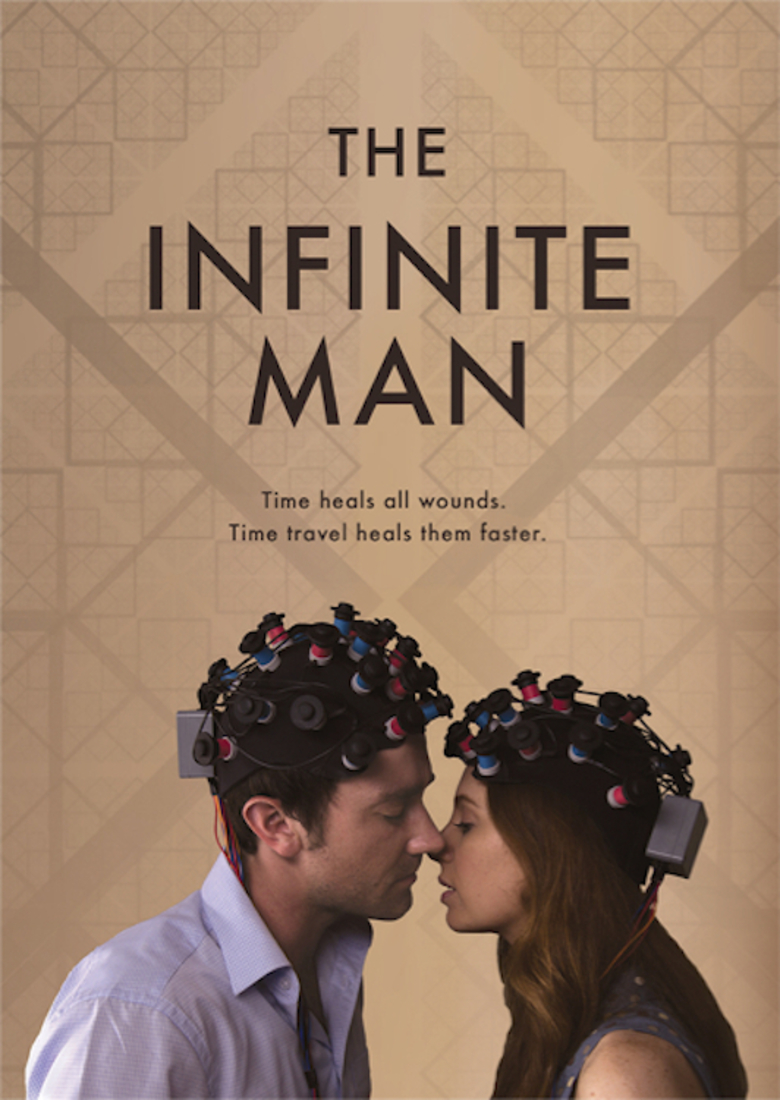
The Infinite Man (2014) is an Australian sci-fi comedy which did not make much of a dent at the local box office. It has however created a reasonable amount of buzz amongst those who managed to catch it, even popping up on some best of 2014 lists over the past couple of weeks.
Immediately the film makes no bones about the fact that it is a love story first and foremost. We meet Dean and Lana, celebrating an anniversary at an outback motel. Or tyring to anyway. Dean is a great character, a lovesick, very nerdy and slightly neurotic scientist. He is desperately trying to have the perfect weekend with the love of his life, meticulously setting out a weekend of traditional Dutch music, massage, tantric sex and a whole lot more. The focus from this man, whose work is bound up in the logic of the universe that surrounds him, is very much on the meticulous control of variables rather than the spontaneous moments that arise with the one you love. This attribute, perhaps the strongest of his character, leads to an inevitable breakdown in the success of the anniversary weekend and sends the film spiralling down a time travel road, as Dean repeatedly attempts to do-over the weekend more successfully.
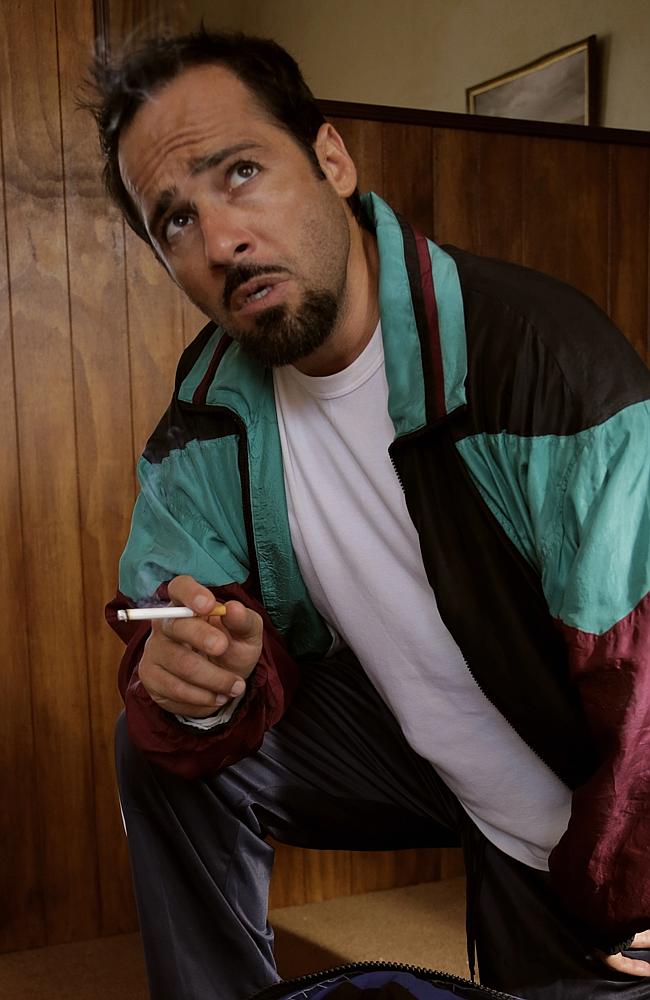 Occasionally time travel films would be better without the time travel. And that’s kind of how I feel about this film. I was totally onboard with the quirky love story vibe of this film. But once the time travelling starts, it just lost me a bit. It’s by no means bad, but it just slows the film down a lot in a storytelling sense. The time travel elements allow the themes of the film – living in the moment, changing the past, love, and the ability to let go – to be examined in greater depth. Unfortunately for me though, this enhanced thematic depth came at the expense of narrative enjoyment. Whilst initially the approach to the time travel captured my interest, with different versions of all the characters trying to avoid running into each other, it quickly became too slow, bogged down away from the emotional heart that had been so well established.
There are only three characters in the film and they are all good, especially the lead two. Alex Dimitriades is excellent as always as Terry, Lana’s ex-boyfriend who is basically a caricature to drive the plot along. Given the skill that Dimitriades possesses as a comedic actor though, his character does not feel tacked on or annoying as a narrative device. Dean, played by Josh McConville, is the most interesting of the characters. He is adeptly set up early on as a man whose (considerable) intelligence seeps into and generally overwhelms every aspect of his life. This is the constant battle for Dean throughout the entire film. Despite being relatively young, Lana (Hannah Marshall) seems weary with the world and especially the men who surround her. She is sick of Dean’s lack of spontaneity and the oppressiveness of trying to be with someone so rooted in the scientific. Despite the small cast, the film never seems empty, helped along by the fact the material is filmed with a light tough and all three of the actors are really good with what they have.

You can see that this was a low-budget film, but director Hugh Sullivan and his crew have done an excellent job of utilising what was available to them. The isolated location gives it a distinctively Australian flavour, even if perhaps initially it does not feel like it suits the story. But the story grows into the location and by the end of the film it feels a more natural fit. Once the characters are established it effectively functions as a blank slate for the material and actors to weave their magic on. The sparseness is in fact a benefit, as it focuses the viewer’s attention in on the strengths of the film that are not dictated by budget. Script wise, The Infinite Man is a strange beast. It is a truly funny script, but one without any real jokes in it. Rather the observational style, especially around the frustrations and challenges of relationships, will have you chuckling along. The editing is particularly sharp in the film, hinting at the time travel aspects in the first act and then bringing them to life later on.
Verdict: In the end, The Infinite Man is one of those films that I wanted to like more than I did. As a quirky rom-com with a scientist lead character the type of which is rare in this kind of film, there is definitely plenty to enjoy. It’s just that the time travel that dominates the narrative slows the narrative flow of the film more than I would have liked. Stubby of Reschs
Related beermovie.net articles for you to check out: Predestination and Quick Review: The Adventures of Priscilla Queen of the Desert.
Like what you read? Then please like Beermovie.net on facebook here and follow me on twitter @beer_movie
Rope
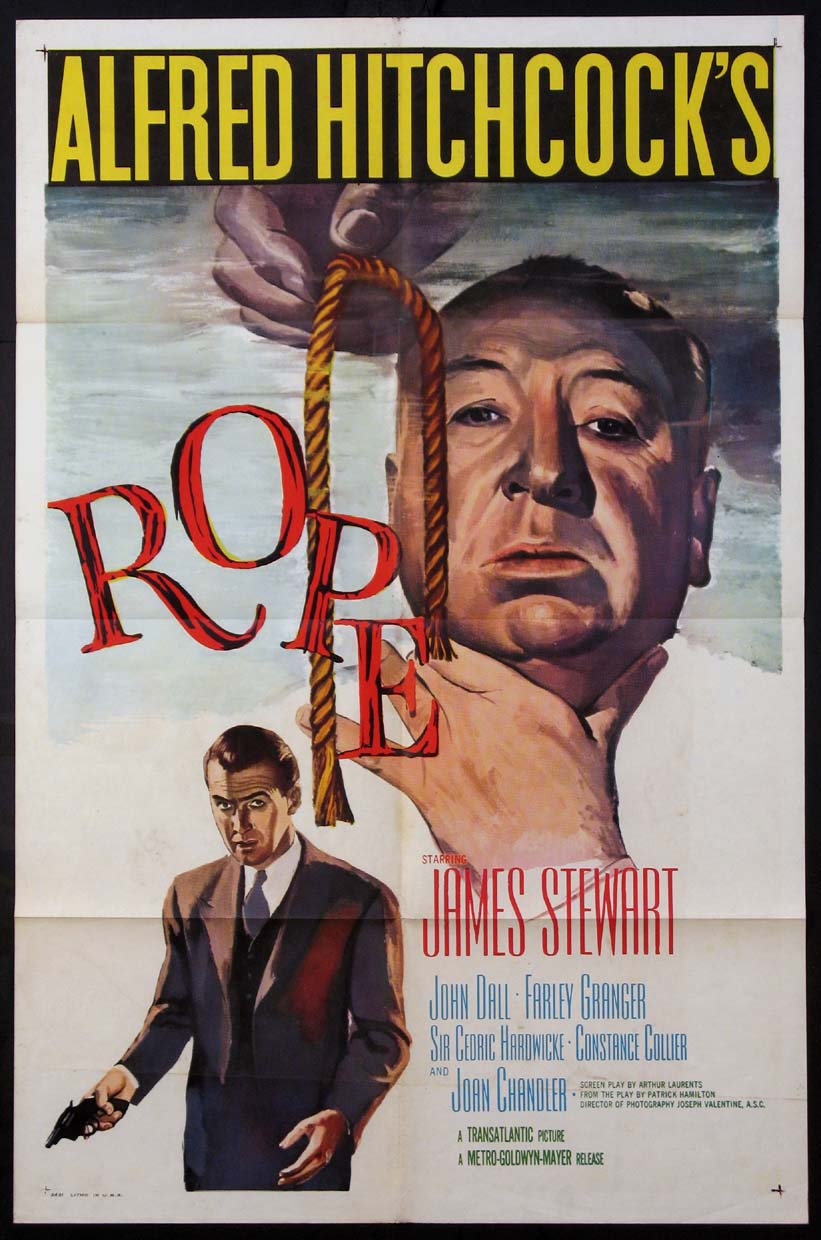
What a poster! Can see who the real attraction here is.
You have to give it to Alfred Hitchcock. He could have comfortably kept making the same type of movie over and over again if he chose to, and in the process made a lot of money and a lot of really fantastic films. But what set him apart and made him perhaps the greatest director of all time was his constant desire to push the envelope. He famously had to fight exceptionally hard to get Psycho (1960) made, blew the budget on a Salvador Dali dream sequence in Spellbound (1945) and got all high concept with Lifeboat (1944). Another film quite similar in premise to that is the baby-faced Jimmy Stewart starring Rope (1948).
The high concept Rope all takes place in a single small apartment. It sees two young men Brandon and Phillip covering up a murder (which they carried our using the titular weapon) whilst hosting a dinner party, with the body hidden away in the apartment as friends and family mingle. Amongst those friends is Rupert, played by a pretty young Jimmy Stewart. This mentor figure is the audience’s way into the film, reacting as we may to the events as they unfold. Rupert is brought to life by Stewart’s remarkable humorous sensibility, which shines through even in roles such as this which are not particularly comedic. The body literally sitting in the middle of the room whilst characters linger around it casts a pall on proceedings, from the perspective of the audience at least, though not the unsuspecting characters. The body also influences what is a very smart script, resulting in everything taking on different meaning if you have the knowledge of what is really going on. It is a wordy script too which is quite bold, the characters expounding a lot of ideas aloud, in a way which never ends up feeling like the unnecessary regurgitation of the plot and bringing the audience up to speed, rather adding complexity to the film’s thematic focus. The film is shot in 4:3 aspect ratio, which is an interesting stylistic choice. It works though, boxing in the action on screen and intensifying the claustrophobia that the audience and especially the under pressure characters onscreen are feeling.
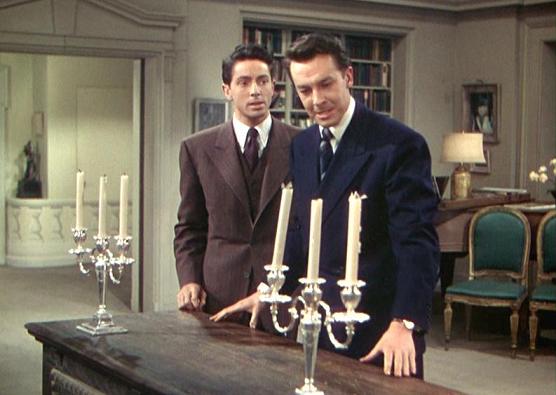
Given the premise, it is in themes not plot that Rope has the most weight. Right from the start, you can tell that Hitchcock’s primary concern with the film is psychology. Brandon and Phillip go through a range of feelings in terms of the crime they have committed, from contentment, to guilt, to horror. This is all informed by the distinct hint of homoeroticism in their relationship and the way that one seems to be able to control and guide the other. Also feeding into the psychology of the participants is their class, which has imbued the perpetrators, Brandon in particular, with a sense of entitlement and smug satisfaction in what he has done. The manner in which Brandon and Philip revel in their intellectual game is also connected to their class. It is as if they are bored by the leisure activities that society offers them, so instead of polo they resort to a sick game of cat and mouse, as if that is the right that their class affords them. The experiment of pulling of the perfect crime, killing for the sake of danger and sake of killing, also serves to stoke the ego of the perpetrators, reinforcing what they have always been told – they are special and they are better than those around them.
Verdict: Rope always feels a little too small a film to be counted amongst the very best of Hitchcock. But there is no shame in that and the psychological aspects of the film are unique, intense and expertly written and performed. Stubby of Reschs
Progress: 118/1001
Related beermovie.net articles for you to check out: Live Tweet Review: The Birds and Psycho.
Like what you read? Then please like Beermovie.net on facebook here and follow me on twitter @beer_movie
MIFF 2014: Whitey: United States of America v. James J. Bulger

I finished off my first MIFF experience with the true crime documentary Whitey: United States of America v. James J. Bulger (2014). If you can imagine a documentary version of a Dennis Lehane novel or Ben Affleck’s The Town (2010) you can pretty much imagine this film. It’s a gangster flick brought to life basically.
The film tells the story of the trial of James J. Bulger, a gangster near the top of the FBI’s most wanted list who had been on the lam for a pretty incredible 16 years. The film takes a look at the crimes(mainly murder) that he committed, the way these crimes impacted on the families of those involved and the rampant FBI corruption that allowed Whitey to rule with an iron fist over Boston and evade capture for so long. The film is insightful when looking both at the gangster and those supposedly enforcing the law. It gives a glimpse into the strange gangster’s psyche or code where it is totally fine, laudable even, to be a murderer. But to be an informant is an unforgivable sin. If anything though, the FBI come off looking even worse than the gangsters in this film. As an outward looking and publicity seeking organisation, they were so obsessed with taking down the Italian Mafia that they let the Irish such as Whitey Bulger do more or less as they pleased. Which is to say nothing of the rampant and overt corruption that amongst other things tipped Whitey off in regards to his impending arrest, allowing him to have an extra 16 years of freedom and which continues to ferment within the organisation even today. No wonder the FBI did not agree to be interviewed for the film.
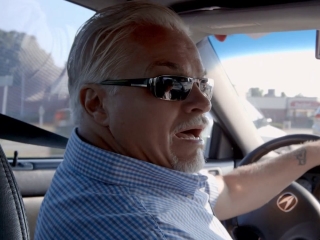
One of the people interviewed in the film, whose life was so affected by Bulger.
If there is a major criticism to be levelled at the film, it is that it’s not a particularly cinematic as far as big screen docos go. Coming out of CNN films, which I did not even know existed, the film often feels more like a CNN news report and not a film experience to fork out your money to see in a cinema. The entire production feels very slick and polished, probably a little too much so. A gangster story should have a bit of roughness around the edges I feel and that may have given this film a little more soul. The film starts off focused quite heavily on those who were affected directly by Whitey Bulger – victims of standover tactics and relatives of murder victims. This is the part of the film with the most heart and whilst the examination of the role of FBI corruption becomes more interesting as the film goes on, I would have preferred a greater focus on these families.
Though it never elevates above being slick and pretty good at what it is aiming to do, Whitey is generally successful as an indictment on the FBI and also as the story of an individual gangster and the horrors he brought to bear on people. Also, if hearing plenty of that distinctive Boston twang is your thing though, this may well be your favourite film of all time.
Verdict: Stubby of Reschs
Related beermovie.net articles for you to check out: MIFF 2014: Cheatin and MIFF 2014: Come Worry with Us
Like what you read? Then please like Beermovie.net on facebook here and follow me on twitter@beer_movie
A Hard Day’s Night

Whilst in London recently I was lucky enough to catch a screening of the famous Beatles film A Hard Day’s Night (1964) at the BFI at Southbank. I didn’t take extensive notes like I usually do, but thought I would share some thoughts in this quick review.
First up, the BFI in Southbank is a fantastic facility. With the Arc Cinema here in Canberra, an institution with ostensibly similar goals being gutted, it is great to see an archive cinema that is clearly booming and exceptionally popular. It was slightly disappointing to see that there was no real exhibition space at the facility, but in a city like London there are always other places to catch quality glimpses at film history.

The Beatles are of course an exceptional band. I have not explored their music as much as I probably should have, but even so I would say that “Revolver” is probably the most perfect album in pop music history and a work of art to stand against any created in the 20th century. Their work veered from the heartfelt, to the experimentalism of “Sgt Pepper’s Lonely Hearts Club” to the silly. It is the latter where the film A Hard Day’s Night comes in as the fab four rollick about onscreen in what is essentially a slapstick farce. It is far from the perfection that some of their music approaches, but that probably makes it all the more fun. It takes a certain level of charm for four not great actors dicking around onscreen to be acceptable cinema entertainment. Those four guys definitely had that charisma. The film also takes some wryly amusing pokes at the frustrations that the band must have felt with the stifling fever pitch of fame that surrounded their every move. As fun as the story – which is essentially a succession of skits – is, the songs when they come along absolutely stand out and are probably reason enough to watch the film alone.
Not everyone will get much out of this. I enjoyed it and if you have even the slightest interest in the band or even slapstick comedy then you probably will too. If you are Beatles nuts like my parents who went with me to see this, you will probably absolutely adore it.
Verdict: Stubby of Reschs
2014 Progress: 18/101 (wow, I am going to fall miserably short of this goal)
Progress: 114/1001
Related beermovie.net articles for you to check out: Steamboat Bill Jr and Singin’ in the Rain.
Like what you read? Then please like Beermovie.net on facebook here and follow me on twitter @beer_movie
Jason Lives: Friday the 13th Part VI

‘Jason is going to kill you!’ – a delightfully to the point tagline
Jason Lives: Friday the 13th Part VI (1986) is a refreshing rebirth for the series. By both integrating itself into the rest of the series and having a sense of humour without being too ludicrous, the film is one of the most enjoyable films in the series.
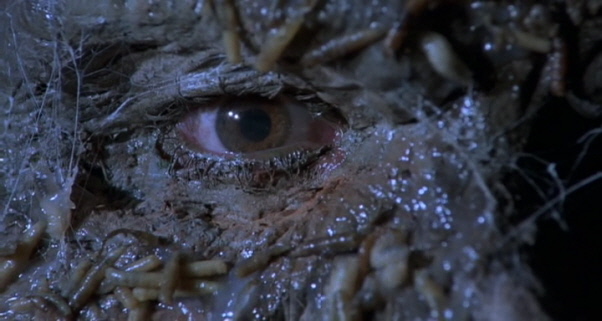
Gross
In a change for the series, the opening of the film is atmospheric and genuinely scary. Riffing on Frankenstein (1931), the film opens in a foggy, dark cemetery, the vibe well and truly heightened by solid use of the soundtrack. Further inviting comparisons to the James Whale classic is the grave robbing that takes place in the early part of the film as Tommy (another ‘creepy not Feldman’) opens up the tomb of Jason Voorhees to ensure he is well and truly dead. Jason’s maggot infested body is one of the visual highlights of the series up to this point and the reanimation of his corpse (erm… spoiler, Jason comes back) is a wonderfully schlocky scene combining the slasher genre with some more supernatural elements. Specifically it is a bolt of lightning that gives Jason life, reinforcing the Frankenstein correlations even further. But it never feels derivative in that sense, rather it feels like a really fun homage. Another point of difference and a very important one for this film is that the kids actually make it to camp this year. That sets up the most intense elements of the film, which balance the humour this film brings to the table. This is taken some pretty intense and shocking places which is a change from the constant over the top body count with no real stakes that has occasionally featured in this series and also does in some parts of this film. It also delivers one of the lines of the series when seemingly nearing death, one little dude enquires of another “so, what were you gonna be when you grew up.”

‘Creepy not Feldman’ mach 2
One of the reasons that the film does feel like a rebirth of the series is that it manages to engage with the earlier films, rather than completely starting over. The inclusion of the character of Tommy connects the film to number IV. Even though the series at this point has almost done away with bothering with narratives for the films (which is not always a totally bad thing, as in this case), that connection at least gives a sense of some narrative substance. At least one character in the film has some motivation. What this film does better than any other in the series and better than a vast majority of slashers that attempt to do the same, is inject humour into proceedings. When it works well in this film, which is a reasonable amount, there is an awesome and genuinely funny schlockiness that manages to avoid veering into the silly. Even those aspects which absolutely could be silly, such as the James Bond reference in the opening credits manage to avoid that.
As a general rule, slashers that also try and be funny are the absolute worst. Not so Jason Lives: Friday the 13th Part VI, which manages to maintain some focus on the slashing and not totally concern itself with making terrible 80s jokes.
Verdict: Stubby of Reschs
Series ranking thus far:
- Friday the 13th Part 2
- Jason Lives: Friday the 13th Part VI
- Friday the 13th: The Final Chapter
- Friday the 13th
- Friday the 13th Part V: A New Beginning
- Friday the 13th Part III
Like what you read? Then please like Beermovie.net on facebook here and follow me on twitter @beer_movie
Un Chien Andalou

Oh yeah, you know Un Chien Andalou (1929). Rather, you probably just know that one shot, the iconic eyeball slicing scene. It is surprising how many people are so aware of that one shot, without ever having checked out the 16 minute entirety of Luis Bunuel’s surreal and absurd avant-garde classic.
As for the eye slicing, it is rightly iconic. It is also uncompromising. Even if you are well conditioned to contemporary gore it is an almost unwatchable shot. Aside from that, the film also features the weirdest maguffin you are ever likely to come across, ants flowing out of stigmata, too many dead animals for my liking and a wonderful choice of soundtrack that is both bawdy and drives the film along. I like avant-garde cinema, but for me, 16 minutes is a little long. I prefer a good 2 minute blast of Man Ray imagery. Stretching the form over this kind of length leaves me searching for meaning a little too much. Having said that, the images do link together so well in this film through plentiful match shots and other editing techniques, that for the most part you will not find yourself too bogged down.
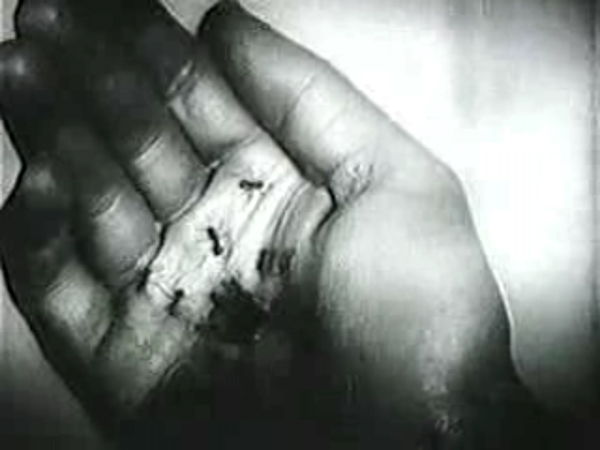
Obviously with a surrealist, avant-garde film like this, you are never really going to know what in the world is going on. But for a film in this subgenre to be effective, at least for me personally, it must first look cool, and secondly have some sort of binding theme. This film nails it on the first. The repeated image of the ants festering around a stigmata is exceptional and probably deserves to be just as iconic as the eyeball slice and there are numerous moments when you have no idea what you are watching, but you know it looks very cool. On the second measure, Un Chien Andalou succeeds for the most part I guess. Well there are a lot of themes there. They may not be cohesive as such, but Bunuel and Dali are throwing some interesting ideas out there. Not that they all stick or even that I picked up on them all. For me though, the film was concerned with a huge amount of things including male/female relations, religion (the folly thereof?), the act of writing and creation of any art (and the investment of one’s person in doing so), the nature of time as there are temporal folds and creases and reincarnation. So basically, plenty to assault you over the course of 16 minutes.
It is easy to see why Un Chien Andalou is perhaps the most famous avant-garde film of all time. It’s pretty challenging to sit through its short running time, but for the most part is a worthwhile and rewarding experience, especially for anyone who wishes to be a student of film history. You can check the film out here:
Verdict: Stubby of Reschs
2014 Progress: 14/101
Progress: 110/1001
Related beermovie.net articles for you to check out: Hold Me While I’m Naked and Worth Watching June 2011 (featuring a review of Man Ray’s A Return to Reason).
Like what you read? Then please like Beermovie.net on facebook here and follow me on twitter @beer_movie
Cheap Thrills
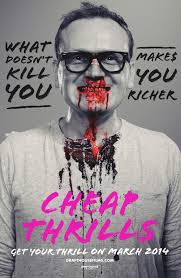
Cheap Thrills (2013) is an indie horror film that has been garnering a fair amount of hype recently. Featuring David Koechner, aka Champ Kind on the cast and a simple, relatable, yet able to be taken to the extreme premise, it is easy to see why plenty have fallen in love with this film.
Craig is a man down on his luck. His morning root was interrupted by his crying baby, a final notice has been pinned to his front door and to top it all off, he gets fired. This basic, effective, characterisation is filled out as the film progresses. We learn that the now fired mechanic was once a writer, who has clearly either fallen out of love with his art or lost the ability to produce. This back story is obviously not the point of a film like this, but it does definitely help to elevate the narrative and that level of detail and craft makes you (well me at least) a little more willing to overlook some of the film’s later flaws. Down on his luck, Craig finds himself in a dingy bar, trying to drink away the pain of losing his job, before heading home to see his wife and baby, who he now has absolutely no way of supporting. At the bar he runs across an old mate Vince, and they are in turn befriended by a rich couple played by Sara Paxton and David Koechner. These two are out for her birthday and Colin, played by Koechner, has an obsession with making memories which leads to the two old friends being challenged to a serious of dares with increasing financial stakes and correspondingly increasing levels of risked attached to them. I won’t give too much away, but the gauntlet kind of runs from taking shots to public toileting to severing limbs, with more than a few diversions into other stunts, which can be anywhere from unoriginally crude to intriguingly psychological.
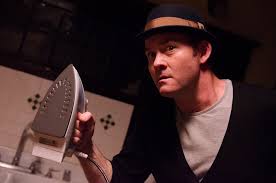 I am really not sure how I feel about the ending of Cheap Thrills. I for one did not see it coming, though I think I have heard others peg it as a little obvious. At first I was really not a fan. But now after letting it stew a little bit, even though I still don’t love it, I kind of respect it as a choice of ending. I definitely feel that, even though it is briefly touched upon, the financial aspect to the motivations of these characters really should have been fleshed out a little more. The film is clearly a comment on the haves and have nots in our societies. But the idea is just plonked there a little and I wanted some interrogation of it. Having said that though, it is great that a horror film even puts the ideas out there though, plenty of films would have focused totally on the crassness and the one upmanship. Morally, it was good that the character of Craig was at least a little conflicted to begin with and again this should have played out a little more through the economic exploration that the film was lacking. Ditto the almost immediate breakdown between Craig and Vince. It is kind of plonked there but the point that could be made is either not there or it is at the very least not wholly rounded out. The performances are pretty solid overall. As one of the two leads, I thought Ethan Embry who played Vince was the pick of them, seeming to channel Tom Hardy a little and he nicely mixes up a sense of fun with a definite dash of intensity. His comedic sense is great and it would be cool to see this film lead to more opportunities for him. Koechner is probably the most famous person on the cast. Initially he is just so ‘big’ with the performance it’s distracting. You can’t help seeing him a little as Champ Kind, with his uber obnoxious loudmouth air. As the film goes on though, this tempers a little and he actually establishes pretty easily a character that stands well apart from Champ, so it is good to see that he has the ability to pull that off.
Cheap Thrills is an interesting film with a great core concept. It definitely could have taken that concept, and the commentary on us as individuals and a society further, but at the very least those ideas are there. At its best, this is really, really good. As it stands though, its just good, but the kind of good that is different enough from the norm it is probably worth your while checking out.
Verdict: Stubby of Reschs
Related beermovie.net articles for you to check out: The Tunnel and Devil.
Like what you read? Then please like Beermovie.net on facebook here and follow me on twitter @beer_movie
Planet of the Apes (1968)
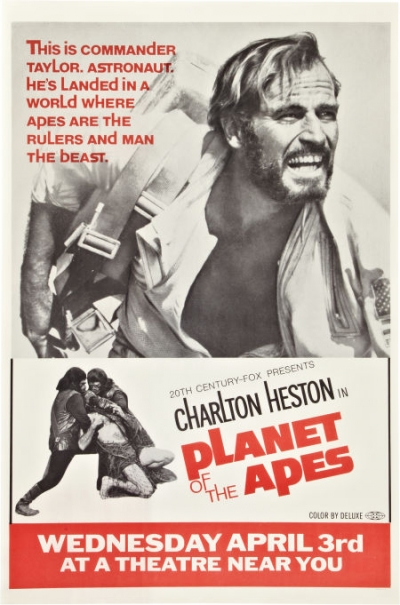
Planet of the Apes (1968) is a film that has become a really central part of pop culture. Not just through The Simpsons, though yes that did totally ruin the film’s ending for me some years ago. I hadn’t seen the film for a whole bunch of years, so thought I would revisit it to see if it still held up as a sci-fi classic for me.
I actually watched Planet of the Apes a good 10 years ago, long before I was into classic film. I recall being really impressed by it and blown away by the ending even though I knew what was coming. It starts exceptionally well, combining thought provocation like all the best sci-fi with some nice futuristic visuals. The exploration of the mental and philosophical issues of exceptionally long space journeys is really good stuff and it leads into a spectacular crash sequence. The camerawork here is one of the highlights of the film as the camera swirls wildly while the spaceship tumbles to the ground. There is an early sense of exploration and a final closing off of the initial ideas that the film is concerned with, particularly in the manner that George Taylor played by Charlton Heston reacts to the fact that everyone he knew has been dead for millennia and he will almost certainly never get back home. These are all great questions to ponder, especially today with manned missions to Mars possibly looming, and the very real probability that one day people will have to sign up for one way space missions. The discussions between Taylor and his rather more perturbed crewmates are really well scripted and bring all of those ideas out. Unfortunately once the three men were captured by the apes, the film really flattened out for me. Aside from that capture sequence, the action is all pretty lacklustre and the narrative never particularly goes anywhere. Most of the elements of the film that work later on have very little to do with the apes actually, which are obviously the focus of the action. Rather, it is the hallmarks of the environment that have the timeless prescience of all the best sci-fi that hit the mark. The soil is totally ruined, nothing at all will grow and much of the planet is a total wasteland.
 One aspect of this film that really stands out, especially given its vintage, is that it is really quite a dark film both narratively and especially thematically. The plight of the astronauts is bleak, basically from start to finish and there is a certain meanness to much of what happens. For such a mainstream film, some of the technical elements are quite bold. There are long segments with very little dialogue, the spaceship is intricately designed, there is an almost handheld sense to some of the camera work and the soundtrack is full of (at times annoying and intrusive) electronic bleeps and bops. The ape costuming work, whilst possibly revolutionary at the time, is exceptionally dated now, just looking terrible and basic. At times, I found them to be so bad that it was actually distracting. Planet of the Apes is quite famous for a number of the philosophical messages it examines. This is cleverly done by inverting the roles of humans and apes that currently exist. Humans are used for ‘animal testing’, talked down to and generally treated abhorrently. In some ways it is a very forward argument against human exceptionalism, at least that is a reading I made of the film. Unfortunately though whilst this inversion of roles is clever, there is only so much you can achieve simply by inverting the roles. The ideas needed to be, or at the very least could have been, pushed a lot further. I guess one advantage of the limited approach of the inversion of ape and human roles is that it makes the film’s messages quite universal and open to interpretation. But I still think that overall the script needed to go further with the ideas.
I was definitely less impressed with The Planet of the Apes this time around. My impression is that if you look at various elements of the film, especially the themes and some of the design, it should be a lot better than it actually is. As a whole though, I found this to be a merely good experience rather than a truly satisfying one.
Verdict: Stubby of Reschs
2014 Progress: 11/101
Progress: 107/1001
Related beermovie.net articles for you to check out: Upside Down and Ben-Hur.
Like what you read? Then please like Beermovie.net on facebook here and follow me on twitter @beer_movie
Friday the 13th: The Final Chapter
It was my hope when starting Friday the 13th: The Final Chapter (1984) that this series would turn out to be the inverse of the Elm Street films. That is, whereas with that series the odd numbered films were far and away better than the others, hopefully with this series it would be the even numbered ones. And that is true to a degree. The even numbered Friday the 13th films are at least moderately enjoyable, unfortunately the same cannot be said for the rest of them. There is also not really a centred marketing approach or narrative through line in these films like the Elm Street ones. The DVD edition I have of this is actually quite comical. The front obviously has the title Friday the 13th: The Final Chapter on it, whilst the first sentence on the back goes to lengths to explain that this is “the fourth – but not final” film in the series. Say what now?
 The issue with this series for me is the sheer lack of ambition. Whilst I quite enjoy Friday the 13th: The Final Chapter, there is very little that feels like it has not just come straight from all the other films. Though there is a brief revenge sub-plot that does actually feel new. But it is almost comical just how quickly that is dispensed with. Even though I bag the plot and repetitiveness of these films, this is better than most of them in that regard. I really like the start of the film, as the fuzz and ambos clean up after Jason’s rampage in the previous film on a delightfully dark and rainy night. Then it moves onto a really atmospheric section in a hospital. And let’s face it, outside of an isolated cabin in the woods, a hospital is about as excellent a slasher setting as you can get. But from that point on, the film settles back into what is essentially the exact same plot as the first few films – teens sexing and Jason killing. Unfortunately you can’t help but thinking that if the film had of been based more on the revenge sub-plot I mentioned earlier, told from that point of view, this would have been a much more interesting watch.
I don’t really have any issue with films following a formula. Hell, I am a James Bond nut. But these really should build up more of a sense of both story and character. In each film, the first 45 minutes are achingly slow and not much at all happens. This is where there should be slather of atmosphere and character interactions built. But each film meanders along, not really doing anything until the killing kicks off in the second half. Nostalgia wise, Friday the 13th: The Final Chapter delivers a couple of classic appearances on the cast. Both Cory Feldman and Crispin Glover appear. The film really has to be seen for Glover’s dance moves at one point which are essentially the 80s distilled into a bite size morsel for you. As for Feldman… well wow. If you have seen this film, that sentence will probably be pretty self explanatory. If you haven’t though, let me just explain that it involves a half cocked head shaving sequence to kill the big bad. It is all rather woeful, albeit with a brutal kill at the end. And it has to be said that the very last shot, with creepy sorta bald Feldman, is exceptionally badass.

Unfortunately Friday the 13th: The Final Chapter sees this series continue on a pretty painfully formulaic run. Fortunately though, despite that, the film is enjoyable enough. It is not going to wow you, but it will give you 90 minutes of pretty mindless escapism. And there are worse things in the world than that.
Verdict: Stubby of Reschs
Updated franchise ranking below:
- Friday the 13th Part 2
- Friday the 13th: The Final Chapter
- Friday the 13th
- Friday the 13th Part III
Like what you read? Then please like Beermovie.net on facebook here and follow me on twitter @beer_movie
 Beermovie.net