Casino

Perhaps no American director seems to have created more cinephiles than Martin Scorsese. I have never been his most ardent fan though, generally liking rather than loving most of his work. But he’s also one I feel I need to continually revisit to see if I will ever find the spark of genius that so many others find.
The plot of Casino (1995) sees Robert De Niro playing up and coming member of the mob Sam ‘Ace’ Rothstein, making his way in the world of organised crime. An advanced party for the organisation’s tentative excursions into Las Vegas. He runs a casino which in turn funnels huge sums of money back to his superiors. Ace’s mission is complicated by having to keep an erratic, violence prone, ‘made’ (unlike De Niro) member of the mob Nicky Santoro (played by Joe Pesci), in some kind of check. All sound pretty familiar? That’s because Casino is painfully similar to Goodfellas (1990). So close it could be a remake. The grand sweep of the arc is the same, the ups and downs, machinations of the mob and a focus on ‘street level guys’ all reappear. The films mainly look the same and many of the same actors appear. Even specific plot beats echo loudly from one film to the other. There are some slight differences – the love triangle dynamic is well set up here involving Sharon Stone’s Ginger McKenna, and the notion of a film structured like an American epic but really only being about a casino intrigues for a little while. But the similarities certainly consume any tangible differences. In addition to these similarities, the film also loses its narrative core regularly along the way, feeling too vague. Some of the story elements, Ginger’s drug habit for example, are really muddled in the way they are conveyed, which lessens the impact of that part of the story.

Style wise, Casino does not do a whole lot out of the ordinary, and what it does is a mixed bag. The duelling voiceovers are tiresome and the cutesy stuff such as ‘back home years ago’ subtitles are ineffective. But there is a gaudiness to the colours that Scorsese employs well, helping the glitz and seediness of Las Vegas pop off the screen. Similarly the performances range from the disappointing, to the stock standard to occasionally good. Pesci is perhaps the best of them all. I don’t really care for his character, it’s basically the exact same little wired psychopath vibe we’ve seen before. But he performs it very astutely, becoming the focal point of the scenes he is in. At the other end of the scale, particularly in terms of the writing of the character, but also performance wise is Sharon Stone. The film asserts that she is “the most charming woman you ever saw”, but at no point does that come out. Stone plays Ginger as a blank slate and neither the writing or the performance gives us any clue as to why she becomes such a contested part of the story.
Verdict: In the end, I feel the same about Casino as I do about a lot of Scorsese films. It is a fine, watchable experience. But ultimately a pretty hollow one. For me, the film does not have anything to say and it is further weakened by being essentially the exact same film as Goodfellas. Stubby of Reschs
Progress: 139/1001
Related beermovie.net articles for you to check out: The Wolf of Wall Street and The House of Caine: Get Carter.
Like what you read? Then please like Beermovie.net on facebook here and follow me on twitter @beer_movie
Worth Watching June 2016
I didn’t realise how heavy a viewing month this was for me til I sat down to write this. Wildly mixed in terms of enjoyment too, though overall a rough month. There was a heavy focus from me on the #52filmsbywomen challenge, with 11 of these fitting that bill.
Worth Watching
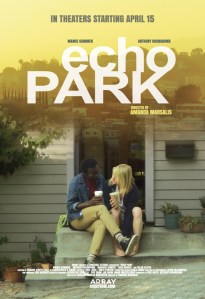
- Echo Park (2014), Amanda Marsalis – Refreshing to see a love story that does not pander to the audience, glibly giving them what they want. Begins with Sophie, a very unhappy party to a very affluent relationship, fleeing. A little of the scripting is a touch forced early on as new relationships are established. But that fades away. There are plenty of interesting characters, in particular Sophia who could have so easily been an over-entitled cliché. The soundtrack is really nicely used, unconventional choices accompanying the action. Feels very true to life. The way people act, undermining themselves and their relationships.
- The Bling Ring (2013), Sofia Coppola – Celebrity in the Facebook age is immediately established. Characters are wallowing in a world of insufferable entitlement. Privilege and shallowness coming out in their actions. Sort of formless. Which I would so often find infuriating but didn’t bother me. Film also works really well as a portrait of Los Angeles. Both the physical place and its collective psyche. Some of the acting is a little patchy, though not from Emma Watson who is outstanding. The film gives a really good insight into the inexplicable mindset of these teens.
- The Rage – Carrie 2 (1999), Katt Shea – This film manages to simultaneously be the most 90s thing ever (it even has one of the kids from Home Improvement), and a blistering still relevant take down of jock-led rape culture. Not everything totally works. But there is just so much interesting shit going on here. Theme wise and stylistically – it’s interestingly shot, with quick cuts whilst the plot utilises flashbacks really well. It’s very surprising how well the flashbacks to the first film work actually. And the stark presentation of the horrific nature of jock culture was much more shocking than I was expecting. On the pure horror front, it definitely retains the spirit of King’s original character, whilst there is some great gore toward the end. Quite powerful at times.

- Bobby Fischer Against the World (2011), Liz Garbus – A portrait of the certain kind of genius it takes to become a chess grandmaster. The first half makes you care deeply about a chess match, even if you don’t play the game (like me). It also envelops you in the sheer history of the game, making notions such as the fact Fischer may have been the greatest player since the 6th Century wondrous. Garbus is a very astute filmmaker, the way she weaves documentary techniques together. Occasionally personalities transcend niche sports and Fischer did that for chess. But if the first half of the film is about a unique dude and great sporting theatre, the second is a turn into the darker side of that genius required. The paranoia, madness (and again here we see the historical precedence) and utter single-minded obsession is stark. In the end, the final feeling is of overwhelming sadness as the unique Fischer descends into an anti-Semitic shell of the person he once was.
- Brooklyn Nine-Nine Season 2 (2014), Daniel J. Goor & Michael Schur – Whilst a lot of the laughs come from well crafted silliness, the real reason the show stands out is the ensemble character development. Almost every character changes in an interesting way and interacts with the other characters in fun ways. And ways that change what you think of them. It is so well performed, as well as any drama. Plus this show makes me laugh a fuckload. So easy to watch, but doesn’t feel like a throwaway.
- Joan Rivers: A Piece of Work (2010), Ricki Stern & Anne Sundberg – In mainstream circles, Joan Rivers has oft been reduced to a figure of ridicule. So it is great to see a film that establishes the foul mouthed comedian side of her. Obsessed with work, with being booked. Both due to passion and her expensive lifestyle. Also thoughtfully shows a performer who’s been passed by but doesn’t realise it. Not in a nasty way though. Doesn’t negate the fact she was still a pioneer and a trailblazer. The film nicely draws out her contradictions. A little sad. Way she is disrespected by the industry, down on her luck.In mainstream circles, Joan Rivers has oft been reduced to a figure of ridicule. So it is great to see a film that establishes the foul mouthed comedian side of her. Obsessed with work, with being booked. Both due to passion and her expensive lifestyle. Also thoughtfully shows a performer who’s been passed by but doesn’t realise it. Not in a nasty way though. Doesn’t negate the fact she was still a pioneer and a trailblazer. The film nicely draws out her contradictions. A little sad. Way she is disrespected by the industry, down on her luck.
- The Last House on the Left (1972), Wes Craven – Given the film’s reputation, it’s hard not to start it with a pit of anticipation in your stomach. Reminiscent of Craven’s other early work though perhaps not quite as assured. The juxtaposition of horror with domestic bliss & slapstick comedy is clumsy and the soundtrack is truly awful. A raw film by an at the time raw filmmaker. But it’s an incredibly uncomfortable portrayal of control and particularly the revelling in it. The film assumes the male gaze in an intimidating way. Deeply troubling film, even today. The shift in the middle works well. The methodical preparation for revenge. The film grows increasingly darker throughout, all the way to the end.

- Hush (2016), Mike Flanagan – This is one of the best home invasion films I’ve ever seen. A deaf and mute woman is alone in her house in the woods when she comes under attack. Unsurprisingly given the subject matter, sound design is a very big and very clever focus. The sensation of deafness is effectively conveyed through the combination of sound and her imperviousness to it. Film has a great soundtrack too. Very cool to see subtitled sign-language on screen. The film explores interesting notions about inner spaces whilst progressing the narrative. Certainly toys with convention and expectation in very clever ways and the result is super terrifying. A creatively executed horror film with a lead character who is a badass (but not in a fantastical way) deaf women.

- Queen of the Desert (2015), Werner Herzog – It’s a bit of a trainwreck but an interesting one. Many will disagree but it’s well performed. Nicole Kidman especially I think avoids mawkish parody on two fronts: as a white privileged woman exploring the Middle East, and one ‘unlucky in love’. It has some interesting things to say about colonialism (some intentional, some not). The soundtrack is interesting too, mixing Middle Eastern sounds with traditional ‘epic’ scoring. Herzog is clearly someone who still wants to tell unique stories. Definitely goes on too long. The last half hour is a slog and the chronology of the ending is muddled.
Not Worth Watching
- The Moth Diaries (2011), Mary Harron – Horror film that very much captures a girly boarding school vibe early on. It’s a little contrived and rushed. The plot is where it falls down in the end, far too thin even for the very short running time. It looks pretty sharp though. I like the use of colour and also the use of the lack of it. Also suggests classic gothic literature in some interesting ways, though in the end not as much as it could have. The tone is too light for it to have the impact it should.
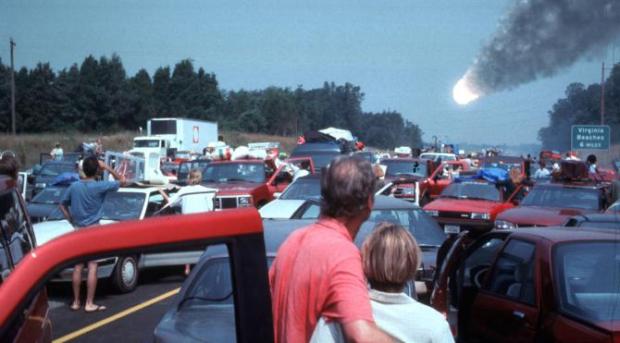
- Deep Impact (1998), Mimi Leder – I was hoping for some really stupid fun. Didn’t get any of the latter unfortunately. It is very low key at the start. We seem to spend a surprising amount of time with Tea Leoni’s journalist character running down stories. Any positives are well and truly hamstrung by a truly dumb script. One that manages to squeeze minimal tension out of the impending end of the human race. The personal emotional beats feel really out of whack too which makes it feel emotionless. The effects are pretty rubbish as well.
- The Look (2011), Angelina Maccarone – This is a film that never manages to penetrate the pretentious artifice it is built on. So arty man. But also so distant and ponderous. There are occasional flashes of insight or interest that punch through – for me personally it was mainly the novelty of seeing Paul Auster my favourite author onscreen. But it is mainly just Charlotte Rampling sitting around chatting with some mates about the philosophy of performance or love or death. There is the occasional interesting and very human piece of insight and reflection. But it’s more often contrived and also too often feels like a first year philosophy class from hell.
- The Abyss (1989), James Cameron – This was a major disappointment. Too slow to start and the storytelling is unnecessarily muddled. There’s some nice technical work, as you would expect from the director. The sound design is incredible and that sense of underwater claustrophobia is well communicated. But plotwise, none of the character machinations are particularly interesting whilst he nature of what the crew are up against is simultaneously too unclear and uninteresting. No pop to the storytelling, with two narrative threads that don’t really sit well together and sorely lacking in logic.
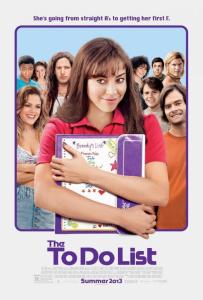
- The To-Do List (2013), Maggie Carey – Such a killer cast. When it does get by it’s ultimately on their charm, because the scripting is very rough. Rachel Bilson steals the show as a ditzy big sister. But this is definitely not Aubrey Plaza’s best work. There is not a shred of believability to her character. And disappointingly the film really has nothing to say about sex. It’s also more than a little gross and much lower in laughs than you would expect with the cast.
- The Good German (2006), Steven Soderbergh – There are certainly things to not only appreciate but outright love here. The retro styling and black & white cinematography that is exceptionally sharp. Toby Maguire does menacing very well too. But that style sort of overwhelms everything else. The story is pretty standard immediate post-wartime fare. Which whilst occasionally touching on an interesting nerve, such as the notions of survivor’s guilt, ultimately falls victim from being Le Carre-lite oblique and shadowy espionage stuff. Deliciously beautiful, but ultimately lacking in weight.
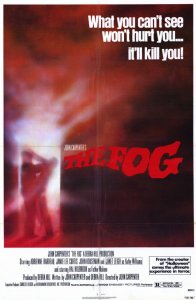
- The Fog (1980), John Carpenter – Far from my favourite from this horror great. Hammy framing device gives way to a slow start. Really lacks the thematic interest of Carpenter’s best stuff. The plotting is a little vague as well. Supernatural elements essentially bringing slasher villains to town. But there is no real clarity to the menace. It’s not a write off. The score is amazing as his all are, though there is not enough of it. Jaime-Lee Curtis is so fucking charming in this and Janet Leigh is here yo! Feels like a tired effort from a maestro, a supernatural hodgepodge that feels too small scale.
- The Descent (2005), Neil Marshall – Bit miffed as to why this is such a beloved modern horror classic. It starts off iffy. By the numbers character intros and overbearing style. The script is poor throughout. I found the scares really cheap too, never bothering to tap into the inherently terrifying nature of caves. Despite the potential offered by the location, it looks really average. Relies too heavily on the stupidity of its characters to drive the plot. It doesn’t improve once the shit hits the fan either. The geography of the caves is muddled and the action is impossible to follow. A dreary disappointment.
- Finding Dory (2016), Andrew Stanton & Angus MacLane – Weak stuff. Feels more like a remake of the first than a sequel. Beats are lifted straight from the first film. Has a risible, repetitive narrative structure. There’s some cute moments and characters. But nowhere near enough to make this cynical exercise worthwhile. Rests more heavily on nostalgia than any film of the last five years. Splitting up of the main characters for much of the run time is a mistake. And I think that based on this evidence Dory as a character is better suited for a (large) support role as in the first. With so much time here the shtick quite quickly becomes tiresome.

- Life Partners (2014), Susanna Fogel – An up and down film, with maybe the clunky script being the element that tips it over the edge. The acting is good. The two leads Gillian Jacobs and especially Leighton Meester, carry the up and downs of a friendship well, whilst the supporting cast led by Gabby Sidibe all have a great presence. But the Adam Brody character, a major one, is insufferable. The plot is shorthand, way too rushed and the script never establishes the attraction of Brody’s romantic lead which is something the film rests heavily on.
- Vacation (2015), John Francis Daley & Jonathan M. Goldstein – The awkward family photos style opening is a deeply unoriginal start and a solid harbinger of things to come. A rubbish, unintelligent script does not help. The little bro character is one of the most obnoxious characters I can recall. Helms and especially Applegate are pretty good performers. But their energies don’t fit well with this film. A lot of the incidents are actually quite nasty when you think about them. Chris Hemsworth and Leslie Mann in a small sequence really bring something lacking from the leads. Energy I guess. Bad even as far as modern comedies go.
If you only have time to watch one Hush
Avoid at all costs The Descent
Related beermovie.net articles for you to check out: Worth Watching June 2015 and Worth Watching June 2013.
Like what you read? Then please like Beermovie.net on facebook here and follow me on twitter @beer_movie
Ghostbusters

It is absurd that Ghostbusters (2016) has prompted such serious conversations, becoming a flashpoint for the unbridled misogyny that has beset geek culture of late. Manbabies are railing against the film whilst simultaneously declaring they will never see it, whilst spamming IMDB with zero star reviews. This is all even more absurd because the only area in which Ghost Busters (1984) truly excels is in being really, really fun.
You can add another reason to feel sorry for the so called Ghostbros who are refusing to see this film – they are missing out on one of the year’s best times at the cinema. There are definitely things the film does not do particularly well. But much like the film it is based on, this is above all fun. Really well performed, well directed and spectacular looking fun at that. The story is pretty thin and will feel familiar to anyone who has seen the original. Two scientists posited a theory of the paranormal years ago. In the interim one has gone ‘legit’. They briefly feud early in the film. That is resolved very quickly, then with another scientist and a MTA worker in tow, they set up their ghostbusting enterprise. Fun ensues. And that’s what it is all about really. There are some flat spots. Early on particularly and it is a little exposition heavy at times. But it is all the other aspects – the acting, score, action, visuals – attached to this story that make this a very worthwhile watch. Where there is thankfully some depth is the paranormal mythology set up. It helps to explain the actions of the main villain and adds some malevolence to the goings on that are populated with somewhat silly looking CG ghosts in a way that actually works well. As for the controversy swirling around the film, it engages with that really well I feel. A couple of the script’s funniest zingers are one-liners about the internet trolls commenting on YouTube videos and railing against the fact that women couldn’t possibly bust ghosts. But the script never makes this a focus, rather getting in some good jokes, but never distracting itself from the main plot.

One of the major assets this film has going for it is that the best mainstream comedy director working today Paul Feig is at the helm. Not only is he good at the funny stuff, but just like in Spy (2015), though even more so here, he proves himself really adept at doing action. The large scale set piece at the end manages not to merely devolve into an effects-fest, but continues the narrative threads set up earlier. Also sprinkled throughout are a reasonable number of good smaller pieces of fisticuffs. We’ve seen how hard it is to tell compelling action with any sense of weight when it is a human performer facing off against a bunch of CGI sprites. But the director and his performers bring that to life well. There are some nicely done scary moments too, especially the haunted mansion style opening where the sound design and riffing on genre tropes makes for pretty effective stuff. The film looks exceptional as well. Not only does the 3D avoid the common traps of being totally dark or having that tacky diorama feel, it elevates what is on screen. There is a black border around the image which allows weaponry and lightning to go outside the frame. It’s a simple approach, but it feels fresh. Plus the slime and ghosts coming right for you is as fun as you would expect, without being overdone. I would definitely recommend making the effort to catch it in the 3D format.
On the performance front, all five of the leads are good at the very least. The patter between McCarthy and Wiig was the best thing about Bridesmaids (2011) and it is again joyful to watch here. They are both excellent performers. If anything there could have been more of that. Wiig does a lot with a character that could have been overwhelmingly boring, and her interactions with Chris Hemsworth are really charming too. Hemsworth is a lot of fun, subverting the traditional dopey receptionist cliché, though the writing of that character does on occasion veer a little too silly. Probably the best of the performers are the two relative newcomer ghostbusters. Kate McKinnon as Holtzmann is (rightly) getting a lot of the buss at the moment. Her energy is infectious and you could feel the cinema leaning in every time she was the focus. But I think Leslie Jones as Patty may even outdo McKinnon. She is my favourite character, getting a lot of the best moments and biggest laughs. The writing of some of the characters is a little up and down. Especially early on for McCarthy, she is subdued whilst the tokenistic beef between her and Wiig is sorted. But the script also provides the base for McKinnon and Jones to launch their winning performances from. The score of the film is a definite highlight. A film of this tone is hard to score and rarely done right. It is here though. It brings atmosphere to the more frightening scenes, but always just addingsome spookiness, not trying to terrify. Playful and spooky are hard to do without it sounding silly,but that is what is done really well here.

Verdict: Once again Feig, McCarthy and crew have delivered a comedy filled to the brim of laughs, fun action and really excellent performances. I certainly can’t wait to see this band of characters fleshed out on more ghostbusting adventures. Pint of Kilkenny
Related beermovie.net articles for you to check out: Ghost Busters and Deathgasm.
Like what you read? Then please like Beermovie.net on facebook here and follow me on twitter @beer_movie
12 Angry Men
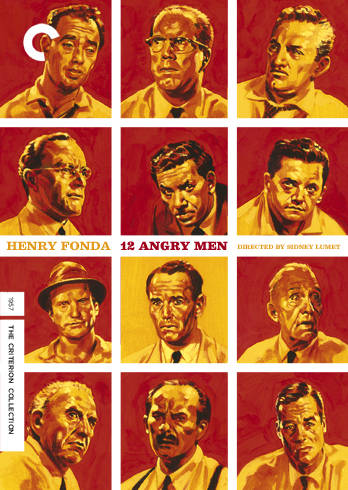
In 2016, the title 12 Angry Men (1957) is enough to send a shiver down the spine. There are too many angry men all around us, in real life, online and in the movies we consume. Perhaps Sidney Lumet’s best film though is thankfully not as infuriating as the title would suggest.
12 Angry Men is essentially a high-concept drama, taking place in a single room. The 12 of the title are the jury in a murder case, one that initially seems cut and dry, but that quickly becomes rather more complex. Henry Fonda gradually wins some of his peers over to his point of view, told through the camera as an isolated character gradually being joined in shot by more and more characters. The film functions as a reverse crime procedural – only it is not the police who are poring over the evidence and considering every angle of the case, but the jurors. The film argues both sides in terms of questions of what constitutes justice, can it be pure and how much respect the system deserves, through the simple plot. Unlike most other courtroom dramas, this film structurally starts at a very interesting spot. We do not see one second of the trial, rather it is deemed unimportant as the film starts as the jurors begin deliberations. Or rather than the trial being marked as unimportant, perhaps it is more accurate that in the end the power in the system rests not with the lawyers or even the judge, but with the 12 doing their ‘duty’. It’s a great script. Men sitting around a table talking about a case could go wrong in a multitude of ways. But this is sharply written with writer Reginald Rose delivering something that is simultaneously all exposition and none. It is layered and definitely talky, but never in a showy way.

It is difficult to make 12 dudes sitting around a conference table arguing look visually arresting. Or even moderately interesting for that matter. But from the get-go, Lumet uses the camera to both create interest and more importantly impart meaning. The film opens with awed shots of the courthouse where the action will take place. This reverence for the hallowed place of the law in our society will be both reinforced and challenged over the course of the film. Lumet is not afraid to put his close-ups right out there too, filling the entire screen with a face. The shooting is simple, but the use of these shots is astute, providing moments such as a change of vote with a jolt of meaning that other films may choose to deliver through sound design. For what is in narrative terms a simple story, there is a lot going on here. And as such every interaction, every shot, feels as though it is laden with meaning. The narrative focused on single murder is used to examine the whole of society in unfortunately still relevant ways. The film has a progressive bent, especially in terms of the examination of race. How white people look down on others, the dismissal of “slums” that are a “breeding ground” where undesirables are allowed to run rampant. White men discussing an ‘other’ that they (for the most part) have zero experience with or even any interest in. This culminates in a ridiculous rant about “them” and the accused’s “type”. Lumet wants us to see how foolish this crusty old man looks as he screams his backward ideas into an abyss as more and more people lose interest. Hopefully a whole society of them.
Verdict: With its high concept, single room location and unexpected narrative structure, 12 Angry Men is a pretty experimental classic. It works well as a crime flick, a courtroom piece as well as a thematic consideration of justice, the possibility of it and the role of it in society. Pint of Kilkenny
Progress: 138/1001
Related beermovie.net articles for you to check out: Serpico and Network.
Like what you read? Then please like Beermovie.net on facebook here and follow me on twitter @beer_movie
Worth Watching May 2016
Overall this was an excellent month, with only a crappy new release horror spoiling things. A couple of really good, lesser known Craven and Carpenter films, two hilarious TV shows and some excellent recent arthouse releases provided the highlights.
Worth Watching
- Brooklyn Nine-Nine Season 1 (2013), Daniel J. Goor & Michael Schur – Breezy as fuck. Andy Samberg has the right mix of goofball and charm. This is the ideal show to dip in and out of. So bloody well cast. Terry Crews is a great comedic performer. And I love the character of Raymond Holt. Plus there is some really good exploration of themes through that character. The homophobia and racism against him. The entire cast of characters is great. Best, pure laugh out loud comedy I’ve seen for a while.
- Prince of Darkness (1978), John Carpenter – A classic, perhaps my second favourite Carpenter film. Utilises music in a totally unique way. A guttural, driving score that is over most of the film. It’s an exceptional piece of artistry. A textural and interesting film where physics is melded in with superstition on the story front, and horror in with sci-fi on the genre front. Otherworldly, despite the contemporary setting. Also wholly engages with the very traditional evil concepts at its core. Fantastic.
- Wayne’s World (1992), Penelope Spheeris – Certainly not a timeless comedy. But the talent of the performers means it’s still decent. Dana Carvey really stands out. Other aspects such as the talking to the camera and engagement with popular tunes still hold up quite well. On the supporting front, Tia Carrera is super talented and Rob Lowe does smarmy very well. Fun breezy viewing with some genuine laughs.
- The Serpent and the Rainbow (1988), Wes Craven – This is quite ambitious from Craven, which delivers mixed results. The vision for the film doesn’t have a lot of clarity. But it’s interesting to see him playing with a story and aesthetic steeped in voodoo imagery. There’s also a sense of Indy globetrotting adventure, the exotica of Haiti. Craven always strikes me as someone interested in the world outside him which comes through in his work. Bill Pullman is decent, though it’s not the best written character. Cathy Tyson is excellent as the female lead. A lot of great, ominous imagery. The end result is kinda great. A mystical style creepiness not found in the director’s other work.
- Iverson (2014), Zatella Beatty – Doco about a singular basketball player that also functions as microcosm of America. An African-American player who embraced hip-hop lifestyle and aesthetic and refused to apologise for it or polish it. Hell of an athlete, a game changing presence. The ending is a little rushed. Doesn’t really delve into his later career well. But hard to cover everything in 90 minutes I guess.
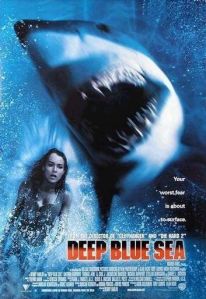
- Deep Blue Sea (1999), Renny Harlin – Rushes totally headlong to embrace creature feature clichés. Not just the shark, everything has a fakey sheen. Rough script unabashedly steals from better films. Has all the B-movie staples – endearingly shit effects, genetic modification, Samuel L. Jackson. There’s some nice surprises tacked onto the formulaic plot. Makes you smile as all films like this should and features a contender for greatest cinematic death ever.
- Broad City Season 2 (2015), Ilana Glazer & Abbi Jacobson – Starts rough, but the first season did too. Characters don’t immediately mesh with how they were set up in the first season. Such a great portrayal of friendship though. Also really lands the examination of the millennial experience. Influence of social media. Requisite mundane day jobs and the impact of them on how people experience the world.
- Leviathan (2014), Andrey Zvagintsev – Opens with incredible, wide scenery but quickly brings the focus much narrower. Both the scripting and acting are a little up and down. The thematic concerns around contemporary Russia, close ties between the Orthodox Church & state apparatus, pervasive dis-empowering role of bureaucracy and the powerlessness of ‘the people’ are where it excels. Also a portrait of a hyper-masculine, totally male dominated society that lends itself to ugliness. Pretty horrific stuff.
- The Invitation (2015), Karyn Kusama – The filmmaking arrests from the start, even if the plot is a touch predictable. It’s really stylishly shot and the music interacts with the visuals in a way that creates such an unsettling atmosphere. The least interesting elements are those that fit into the cult subgenre of horror. It’s not all there as a genre exercise, you’ve probably seen it all before. But along with the filmmaking, Logan Marshall-Green is fantastic, finally getting a vehicle for his talents. Kusama controls the atmosphere really well, invoking other films and real-life circumstances to toy with the tension. A fantastically constructed conclusion too.

- Duke of Burgundy (2014), Peter Strickland – This is a great love story that considers the suppression by one party of being in an unhappy relationship. The S & M elements add an extra layer of complexity on a usual relationship. Everything becomes so meaningful. Who does what and when? What is rigid what is contestable? Strickland’s bold use of sound design carries over to this film and it is beautifully lit. Also feels out of time a little. No cars, typewriters. Portrayal of sexual ritual and routine also fascinate. Is there an inherent risk that will grow stale? Become too practiced?
- Cooties (2014), Jonathan Milott & Cary Murnion – A horror-comedy with a tone so light it barely counts as the former. The characterisation is a little silly early on. But there is some fun scripting courtesy of Leigh Whannell who also has a fun presence onscreen. Despite the huge doses of violence, there is certain charm to it. Cool practical effects and a really fun & playful score. Though it does drift from its solid, clean premise toward the end.
- The Nice Guys (2016), Shane Black – It’s a nothing story, but that doesn’t really matter with a script this good. There’s some really interesting shit going on here. Plus it’s legit laugh out loud funny too. Love the ethics around what makes someone good or bad, though they could have dug into that more. Crowe and Gosling are totally great. Black balances them perfectly in a comedic sense. But Angourie Rice is the standout. Most of the interesting things in the film are filtered through her character.
Not Worth Watching
- The Boy (2016), William Brent Bell – It’s lovingly made and classically pieced together. The acting is really average though and it looks butt ugly. Scares are totally standard and cheap, whilst the script delivers none of the requisite tension. Never establishes the characters or the rules of the universe. Though there is a pretty decent depiction of domestic control. And there is a late-ish twist that I’m a really big fan of. It’s well earned by the rest of the film.

If you only have time to watch one Prince of Darkness
Avoid at all costs The Boy
Related beermovie.net articles for you to check out: Worth Watching May 2015 and Worth Watching May 2013.
Like what you read? Then please like Beermovie.net on facebook here and follow me on twitter @beer_movie
My Brilliant Career
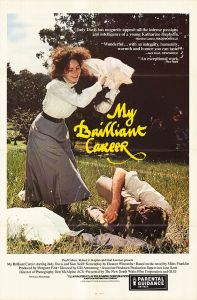
Gillian Armstrong’s My Brilliant Career (1979) is based on the iconic Australian novel of the same name written by Miles Franklin in 1901. It is one of those books that you are forced to read for school or uni that you dread, but then end up really quite liking (well at least that’s what happened for me).

This film adaptation may be one of the best reflections of a literary character onscreen that I have come across. The film, like the book, immediately inserts the writer into the action. The film is a character study, never wavering from the focus on Judy Davis’ Sybylla Melvyn, who may literally be in every single scene of the film. Both the writing and the performance of this character beautifully capture her sass and aspirational nature, as well as the rebellious streak and “illusions of grandeur” that she holds as dear to her as any other aspect of her personality. Some of this sounds cliché, but this is a rare idealist character that does not exist solely based on shallow braggartism. Rather that is balanced, undermined and heightened by the really well drawn element of insecurity and uncertainty of a person that age. Sybylla herself refers to herself as a “misfit and a larrikin”, her persona as an artistic dreamer content in her own world, never overwhelms her with an unnecessary self-seriousness. The film is certainly not plot-dense or dripping with incidence. It does have a perfunctory love story going on as well. Perfunctory in the sense that it really exists only to better illuminate the main character and what is most important to her. But it does that very well and the line of “I’m so near loving you … but I’d destroy you” perfectly captures the journey of the character, her coming to realise her shortcomings and how to best interact with those around her. Something she has been experimenting with and often failing at, throughout the film.
The performance of a very young, almost unrecognisable, Judy Davis is essential to the main character and by extension the film. There is a twinkle in her eye that so perfectly reflects how readers would have imagined the character and a cheek to her line delivery that charms no matter what she is saying or how she is behaving. In comparison, everyone else in the film exists solely to be acted upon by Sybylla, to bask in that force of nature. So the good performances of folks such as Sam Neill, Wendy Hughes and Robert Grubb are a little overwhelmed by the central character.

Thematically My Brilliant Career is a distinctly feminist film. Sybylla has a sense of social justice that she is not afraid to share with anyone around her. Perhaps even more than gender though the film is concerned with classism. Sybylla is righteous about the poor and their importance to society. This extends to an exploration of unnecessary class structures and high vs low culture, in particular the stuffiness of the former versus the ingenuity of the latter. Like everything, the thematic exploration serves to embellish the character of Sybylla, to tell the audience something new and interesting about her.
Verdict: My Brilliant Career really is a genuinely exceptional character piece. Sybylla is such a fleshed out and genuine character, whose journey is supported and reflected by a quite decent love story underneath. Pint of Kilkenny
Progress: 137/1001
Related beermovie.net articles for you to check out: Oscar and Lucinda and Mad Max: Fury Road.
Like what you read? Then please like Beermovie.net on facebook here and follow me on twitter @beer_movie
Worth Watching April 2016
You know I always claim that there are no bad years in film. But I’m beginning to think 2016 may be the year that changes all of that. Again in April there were a couple of critically lauded new releases that I just did not think much of. It was a mixed month overall actually, with nothing reaching great heights, though I did discover some lesser known gems from favourite directors.
Worth Watching
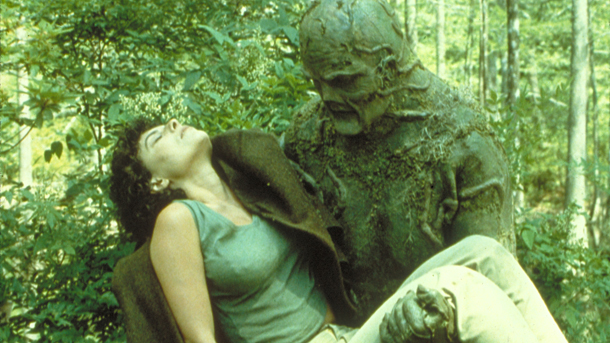
- Swamp Thing (1982), Wes Craven – From the outset, feels like a southern bayou set 60s B-movie. Everything contributes to that end – swish pan heavy editing, grouse practical effects, action that looks like it’s from The Power Rangers, schlocky dialogue, POV shots. I love the style of it all, the shooting approach is really varied. Enjoyment of the film does require an acceptance that it’s being deliberately schlocky. And also that this is not Craven’s usual horror fare, but rather a comedy-fantasy hybrid. It’s a totally strange film. A former Bond villain appears, essentially playing a Bond villain. It veers into a pretty philosophical closing section. A fever dream of a film.
- Secret Agent (1936), Alfred Hitchcock– ever wanted to know what a low-budget, Hitchcock James Bond film would look like? This provides the answer. High espionage, faked deaths and all. All those espionage moments are the highlights too as the character beats are not the best. But as with all Hitch films, there are some great stylistic flourishes. Close-ups of mouths, talking into ears, bold & aggressive sound design I like this a lot and it grows on you. Peter Lorre’s performance gains more subtly as the film progresses. Classic Hitchcock themes prevail as well.
- Please Give (2010), Nicole Holofcener – Mr Noah Baumbach seems to have made the privileged ‘New Yorker whining’ subgenre rather popular. This is probably my favourite of those kind of films, which I generally have derision for. It is helped by an excellent cast. Rebecca Hall, Amanda Peet reminds you she should be in more, Catherine Keener is excellent in a tough role whilst Oliver Platt is just so damn talented. There is some tiresome dialogue, but it is balanced by other parts which are really sharp. Characters start out as caricatures and I guess they kind of are. But they develop to an extent and the film says some interesting enough things with them. It’s not the most exciting film, more observational than narrative driven. But the cast makes it worth your while.
- A Thousand Acres (1997), Jocelyn Moorhouse – There are some very old fashioned feeling elements – Midwest farming imagery, awful voiceover, motivations so patriarchal they struggle to be believable. But under that surface there is some interesting stuff bubbling away. The film gets a lot darker than I was expecting. The intrigue of the relationships develops nicely which is the main area that the Shakespearean source material comes through, along with the melodramatic moments. So too in scenes where the action and atmosphere is really ramped up – an extended storm sequence especially. Jessica Lange is exceptional as a survivor of sexual abuse, her crushing recollections will make your skin crawl. Pfeiffer is great too. A real shaggy dog of a film.
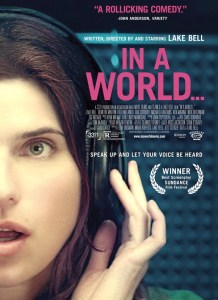
- In A World (2013), Lake Bell – Takes place in a very niche world – film trailer voiceover work, which gives the background to the occurrences a unique feeling. Great cast. Nick Offerman, Demetri Martin and Bell are all great while Rob Cordry dials his usual schtick down in an interesting, successful way. It’s fun and smart, and Lake Bell is clearly a very talented writer and director, in particular the former. There are some really powerfully written moments, especially in the subplot focusing on the marriage between Cordry and Michaela Watkins. Balances dialogue and narrative well. Also shows that Bell is equally adept at writing genuine laugh out loud comedy and meaningful drama. It’s a really nice film and the later plot developments make it one of the better rom-coms I’ve seen in a while.
- Scrotal Recall (2014), Tom Edge – Has a lo-fi feel to it. Hops straight into the framework of the series, which involves a bloke diagnosed with a STD tracking down former flames to inform them. It also, really satisfyingly, weaves in a broader story. This is a fun, really well written show. I found the male lead a little lacking in charisma. But the two other main performances are really excellent. It’s a decently diverse show that sets up the broader emotional stakes really well. They totally crush the last episode too. One of the best pieces of TV I’ve seen in a long time. Certainly was not expecting to shed tears watching a show with this title.
- The Boss (2016), Ben Falcone – On the surface barely noteworthy. It’s only an ok script and the filmmaking is stock standard. But McCarthy is the best cinematic comedian going and she is wonderful as always. Her and Kirsten Bell work really well together and the supports are all quite excellent. Noticeable too that there are barely any dudes in this film which is great. Has some things to say about the selfishness of wealth and showcases some character types that feel new. But most importantly it’s just a really funny comedy.

- Scouts Guide to the Zombie Apocalypse (2015), Christopher Landon – This is patchy, as so many horror-comedy films are. There are some fantastically bloody, practical zombie effects. At times laugh out loud funny in either an absurd, or more commonly, crass way. Conforms to a pretty standard teen film template actually. Despite digging the gore, the horror elements are the weakest aspect of the film, in part due to the total lack of mythos.
- Escape from L.A. (1996), John Carpenter – It has some great, simple sci-fi worldbuilding and also a really interesting conclusion that plays into that genre. In the middle is an oh so 90s action flick, but one starring Kurt Russel as one of cinema’s all-time great badasses and directed by an on form Carpenter. The effects veer wildly from those that hold up nicely to the laughably awful. Darkly prophetic of 2016 America – moral crimes, the outlawing of certain religions and voluntary executions. It’s episodic, but full of interesting story choices, like Plissken’s fame preceding him.

Nothin 90s about this
Not Worth Watching
- The Ward (2010), John Carpenter – Has a real Horror 101 feel to it. Group of disturbed women in a psychiatric hospital, flickering lights etc. It’s not all bad, but it certainly mostly is. Amber Heard is not the worst, it at some point conveys the fear of unknown of someone in an institution and it looks cool on occasion. But the writing really does not evoke the 60s setting and it has a very cheap feel to it. Certainly lesser Carpenter, with his jump scares and ghostly imagery not having any fright factor to them at all. They fall very flat. I also have a broader issue with the use of electroshock therapy and the like in film’s set in these places, due to their troubling basis in fact. I think that takes the viewer out of the film rather than boosts the horror. Very predictable, derivative and lacking of weight of any kind.
- Lost in Translation (2003), Sofia Coppola – So much potential to examine a foreigner (or two), adrift in a place totally alien. I dunno though. Jokes about the the lengthiness of Japanese language just seen out of place in this kind of film. Actually the interaction with Japanese culture and society is rough throughout. Feel like Coppola has worked through a lot of these same themes later in her career in a much more interesting and succesful way. Though the low-key friendship between the leads is much more satisfying and nuanced than the rest of the film. Scarlett Johannsson is excellent though. She makes you buy into her lonely situation. Murray is good too, but it feels like he is acting in a much sillier film. The tone is all over the shop. Certainly a filmmaker still finding their way.
- The Jungle Book (2016), John Favreau – A real mixed back. It looks totally wondrous, the 3D is immersive and adds a lot. And I think that photorealistic animals not only look great here, but are a really exciting development for a number of reasons. It’s shot quite interestingly as well, though that is really only apparent early in the film and the score is great. But the story is anaemic. There is no epic scale to it and it just feels like a succession of beats being ticked off. The lead kid gives a really spirited performance. It is especially impressive given he’s surrounded by CGI. But the whole film is soulless, lacking any true heart.

- Mr Holmes (2015), Bill Condon – There are occasional moments of brilliance. Old Sherlock Holmes seeing the impact of the Hiroshma atomic blast cuts right through. Impactful. Especially so in light of the fact that this is a character who worships only logic. But moments of inspiration are too far in between, or this may even be the only one. This film is beyond quiet and reserved. So much so that it legitimately barely functiond in being a film. Though Holmes becoming senile is an interesting enough choice. And I’m sure there are themes to dig into. But I’m struggling to stay interested enough to care. Or perhaps it was just a mood thing. The stuff around ageing for example simply did not grab me.
- Captain America: Civil War (2016), The Russo Brothers – First things first, this is an Avengers film not a Captain America one. Seems trivial but speaks to issues around narrative identify I think. This is the film where Marvel’s storytelling approach finally ate itself. It is so totally bloated and none of it means a thing. Notion of a civil war is totally facile. No battle of ideals as there should be. Just an excuse to have a quip-laden 5 on 5 battle that goes on forever. Boseman’s Black Panther is a huge highlight though. If Marvel get out of Ryan Coogler’s way, they are going to crush that film.

If you only have time to watch one Scrotal Recall
Avoid at all costs The Ward
Related beermovie.net articles for you to check out: Worth Watching April 2015 and Worth Watching April 2013.
Like what you read? Then please like Beermovie.net on facebook here and follow me on twitter @beer_movie
Network

With minimal changes, Network (1976) could easily apply directly to today’s media landscape. It is shocking just how ahead of its time the film is. Or perhaps it is shocking just how little mainstream news media has evolved over the past 40 years
Network is straight satire, which is a hard genre to pull off. This is true of the film early on. It is a little disjointed, consisting solely of jokes and neglecting to craft any narrative to go along with them. The employees of the network in question have their heads so far up their arse that they basically miss the profession from the protagonist Howard Beale (played by Peter Finch) that he intends to kill himself on air. It’s a funny, but not exactly subtle setup, reminiscent of Wag the Dog (1997) in this and other ways. The jokes often feel too straightforward as does the satire that initially focuses mainly on examining the primacy of business over personal interests. You have to dig a little deeper for the clever satire, concerning the commercialisation of a revolutionary (or anything) that goes so far it eventually cannot be controlled. There are very occasional moments of personal warmth between the characters. However these mainly serve to highlight that the film is very cool and distant, lacking that personal connection or story. Overall it feels in a way that a first viewing of the film (which is what this was for me) is really just to familiarise yourself with the material. It is a truly weird film and I think further viewings will be required to absorb it properly.
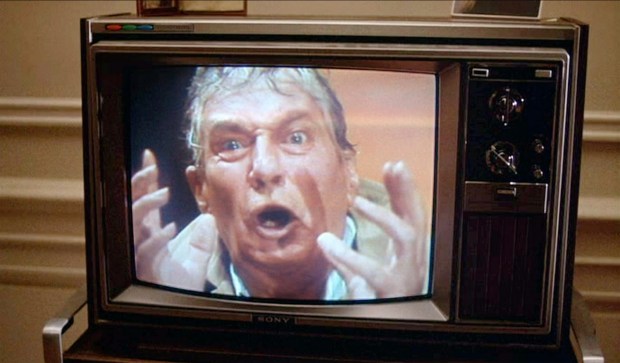
Sidney Lumet is considered a master director, and he has a way of shooting films that captures the eye, even if what is being presented is mundane. Here he mixes things up, shooting conversations in a pretty standard way and letting the absurdity of the script grab the attention. But that is contrasted with some really creative cityscapes, canted angles and split screens in other moments. The acting is excellent throughout the film and helps to anchor a script that, whilst brilliant, is quite wild in its construction. Faye Dunaway is marvellous, impassioned and conveying the intelligence of her character. But it is Peter Finch who propels the film. His performance takes you on a surreal psychological journey from downtrodden browbeater to prophetic visionary. This character arc is simultaneously the strangest and most successful aspect of the film.
Verdict: Network is a much weirder film than its reputation would suggest. It is dark and cynical, feeling quite ahead of its time in that regard. Whilst it is a little hard to take it all in on first viewing, the film still works despite being devoid of drama. The work of Peter Finch as Howard Beale is probably worth checking this out for on its own. Also does anyone else feel like Anchorman 2 (2013) is essentially a remake of this film? Stubby of Reschs
Progress: 137/1001
Related beermovie.net articles for you to check out: Serpico and SUFF 2014: The Dog.
Like what you read? Then please like Beermovie.net on facebook here and follow me on twitter @beer_movie
Stories We Tell

Sarah Polley’s Stories We Tell (2012) is one of the most critically acclaimed documentaries of the last decade. It is certainly an experimental and quite dense experience. But, at least on first watch, there are some aspects certainly lacking.
Part of the issue with the film is that it is so small scale. What Polley is telling here is essentially a piece of family history. A moderately interesting one sure, but there are similar tales of family secrets in many many families I think. The emotional volume of the film never really reaches any great heights either. The director admits during the film that she started out making this piece just for herself. It shows too, with this feeling almost more like an academic self-reflection rather than a feature doco. This subject matter makes it difficult for the film to really differentiate itself and justify the investment. Much of what is going on is interesting. But it is far too slow in its delivery and too small scale. The film really struggles to exceed feeling like a pretty standard familial tale and I don’t think it ever achieves that. At least on a surface level, there is a big focus on memory, about the differing ways in which people recall the same bents. Similarly Polley reflects on the storytelling process occasionally, but this is not a focus throughout the entirety of the film.
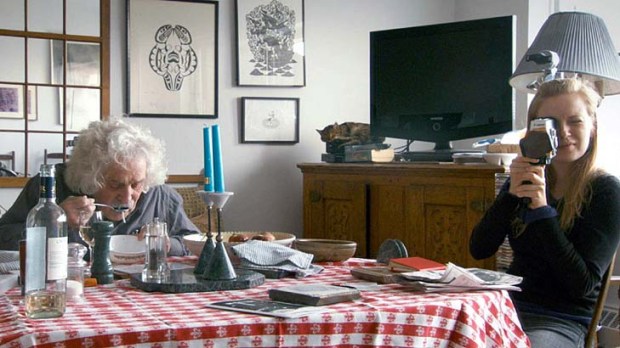
It is easy to point out and discuss the fact that Stories We Tell is a film concerned with notions of storytelling and memory. But the thing is, I’m not so sure those things are really there. The ideas bookend the film, are more of a focus at either end. Through the middle though they seem to be less of a concern, with the film just focusing on a mildly interesting family story. One of the more interesting stylistic choices that Polley makes in the film is revealing the artifice of filmmaking. On occasion we see visible sound recording equipment or cameras, drawing attention to the fact that this is a story being crafted, not an immersive truth. Something borne out even further by a late ‘twist’ concerning some of the footage. The experimentation or toying with form is perhaps the most interesting aspect of the film. It starts with the film’s opening stages, featuring talking heads with only first names provided, not context for who the person is or what perspective they are coming to their testimony from. Though whilst interesting, this affectation is unnecessarily oblique, making it too hard to discern the differing relationships.
Verdict: At some point in Stories We Tell, someone remarks that it’s “a great, great story”. Only I’m not so sure it actually is. It’s an ok film, with some interesting ideas around memory and storytelling philosophy that are not enough of a focus. Which serves to make this slow film even more frustrating. These issues are also only amplified by the fact that it is an exceptionally dense film to take in on first watch. Schooner of Carlton Draught
Related beermovie.net articles for you to check out: Sherpa and The Wolfpack.
Like what you read? Then please like Beermovie.net on facebook here and follow me on twitter @beer_movie
Reservoir Dogs
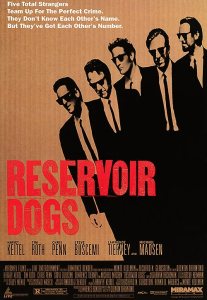
The more I think about Quentin Tarantino, the more conflicted I feel. He’s perhaps one of only two directors in the history of cinema (Hitchcock being the other) to have made himself into a genre and he’s also responsible for some of the purest blasts of cinema seen over the past few decades. On the other hand, I seem to like his films less than most, a lot of them being just ok. I also have a strange propensity to like his sillier works such as Death Proof (2007) and Kill Bill Volume 1 (2003) more than the more serious efforts that have garnered the director major acclaim.
That is all a longwinded background to where I was coming from when I sat down to watch Reservoir Dogs (1992) for the first time recently. This is the film that blasted Tarantino into stardom and it is a pretty perfect summation of where his career would go. On one front it is a little disappointing. All of his flaws (except for maybe the recently acquired tendency for his films to be vastly too long) are on display here, though it must be said, also are many elements of his filmmaking genius. This film is incredibly talky, with characters talking over each other about, well bullshit a lot of the time. The rapturous reception, to what is an admittedly pretty original conceit of having characters engage in lengthy side-conversations about movies and music, may have done Tarantino’s work a disservice in the long run. Almost in contrast to my feelings about Tarantino’s filmography broadly speaking, here he is best when being serious. The film is much better when painting something like Tim Roth’s desperation to live rather than the riffing on pop culture bulllshit. It’s all about story. If he is dicking about with the script, but it’s in service of the story, then I am in. But otherwise it is just tiresome. On a plot level, this is a mixed bag. Here we see Tarantino’s flair for mixing up narrative structures in a way that increases both the enjoyment and intrigue you will take out of it. But after you tease out what is going on, it is a pretty thin tale, with a twist that really falls flat.
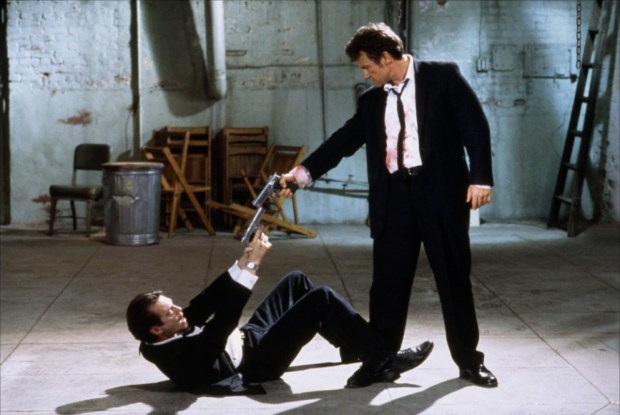
In case you hadn’t noticed, Quentin Tarantino has a stratospheric ego. Here, in one of his interminable cameos (Hitchcock shows us how director cameos should be done – requiring no skill, playful and SHORT), Tarantino gives himself all the most attention seeking, motor mouthed lines in a display that shows off his woeful acting chops. It is interesting to see how actors deal with the script that really does have a lot of rubbish in it. Some flounder, whilst others are able to excel despite the weaknesses on display. Most notably among the latter in Reservoir Dogs is Harvey Keitel, and to a lesser extend Michael Madsen. Somehow those two cut through the weakness of the writing and deliver performances that actually service the plot. They make you believe the dialogue, rathe than feeling you should be sitting back and admiring it for its cleverness.
Verdict: Weirdly, I really don’t have all that much to say about this film. It didn’t move me any more than the fact it is a moderately interesting crime flick. An alright film and notable for being the start of a great career, but no more. Stubby of Reschs
Progress: 136/1001
Related beermovie.net articles for you to check out: Sabotage and Worth Watching January 2016 (includes my review of The Hateful Eight).
Like what you read? Then please like Beermovie.net on facebook here and follow me on twitter @beer_movie
 Beermovie.net