Trailer for your Weekend: Escape Plan
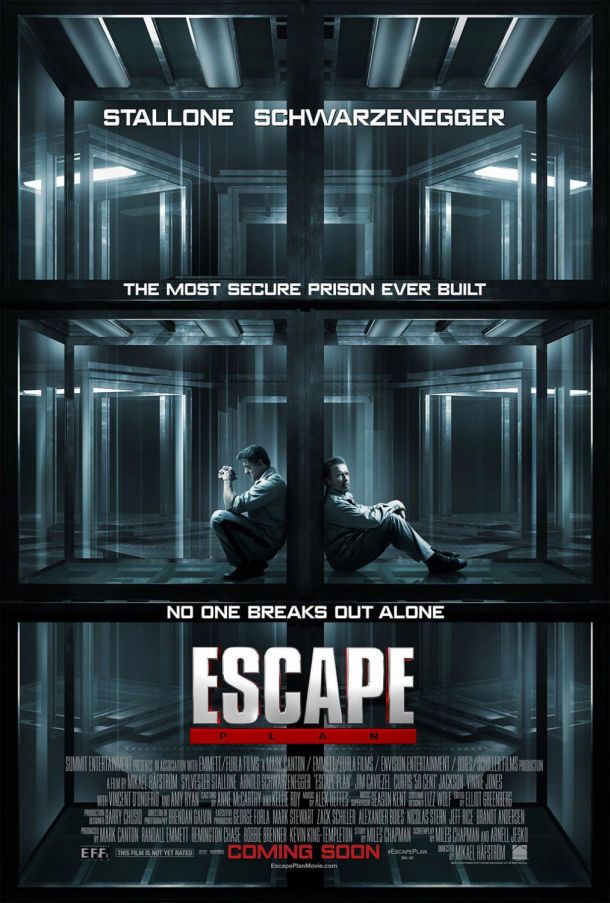
A little late on this again this week. But at least it will probably be on the weekend for most of you. This week’s trailer is for the upcoming Escape Plan, which may help us answer the question of whether Arnie and Sly still have it. If they ever had it to begin with in your opinion.
To be honest, this looks like pretty stock standard prison breakout fare. Except y’know, with Fiddy Cent and a terrible CGI looking prison. Not sure that either of those will help. Who knows if it will reach any great heights. Here’s hoping it does, because the prison break subgenre is actually one with some pretty interesting and fun films.
Like what you read? Then please like Not Now I’m Drinking a Beer and Watching a Movie on facebook here and follow me on twitter @beer_movie.
The Act of Killing
Just a heads up guys, this is kind of a long review. But I had a whole lot to say about this film, so I hope you enjoy the read.

Not since childhood have I laid down to go to sleep after seeing a film, and had images from the movie flashing before my eyes. The director’s cut of The Act of Killing (2012), currently in a very limited season at Arc Cinema, had that effect on me. The film has periodically haunted my thoughts since, even now a few days removed from viewing.
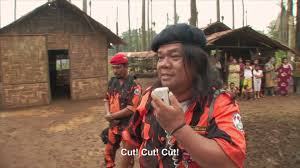 The film opens with a succinct background to what is going to take place. Text onscreen informs viewers of the 1965 military coup in Indonesia. Following the coup, opponents of the military, no matter their nature, were branded “communists”. One million of these supposed communists were murdered in a single year. There is no stock footage or anything like that to accompany the text. The facts are simply laid out, before the film moves into its central focus on a number of men, most prominently Anwar and Herman who were street level executioners during this time. The elderly men calmly describe how they initially battered people to death. However this caused too much blood to be spilt. So they show off the strangulation device they came up with and enthuse about how simple and bloodless this made the entire process. It is jarring to see the same man who explains all this, tenderly nurturing his ducks and teaching his grandchildren how important it is to be kind to animals. As a result, these scenes between Anwar and his ducks are some of the film’s most effective. The men are also invited to dramatise aspects of their killing careers on film, which they devote themselves to in quite a committed manner. A number of sequences in the film see them critiquing their performances in these re-enactments, pondering how to improve the costuming the next time they do it. It is these performances, creative re-enactments if you will, and their construction that make up a majority of the film. It is really powerful to see the reflection that this entire process brings about for some of the people involved. Don’t get me wrong, this is not some simplistic tale of redemption, but rather it is people for the very first time actually processing some of the evil that they have perpetuated through their life.
Where the approach of The Act of Killing differs from anything I have seen before is that it openly engages with these murderers. This is a difficult approach to comprehend as a viewer. These men are not simply interviewed or set up to be vilified. Director Joshua Oppenheimer gets them to be a driving force behind the direction the film takes. They decide what kinds of scenes they wish to turn their past into – the outfits, the narratives, the cast. Oppenheimer is essentially letting them write their own history. But the process of doing so reveals much about the men. Their bravado is variously amplified and challenged, as well as being both illustrated and examined by the film. For much of the film the men are extremely proud of their past and see the filmmaking process as a way to ensure that they are remembered for their deeds, but this breaks down to a degree as the process continues. The manner in which the film is constructed risks humanising these killers. Actually it does humanise them. In an email from the director that was read out before the film started, he stated this was one of his intentions. Evil is perpetuated by human beings, not abstract ‘good’ or ‘bad’. The film also gets deep into the psychology of these killers, examining how they felt when killing, how they dealt with their past and how they are still dealing with it now. I have no idea how Oppenheimer came up with the idea to have the men reinterpret their killings as cinema. But somehow it is able to go so much deeper into the story than a stock standard documentary would have been able to do.

One of the many disturbing aspects of the film is that it is a film about cinema and the power of cinema. This is actually examined by the film on a number of different levels. Obviously there is the cinematic re-enactments of their murders that the men are creating and shooting. This includes incorporating their favourite film genres into proceedings. So we see a Western interpretation of killings, a gangster themed one and a number of others. The men all also have a passion for cinema. Anwar enthuses about how he worked in a cinema in the 60s. One of his favourite films was perhaps unsurprisingly Scarface (1983) and he reveals he used to incorporate the methods of killing that he saw in gangster flicks into his day to day work. This all adds up to a combination of showbiz and genocide which is in many ways as absurdist as it is chilling. And don’t worry, it is ultra-chilling. Looking at the idea on paper, it seems that there is the risk the approach will trivialise what took place. But the effect of this 2 hour and 40 minutes is if anything the opposite, a challenging look at literally the act of killing. It looks into how these murders have shaped the men who commit them, in doing so shedding light on just how heinous their actions were. On another level, we also see the discussion of the hidden history of how cinematic propaganda was used by the military in the 60s to sway public sentiment against the communists. Film propaganda is traditionally (well by me anyway) connected to World War II, on both sides of that conflict, but clearly was used in Indonesia as well. The men involved reminisce about how school children were forced to watch the same anti-communist propaganda film each year and ponder the effect that would have had.

Whilst most of the film does have a very specific focus on a couple of the men involved in the genocide, it also paints a broader societal picture. One that shamefully shows that really nothing has been learned or even processed in Indonesia in regards to these events. A contemporary politician boasts that “communism will never be accepted here because we have too many gangsters” (the term gangsters is how the executioners and their colleagues refer to themselves). Within all of the government officials featured in the film, there is a broad acceptance in the ‘rightness’ of the murders that took place in the 60s. The fact that there are numerous credits for ‘Anonymous’ at the film’s close also shows how fearful many Indonesians were in being involved with the film because of what it is addressing. There is also a strong focus on the Pancasila Youth organisation that both Anwar and Herman belong to. The organisation is still strong and seemingly beloved in Indonesia. A sort of off the grid militia embraced by politicians, mixed with just being small time hoods who intimidate local store holders into giving them money. Shockingly this horrid organisation even get a visit from the Vice President of Indonesia during the film who showers them with praise.

Director Joshua Oppenheimer at work
As a documentarian, Oppenheimer has a pretty hands off approach. He is rarely seen and only occasionally heard. These couple of times that we hear his voice though are really key moments and ones that improve the film a whole lot. Without giving too much away, in one instance he questions Anwar as to whether he really wants to show his grandchildren the violent re-enactment they have just shot. This cleverly raises questions about the perpetuation of this mindset through generations. In the other, Oppenheimer boldly challenges Anwar’s attitudes in what really becomes the film’s key sequence. I won’t say any more than that for risk of spoiling it. Like I said right at the start of this review, the film has been in many ways hanging over me, haunting me since I saw it. Usually that would mean I would put it in the ‘great films I never want to see again’ box. However for some reason, I am really keen to sit through this film another time. I suspect that repeat viewings will reveal more and more, especially because the film is quite broad ranging in the ideas it is exploring and the buttons it is pushing.
The Act of Killing is simultaneously engaging and repulsive. It challenges the traditional documentary form by using the clinical and creative deconstruction of the murderous events to tell a much fuller picture than a straightforward approach could have managed. In addition to that, the process and content of the film formulate a movie about movies different to anything else you will have seen. If you ever get the chance to see the Director’s Cut of this film, grab it. Like the director has said, it is not a film that you will ‘enjoy’ as such. But that doesn’t mean it is not one of the most memorable cinema experiences you will have.
Verdict: Longneck of Melbourne Bitter
High Noon
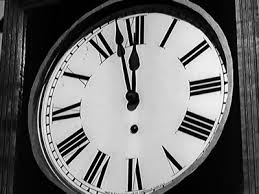
If 24 was a classic Western – and it really should be – it would most likely be High Noon (1952). The clock rules in High Noon, slowly ticking down to an archetypal Western showdown between the law and the baddies.
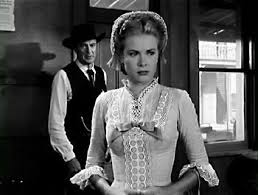 The film is all set in one day, which happens to be the wedding day of local Marshal Will Kane and Amy Fowler, played by Gary Cooper and Grace Kelly respectively. The Marshal is retiring from his job into a more peaceful new life with his Quaker missus. Their happy day is ruined by the return of the fiendish Frank Miller, who Will had put in jail some time earlier but has just been pardoned. After abandoning an attempt to flee, to the disgust of his wife, Will returns to town in order to confront his nemesis when he gets off the train. The rest of the film is devoted to an almost real-time countdown for the train to arrive, as Will tries to get a crew together to support him in standing up to the thugs, wading through a sea of small town politicking to do so. Unfortunately though he seems desperately low on support from the townspeople. The film is an interesting mix of classical and innovative approaches to the genre. The final showdown between the foes is pretty standard in the realm of iconic Western. The tense but slow-burn build up, which in many ways is extended bouts of diplomacy is not so standard. A different psychology is at play to most Westerns I have seen with much less of a focus on action. Similarly the scenery consists of predominately agricultural land and the town rather than the open, sweeping John Ford style American plains and valleys.
Running down the list of the cast of this film, it would have to be close to the greatest cast ever put together for a Western – Grace Kelly, Lon Chaney Jr., Lee Van Cleef and Gary Cooper. They are all in good form here as well, especially Kelly and Cooper as the (un)happy newlyweds. Both of them are helped by the fact that there are some really interesting elements to their characters. Kelly’s Amy has a fervent belief in her religion and the pacifism that it entails which is examined on a number of occasions in the film. On the other hand, Cooper’s Will is not just a whitewashed, perfect hero. He loses his cool, hits people, doesn’t seem to have all that many friends in town and could most certainly treat his new wife a whole lot better. Directed by Fred Zinnemann the film is astutely shot. Much of the action takes place either indoors or in the confines of the town, so it is shot much tighter than most Westerns. It is opened up a little by the use of some funky camera angles, such as a close-up of a wagon wheel as the wagon bounces along at great speed.

I really enjoyed High Noon, it manages to blend the iconography of the Western with a pretty original approach to the storytelling. It is not one of my absolute favourite Westerns, but if you have any interest in the genre, then this is one you probably want to tick off.
Verdict: Stubby of Reschs
Progress: 89/1001
Like what you read? Then please like Not Now I’m Drinking a Beer and Watching a Movie on facebook here and follow me on twitter @beer_movie.
Sanctum
One of the first films that James Cameron turned his attention to after Avatar (2009), was the Aussie genre film Sanctum (2011) which Cameron produced. That fact, as well as the fact it was (I believe) the first Australian film to utilise 3D, got the film a relatively large amount of hype, at least here.
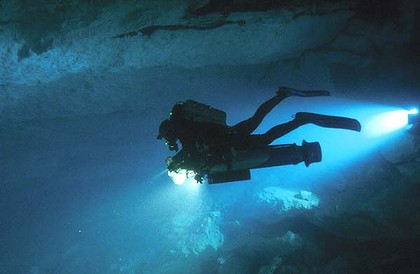
Whilst the film was relatively panned by critics and did not go so well at the box office, I think it deserves a bit of a reappraisal. Definitely imperfect, Sanctum is an atmospheric and refreshingly dark thriller. You know what is good for creating atmosphere? Frickin caves. You know what the only thing scarier than caves is? Frickin cave diving. Sanctum makes the best of these indisputable facts as it traps an eclectic bunch of divers deep within a cave system in Papua New Guinea. With their path to the surface blocked, their only option is to journey through the previously unexplored cave system to find the ocean. The film is beautifully shot. Some of the establishing shots of the PNG countryside are jaw-dropping and the budget clearly extended to some really excellent aerial photography. Without overdoing things, the photography also ramps up the suffocating claustrophobia that cave diving brings. The kind of claustrophobia that can, and does, seriously affect one’s mental state. The narrative is a little silly. It reminded me of that terrible film Vertical Limit (2000) where a whole bunch of people die in a mountain rescue, but you still feel happy because the right one lives. But as an exercise in tension, it works pretty well, managing to overcome dafter moments such as a base jump into the cave. This was my second viewing of the film and I did notice this time that it is quite a difficult watch. There is a brutal edge to many of the proceedings and it is rather harrowing to sit through things right til the end. Sitting through it will reward though, because there is heaps to like about the film.
 The performances in Sanctum are a bit of a mixed bag. Richard Roxburgh is the most effective as the grizzled veteran diver Frank McGuire who has never been able to build much of a relationship with his son, preferring instead to focus on his career as a cave diver. As his son Josh, Rhys Wakefield is serviceable and makes you believe in the angsty relationship that he shares with his old man. I thought Ioan Gruffudd was a better actor than this though. He is utterly abysmal in this film. Much of this is due to the accent he attempts to put on. I think it is meant to be American, but it is truly hideous and really distracting. It definitely takes a certain breed of person to invest your life in caving and especially cave diving. Not exactly my cup of tea. But the film brings to life this misfit gang and taps into some of the psychology behind why they choose to spend their time deep underground in scuba gear, living on the precipice of death. You can definitely get a sense of the attraction of being able to see something that no human being has ever been privileged enough to see before.

Sanctum looks incredible – both above and below ground this is a really well shot film. As a coherent well-acted narrative the returns are a little variable, but as far as tense, claustrophobic thrillers go, you can do a whole lot worse.
Verdict: Stubby of Reschs
Like what you read? Then please like Not Now I’m Drinking a Beer and Watching a Movie on facebook here and follow me on twitter @beer_movie.
Live Tweet Poll: Rubbish Shyamalan

The career of M. Night Shyamalan can be easily divided into two parts, with perhaps a little grey area in between. First is his golden, early career that famously led to him being labelled the ‘next Spielberg’. This period runs up to at least Unbreakable (2000) and includes the almost universally acclaimed The Sixth Sense (1999) that was probably the critical and commercial highpoint of Shyamalan’s output. Just as stark is the period of rubbish Shyamalan, which runs from Lady in the Water (2006) to his most recent abysmal effort After Earth (2013). This period has seen Shyamalan release some of the most maligned flicks of the last decade, attracting the kind of vitriol generally reserved for the likes of Uwe Boll and Michael Bay. Signs (2002) and The Village (2004) occupy a little bit of a grey area in between the two periods with mixed opinions. What do you guys think of those two?
In any case, I have actually seen very little of Shyamalan’s work hence this little live tweet poll. This Saturday night coming around 9:30 ot 10 my time, I will be live-tweeting one of M. Night’s rather crappier efforts. Let me know in the comments below which of these three films you would like me to unleash my live-tweet on.
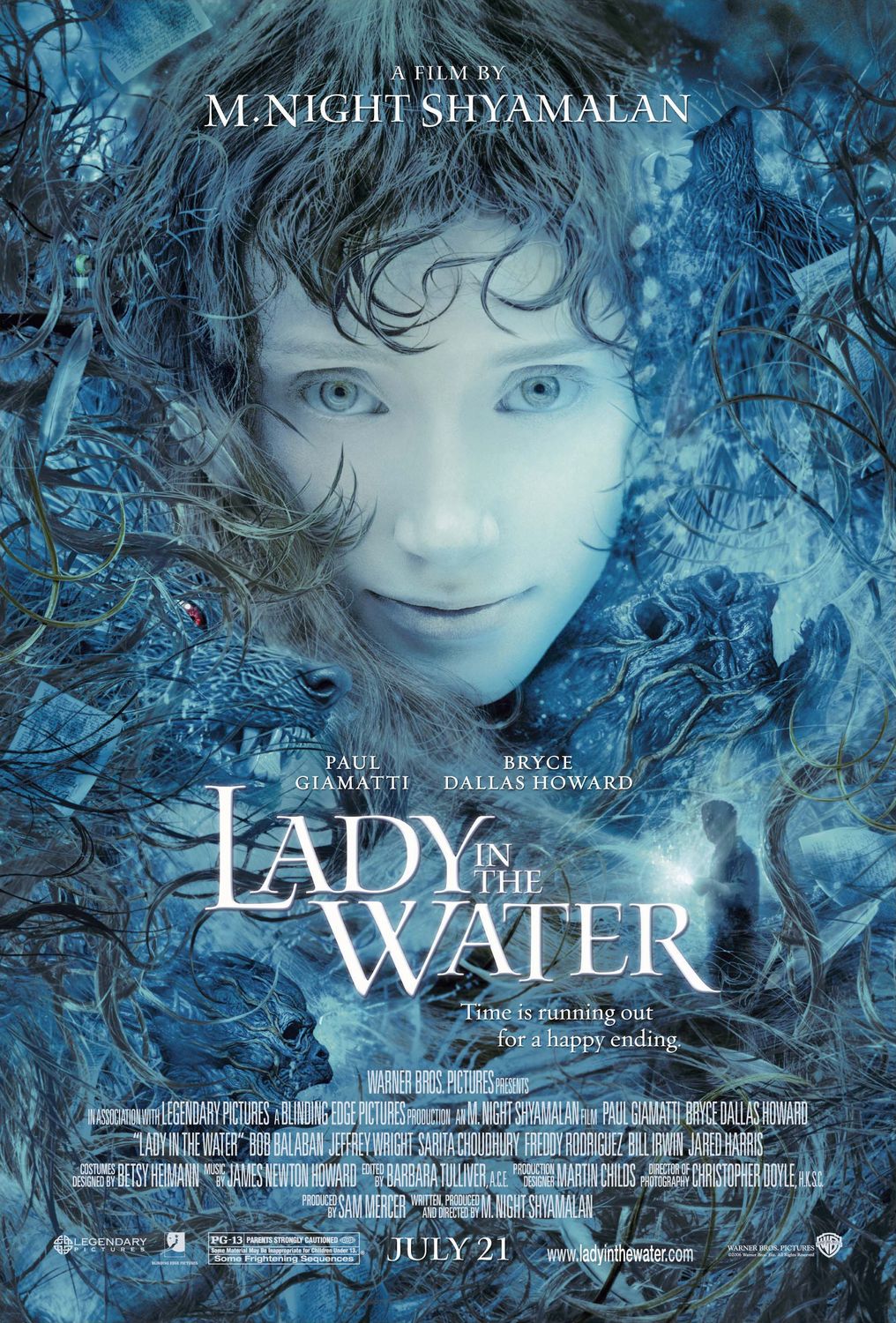
Lady in the Water (2006)
The Happening (2008)

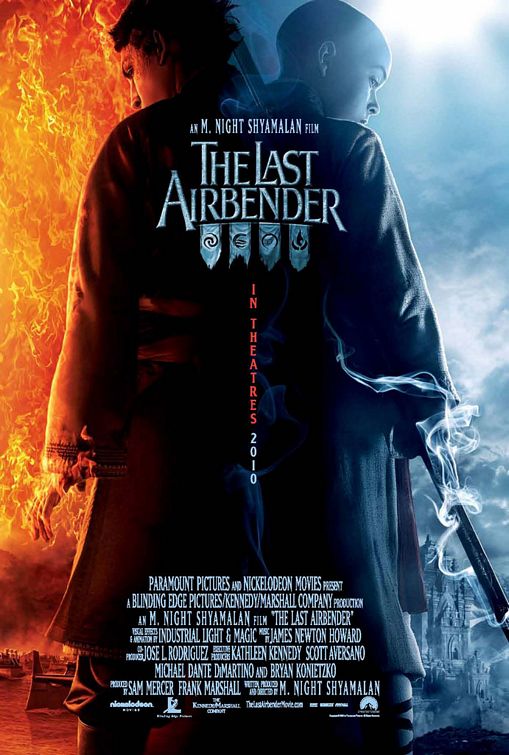
The Last Airbender (2010)
Like what you read? Then please like Not Now I’m Drinking a Beer and Watching a Movie on facebook here and follow me on twitter @beer_movie.
Trailer for your Weekend: R.I.P.D.

A little late with this, but better late then never I guess. R.I.P.D is apparently already out in the states, though it mustn’t be making many waves because I have not really seen any reviews doing the rounds. The trailer looks like it could be a pretty clever ride and it has some pretty interesting people involved – Jeff Bridges, Ryan Reynolds and the awesome Mary Louise Parker. It does also look like it has a tone that could definitely go either way. Has anyone seen this already and care to share their thoughts?
Like what you read? Then please like Not Now I’m Drinking a Beer and Watching a Movie on facebook here and follow me on twitter @beer_movie.
Chico and Rita
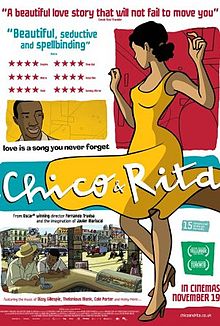 The Spanish film Chico and Rita (2010) was nominated for an Academy Award for Best Animated Feature before losing out to Rango (2011). It is always nice to see a film made by someone outside of the Disney/Pixar/Dreamworks trinity get some kind of recognition at the big award ceremonies, so I thought I would take a look.
A vast majority of the film takes place as an extended flashback, beginning in Cuba in 1948. Chico is a muso in his prime, who comes to know and love Rita. Theirs is a topsy turvy relationship that spans a fair bit of time and space, travelling to the States, Paris and more. They both make mistakes and it is nice that their love is not too neat and tidy nor ‘hollywood’ in its presentation. Because in real life, love is rarely that way. There are a couple of surreally well realised moments in this romance. When Chico and Rita make music the morning after they first make love is one such moment which definitely springs to mind. Aside from the dominant love story, music (especially Cuban), is the predominant focus of the film. Music is used both in the background and the foreground of the action onscreen. In its establishment, the narrative, and film more broadly goes for a very old fashioned filmmaking aesthetic. The comedic chops and characterisations hark back to a 30s musical or melodrama. In addition to this, the film also takes the quite interesting approach of mingling fact and fiction by incorporating real life people and events into the film.

The film looks absolutely amazing, with a really unique visual approach. The animation has really noticeable, black outlines which boldly evoke classical animation and also a sense of the time where the events are set. This style is a really fantastic way to approximate life, more so than 3D animation and perhaps even the more traditional cell shaded approach. Whilst the animation looked incredible, when it came to the motion of the animation there were some issues. The faces were not always adept enough at conveying all important emotions while some of the movement of the characters was a little clunky. But overall, the visual splendour of the film is its chief selling point.
Perhaps not as enchanting as it could have been, Chico and Rita is still worth spending the time on. The film looks phenomenal and is better at evoking a real sense of time and place than most any other animated flick I can recall.In fact unfortunately, taking away the visual approach, I perhaps wanted to like the film a little more than I actually did in the end. Having said that, the ending of the film is a cracking one, actually bringing a conclusion to the proceedings that is a little more satisfying than the overall feel of what has come beforehand.
Verdict: Stubby of Reschs
Like what you read? Then please like Not Now I’m Drinking a Beer and Watching a Movie on facebook here and follow me on twitter @beer_movie.
Trailer for your Weekend: The Canyons
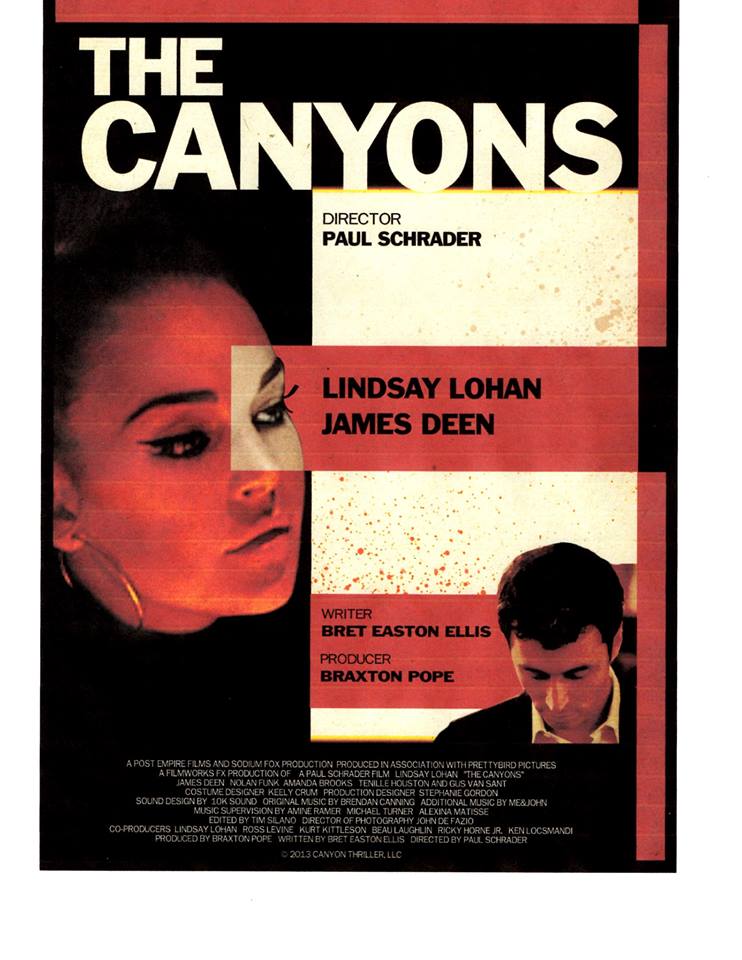
A bit of stunt casting for this one – the porn star and the fallen star of Lindsay Lohan. Plus it is based on a work by Bret Easton Ellis, the controversial writer. I have read (and been challenged by) some of his work in the past and I am intrigued to see this, despite the authors rather unlikable public profile. This trailer is decent, I especially like the opening little part about films. Plus the fact that Paul Schrader directs the film, makes me pretty keen to check this one out.
Like what you read? Then please like Not Now I’m Drinking a Beer and Watching a Movie on facebook here and follow me on twitter @beer_movie.
Before Midnight
Opening tomorrow here in Australia, Before Midnight (2013) is the third entry in the Before… series of films from director Richard Linklater and stars Julie Delpy and Ethan Hawke. I have only recently watched (and loved) the first two films: Before Sunrise (1995) which is fantastic, and Before Sunset (2004) which is something of a minor modern classic in my view.

As such, expectations were pretty high for this third entry. If you have not seen either of the first two films, they are essentially romance films, that on the surface should be too schmaltzy to handle. But somehow they work really well, the improvised dialogue and realistic feel coming through. However where the first two films are a couple falling in love and rediscovering each other, Before Midnight is two people having a stupid fight. Imagine if you met my fiancée and I for the first time, and we just had an absurd, meaningless argument that just jumps from point to point for an hour and a half. An argument where the parties involved lose all perspective of why the hell they were even arguing in the first place. How would you feel about us? That is what this film is like. The snappy dialogue and rapport between Hawke and Delpy that is channelled in such interesting directions in the first two films is just mired in the blandness of everyday life here.
 I respect the direction that the film is taken, but it is not what I go to the cinema for. I want the whimsical idealism of the love story between these two characters, Celine and Jesse. I was just not prepared for this very domestic drama. Before Midnight tries a fair few different things to the first two films. For starters, it introduces more outside characters, they are on a holiday with a number of other people when the film starts. It also has a bit more of a rambunctious, obvious sense of humour, which actually manages to merge pretty well with the vibe of the rest of the film. I’m not so sure that the external intrusions of the additional characters work so well though, they distract from what made the first two films so iconic, i.e. the singular focus on Delpy and Hawke. The additional characters help to make much of the film a comedy rather than a love story. Indeed, the film is part comedy and part relationship drama. None of the wondrous romance of the first two films. Overall, despite the two lead actors being once again fantastic in their roles, the film was too grounded in reality for my liking when I was just looking for a continuation of the grand love story. Before Midnight unfortunately takes these two really endearing, even if slightly pretentious characters and makes them just utterly unlikeable.
This film has worked for a lot of people, but it did not work for me. I was not ready to accept ‘real life’ from the characters of Celine and Jesse. I want a love story for the ages, not a daft argument which makes me dislike them both. There is just not enough joy in this film for me.
Verdict: Schooner of Carlton Draught
Like what you read? Then please like Not Now I’m Drinking a Beer and Watching a Movie on facebook here and follow me on twitter @beer_movie.
The Masque of the Red Death
Roger Corman is undoubtedly the king of B movies, renowned for films featuring cheap dialogue, titillating female characters and huge monsters. The cycle of eight Edgar Allan Poe adaptations that he directed from 1960 to 1965 in tandem with star Vincent Price 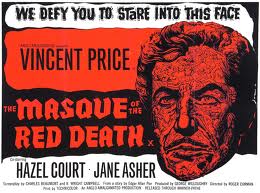 were the closest that Corman ever came to physical acclaim.
The Masque of the Red Death (1964) is the penultimate film in that series and the only film of Corman’s that features on the 1001. It is not surprising that he was able to create a film of such atmosphere and quality, because even when bringing to the screen his silliest visions, there was no doubting the quality of his craft. He also had an incredible eye for talent, helping to launch the careers of a whole range of film icons, Martin Scorsese and Jack Nicholson to name just two. Indeed Nicholas Roeg, who would go on to direct films such as Walkabout (1971) and Don’t Look Now (1973), was the cinematographer on this film. The Masque of the Red Death is an adaptation of the Poe story of the same name. One of the most notable achievements of the film is that it is able to stay true to the spirit of what is a very short story, whilst making the necessary expansions to get it up to feature length. The film sees a plague sweeping across the land which forces Price’s prince to hole up in his castle with a bawdy bunch of friends for some partyin and Satan worship… as you do. Once there of course, many moody and atmospherically creepy happenings begin to take place.

Vincent Price is a really great actor. Yeah his range might have been a touch limited compared to some, but Price did his thing very well. And as the tyrannical Prince Prospero, Price is chewing the scenery left right and centre with aplomb here. It is lovely scenery too, because the design is perhaps the best thing about the film bucking the usually rather cheap standard of Corman films. Apparently the very cool castle set was inherited from another production which may help to explain some of this though. The castles and set dressings are fantastic as are the costumes that adorn the Red Death and his associates. Especially for the time, there are some pretty interesting moral things going on in the film. From Prospero’s continual assertions that “God is dead” to various deals with the devil and an intense sequence where a man in an ape suit is calculatingly burnt alive.
As a fan of Poe’s work, it is a treat to see it interpreted in a manner that is both so original and yet so adept at bringing to life the spirit that is in his writing. The Masque of the Red Death is also a perfect chance for Corman and Price to show their real quality as director and actor respectively. If you are a fan of Edgar Allan Poe’s work, or of classic horror filmmaking, then you should definitely take a look at this one.
Verdict: Pint of Kilkenny
Progress: 88/1001
Like what you read? Then please like Not Now I’m Drinking a Beer and Watching a Movie on facebook here and follow me on twitter @beer_movie.
 Beermovie.net