Avengers: Age of Ultron

In any other year, Avengers: Age of Ultron (2015) would be the biggest release by far. This year there is another franchise looming large on the horizon that comfortably takes that honour away. But an early-ish release date on the calendar and a close to perfect Marvel track record has expectation sky high for this one.
Unlike the first film, there’s no easing in to be had here. Instead, we find the crew already together, mid-battle in Eastern Europe. Being thrown in the deep end engages straight away, ramping up the exhilaration. However it also takes away a lot of the charm that was in The Avengers (2012) as the new characters were introduced and relationships established. Obviously that level of origin story grounding was never going to be required in this film. It suffers as a result though and perhaps it would have been better to have some new members of the gang to introduce from the start. In addition to the action, the overwhelming take away from the first sequences is that this will be a fun film. The gang are all cracking jokes and taking the piss out of one another. The packed screening lapped up basically every one-liner, drawing at least guffaws and on occasion applause. In the end, I actually feel this film has too many quips and jokes for its own good. Particularly toward the end, this element of the film takes over and tonally what should be a tense action packed payoff instead feels like a buddy comedy, which can’t help but lower the stakes. Ultron is a very strong villain. Even when he looks like a knock off Iron Man, the robot has a chilling presence. Following the character’s creation, the film inevitably shifts its focus elsewhere, which leaves the villain a little undercooked and the film a little slighter as a result. A similar criticism can be made of the film’s thematic focus. Stark’s creation of Ultron recalls the depth of Captain America: Winter Soldier (2014), but that is all too quickly done away with for buddy fun and the LOLs.
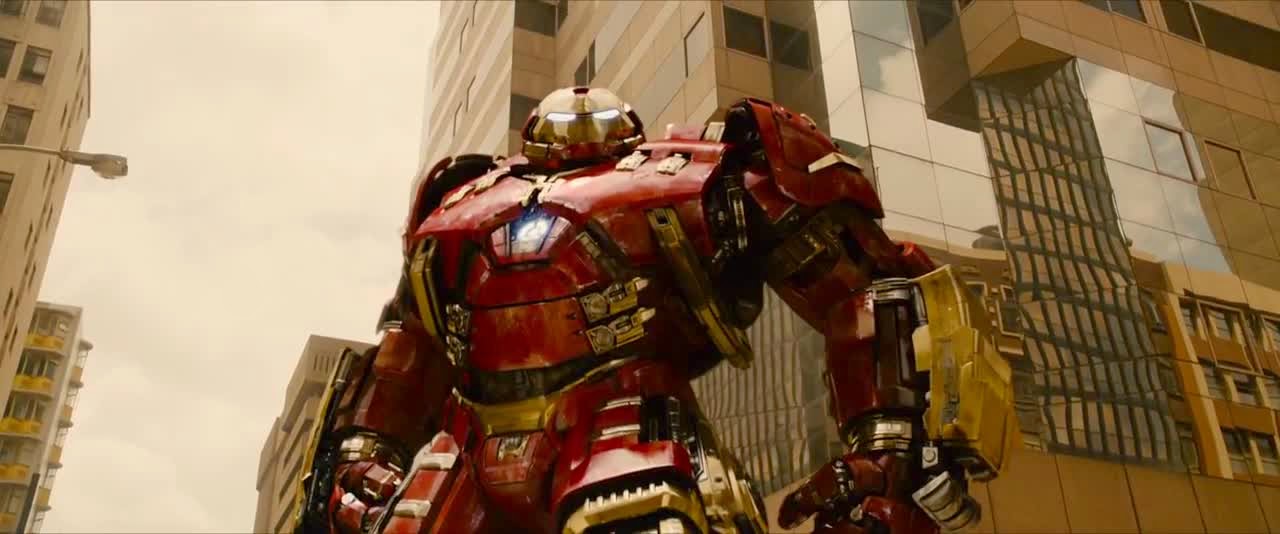
In comparison to most Marvel films, the action in Avengers: Age of Ultron is exceptionally fast and kinetic and not just when Quicksilver is involved. There are a bunch of great, big action sequences here and for the most part, everyone gets their chance to show off and shine a little. However, it is strange to pinpoint why Whedon chose to accelerate the action like he did, because it makes a lot of it difficult to follow. Indeed right from dropping the audience in from the get-go, the film doesn’t let up, with a huge action set piece teased in the trailers coming remarkably early. It’s a little too much, which is why when the film slows down to actually bother telling some story, some of the best sequences of the film arrive. In particular one sequence focused on Hawkeye revealing a secret side is a definite welcome change. Actually the increased presence of Jeremy Renner as Hawkeye is a major plus for this film over the first one. He brings a very human vibe to a superhero tale and his self-deprecating humour stands apart in a sea of zingy one-liners. One of the other standouts is Aaron Taylor-Johnson as Quicksilver, probably outshining Elizabeth Olsen’s Scarlet Witch to some degree. It’s good to see Johnson returning with a little of the charisma and charm that his Godzilla (2014) everyman was totally devoid of.
Verdict: In the end, Avengers: Age of Ultron works well as fun geek fan service and as a continuation of the Marvel Cinematic Universe. But it’s no more than that from a studio that we have come to expect more from, as the more interesting ideas (politics, bold sci-fi plotting) are dispensed with too quickly. Stubby of Reschs
Related beermovie.net articles for you to check out: Captain America: The Winter Soldier and Guardians of the Galaxy.
Like what you read? Then please like Beermovie.net on facebook here and follow me on twitter @beer_movie
It Follows

In these days of VOD release dominance for genre films, it’s great to see an indie horror film like It Follows (2014) getting such a solid release around the world. Here in Australia it’s playing in a fair few cities and I know it has performed very well in the States too.
The film follows Jay, a young woman infected with a malady following sex with her new boyfriend. A lot has been made of the fact ‘it’ is transmitted through intercourse, resulting in an expected focus on the theme of STDs and claims that the film is anti-teen sex. The latter is not really supported by the film, but there is no doubt there is a cautionary aspect to the film in relation to STDs, though it never feels like uber-obvious preaching. On one level this thematic concern is an extension and amplification of the sexual politics of classic 80s slashers, where intercourse was usually quickly followed by a brutal death. But It Follows also reinterprets this notion and updates it for today. The film accepts that teen sex happens and that it can be really fun and grand. That can be true and ‘it’ can still be transferred through the act. On this front, and a range of others, the film feels perfectly attuned to teen life. We barely see any parents in the film, which emphasises the teen focus, not being distracted by the potential passing of judgement from the disapproving olds. And just as teenagers often do, it’s a really nice touch that most of her band of friends believe Jay’s plight pretty much straight away with very few questions asked, when there is not that much evidence to support her. Stripping away the subtext, on a surface level the threat at hand is awesomely creepy, an enemy that is slowly walking toward its prey at all times. It might not be there today or tomorrow, but it will arrive eventually. Unfortunately though, the ‘rules’ of the threat are never fully established. Occasionally ‘it’ sort of just stops, and at others it seems to slightly cheat on the walking only policy. They are minor quibbles, but once that distract from the tightness of the film and its concept.
In terms of pacing, this is surprisingly slow, and a little patchy. It actually feels a little plotless to me, not functioning as a smooth long sweep of a story, but rather hopping from one incident to the next. Wait for ‘it’ to show up, scare the bejeesus out of you, move to a new location, ‘it’ shows up again. This is totally terrifying, but it also just feels aching for a richer incidence to the narrative. However director David Robert Mitchell is totally in control of his audience, deftly placing them where he wants them. I noticed one sequence where the dialogue felt especially stilted and the atmosphere had been sucked right out of the film. Then ‘it’ all of a sudden shows up and all of the atmosphere rushes back into the film with a greater force given that Mitchell had made you complacent with the preceding scene. The camerawork is a little over-done at times, especially a repeated fondness for the camera wheeling around in a wild circle. It’s a gimmicky, too funky touch that does nothing to dial up the tension.

Whilst overall it is a little difficult to see why the film particularly necessitates the hype it has garnered (though as a fan of the genre I’m not complaining), there is no doubting there is a level of detail and artistry that sets It Follows apart. The look of the suburbia is just slightly off, adding to the whole vibe of the film. Little touches such as the furnishings all seemingly being a combination of retro and futuristic looking pieces for example. Whilst I would characterise the film is a very good one, I feel that the soundtrack is flat out great. The approach taken is a risky one and could have so easily distracted from the film or ‘signposted’ events a little too much. Instead the soundtrack by Disasterpeace lends a totally jarring and disconcerting backdrop to the imagery. In that way it is both a little similar and totally different, to Hans Zimmer’s score for Interstellar (2014). The score seems to assault you, not through sheer volume, but because there seems to be a raw physicality to it. It’s one of those soundtracks I rush straight home and look into if I buy a vinyl copy (turns out you can, though it’s a pretty limited run). The soundtrack feeds into what I would label the film’s denseness. Also fitting this mould is the incorporation of pieces of literature throughout, chiefly Dostoyevsky’s “The Idiot” and a parade of old sci-fi films on black and white telly. On a first viewing, it is hard to take in and incorporate exactly what is being said by these elements. But they function as nice window-dressing that I would like to unpack on a re-watch.
Verdict: It Follows is a really quite good and creepy as balls horror flick, albeit an overly hyped and definitely flawed one. However, if you have even the slightest interest in the use of soundtrack in film, it instantly rises to a must see experience. It may well end up being a modern classic in terms of horror soundtracks. Plus, get out there and support indie horror in cinemas. Stubby of Reschs
Related beermovie.net articles for you to check out: The Babadook and Patrick.
Like what you read? Then please like Beermovie.net on facebook here and follow me on twitter @beer_movie
The Exorcist
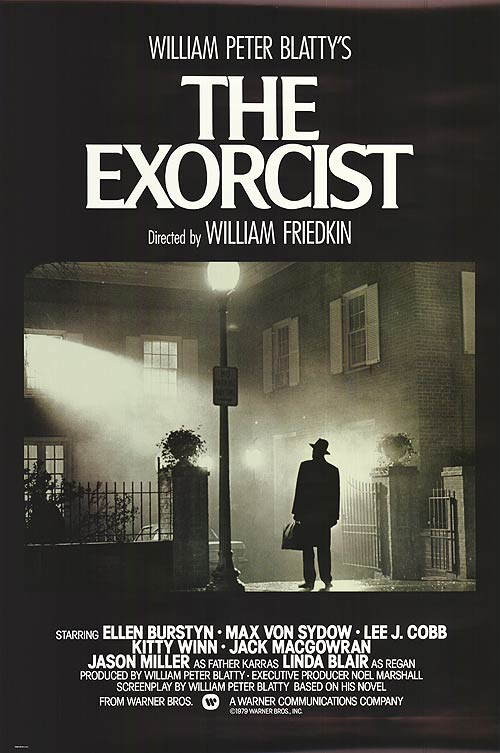 William Friedkin’s The Exorcist (1973) may well be the most iconic horror film of all time. Everyone has a story of the first time they saw it, or shudders at the mere mention of the film, refusing to ever watch based on its reputation. My mum often talks about how petrified she was when my old man took her to see it when she was about 17.
Everything you’ve heard about the film don’t prepare you for just how strange it is. I was expecting a pretty mainstream horror film. But after the chilling credits music and opening shot, the film heads off for an extended Northern-Iraq set prologue. These scenes in the desert almost feel like they could be from a Terrence Malick film. The most shocking thing about watching The Exorcist for the first time for me was the ethereal and not at all mainstream vibe of the film which was so different to my expectations and so refreshing as a result. It’s unapologetically a big swirling mass of a film.
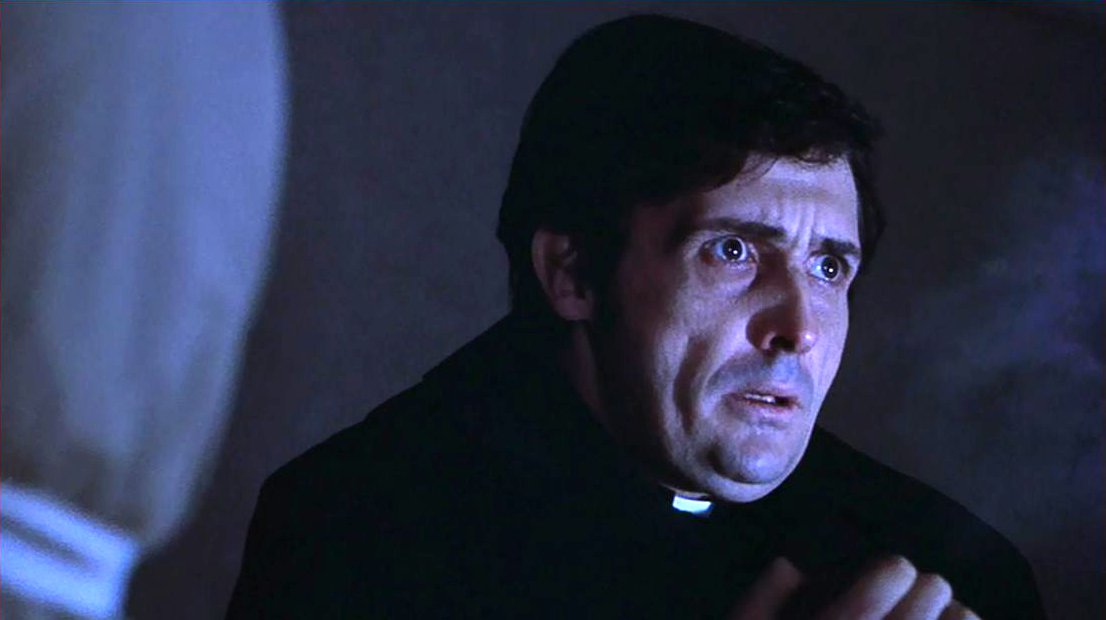 So much discourse around The Exorcist centres on the religious facets, which is unsurprising given the title. However what struck me whilst watching the film was the fact that it unfolds really through a medical prism. It is assumed by all of the characters that the issues besetting Regan are medical in nature. When Regan’s mum first approaches Father Karas regarding an exorcism (at the suggestion of doctors), even he steers her enquiries away from the spiritual realm. One part of why, despite the strangeness of the film, The Exorcist has become such a beloved horror classic, is the imagery that Friedkin and co were able to produce. Regan scuttling down the stairs, her head turning right around, or even just her appearance towards the end of the film, these are some of the most arresting and iconic images that the genre has ever brought to life. The film progresses methodically along for much of its lengthy running time, but then explodes with intensity and never lets up afterwards. The assured craftsmanship of the writing and directing ensures that none of the events of the film ever feel ludicrous or silly. The culmination of this build-up comes as a distinct pall comes over the film throughout the climactic exorcism, in as gripping a half hour odd of cinema you will ever come across.
Watching the film, you can see the similarities it has with films of a similar vintage, most notably for me The Omen (1976) – the presence of priests, a washed out colour palette and a similar feel to the domestic settings. It wheels out some traditional horror tropes as well, including the freaky attic. But having said that, by the end of the film it is plain why The Exorcist is held in such high regard, because it takes everything its contemporaries were doing, does them better and then does a whole bunch of things those other films never even attempted. The film is very classically and beautifully shot, trading in silhouettes, shadows, low and high angle shots. All of which look damn beautiful on the sharp blu-ray release that I watched. Friedkin is able to place the camera in such a way that it gets not only really pretty shots, but also creates a whole lot of tension, without ever feeling gimmicky. 
One of the hallmarks of so much, but not all, really classic horror cinema is the quality of the performance. And with Linda Blair, Jason Miller and Ellen Burstyn, The Exorcist can legitimately lay claim to having three of the best the genre has ever seen. So much of the religion/medicine divide is summed up through Jason Miller’s world weary turn as Father Karras (incredibly his debut film performance), Ellen Burstyn is ultra-believable as a mother going through an absolute living nightmare, but it is Blair’s film. As the possessed Regan, she is so totally in control of her performance. Remarkably so in fact for someone of her age. The range of content she handles, innocent/inquisitive child, totally possessed force of nature, explicit sexual references and profanity, is all so well done that not once are you taken out of the world of the film.
Verdict: Not only does The Exorcist deserve its exalted reputation, it probably deserves more. I was unprepared for just how strange and iconic an experience watching this film would be, as well as blown away by the density of the material and the themes. This is a pretty great and truly unique piece of cinema. Longneck of Melbourne Bitter
Progress: 123/1001
Related beermovie.net articles for you to check out: The Omen and Frankenstein. Like what you read? Then please like Beermovie.net on facebook here and follow me on twitter @beer_movie
Worth Watching March 2015
Worth Watching:
- A Bug’s Life (1998), John Lasseter & Andrew Stanton – Feels like sort of a forgotten Pixar film. Yet another example of how damn clever their scripts are. In terms of world-building, this is one of their stronger films. Detail of the miniature world around and below us. Storywise, despite being original material, it sets up a very old fashioned adventure story vibe. Quite a funny film too, with the silly band of circus bugs running rampant. It is a level below the very best of Pixar, too saccharine in comparison, especially through the second half. But good Pixar is still great animation filmmaking.
- In Order of Disappearance (2014), Hans Petter Moland – Seriously, where is all the hype for this awesome film. A clever, genre/B-movie revenge script. Something so cool and simplistic as Stellan Skarsgard’s character moves from minion to minion to find out who killed his son. Bashing the snot out of one, to get the name of the next. The soundtrack is tops too, perfectly complimenting and elevating what is onscreen. The occasional silly moment is well and truly overwhelmed by one of the best genre films I’ve seen in a while. Some violent, well made and stylish shit.

- Chappie (2015), Neil Blomkamp – Freaking loved it. Found it utterly hilarious and the action sequences are excellent. So often robot action is impossible to follow. But Blomkamp nailed it. I’ve never felt an emotional connection with a robot character like I did with Chappie. Thematically and symbolically, there is so much to pull apart here, from the notions around AI to the invocation of religion. Can’t help feel that the presence of Die Antwoord turned a lot of people off. But for me, they added a uniqueness and definite authenticity. I think this is such a rich film when it’s being dismissed as the opposite.

- I Love You Phillip Morris (2009), Glenn Ficara & John Requa – Jim Carrey is such a talented guy when the material isn’t utter shite. This is a really stylish and distinctive film. At times that style’s a little overwrought, but only rarely. In the end it’s a strange mix which is a exceptionally dark comedy that’s light in filmmaking tone. Deals with suicide, homosexuality and gay sex in a frank and thoughtful way. There’s a lot of shading to the moral black and white to the film too. Ewan McGregor is good in this, but Carrey is the real star. It’s a pretty complex character study in the end and that succeeds in a major part due to Carrey’s timing, of both the comedic and dramatic varieties.
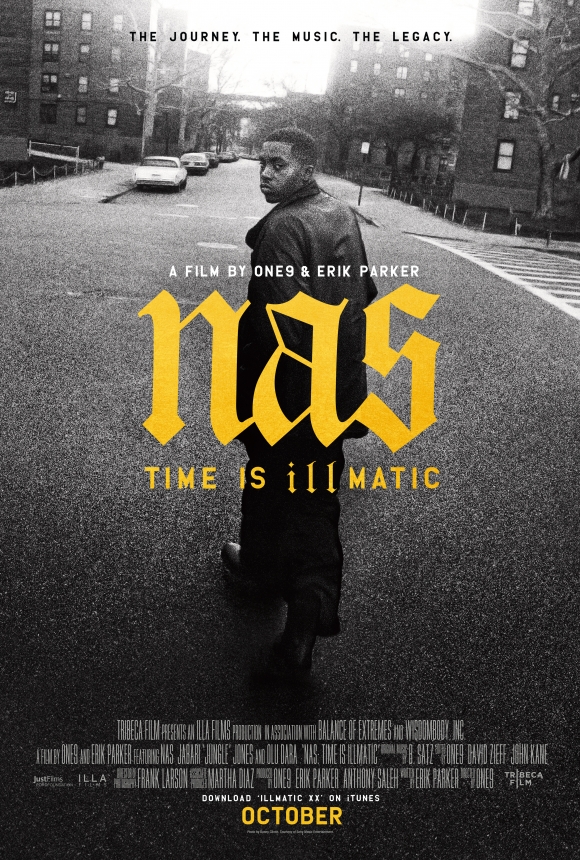
- Nas: Time is Illmatic (2014), One9 – Nas’s album is a true hip-hop classic and this film breaks down in great detail what led to it. The film is the history lesson of an album that is an unsurpassed portrait of the streets. So great to see Nas, precocious talent and very deep thinking & perceptive dude, telling these stories in his own words. This is a much watch for any fan of hip-hop. My only slight criticism is that it could have broken down the album itself a little more. Part of that is the laudable desire to not simply tell a ‘doco 101’ type story. And as a background document, it’s more than thorough.
- Stephen Fry: Today’s Russia a Literary Landscape (2014), Sarah Wallis & Paul Mitchell – Fry has gotten to the point where anything that interests him in the slightest, he can get a show made about it, no matter how niche. And this, focusing on contemporary Russian authors, is pretty niche. But really, Fry is little more than a figurehead for this hour long film. It’s the characters of the authors that hold sway, weaving in some great stories and illuminating what are some somewhat hidden pieces of Russian literature. If nothing else, it will give you some cool books to track down, though there is little broad appeal here.
Not Worth Watching:
- Kingsman: The Secret Service (2014), Matthew Vaughn – Well the one thing I was not expecting was for this to be so exceedingly boring. Can see the Kick Ass (2010) vibe and sensibility that Vaughn is trying to bring to the spy genre. But this film does not actually function as a spy film, and it’s lacking the wit and kineticism that made his earlier film such a delight. There’s also no tension, and for me a majority of the comedic sensibility fails. Samual L. Jackson’s lisping villain sums that up well. Underlying story is so neglected that even if all the loving parody trimmings landed (which they don’t) this still would not satisfy.
If you only have time to watch one In Order of Disappearance
Avoid at all costs Kingsman: The Secret Service
Related beermovie.net articles for you to check out: Worth Watching March 2014 and Worth Watching March 2012.
Like what you read? Then please like Beermovie.net on facebook here and follow me on twitter @beer_movie
Groundhog Day
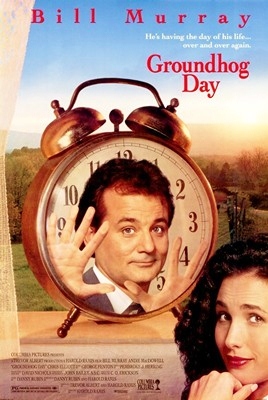
If there’s a film I see named by comedians as being influential more than any other, it’s Groundhog Day (1993). Similarly, the film’s director Harold Ramis and star Bill Murray, have an aura that seems to hold sway more in the comedian community compared to the broader public sentiment.
Often the exact reasons as to why these differences in standing preserve are intangible. But Groundhog Day also makes plain many of the reasons why. Whilst zany and offbeat, the film is impeccably and very tightly structured. The repeating structure is a framework from which Ramis and Murray can weave their magic. To achieve this, the script from Ramis and Danny Rubin cleverly builds slight layers on top of itself. It references and slightly tweaks aspects from the ‘day’ before. This is a major reason why the simple plot of Murray’s egotistical and rude TV weatherman Phil being stuck in a time loop, waking every day in a two-bit town that he despises, never becomes numbingly boring like so many of the film’s imitators. The script reflects the film as a whole. It is boisterous and thoughtful, as is the way the film is put together and progresses through musical choices and the editing. Not only that, what is such a tired plot structure actually feels very fresh here, with the script exploring all the nooks and crannies that the concept presents. The structure is used to novel ends, with the generic ‘arc’ or change of a character we expect in basically all films, technically compressed into a single day span.
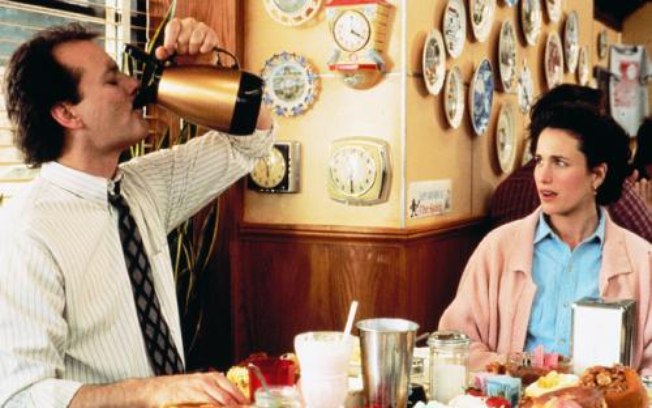
There is little doubt that a couple of the film’s plot points jar a contemporary sensibility (or perhaps just my contemporary sensibility). For a time that Murray’s character simply uses his predicament to bed women. At one point he practically tries to rape his love interest, and whilst he does in a way get his comeuppance for these acts, it is not as direct as it maybe could have been. Later on though, the manner in which Phil respectfully interacts with Andie MacDowell’s Rita and uses his ability to re-live the same day in their relationship, feeds into the core arc of the film. Those earlier moments, simply using his ‘skill’ to get into the pants of hot women around town, don’t serve the same narrative purpose. Murray’s reputation as one of the supreme comic performers is supported by this film. Right from the get-go, you can sense his comedic timing and rhythm. His whole body conveys that, his subtle movements and just the way he carries himself. These talents allow him to have the audience in the palm of his hand, whether he’s being the jerk you love to hate or the silly clown making you roar with laughter. Whilst she does not do much of the comedic heavy lifting in a ‘straight’ role, MacDowell has a really nice naiveté to her character that suits the plot and allows the audience to better appreciate the arc of Phil. The other standout performance is Michael Shannon in a wonderful two scene or so effort, mainly because it involves a Wrestlemania reference.
Verdict: This really is an exceptionally funny film and perhaps career best work from Ramis and Murray. Whilst there are occasional beats that are now a little dated, this is one of the smartest comedy scripts ever brought to life and is one of those classics that you need to track down if you’ve never seen. Pint of Kilkenny
Progress: 122/1001
Related beermovie.net articles for you to check out: The Trials of Muhammad Ali and Fightville.
Like what you read? Then please like Beermovie.net on facebook here and follow me on twitter@beer_movie
Foxcatcher

“Embrace the grind” – someone, once upon a time talking about wrestling
I never wrestled. I am a lapsed jiu-jitsu white belt though. Jiu-jitsu was tough, way too tough for me both mentally and physically. Wrestling wears you down and not a whole lot of people can hack that. This is what wrestlers refer to as the grind, and being able to embrace it as the quote above suggests, is a badge of honour.
Foxcatcher (2014), well half of it, is about the grind. The first half of the film very much embodies the notion, embracing and reflecting the psychological and physical approach that wrestlers are so fond of talking about. Mark Schultz, played with a depth many didn’t think he had by Channing Tatum, is a superstar wrester. An Olympic champion. But even wrestlers at the pinnacle of their sport, embrace a working class aesthetic. Part of this is financial reality. The sport pays next to nothing, and like so many Olympic sports, is only in the broader public consciousness once every 4 years. But it’s also the sweaty, physically brutal aspect of the grind. Tatum has that raw physicality of a developing athlete and is able to embody, both in looks and performance, that pure athleticism.

Watching the film at times feels like a physical experience. So much of the brotherly relationship between the characters played by Mark Ruffalo and Channing Tatum is conveyed through physical contact, the way they warm up and grapple. The working class aesthetic of wrestling as well is captured by this physical approach to the film. Part of that is the fact we more or less see the events of the film from the perspective of Tatum’s Shultz who as a character encapsulates the arc of an athlete. All he ever really known is that athletic path of grind and ups and downs. He knows nothing else, so that is the only real way that he can express himself and engage with those around him.
The second half of the film is more a psychological thriller, or to be more precise a psychological portrait of Steve Carrell’s John Du Pont. His deep-seated creepiness and mommy issues are explored and played out, without ever resorting to an over the top expository approach. The reaction of Du Pont to these failings is an insatiable desire to be considered a ‘great’, physical and masculine presence. So he surrounds himself with the Shultz brothers who are that above all. His attempts to mirror their impact on the world around them are comical, but they also make Foxcatcher an exceptionally dark journey. It is so disconcerting to witness sequences of the frail DuPont trying to coach wrestling. Aching to fit in and impress despite his clear mental and physical limitations. It is here that the two aspects of the film seep into one another. DuPont sees the grind and physical contact of wrestling as a way to deal with or play out his psychological foibles.
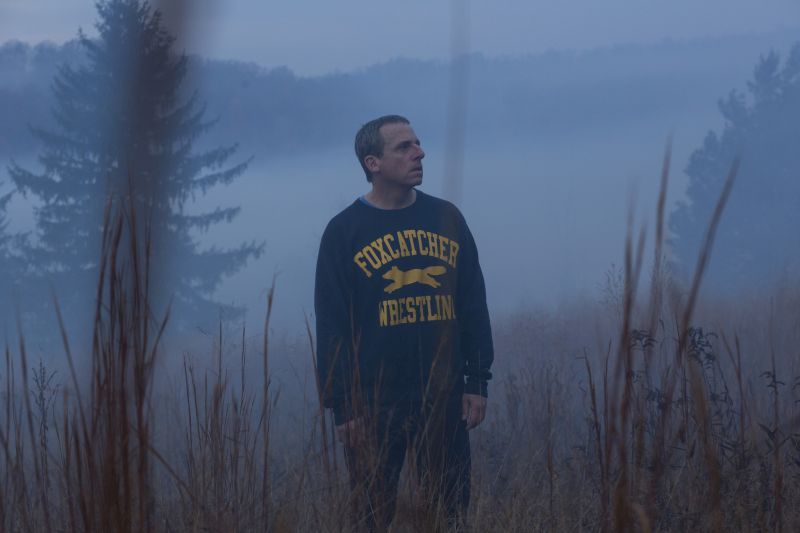 It is in the early stages of the film’s second part that it is weakest. Tatum’s Mark Schultz abruptly transforms from a driven, world class athlete, to a drunk and drug addled bum, exaggeratedly tending to DuPont. The distinctive, overt depiction of the homoeroticism of the relationship between Mark Schultz and DuPont strongly recalls Behind the Candelabra (2013). It is hard not to feel this complexity between the two men could not have been depicted in a more muted and dark manner, which would have been more in keeping with the rest of the film stylistically.
Much has been made of the performances in Foxcatcher, and with good reason. However if anything, Steve Carrel’s turn is the least impressive. It’s still a great performance, and he manages to overcome the shock of his physical appearance and truly inhabit the role dramatically, to a really high level, much more so in my opinion than Eddie Redmayne managed in The Theory of Everything (2014). The hook nose and off-putting voice never distract from the character and the psychological force that he brings to the film. I changed my mind repeatedly through the film as to which of the three leads delivered the standout performance. It has to be Tatum though. He takes a character that could have almost been a simpleton and makes it something exceptionally complex. Mark Ruffalo is equally as good as both of them, in a role without the focus of the other two, but who is in a large part responsible and a part of basically all that happens in the film.
Verdict: Foxcatcher is essentially a film about masculinity. That is a description that would generally turn me right off a film, but here with the astute direction of Bennett Miller and three exceptional performances, there is a cutting incisiveness to that notion, filtered equally through athletic pursuit and psychological descent. It’s at times a brutal and slow thematic exploration, but it is a film that will creep up on you with its quiet brilliance and uniqueness. Longneck of Melbourne Bitter
Related beermovie.net articles for you to check out: The Trials of Muhammad Ali and Fightville.
Like what you read? Then please like Beermovie.net on facebook here and follow me on twitter@beer_movie
Adventure Time Season 1
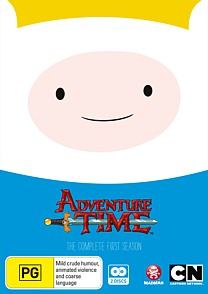
Adventure Time is one of those shows that has been popping up on my radar for a while now from a range of unexpected sources. Ostensibly a kids show, I kept seeing praise on twitter especially from comic writers, as well as mates in my day to day life telling me how good it was. So I decided to check out Season 1 to see if the hype is justified.
 It is. The series follows Finn the Human and Jake the Dog as they search out eclectic adventures in the land of Oo. The vibe is hyperkinetic, assaulting you with a delightful and disparate range of stories, characters, colours, songs, themes and fable-like messages to ponder. Likewise, the sense of humour is both great and varied. Everything from fart jokes to more incisive material undermining storytelling tradition, gender roles and even prison policy takes centre stage. But the overarching theme of the humour is that there isn’t really one, it’s all very scattershot and warped. As with all the best TV for kids, or at least with some intention of attaching young viewers, there are numerous lessons being taught here. Gratefully though they are genuine and perhaps the least twee sketching of the nature of good vs. evil I have seen. At the core of this, from which all the randomness spews out of, is the relationship between Finn and Jake. It’s a tops ‘best friends’ dynamic that feels exceptionally real to life and as such I could see a lot of kids getting a lot from that vision.
On the surface, the major trait of the visual style is big, bold and simple. That stuff is great, but dig a little deeper and the creativity only deepens, with the ol fashioned film title cards and classic filmmaking shots weaved in. Often the voice acting on kids shows is a bit of an afterthought, slapped on as bland as possible so as to not distract from the pretty pictures. Not so with Adventure Time where each character’s unique persona is conveyed more through their voice than anything else. They also have the ability to reduce my wife to a crying fit of laughter, as evidenced by basically the entire first episode featuring Lumpy Space Princess. Actually my minimal, and rather selfish, criticism of the show mainly consists of the fact that LSP is absent for a long stretch of the season. Though on a more objective level, I think that does feed into a rather flat section through the middle of the series where a lack of focus on the delight of the vast number of supporting characters results in a slight dip in enjoyment levels. Throw Princess Bubblegum in there too as a character that goes missing for long stretches, her strong female leadership character and level of geekiness is missed as much as LSP’s over the top hilarity.

Behold the awesomeness that is LSP
Verdict: This is such a unique show compared to what was around when I was a kid, which makes me happy that the current media environment allows creativity like this to be not only made, but widely seen. It is hilarious, with a distinct depth to the adventure that will charm viewers of all ages. Oh and also, the ‘one shot’ behind the scenes featurette on the DVD (well at least the Aussie Madman release) is my favourite extra ever. Pint of Kilkenny
Related beermovie.net articles for you to check out: Rick and Morty Season 1 and The Cat Returns.
Like what you read? Then please like Beermovie.net on facebook here and follow me on twitter@beer_movie
The Trials of Muhammad Ali

Nobody embodies the concept of a political sportsman more than Muhammad Ali. Dispensing with most of the sporting aspects of his life, The Trials of Muhammad Ali (2013) examines the political stances and impacts that this incredible athlete brought to bear on the twentieth century.

Ali’s brother, one of the great talking heads in the film
The Trials of Muhammad Ali is a very good example of cinema as biography, a subgenre of documentary that is generally pretty blandly done. The advantage that this film has is that it zeroes in on a very specific aspect of its subject. As such, the fact a minute approach brings so much new knowledge to the viewer (well it did for me in any case) that it is hard to keep up at some points. Ali’s early life and background are quickly sketched in. There is not a whole lot of detail, but there is more than enough to establish where he came from and how that influenced what was to follow. The optics for example of his early career, when Ali was ‘owned’ by 11 crusty old white dudes; or the fact that Cassius Clay was a white man who lived a couple of generations before Ali. The film chronicles Ali’s conversion from the “slave making religion” of Christianity to the “slave breaking religion” of Islam. Director Bill Siegel wisely digresses through this period to paint some really informative background of the history of the Nation of Islam as well as the splits that tear at it, most notably the one involving Malcolm X. This is then brought back to the focal point of the film by examining the huge impacts that Ali’s choice of religion had on his public perception in America. Just like the colour of Jack Johnson’s skin decades earlier, Ali’s allegiance to the Nation of Islam became something for the white American status quo to rail against. Though that is not to say that many in the African American community weren’t also perturbed by Ali’s choice and wished to see him fail because of it.
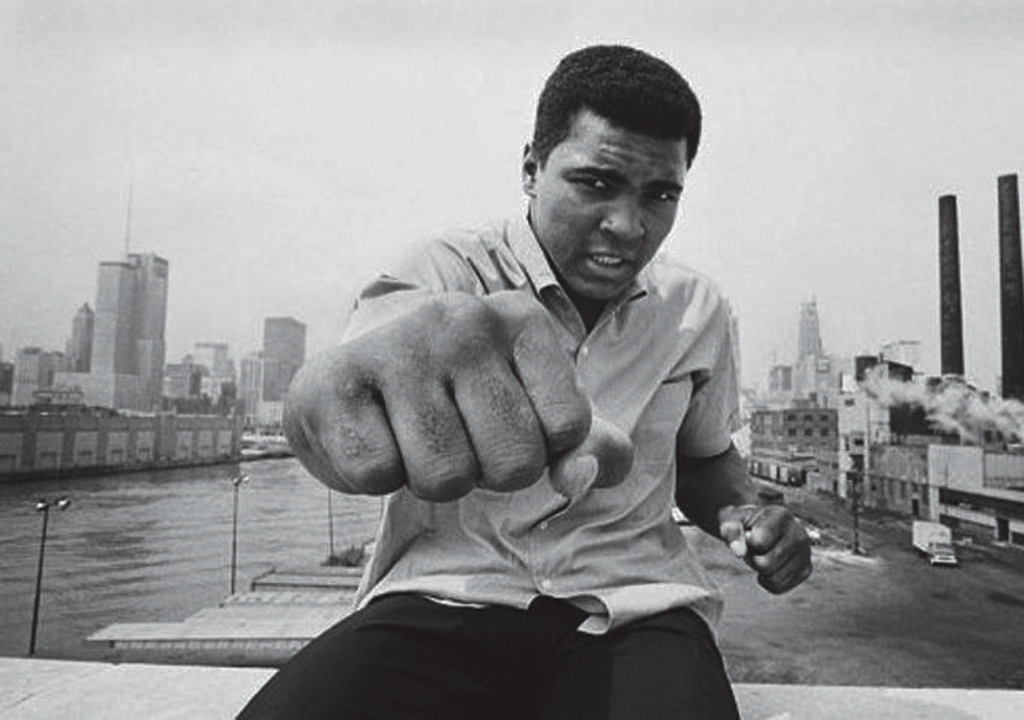
The other major focus of the film is on the refusal of Ali to join the war in Vietnam when drafted. It seems like a fairly defensible position now. But when it was made back then, by an African American Muslim no less, it was seen as a gross affront to the ‘American way of life’. The very fact that Ali was deemed unfit to continue as heavyweight champion of the world and banned from the ring, would actually partially feed into what made him so iconic in years to come. With a young family to support, Ali went on the road, speaking and honing his skills. Gradually over this time he developed the swagger and bravado that would characterise him as an athlete and which continues to inspire copycats, especially in combat sports, to this day. Again, it is impossible to not consider the lens this trash talk must be viewed through, coming from an electric African American athlete, a convert to Islam and a conscientious objector to the war in Vietnam.
Verdict: As an athlete, and a person, Ali was a revolutionary dude and incredibly ahead of his time. The Trials of Muhammad Ali effectively explains why Ali was so revolutionary by digging down into a lot of the detail around his allegiance to the Nation of Islam and refusal to fight in the Vietnam War. A must watch for and fans of sports and politics. Pint of Kilkenny
Related beermovie.net articles for you to check out: Fightville and SUFF 2014: American Arab.
Like what you read? Then please like Beermovie.net on facebook here and follow me on twitter @beer_movie
Worth Watching February 2015
February was a bit of a quieter month for me, but it is nice to have the good flicks taking precedence over the bad here. Though there were some definite disappointments, the combo of powerful docos, silly sci-fi and staunchly feminist drama won the day.
Worth Watching:
- Wild (2014), Jean-Marc Vallee – Whilst this film occasionally overdoes it tonally and stylistically, it’s still a sorely underrated film in my book. Both Reese Witherspoon and Laura Dern are arresting, with the former taking the audience on that huge fuckin trek with her. The concept/cliché of life as a journey is encapsulated totally and satisfyingly in this film. The last five minutes of this are genuinely, painfully good. So much so they slap you in the face and remind you why you love cinema and just how powerful it can be.

- Citizenfour (2014), Laura Poitras – An exceptional film. It’s tempting to laugh at one point when a character refers to the goings on as like something out of a le Carre novel, but it’s so true. Poitras has masterfully marshalled a huge story into something digestible, with no shortage of filmmaking craft involved. She conveys the danger Snowden is taking on and the gravity of what he is revealing. She also creates a portrait of heroes for this age in Snowden, Greenwald and even herself.
- Troll 2 (1990), Claudio Fragasso – The hype is real! All I can really say is that if you’re a ‘good bad’ movie aficionado, then this is as good as they come.

- Pantani: The Accidental Death of a Cyclist (2014), James Erskine – This has so much more personality and insight compared to Alex Gibney’s recent Lance Armstrong film. Quiet poetic and scientific about cycling it also examines the magic that Pantani, a true throwback, bought to a sport at its lowest ebb. He was an instinctive artist in a scientific, analytical age. The film pushes a very pro-Pantani narrative, but it also captures the human, vulnerable side of him in a pretty universal way. An examination of what happens when a person’s one true passion is taken away.
- Jupiter Ascending (2015), Lana and Andy Wachowski – There’s something about the Wachowskis’ vision that I’m a big fan of. This is silly a lot of the time. But it’s also big, old-fashioned and bloody fun sc-fi more of the time. It looks great and grand too, though it lacks the thematic depth of the best of the genre. On the level of a thrill ride though, it’s exhilarating with a unique kind of innocence to it. Seriously though, what the fuck was with Eddie Redmayne’s performance. So off the mark and awkward it bordered on the unwatchable.

- The Good Wife Season 3 (2011), Robert and Michelle King – This is a show that continues to get better and better. Some aspects of this season work better than others. The hero/villain dichotomy set up between Peter and Alicia is a lot more satisfying than the incorporation of Eli’s PR firm into the main storyline. It buys into some racial norms, whilst subtly subverting some gender ones. Again the characters are where this is really at. Diane, Kalinda and Peter all get more to work with this season. Noth is excellent as Peter, a character delightfully hard to read, part idealistic, part menacing.
Not Worth Watching:
- The Theory of Everything (2014), James Marsh – It’s difficult to imagine a stuffier or more obvious reading of the Hawking tale. Suffers from being neither a biopic or a romance. Well it tries to be both, but is neither. Worst of all, it will make you feel absolutely nothing. Redmayne is obviously very good. But he’s more a mimic than an actor truly inhabiting the role. If anything, Felicity Jones is better. A pretty awful effort.
- Piranha (1978), Joe Dante – I cannot believe I didn’t like this. The opening sequences are the stuff schlocky dreams are made of. Boobs, military test sites and hellacious looking creatures. But it’s relatively slow and bleaker than I like my B movies. The body count is huge, including heaps of kids, and the filmmaking is perhaps a little too good, so I feel bad about that. Too many unnecessary kills and not enough B movie cheese.
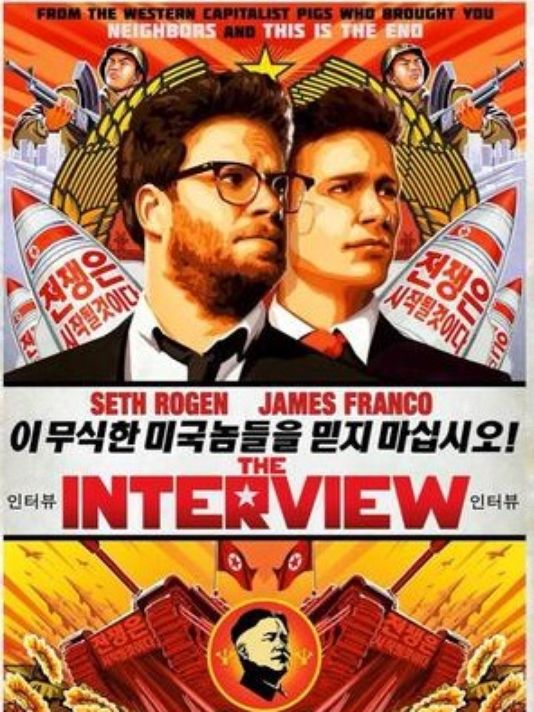
- The Interview (2014), Evan Goldberg and Seth Rogen – As far as contemporary comedies go, this is ok. But it’s still not particularly good. I enjoyed the first half more. There were some genuine laughs and some of the political points were actually kind of interesting. But once it hits North Korea, it gets overly puerile, silly and well, bland. Despite the absolutely epic brouhaha it caused, this is pretty run of the mill stuff.
- Life of Crime (2013), Daniel Schechter – This, based on an Elmore Leonard novel, is a pretty dire effort. The costuming and music are really reaching for the aesthetic of a period piece. The whole film is reaching really. For that slight comedic, gangstery tone. For something for the really excellent cast to actually work with. To be a good ol’ fashioned farce. It fails at all of these things and just feels really soulless and inauthentic.
If you only have time to watch one Wild
Avoid at all costs The Theory of Everything
Related beermovie.net articles for you to check out: Worth Watching February 2014 and Worth Watching February 2012.
Like what you read? Then please like Beermovie.net on facebook here and follow me on twitter @beer_movie
Only Lovers Left Alive

It is always so interesting to see an auteur take on subject matter generally considered the stuff of genre cinema. Stanley Kubrick pretty much made a career out of it, whilst Jim Jarmusch has shown he is not afraid to do it previously with films like Dead Man (1995). It is in that context that Only Lovers Left Alive (2013) hit last year, to some pretty universal critical love (I saw it pop up very high on a number of top 10s).
As you would expect given the director involved, this is a pretty unique take on the vampire film. It functions as an interesting reinterpretation of the vampire mythos, filtered through love story. The focus is on two vampires, Eve played by Tilda Swinton and Adam played by Tom Hiddleston. They live in Tangier and Detroit respectively, but maintain a grand love between the two of them, content to live apart so that they can explore their individual passions. These passions are initially set up a little too simply, one likes music the other books. But over time they inform and seep into their characterisation making it a much more satisfying aspect to their construction. From this base Jarmusch builds his narrative, weaving the two separate strands closer together. There are fleeting appearances by other characters, Mia Wasikowska as Eve’s sister, Jeffrey Wright as a good source of hospital blood and John Hurt as Christopher Marlowe (yes that Marlowe), though this is really all about Swinton and Hiddleston. All three of those supporting performances are unsurprisingly excellent, though with minimal to do, as the development of the supporting characters did not seem to be much of a focus of the film.
 I mentioned Dead Man earlier and just as in that film, music is a major focus and accompaniment to the narrative of Only Lovers Left Alive. Adam is obsessed with music, his living space cluttered with vinyl, guitars and antique high level stereo equipment. His obsession gives an insight and genuineness to the character. This is a passion of course which has been developed and honed over centuries of living. The choice of tunes, a lot of fuzzed out style rock, shredding guitars over an almost abandoned Detroit and plenty more, is intensely creative as is its matching with the images on screen. It is hard to overstate how good the use of soundtrack is in the film. And it seems to align perfectly with Jarmusch’s manner of shooting, which situates the characters in really interesting places in the frame.
Verdict: For me, the film had some definite weaknesses in terms of narrative and minor character development. But the supreme use of music and soundtrack single-handedly makes this a film that deserves to be watched and re-watched. Pint of Kilkenny
Related beermovie.net articles for you to check out: Dracula Untold and 2013 in Review: The top 10 (Byzantium at #4).
Like what you read? Then please like Beermovie.net on facebook here and follow me on twitter @beer_movie
 Beermovie.net