The Silent House

There is a fine line between gimmicky and ‘high-concept’. Thankfully though, single shot Uruguayan horror film The Silent House (2010) comes down on the right side of that equation.
The set-up is simple enough. A man and his daughter arrive at an isolated house in a rural area to clean it prior to sale. Initially the pace of the film is measured as it sets up the location, the characters and the atmosphere. This section is very assured, as the creepy tone is set without feeling the need to slap you in the face with over the top haunted house aesthetics. In terms of frights, the film is notable for reinforcing just how bloody freaky things literally going bump in the night can be. The film is moseying along early, but then a few bumps jolt you and certainly frightened me a lot. I generally don’t find horror films too hard to sit through, but this made me squirm more than any flick since The Conjuring (2013). Perhaps inevitably given the structure of the film, it does certainly drag at times. Thankfully though, the film never goes too far along without wrenching you right back into what it is aiming to do. Much of the credit in this regard goes to the lead actress Florencia Colucci who has the bulk of the screen time. She is definitely convincing in conveying the terror of her situation, not to mention her crying and screaming game is on point the whole way through.
 Everything about the film, from the title onward, screams classic haunted house flick. Thankfully it’s a bloody good one too, managing to be a homage to the subgenre without feeling derivative at all. Even if on a couple of occasions some elements become a little overworn, such as the use of mirrors. But then again, some of these familiar elements also help bring the film’s best moments. I’m looking at you polaroid camera sequence that is borderline unwatchable it is so terrifying. Perhaps it shouldn’t have strayed too far from the old fashioned norm though, because as the plot shifts away from convention in the second half, some of the intrigue is definitely lost. Not to mention that the film closes with a monumentally crap twist. One of those twists that is not just annoying, but it actually really effects how you feel about the film as a whole. As for the double gimmick of (supposedly) being filmed in one shot and being real time, these add to the film rather than detract from it. If the film is indeed just one shot (I never have the concentration to concentrate hard enough to actually make sure) it is a pretty exceptional effort. Rather than a staid camera that follows the characters around, the camerawork in The Silent House is noticeably bold. It’s not afraid to show off that it is a singe shot, but it never feels gimmicky and the camerawork is handheld but able to be steady in its movements and move in and out of focus when required. There is some great stuff on the sound design side of things as well. It mixes up silence, music and good ol’ fashioned effects to bring both atmosphere and scares
For the most part, The Silent House is an excellent film. One of the few films I find genuinely terrifying, it is also very slick in its design and construction. It is a shame then my final opinion of this sharp homage to haunted house flicks is so tainted by a misfiring twist ending.
Verdict: Stubby of Reschs
Related beermovie.net articles for you to check out: 2013 Horror Wrap and Worth Watching September 2013 (includes a review of Russian Ark).
Like what you read? Then please like Beermovie.net on facebook here and follow me on twitter @beer_movie
Blackmail
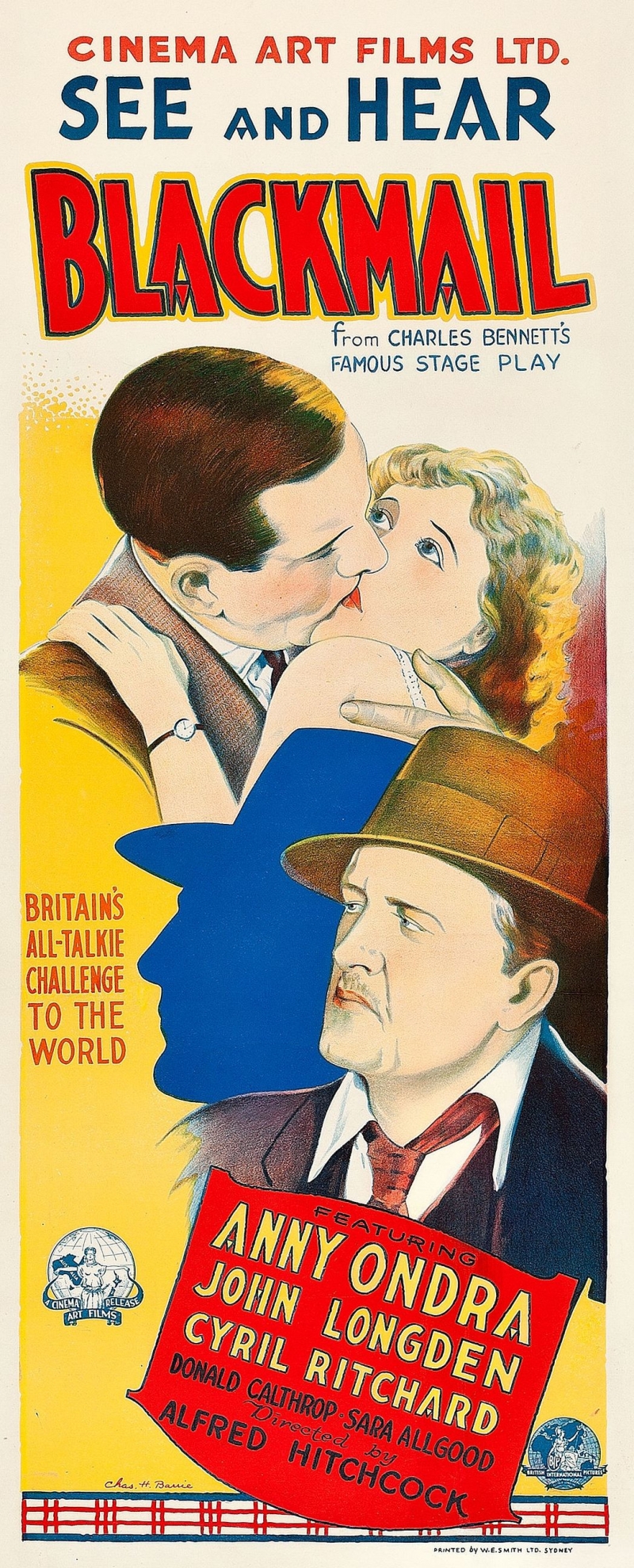
Alfred Hitchcock is the filmmaker with the most entries on the 1001, and the first of those chronologically is Blackmail (1929). The film was far from Hitch’s first though, he had already made nine silent features before this one. Whilst it is definitely minor Hitchcock, Blackmail is notable for being not only the director’s first sound film, but Britain’s too. My understanding is that the film began production as a silent film, before the decision was made part way through production to make it a sound film instead. A silent version was completed, but I m not sure that it is available and this review is of the better known sound version.
Like many films of the period, including from Hitch, Blackmail is based on a play. Some of these early films, Number 17 (1932) springs to mind, really struggle to escape their source and come off feeling more like filmed plays rather than being at all cinematic. For the most part, this film succeeds in convincing you that this is definitely a film not a filmed play. Early on though, it struggles to escape it’s beginnings as a silent film moreso than its theatrical roots. The early part of the film just feels like a silent film sans intertitles. I suspect that these sequences were already filmed when the decision was made to convert the production to a sound one. Plot wise there is nothing too intriguing to report. The film is a crime story and a pretty straightforward one, at least after being pretty difficult to follow over the first section. The most important part of the plot is of course the Hitchcock cameo and I can happily report it is a cracker. One of my favourites actually, as Hitch rides a train and gets bugged by a little kid. After what is a frankly pretty boring first half, this film thankfully picks up a fair bit over the second and third acts. Part of the issue early on is that it takes a long time for the pieces to fall into place. But once there is a murder and a scramble to cover it up, we are in familiar Hitch territory – blackmail, knives, jilted cops, mistaken identity and so on – and it is a nice place to be in this master’s hands.
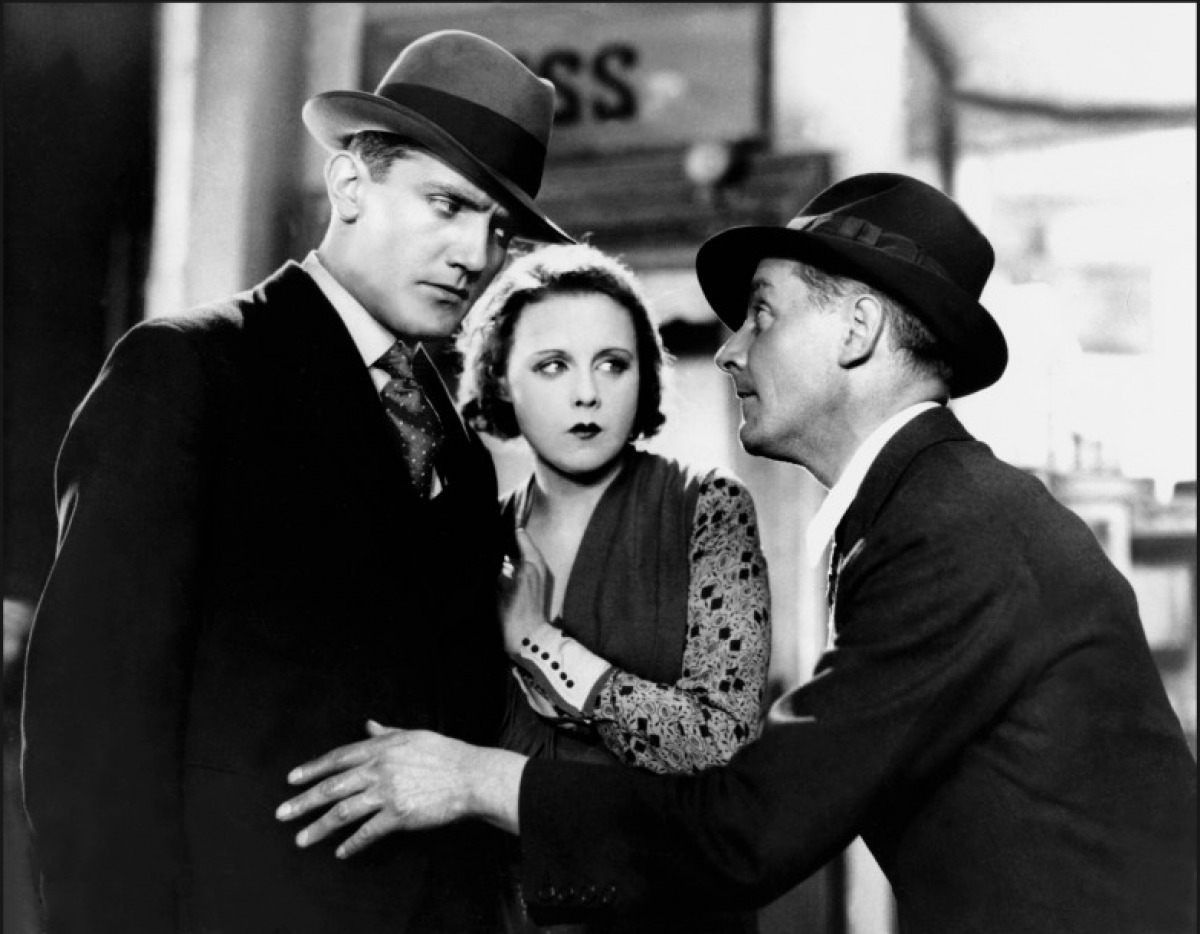 Many people have not seen any of Hitchcock’s extensive British filmography. I generally like this period of his career, with the films generally possessing a low-key charm that was not a part of bigger, ‘greater’ productions such as Psycho (1960) or North by Northwest (1959). Much of the enjoyment from watching this era of films is seeing the progress of Hitchcock’s development. Here there is little of the visual trickery and really noticeable camera movements that would be characteristics of his later work. But the young director already had the ability to frame a shot both perfectly and in a really interesting manner so that they did not feel at all staid. I often ponder the connections between Hitchcock and Tarantino as I think that they share some really interesting similarities and differences. Here, Hitch seems to be quite the forerunner of the contemporary superstar director. There is some really wink wink dialogue, especially about movies, that Tarantino himself would have been ultra proud of. Some of the other dialogue is strangely stuttering for a film from this great director, whose work is usually so sharp. The result is a film that feels more old fashioned than most of his other films. The female lead Anny Ondra gives a really excellent performance, especially in some of the more challenging scenes she is required to deliver. There is a rape scene, which is really quite forward for the time, and Ondra’s performance in the immediate aftermath is impressive, conveying the violation and confrontation she has just endured. Her performance is one of the reasons that the film remains relatively watchable today.
Some of Hitchcock’s earlier British films really only work as curiosity pieces, but thankfully not this one. After a slow start, the plot contains many of the tropes and themes that the director would continue to return to over the following decades. It is certainly not his best or even the best of his British films, but Blackmail is still worth checking out if you are a fan of the great man or just of crime cinema of this vintage.
Verdict: Stubby of Reschs
2014 Progress: 10/101
Progress: 106/1001
Related beermovie.net articles for you to check out: Sabotage and Shadow of a Doubt.
Like what you read? Then please like Beermovie.net on facebook here and follow me on twitter @beer_movie
Never Sleep Again
Just like metal music, the horror film genre has always inspired a fierce cohort of rabidly devoted fans. That is probably the only way to explain the existence of Never Sleep Again (2010) and films like it. This doco is a four hour, exhaustive run through of the Elm Street films.
The behind the scenes film is in many respects a dying breed. There are more of them made than ever, but most are 10 minute snapshots designed for DVD/blu-ray extras rather than stand alone films in their own right. Never Sleep Again makes a few different attempts to separate itself from this middling medium, from the length, to the ‘claymation’ opening credits and interludes to the pretty comprehensive list of talking heads. As you would expect from the running time, the film is seriously in-depth. It starts with a short history of New Line Cinema before launching into a chronological treatment of all the films. Unfortunately the end does sort of peter out into a gushing praisefest of New Line and Robert Shaye. This is even more noticeable because one of the best aspects of the over three and a half hours that had preceded it is the frankness. Conflict and difference of opinion, especially between Shaye and Wes Craven are laid bare. And it is not in the scandalous gossipy kind of way. Rather it shows the different realities of being a producer who is trying to see his small, start-up studio stay afloat and a director totally focused in on the creative side of film.
 Any film of this length or even of this type is going to have aspects that appeal to individual viewers more than others. The discussion in the film does at times degenerate into lengthy, giddy recounting of plot points, which I did not get much out of, perhaps because I have seen the films so recently. This is not the fault of the participants though, it is something that should have been tightened when editing all of the material down. It is when those involved get into analysis and discussing the creative process of generating ideas and bringing them to life that the film is a lot more interesting. A lot of the insight from Craven was really good here (including him ragging on the films he did not like), and I especially enjoyed him discussing the creative mindset that brought him back to the series with New Nightmare (1994). And yes there is a discussion of just how ‘gay’ the second entry into the series is. That was actually an interesting section as the writer was conscious of the subtext (well what was meant to be subtext) and the main character (strangely a male protagonist in a slasher) was an openly gay actor, but a vast majority of the homoerotic elements passed by those who were working on the film. The talking heads really are great and Englund is perhaps the best of the lot. He is clearly a very clever and insightful dude. As a film buff, to hear him tell how he based much of Krueger’s physical presence on a hybrid of Klaus Kinski and James Cagney, I absolutely love that shit. Other influences mentioned on the series of films (not just mentioned by Englund) include Hitchcock which sort of makes sense and Fred Astaire, which makes you ponder a little deeper.
As a film lover, it is great to see a series of films get such adoring treatment. There are great tidbits throughout (Peter Jackson drafted a script for an Elm St film!) and the insight into practical effects is such a contrast to the relative ease in which much CGI is made. In the end, if you are after a four hour doco about the Elm Street films, Never Sleep Again is going to leave you pretty satisfied. But it probably won’t convert you if that sounds like a terrible way to spend half a day.
Verdict: Stubby of Reschs
This brings an end to my Nightmare on Elm Street reviews. Below are links to all the other reviews I did of the canon films, in order of preference. You guys are obviously slasher film fans, because the Friday the 13th series won the poll I ran to see what franchise I would tackle next. Keep an eye out for the first of those reviews tomorrow.
1. A Nightmare on Elm Street
2. A Nightmare on Elm Street 3: Dream Warriors
3. Wes Craven’s New Nightmare
4. A Nightmare on Elm Street 5: The Dream Child
5. Freddy’s Dead: The Final Nightmare
6. A Nightmare on Elm Street 2: Freddy’s Revenge
7. A Nightmare on Elm Street 4: The Dream Master.
Like what you read? Then please like Beermovie.net on facebook here and follow me on twitter @beer_movie.
Captain America: The Winter Soldier

The posters for this film have been ace.
Captain America (2011) is one of my favourite of the Marvel films so far. As such I was pretty keen to check out Captain America: The Winter Soldier (2014), although there was a nagging doubt that I could not quite shake – how would the film hold up without the period setting of the first film?
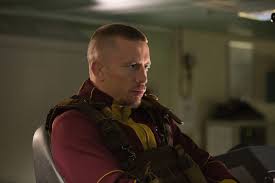 After seeing Marvel’s latest effort, I think it was a fair concern to have. Captain America: The Winter Soldier is by no means a bad film (it is very, very rare that Marvel put their stamp on one of those), but it is also rather standard, never reaching the heights of the best films from the comic book behemoth. Much of that is due to the shift in time frame for Cap which was a necessity in order for him to be part of The Avengers (2012). The character of Captain America is a bit of an absurd one in reality. But his over the top, arch-patriotism works best when situated, like the first film, somewhere like Germany in World War II. In 2014 America, a place where the mainstream political and military mindset has been battered in the opinion of the public by Iraq, Afghanistan, the NSA and so on, Cap is more likely to be a little on the nose. It is a credit to the filmmakers that they are willing to explore this uneasy state of affairs and the uneasy place that this character has in it, but even so, there is no doubting that the major thing that the first film had going for it is gone. The early attempts to transfer the military stylings and focus of the first film into this one does not really work at all and contributes to what is a spluttering first half hour.

Of course simply to say that it is impossible for a present day set Captain America film to be fantastic is silly. With the right story and action beats and there is no doubting the character could helm a cracking film, especially given Chris Evans feels so spot on in the role. But the major issue with this film is that whilst there are some great aspects to it, including some of the action beats, the overarching plot is initially oblique and then to be honest really weak and lacking in the narrative richness required. There was always going to be some need to attempt to connect the plot of the film to that of the first film, and it does not work. I am aware that the story is based on a really highly regarded comic book arc, but I can only assume that does a much better job of telling the story than this film does. It is such a shame that the main story does not stick, because Robert Redford is very good as it is and if the story was a little stronger, his character could have been a really impactful one. The film is also not really about The Winter Solider that much at all. If you are going to build the marketing and even naming of a film around a character, don’t just make him a henchman for a vast majority of the film. The last 20 minutes or so does manage to get the viewer excited for what could perhaps come in the future between the two characters. But you are left with the distinct sense that the potential of the character was neglected in this flick a little to set things up for future entries.
 One thing that this film does better then perhaps any other Marvel flick is that it gives the minor goodies a chance to shine. The increased screen time for Scarlett Johansson’s Black Widow is perhaps the best thing about the entire film. I know that Marvel has an ever expanding slate of both rumoured and confirmed phase 3 films, but they should seriously pull the trigger on a standalone Johansson Widow film. The character has so much great back-story, both from the comics and hinted at this film that could be mined for a really effective origin style story. Basing it around some of the current comics that Nathan Edmondson is writing for the character would be a real winner in my view. And having the character attempting to atone for her chequered KGB past could also make a very different kind of Marvel film. The other main highlight in the supporting cast is Anthony Mackie’s Falcon, a character that initially grates but by the third act is one of the best things about it. Again, the filmmakers actually give the character some great moments out of the shadow of Cap which is something the Marvel films have not always managed to do very well. For me though, Samuel L. Jackson’s Nick Fury continues to be a total bore whilst the much more interesting S.H.I.E.L.D operative Maria Hill played by Cobie Smulders unfortunately does not feature nearly enough.
Captain America: The Winter Soldier is certainly a really solid, enjoyable big budget blockbuster that will be better than 80% of films in that category this year. For me personally, despite my enjoyment, it is a slight disappointment. But that is more a credit to how much Marvel have been killing it of late, rather than any real slight against the film itself.
Verdict: Stubby of Reschs
Related beermovie.net articles for you to check out: 2014 Preview: Top Ten Anticipated Films and Captain America: The Winter Solider posters
Like what you read? Then please like Beermovie.net on facebook here and follow me on twitter @beer_movie.
A Nightmare on Elm Street 5: The Dream Child
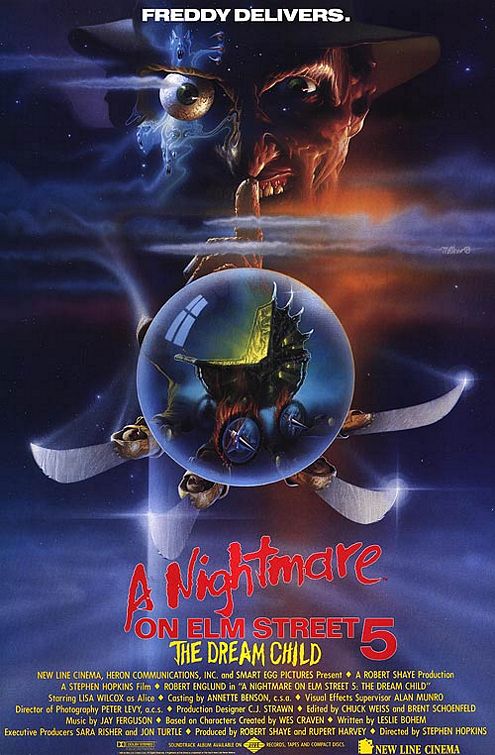
I was intrigued by the title of A Nightmare on Elm Street 5: The Dream Child (1989). Would it deliver the seismic shift in the series that the title suggests? After the dire A Nightmare on Elm Street 4: The Dream Master (1988) I was not at all confident. Whilst the shift is perhaps not seismic, this is still a hell of an improvement and does actually do a fair bit different.
Most of the really excellent stuff in this entry into the series comes from the Dream Child part of the title and the creative crew behind the series have managed to incorporate a much needed jolt of narrative originality into the film as a result. I think the reveal midway through of how Freddy is getting into people’s dreams is nicely different, as is the appearance of the returning Alice’s child as a toddler in her dreams. Ups the stakes in a way no film since the original has managed to do in this series. I think director Stephen Hopkins and co went out of their way with the opening scenes to separate this film from the fourth last entry. It is shadowy and moody, with a gong tolling ominously and the first real hint of sex that there has been in the entire series. It is instantly a darker and more intriguing take than what has come before. In addition to the Dream Child, the other narrative aspect of this that is incorporated well are the flashbacks and references to Freddy’s past. Again, plenty of this is really dark and at times a little confronting – the scene that gives us a glimpse into Freddy’s conception in particular. I was a little concerned that this focus, coupled with none on Freddy’s child murdering crimes, would make the character sympathetic. But for me, the film never fell into that trap. The film does get a little silly at times, but it always manages to keep that on a pretty short leash. Actually at times the more humourous side of Freddy is actually quite engaging and amusing, without detracting too much from the horror storyline that we are meant to be absorbing.

Initially, once out of dreamland, I had grave concerns that the acting and characterisations were going to be unbearably kitsch. Thankfully though, with one notable exception (the acting performance of Joe Seely as Mark), this is really not the case and the film probably has the most interesting characterisations and relationships of any of these films. One of the best aspects of that is the return of Alice’s alcoholic father in this film. He is probably the first character who has satisfyingly grown from one film to the next. Alice, as played by Lisa Wilcox, is also a great recurring character, a surprise given how unmoved I was by her in the fourth film. The character and acting are a lot stronger here. You can really feel her desperation as she fights for her unborn child, as well as her friends around her that she loves so dearly. In addition to at least some level of narrative originality, what sets the good films apart from the bad ones in this series is effective imagery. Again, this film nails that pretty well. A battered and torn pram is great and comes back a second time with some fantastically spiky additions whilst the ultrasound scene veers into slightly absurd, but innovative looking territory. Against all better judgement as well, I really dug the look of the creepyarse Freddy baby. Also, some of the set pieces in this are as good, if not even better than anything else in the series. The early car sequence and the one involving a dream on top of the diving board spring to mind immediately.
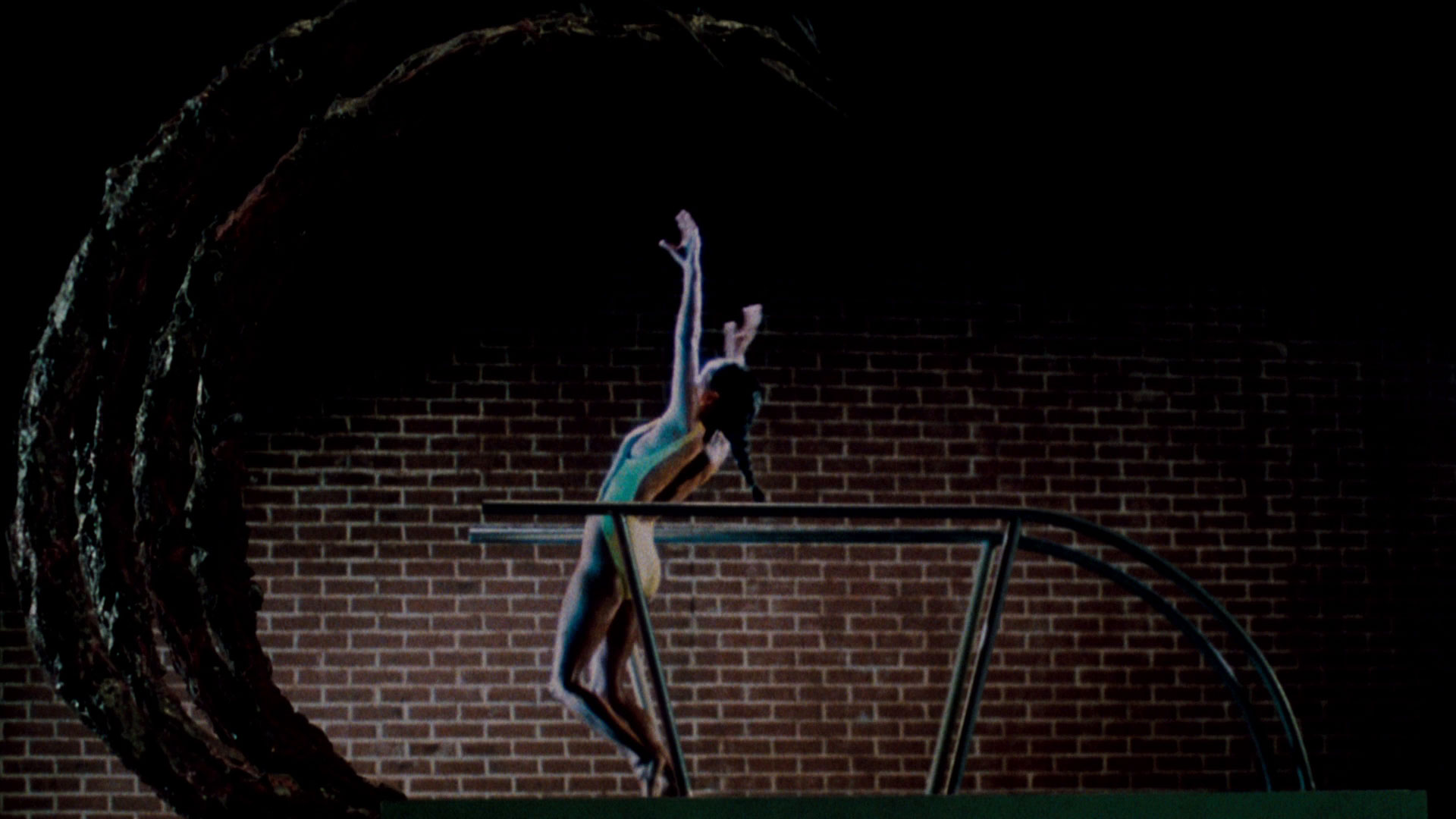
It appears that the odd numbered films in the series are where all the quality is at. The classic original, the return to form of number three and now this have all been comfortably the highlights of this series. This one is so refreshing after the fourth and lives up to the title by incorporating the Dream Child into the narrative and utilising it to raise the stakes in both a story and visual sense. I suspect this may be the most underrated of the bunch, given I am not sure too many people out there are big fans of it. But count me as quite the pleasantly surprised fan.
Verdict: Stubby of Reschs
If you enjoyed this one, please take a look at my other Elm Street reviews: The classic first film, A Nightmare on Elm Street 2: Freddy’s Revenge, A Nightmare on Elm Street 3: Dream Warriors and A Nightmare on Elm Street 4: The Dream Master.
Also faithful readers, please don’t forget to vote in this all important poll here, and check out the episode of the Forgotten Filmcast I appeared on last week.
Like what you read? Then please like Beermovie.net on facebook here and follow me on twitter @beer_movie.
Guest Post: 47 Ronin
My teenage cousin Damo sent me this review of 47 Ronin the other day. I thought it was a pretty good read and I was not intending on writing anything on the film myself, so thought I would publish it here. Some may question the wisdom of employing a teenager to write a film review. But when that gangly teenager knows Ken Watanabe is the boss, well the future is in good hands.
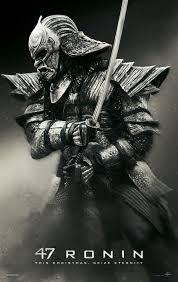
47 Ronin (2013), sounds simple enough – coolish cast, pretty decent sounding story and Keanu Reeves is in it! That guy from the movie about taking the pills! Though this one seemed to lack in certain departments (judging by the trailers) and every other person has panned it, I decided to give it a shot. So here we go.
The film sees Keanu Reeves as an outcast; loving a girl he can’t have; who guessed it? The whole star-crossed lovers thing was a little silly but I got past that. After an incident involving a bewitched lord and some land thieving our man Keanu ends up in exile. So far not a lot had gone on, but I felt something coming and wasn’t really surprised when the head of the dead lord’s Samurais (now called Ronin because they have no master to protect) goes looking for his buddies (other Ronin) to seek vengeance against the dude that took their land. Some five minutes later, he’s traversed half of Japan to seek Keanu Reeves who’s been enslaved to some sort of oriental fight club run by English pirates at some dock. Yada yada yada, they all meet up and get some swords, and all is looking up for the boys! The 47 men have vengeance in mind and travel to where intel tells them they can find the guy that I mentioned earlier. It’s a trap! MY GOD! That took nobody off guard! The boys regroup and decide to strike while the… ah.. Samurai sword is hot? Sorry, felt the need for a Samurai themed metaphor… The fight scenes that follow their attack are generic but Keanu Reeves’ cool extra special powers (he was trained by Japanese Demons called Tengu so look that up) help him kill a dragon/witch/scary/lady. YAY!

(SPOILERS AHEAD) Together, the Ronin kill all the baddies and vengeance is achieved, the boys go back home and their Shoman (head of all Japan and that) orders them to kill themselves. He grants them an honourable death and everyone’s’ happy. A cool ending in hindsight though, I appreciated that they kept the ending without some sort of Disney like “And then the Shoman decided to let them go because they helped save the day!” type get-up. Then some extra history to finish the movie about how the 47 Ronin shall never be forgotten and then yeah. Run Credits.
 Looking back, the interesting moments were too brief and the script seemed 2nd rate. BUT, the cinematography blew me away and Keanu kills this cool looking animal by rolling under it and stabbing it! A pretty decent effort I thought. Though 47 Ronin was predictable; a little too typecast but I enjoyed it. I wouldn’t call it a waste of money or a bad movie, but it did leave much to be desired…
The international cast was a plus; full of goodness and talent; but if Ken Watanabe had been in it it would have been doubly awesome! Some cool modern Last Samurai (2003) stuff between Watanabe and Keanu Reeves would have been dynamite! Just because I love Ken Watanabe!
SO yeah.
Verdict: Stubby of Reschs
Damo is my first cousin carrying on the family trade with his film reviewing chops. This is his first ever published review and far superior to my first ever published review. Damo is also a killer singer-songwriter, so give his stuff a play right here and like his music facebook page here.
Metallica Through the Never

For some reason, Metallica seem to inspire a lot of films. The latest addition to this canon, in addition to the excellent doco Mission to Lars (2012) and the reportedly excellent Some Kind of Monster (2004) which I have not seen, is the music video/feature film hybrid Metallica Through the Never (2013).
 I was not really sure how I would go with this film. Metallica were never a band that I got into that much. As such watching a concert of theirs interspersed with a fictional side-plot would not have been my ideal way to spend 90 minutes in theory. The end result though was a surprisingly satisfying jaunt. It still did not turn me into a particular fan of their tunes, so I imagine that if you are a big fan of the band, that this would be even more satisfying for you. The whole film and the conceit behind it is a little cheesy, but for the most part it is endearingly so. Whilst a Metallica concert plays, a young roadie played by Dane DeHaan (a pretty slick actor to get in this film) sets off into the city on a mission to get something the band desperately needs. On this journey a surreal and shambolic array of occurrences comes to pass. There are riots, a weird masked dude on a horse, car crashes and in perhaps the most striking piece of imagery, a bunch of people are hanged over the road whilst the city burns below them. What all of this means is not entirely clear. The main focus is on making it look pretty cool and having at least a superficial connection to the songs that the band are playing basically the entire time.
There is plenty of footage of the band doing their thing in concert and this gets more prevalent as the film goes on. Personally, I would have preferred a little more of the side story featuring DeHaan, but stronger Metallica fans may well disagree. It is not like that side story is a particularly fully formed narrative. But the experience is original enough, with the concert going on, cutting back and forth. The major strength of it is that it does manage to have some really cool imagery throughout, invoking all sorts of gothic sources and even biblical references without ever threatening to manage to coalesce into something truly coherent. Nowhere is this more evident than the ending which really is a bit of an abrupt and totally unsatisfying conclusion to a little story that I had gotten at least a little caught up in. However all is forgiven and major bonus points scored due to the fact that Metallica guitarist Kirk Hammett uses two guitars throughout the film – one featuring art from the Bela Lugosi film White Zombie (1932) and the other with Boris Karloff as the titular character from The Mummy (1932). How freaking cool is that!

Metallica Through the Never really works better than it has any right to. For the most part it manages to skirt the self-indulgence that could have buried it, helped by the fact that it does not take itself too seriously. Now all I need is one of my favourite bands to take this really kind of cool approach to the concert film and we will really be talking.
Verdict: Stubby of Reschs
Like what you read? Then please like Beermovie.net on facebook here and follow me on twitter @beer_movie.
Run Lola Run

Tom Tykwer is a director who I have had mixed experiences with in the past. I thought the Cloud Atlas (2012) adaptation that he and the Wachowskis served up was a pretty incredible achievement, both story wise and visually. But the only solo film of his I have see in the past is Winter Sleepers (1997), which left me pretty underwhelmed. As a solo director thought, Tykwer is best known for the non-linear Run Lola Run (1998), which I have finally gotten around to checking out.
 The titular Lola spends basically the entire film running around, trying to get her boyfriend Manni out of some trouble he has landed in with a bunch of gangsters. Lola needs cash and she needs it stat. That is pretty much it for storyline. With Run Lola Run the real guts of the film comes from the telling, not the story. There are a bunch of video game stylings in the film, something that I think is very hard to pull off effectively. These range from standard ones that we are used to such as editing and game style introductions of characters, to ones that I hadn’t seen before. Most notable of these I think is the narrative structure, which is quite literally that of a video game, with Lola having a number of ‘lives’ to complete her mission. The film is best when focusing on its tightly defined core narrative or to use a quite apt video game analogy, the ‘mission’ that Lola is attempting to complete. The film is not successful when it branches outside of that, which it does often when the futures of people that Lola passes on her run are told using still images. This conceit really does not work as it takes you out of the core narrative that the audience should be so caught up in. Not only that, but the fact that something utterly amazing happens to each of these people just after they cross paths with Lola is totally unbelievable. And even though the style and narrative of the film is hyper-real, this still jars. In the end these sequences just play like twee, ham-fisted attempted illustrations of the butterfly effect.
From the very beginning, time is a theme of the film, with gothic looking clocks looming over the screen. Thematically time is usually used in a broad sense – a person’s finite amount of time on earth and how they use it. Run Lola Run though considers time at a much more micro level, one that is relatable day to day. The rush of a work deadline or to try and catch a bus. Of course the film takes that notion to an extreme, helped along the way by pulsing, hyper techno music that drives you along the whole way through. Performance-wise, both Franka Potente and Moritz Bleibtreu are really good. Potente carries the film as Lola as she is in essentially every scene. She does a really good job of nailing the panic and determination of her character in helping out her boyfriend. I am a fan of a number of Bleibtreu’s other performances such as in Fatih Akin’s In July (2000) and Knockin’ on Heaven’s Door (1997) which is one of my favourite comedies of all time. He impresses again here in a bit of a thankless role, at least convincing us why Lola would fight so hard for him. It is important that the both of them are good too, because in the end the film is a nice balance of relationship drama as well as action thriller. However I think unfortunately that some of the ending of the film muddles the message a little. What we are meant to take from the casino scene I am not sure – life is nothing but chance? Gambling is good? Always bet on #20 in roulette? No idea. It was always going to be a difficult film to bring to an entirely satisfying close. But I can’t help wish that Tykwer managed something a little more emphatic.

When it sticks close to its innovative narrative structure, intriguing video game flourishes and focused story, Run Lola Run is both interesting and at times innovative. The occasions where it goes outside of that structure were less successful for me, and it is perhaps not tense enough to be a truly great thriller, but this is still a film experience worth taking at least once.
Verdict: Stubby of Reschs
Progress: 100/1001
2014 Progress: 4/101
Like what you read? Then please like Beermovie.net on facebook here and follow me on twitter @beer_movie.
The Wolf of Wall Street

Before I launch headlong into my review of Martin Scorsese’s critically beloved and hedonistic new film The Wolf of Wall Street (2013), it is worthwhile giving some context. For many lovers of film, Scorsese is ‘their guy’. By that I mean pretty much whatever he turns out, they love. This is not a criticism of those people in the slightest. It just means that something about Scorsese’s filmmaking, storytelling and the stories he chooses to tell, consistently really connect with them. Malick and Herzog are two directors who I would say are ‘my guy’ in much the same way. Something about what they put out, just works for me. Scorsese, not so much. I don’t dislike him as a director and I like most of his films. But I rarely love them, and the only one of his films that I would consider an absolute all out classic for me personally is Taxi Driver (1976).
 I think this trend continues with Scorsese’s latest film, because whilst I like it, I like it far less than most people seem to. And that is down to a single creative choice that the director makes – the length of the film. It runs to three hours, and is a film that in my view could have been at the very least an hour shorter. Not only that, I think if the film was heavily edited not only would it have been much more enjoyable, it would have been able to convey its critical points a lot better. The film is about showing how heinous the main character Jordan Belfort is (side note, anyone who thinks that the film endorses the actions of this character and his minions in the film is sorely, sorely mistaken), both on a professional and personal level. The issue for me was that it was these professional shortcomings and criminalities that were far more interesting and a far more important societal commentary than what Belfort chose to do in his personal time, but far less time is devoted to them. The personal side of the story – the raging parties, the drug fuelled rampages, the adulterous trysts with prostitutes – these were all an important part of the story. But the point was made with one example of each. We did not need to see three or four of them which meant in the end this focus on the personal ended up taking somewhere in the region of two thirds of the film. Realistically, the points that Scorsese was trying to make about Belfort’s utter despicability as a bloke could have been covered off on in 30 minutes. Instead they totally overshadow the much more interesting examination of Belfort’s life as a grubby stockbroker and what that says about us as a society.

So much of The Wolf of Wall Street is really great though, which makes its shortcomings all the more disappointing. For starters, whilst I would not call it a comedy, it is very funny at times. And it does a great job of skewering Belfort and the goals he has in life, namely to make himself absurdly, filthy rich by making others poorer. This is a man who not only believes that money makes you happier, he genuinely believes that the accrual of money makes you a better person. The scary thing is, and this is something the film does well to make clear, is that there really are people like that out there. Far too many of them. There are also people in this film who can masturbate whilst thinking of nothing but money. God I hope there are not people like that out there. The film is astute in this analysis, likewise the manner in which it undermines the misogynist and shallow life that Belfort and co use their massive profits to fund. So much of these good aspects and commentaries the film makes are achieved by Scorsese and the writers of the film doing something quite remarkable. They use characters that are nothing really more than caricatures, to make these quite nuanced points. If you have been slightly put off by claims that this film in some way glorifies misogyny and this lifestyle, don’t be. As I have already said but feel the need to repeat, for all the films flaws, this is not one of them. Depiction is not the same as endorsement and rarely has that been truer than here.
There is little doubt in my mind that you will find plenty to like in The Wolf of Wall Street. I certainly did. But having said that, you should be prepared to be in for the long haul. In my view, this would have been a seriously fantastic film if it was anywhere between an hour and an hour and a half shorter.
Verdict: Stubby of Reschs
Like what you read? Then please like Beermovie.net on facebook here and follow me on twitter @beer_movie.
Delicatessen
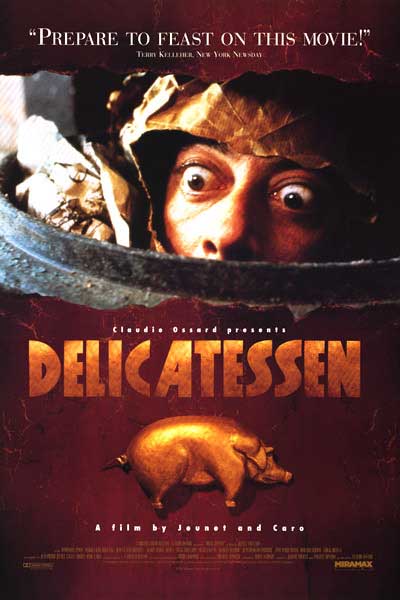
I’ll get this out of the way early: Jean-Pierre Jeunet’s Delicatessen (1991) is utterly bloody absurd. Any film that promotes vegetarian freedom fighters in the promotional material is more than fine by me. This film wanders and winds its way to that end. At times it is brilliant, at times far too oblique, but it is always pretty interesting to sit and watch.
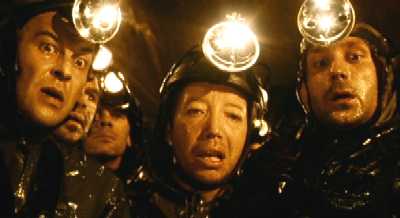 Set in a post-apocalyptic future of some sort Delicatessen takes place in a pretty miserable society where food is extremely rare. So rare that a butcher has resorted to knocking off people to maintain stock in his shop. The world that Jeunet has created is a strange, absurdist, failed industrialist one which manages to combine whimsy and grime in its makeup. There is not a whole lot of plot through the early running. It is more about establishing the tone, imagery and vibe of the whole situation. The plot that there is focuses on a new tenant in an apartment block above the butcher. He is the jack of all trades, and all is going relatively swimmingly. Especially when he begins a tender relationship with the butcher’s daughter. Trouble does appear on the horizon however with the cannibalistic father running low of meat for the butcher’s shop. That is where the vego freedom fighters come in. The film ends exceptionally well. It is a shame then that there is so much kerfuffle for a stretch beforehand that it is near impossible to establish what is going on.
Much of the futuristic aspect of the film is conveyed through the really bold way in which it is shot. It is nothing too over the top, but everything just feels slightly different. There are plenty of angles you don’t often see and the shot length is similarly unique, a touch closer to your average. Actually this shooting and the design of the film was extremely reminiscent of Terry Gilliam’s Brazil (1985) which is a good touch point for knowing what you will be getting yourself in for if you give this a shot. As the butcher’s daughter and protagonist’s love interest Julie, Marie-Laure Dougnac gives the pick of the performances. Perhaps partly as a result, hers is also the most interesting character, especially the breakdown of her relationship with her murderous father. However outside of her, the characters don’t really stand out as individuals. The script does not let the audience in to get to know them.

There is no doubt that Delicatessen is a good film, but it is a little too scattershot to succeed entirely. Like any film such as this, there will be plenty of this you love, some that won’t move you as much. For me, the imagery was a real joy as was some of the absurdity. Would have just been nice if the narrative was a little clearer throughout.
Verdict: Stubby of Reschs
Progress: 96/1001
Like what you read? Then please like Not Now I’m Drinking a Beer and Watching a Movie on facebook here and follow me on twitter @beer_movie.
 Beermovie.net