Bride of Frankenstein

Perhaps none of the original suite of Universal Monster films has such an enduring reputation as James Whale’s Bride of Frankenstein (1935). It is frequently highlighted as the high point in this series of iconic films.
Narratively Bride of Frankenstein plays almost like an early example of fanfic. It is a story “suggested by” Mary Shelley’s novel, functioning as an extension of it. The film opens with Mary Shelly and Lord Byron inserted into the film. This leads into a pretty incredible early example of structurally recapping the first film, as Shelley goes over the events of Frankenstein (1931) with cut scenes from that film playing onscreen. Unfortunately though, after this quite inspired beginning, the narrative is pretty unsatisfying, mainly because of where attention is focused. Namely, the focus is more on the human characters and elements of the story rather than the monsters. Frankenstein’s monster is denied agency throughout, which is generally not how these characters are treated in the Universal canon. The very basis of the plot – a bride for the monster – does not come from the monster. Some scientists just decide to make one for him, denying the character the agency to determine their own path. The story being driven by the humans, makes the plot drag badly, rather than the more kinetic progression that would have made the film stronger. On a much more simplistic level, this film needs way more bride of Frankenstein. She shows up with maybe six minutes to go. We’re are talking Luke Skywalker in Star Wars: The Force Awakens (2015) levels of not giving the people what they want. It’s a bummer too because she is such a great character, both in terms of appearance and what she brings to the story.

The film is at its best when being unique and quirky, rather than the more stock horror elements. There is a wildly fantastical touch when some miniature people show up. Similarly fantastical are the scenes of the monster walking through the woods as a mythic feeling soundtrack plays. It appears James Whale was experimenting with the content and form of these films, and his boldest expressions work the best. The main joy that I took from the film came from these little touches. Boris Karloff is now billed simply as ‘Karloff’ whilst the iconic ‘?’ credit now goes to the monster’s mate. Also, like all these Universal films, it looks great. Such a creativity to the set design and the film always feels so atmospheric even when the story fails to deliver.
Boris Karloff is such a cerebral actor and this may be one of his best performances, even though the film is weaker. He has such a physical presence. And it is not just that he looks hulking, but also in the way that he acts with his whole body. The performance is even more impressive given the character is much more ill-defined than in the first film. At times he is tender, at others viciously murderous, and there seems to be no rhyme or reason as to why he acts a certain way at each point. Perhaps the major misstep is having the monster talk. It is totally unnecessary as the character was already iconic without that ability. This choice amplifies a broader clumsiness in the film, that is the characters speak the themes, rather than the story embodying them in any coherent manner. In addition to Karloff, the other standout performance comes from Colin Clive as Dr Frankenstein. He is able to convincingly convey the experience of a beaten, battered man going through torment. A man torn apart that provides a solid emotional core to the film.
Verdict: I had high hopes going in, but I have to say Bride of Frankenstein is unfortunately one of the lesser Universal Monster flicks. The choice to deny the original monster of any real agency, and the bride of any real screentime, means we are stuck with less interesting human characters to accompany through the story. Schooner of Carlton Draught
Progress: 135/1001
Related beermovie.net articles for you to check out: Frankenstein and The Mummy.
Like what you read? Then please like Beermovie.net on facebook here and follow me on twitter @beer_movie
Worth Watching March 2016
A pretty even split for March. There were a few really hyped new releases that I did not fancy at all whilst most of the ones I dug were older films I was catching up with. Perhaps the dud month of new releases explains my lack of motivation to get out to the cinema over the last few weeks.
Worth Watching
- The Taking of Pelham One Two Three (1974), Joseph Sargent – A very 70s, very stylish thriller. Plenty of the style comes from the excellence of the soundtrack. The plot builds up wordlessly driven by that. The film also reflects the social make-up of the time. African American issues and the Vietnam War play a role in attitudes held and choices made. Not in a forced way though, these issues are just part of the fabric of the film. It is a little slow, but really well acted and scripted. Walter Matthau brings a cool laconic intensity to his role. An action film about process, focused on the inner city, with some truly dark violence. Occasionally feels like a procession of clichés, but perhaps that is because it has become so very influential.
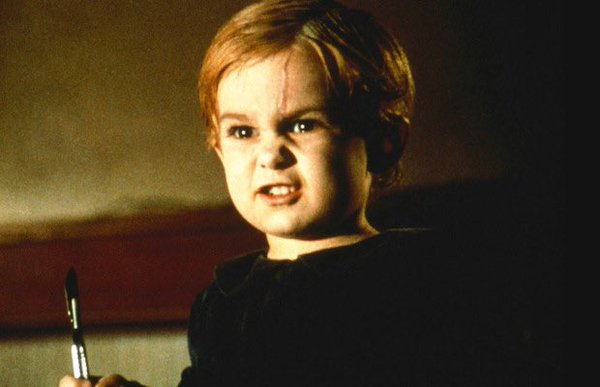
- Pet Sematary (1989), Mary Lambert – A horror that comes out of universal terrors – death of a pet or child. The score is great, over the top, spooky and kitchsy. In fact the whole film is like that. You’ve seen the domestic bliss vs supernatural shenanigans structure countless times before. But this feels fresh, in turn fun, scary then really quite intense. The characters are good, with Jed feeling like a fresh take on the horror movie ol man. Plus that creepy kid is creepy.
- White Material (2009), Claire Denis – Denis is an intriguing stylist. Sound design is initially disorientating, strange levels and abrasive soundtrack. This is all combined with the visuals in a really interesting way. Film takes place in an unnamed African country, a former French colony, in the midst of civil war. It’s relatively freeform, to be consumed on a sensory rather than intricate narrative level. An examination of colonialism with glimpses of plot. Focuses on the fragility of white power both on an individual and broader level. Also the way in which priorities and what needs to be done to survive are often different. A civil war film where no group are the goodies. Which is kinda the point.

- Red State (2011), Kevin Smith – There is so much excellent here that it is a shame Smith can’t help but be both obvious and juvenile. Both his worst attributes that he just cannot seem to suppress for an entire movie. Basically a direct attack on Westboro Baptist Church, skewering a very particular fundamentalist brand of Christianity. Michael Parks’ preacher is shot in an almost drunken, intoxicating way which is clever. A strange little film that gets both very silly and a little intense. There’s a flippancy toward death that really does not sit well with the subject matter.
- Far From Men (2014), David Oelhoffen – Feels almost like a neo-western set in the incredible scenery of Algeria. With an incredible Nick Cave & Warren Ellis soundtrack. Viggo Mortensen plays a schoolteacher of utmost principle. A slow film, low in action. Has that festival film, languid vibe goin on, though eased by the gentle humour throughout. Interesting to see a man with very little interest in violence forced into situations where it is occasionally necessary. Also about engrained societal honour systems and the almost farcical notions of ‘fairness’ in war.
- Child’s Play (1988), Tom Holland – This is a middling piece of kitschy 80s schlock. But that doll is still so motherfuckin creepy. It is a stock standard horror setup (single parent, kid gets attached to a creepy possessed doll) with some awkwardly bad dialogue. But the kills are great, some of them smile inducing their own way. The kills, like the movie, are best when the silliness is wholly embraced. Some of the practical effects are great too. Is a little slow for this kind of affair and the whole thing is overall more good-bad rather than simply good. But if you are a fan of franchise style horror and haven’t seen this one like me, it is still worth your time. Mainly just because that doll is still so utterly terrifying. They pull off a great, iconic villain where it could so easily have been laughable.

- Broad City Season 1 (2014), Ilana Glazer & Abbi Jacobson – This has been so hugely hyped and early it struggled to live up to that for me. It’s a little awkward and the characters take time to settle. The two leads are great though, they have an excellent presence and interact well with each other. Gets excellent towards the back of the season. Writing becomes more assured and the style of comedy gets downpat. Cool social commentary and feminism weaved in. A great spirit to the show. Feels like people are having fun making it.
Not Worth Watching
- Cloverfield (2008), Matt Reeves – rough. Feels a little try-hard with the found footage stuff. And is the definition of nauseating in its use of shaky cam. Frustratingly constructed, a contrived vibe. Some of the dialogue reasonably realistic, but the broader storylines are badly written and there is no levity to the script as a whole. Kind of an annoying film, with forced Godzilla and 9/11 allusions and references. Though the glimpses of the monster are pretty cool. Not a good film at all.
- Friends with Kids (2011), Jennifer Westfeldt – The arc of this film is 100% clear from literally minute one, and nothing makes that predictable journey worthwhile. The leads are ok, especially Jennifer Westfeldt, whilst Chris O’Dowd is nicely laconic. But they are all heavily constrained by middling material. The attempts to balance overwhelming cliché with moderately edgy comedy do not come off. It’s like an annoying show stringing out a will they or won’t they relationship. Everything lays out exactly as telegraphed. All the characters being so hateable doesn’t help. Neither does a very montagey feel that seems like a failure of storytelling.
- Zootopia (2016), Byron Howard & Rich Moore – I’m very much in the minority here, but I found this to be a totally flat experience. Some of the social commentary stuff is good, if shallow. We are talking quips rather than thematic or storytelling depth. But the story hits no particular heights, while there is nothing at all particularly revolutionary on display or even interesting about the visuals or voicework. Plus the female lead disappointingly continually relies on her male companion to solve the case, whilst the late twist is so tired. And that song is fuckin woeful. A disappointing effort from Disney who have been red hot over recent films.
- Hot Pursuit (2015), Anne Fletcher – Probably one of the worst films I’ve seen in quite some time. For starters, it’s disappointingly sexist and transphobic. But outside of that, it’s also really not funny, exciting, competent or interesting on any level whatsoever. I am a huge fan of Reese Witherspoon. But not so sure she has a great comedic presence. Sophia Vergara has that. But the script is totally devoid of humour so she has little to work with. The story is just a procession of comedic plot points you’ve seen a million times before getting ticked off, straight-laced character getting high and all.
- Hail Caesar (2016), The Coen Bros – Starts strong and absurd. But quickly just becomes a succession of boring, barely connected skits. There’s some nice characterisation. But most of the actors are reduced to mere cameos. Josh Brolin’s studio problem solver is an interesting, though underdeveloped, centrepiece. Writing certainly not as funny as it could be. The commentary, both on social mores and the filmmaking biz, are quite silly. I continue to feel like I’m missing something with the Coen Brothers.
- Grimsby (2016), Louis Leterrier – Simply by having some really astute things to say on class, this film takes a more interesting approach to comedy than the contemporary norm. And this has gained the film love in some quarters. Personally I quite liked the patter between Baron Cohen and Mark Strong too. But this is still not a good film at all. Overly crass and not all that funny. It’s also a very flat experience. Also, unlike something like Spy (2015), it does not work as a spy flick outside of the silliness.
If you only have time to watch one White Material
Avoid at all costs Hot Pursuit
Related beermovie.net articles for you to check out: Worth Watching March 2015 and Worth Watching March 2013.
Like what you read? Then please like Beermovie.net on facebook here and follow me on twitter @beer_movie
Sherpa

Documentaries and feature films about Mount Everest have become a dime a dozen over recent years. They all follow a pretty simplistic formula – a focus on some American or European climber chasing their dream, caught up un some terrifying existential disaster, tragedy and heroism abounding and all helpfully set against perhaps the most stunning backdrop in the world – and they all feel a little bit the same as a result. Jennifer Peedom’s Sherpa (2015) though feels totally different, and adds something new and important to the conversation.
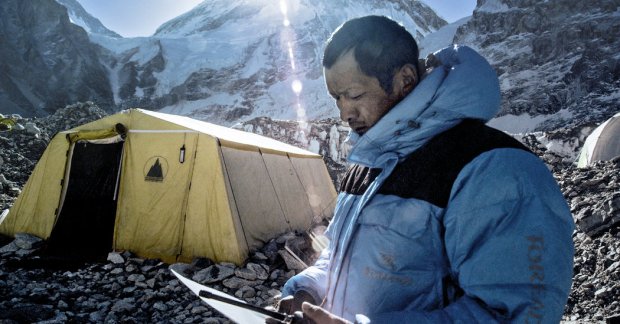
The film begins by laying out the perspective of a Sherpa, both in more societal terms and through an individual examination. From there, the film focuses on an intelligent analysis of the Everest industry, pivoting around the differing reactions to a day of major tragedy in 2014. Perhaps a better term for this western construction would be the Everest industrial complex. There is a form of racism or more accurately colonialism where westerners pay huge sums, sometimes six-figures, to climb the mountain. A mountain where they will traverse the most dangerous parts of once or twice, while the indigenous Sherpas will be required to climb the same area up to 30 times in a season. It also gets to the deep emotional connection that Sherpas have with the mountain, contrasted with the ugly, shallow pursuit of accolades apparent in those from the west. We see a man who has come to love the mountain more than his family, who has summited 21 times. An outlook built on obsession but also a very real, genuine spiritual connection to both the mountain and his continued ascent of it. As befits the location of the story, Sherpa is one of the most visually striking films I’ve seen this year, especially in the first half. Here creativity and excellent shot selection make the imagery both familiar and unique – slow-mo, snowflakes, close-ups, wide shots. There is some handheld, primary source material too, but it’s thankfully not overdone and Peedom selects when to use it, the shots to select and how long to run them for really well.

It is a surprise, a nice one though, that a film such as Sherpa has received such a wide cinema release. Eschewing expectation, ‘disaster-porn’ or putting the interest of western participants second makes the film far more interesting and intellectually stimulating, though less immediately marketable. It is the kind of film that does the festival circuit (which this one has to rave reviews), but that it would be nice to see more of in mainstream cinemas. Of course the shit does eventually hit the fan, and it is presented in a white knuckle terrifying way. This sequence is incredibly composed, the cutting together of radio chatter and footage brings to life the organisational chaos unfolding. But whilst respectfully acknowledging the tragedy, Peedom is more interested in the ramifications that it brings about. Initially there are arguments over who should go in the first chopper to the disaster site. And this divide is reflected again and again in understandably ever-broadening points of contention. Insurance, pay, respect and widespread anger toward inequity and the government’s role in it. It is here that the film’s only real failure is present. I’m not so sure that the complexity of Sherpa vs western dynamic after the avalanche is handled that well. Maybe that’s because it is just so damn complex and Peedom is not interested in giving glib niceties as the solution. But additional clarity around the root cause, specific demands and historical machinations between the two groups may have strengthened this part of the film slightly.
Verdict: Sherpa towers above similar films… like Everest if you will. Unwavering in its focus on the local connection and exploitation raging at the heart of the mountain, this is one of the best documentaries of the year so far. Pint of Kilkenny
Related beermovie.net articles for you to check out: Chasing Ice and CIFF 2014: The Salt of the Earth.
Like what you read? Then please like Beermovie.net on facebook here and follow me on twitter @beer_movie
The Wolfpack
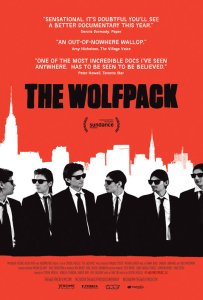
The Wolfpack (2015) has a documentary pitch to make film buffs swoon – a group of brothers are essentially locked away by their father in a New York apartment, with only a massive movie collection to expose them to the outside world. Sounds like some whimsical documentary fun right… not exactly.
At its heart this is an absurd story, but also a very sad and confronting one. And director Crystal Moselle does not shy away from those confronting aspects. The film focuses on six brothers, who for a vast majority of their lives have been kept inside their New York apartment only allowed out a handful of times a year, if at all. There are moments that highlight the power of cinema, one brother remarks on cinema that “it makes me feel like I’m living… magical.” But the film refuses to be twee on that front. Rather than craft a trite narrative about the transformative power of the medium we all love so much, The Wolfpack shows that even that cannot overcome the brutal experience of being trapped in a controlling situation of domestic control. This is less real-life Be Kind Rewind (2008), more story of horrific domestic abuse and overwhelming control. The experience of these young men (and their barely mentioned special needs sister) is quite confronting, ruled by an iron-fisted, most likely mentally ill, patriarch. By the time the film is made, the boys have come to regard their father with contempt, repeatedly expressing their incisively negative viewpoint of him. Though their mother is still pretty enamoured with him and this contrasting of attitudes functions as a comment on domestic abuse to be pondered by the viewer. As does the impact this upbringing has had on the brothers, as they attempt to reach out into the world, but are hamstrung by their past. One of them eloquently expresses the universal fear of being so ignorant of aspects of the world that he will not be able to handle it. It’s universal, but obviously of much greater concern for him than most of us.

However for all its positive qualities in terms of theme, The Wolfpack is a bit of a mess really. There is a struggle to lay out the narrative of the film at all clearly. Perhaps caught in two minds between the crowd-pleasing positive impacts that a love of film has given these brothers, with the reality of their situation, it does not entirely succeed at delivering either coherently. Surprisingly I found the power of cinema focused aspects to be the least interesting, with the more troubling domestic aspects being much more interesting. It is a little frustrating to see interesting roads the film could have taken hinted out but then not taken – the mother’s story is the most interesting but not a focus and the connection between the movies the boys watch and the course of their life could have also been expanded upon.
Verdict: The Wolfpack is a different film to what the synopsis would suggest, both more confronting and less assured than anticipated. Unfortunately, though there is a lot of power captured in this film, it is not captured in a clean, clear way. Stubby of Reschs
Related beermovie.net articles for you to check out: Searching for Sugarman and SFF 2015: The Bolivian Case.
Like what you read? Then please like Beermovie.net on facebook here and follow me on twitter @beer_movie
Batman v Superman: Dawn of Justice

If you’re on the internet, which you probably are, you are most likely aware of the storm brewing around Batman v Superman: Dawn of Justice (2016). The film is being widely derided, whilst fanboys are making utter fools of themselves as they spread hilarious conspiracy theories that Marvel are paying off critics to trash the film. Frankly this is a movie which is neither good enough nor bad enough to be receiving that much attention.
It is worth noting that Batman and Superman don’t directly do battle til a long ways into the film. Until then the action is quite siloed with the Supes side of things (Clarke Kent, Lois, the Daily Planet, Lex Luthor) rarely interacting with the Batman side of things (Bruce Wayne and Alfred). That siloed construction certainly shows. The writing of these two large elements feels totally separate, and one of them (the Batman side) is realised a lot more successfully than the other (the Superman side). The film does a decent, if simplistic, job of establishing Bruce Wayne’s emotional involvement in the events of Man of Steel (2013), though this perhaps does not influence the story throughout as much as it could have. This new Batman is effective enough overall. Whilst there is nothing truly new about how the character is written or presented, I do like the mythical ‘caped crusader’ dimension to him as the film begins. And the dynamic between Affleck and Jeremy Irons, as Bruce/Batman and Alfred is better performed and written than anything on the Superman side.

On that front, the narrative for Superman and Lois just does not sit right. It feels like we are just joining at a random, arbitrary point, with no arc being created or explored. The attempts to bring a political/geopolitical aspect to the story through this narrative are also daft and really add no depth thematically, or interest story wise. On an emotional level, the dynamic of Clark being Superman and also being with Lois is really badly and flippantly written. There should have been some emotional weight to be explored. But instead there is one moment of tension and then Clark hops in the bath with all his clothes on to solve it or some shit. Tellingly, for me at least, the strongest period of the film is the last third when these silos break down. Aside from the parts involving Lex Luthor, the story builds nicely to the finale in an exciting way. The big eventual battle between the two leads features some cool imagery and the fight tells a good story through action, something that is not a strong suit of the film as a whole. Plus they commit for the most part to a ballsy conclusion, though one which is ever so-slightly undermined when you consider a particular story beat earlier in the film.
My major concern with the film going in was the Dawn of Justice subtitle, fearing this would be a half-baked pseudo Justice League film. Thankfully I think they get this right. Wonder Woman is the only character introduced in the film in any real detail and she is the best part of the entire flick. Gal Gadot slays in this movie. She looks the part and the character is written with the perfect amount of sass that thankfully never reaches the point of feeling over-contrived. Plus the simple hyping of the stand-alone film through a single photograph is a really clever way to do it and has me rather excited.
Along with the scattershot storytelling, another major letdown with Batman v Superman: Dawn of Justice is that it does not look particularly good. The effects range from the passable to distractingly bad. Whilst there is little flair in the costuming or design of the piece. I have already forgotten what the Batmobile particularly looked like, whilst the suit Affleck wears for most of the film is similarly forgettable. Though the bulked up helmeted version he wears into the final battle is at least a little unique. The lack of design originality unfortunately extends to a late villain as well who looks exactly like an orc. On the score front, there could not be a more zeitgeisty crew on duty than Hans Zimmer and Junkie XL, but they deliver a pretty disappointing effort. There are some good musical moments late on, but so much of the first half score is overbearing and annoyingly soaring.
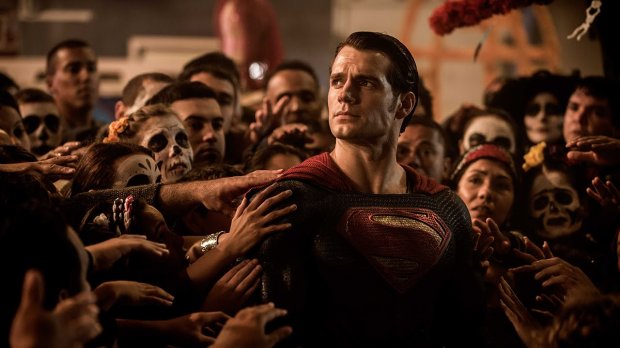
The performances are solid throughout. Gal Gadot is the real standout as Wonder Woman, owning that role in a way that many may have not predicted. The other main leads are good too, Affleck succeeds in the thankless place of being a new Batman too close to an iconic one. Amy Adams is good too whilst Henry Cavill is decent, getting by on the fact that damn he looks so much like Superman aye. But oh lordy, Jesse Eisenberg is beyond terrible as Lex Luthor. Obviously that is not all on him. Someone told him to deliver the performance in that manner and the character is written as a wholly unsympathetic brattish, entitled Daddy’s boy. Not to mention the speeches about the nature of God etc that are just beyond tired. But part of the blame rests with the actor and his annoying riffing on Heath Ledger’s Joker.
Verdict: Batman vs Superman Dawn of Justice is a case of the good, the bad and the Luthor. Some elements are excellent (everything Batman and especially Wonder Woman), some are bad (the Superman elements) and then there is the downright ugly (Eisenberg’s performance as Lex Luthor mainly). Generally I would not delineate elements of a film so much. But they are that disparate in the film and it is when they cohere that the film is at its best. Stubby of Reschs
Related beermovie.net articles for you to check out: The Dark Knight and The Dark Knight Rises.
Like what you read? Then please like Beermovie.net on facebook here and follow me on twitter @beer_movie
Star Wars Episode V – The Empire Strikes Back

In the current online film commentary culture, there is no more prevailing influence on fandom than the Star Wars franchise. Even more particularly is the undying love and borderline obsession many writers have with Star Wars Episode V – The Empire Strikes Back (1980). Which is quite strange given the film is not very good and a totally pale imitation of Star Wars (1977).
 One of the major issues with the film is on the story front. Whereas the first film was a reimagining of classic story structures infused with the occasional dash of originality, this film, especially early, is large part interminable love story. The soapie style dialogue and Leia/Han shenanigans clunk badly, mainly because they are drearily written with no spark whatsoever. Not to mention that this is all part of love-triangle predicated on a premise I’m not sure can ever hold up on re-watch once you are aware of all the revelations that the trilogy contains. It is made to feel even worse because it is contrasted with the friendship between Luke and Han that is fully established and expressed in a way by the two characters that actually feels genuine. So the human stuff is meh for the most part. The saving grace though is the development of Vader as the villain at the heart of these films. Here he continues to establish himself as a legitimately evil, throat constricting dude. Not to mention we get to glimpse him under the helmet for the first time which is totally badass. The story does pick up a little once the main parties split, with Luke pursuing training with Yoda whilst Han and Leia do their own thing. In part this is merely based on the fact that the love triangle elements are relegated so we do not have to endure the worst elements of the dialogue. It’s a shame that overall the story is not quite there, because there are some really interesting psychological aspects to what is going on, especially in Luke’s relationship with the dark side.
The film also makes plain some issues that were hinted at in the first film, perhaps due to the fact this one does not have the same simple, yet forceful narrative structure to get by on. There is no real depth to the world building which is glaring here. It’s simply just the odd cool creature or a different landscape. A procession of worlds with surface level quirks essentially, no mythos underlying that. The ship design holds up better, perhaps because we are really just after stuff that looks rad rather than anything deeper. The design relies on riffing on both classic sci-fi ideas and expanding on what we saw in the first film. That said, the combat does not have the same weight as that in the first film. It is especially hurt by an over-computerised sheen (though as with all things Star Wars, who knows if it looked that bad in the original release). Plus there is a severe lack of good set pieces in this movie, which overall lacks in the cool action stakes. The music is still totally brilliant though and it helps to make the best moments of the film pop. Think the tune that heralds Vader’s arrival every time, a conceit that could have gone totally wrong, but thankfully enhances that character’s presence greatly.

Verdict: The Empire Strikes Back is not all bad, but frankly a fair amount of it is. And given its current reputation it’s frankly hard not to consider this one of the most overrated films of all time. The film sorely misses the classicism and especially clarity of the first film’s storytelling. And it’s a bummer, because this film contains one of cinema’s all-time iconic moments. But unfortunately it just exists in a not very good flick. Schooner of Carlton Draught
Progress: 134/1001
Related beermovie.net articles for you to check out: Spoilertastic Star Wars The Force Awakens review and Star Wars.
Like what you read? Then please like Beermovie.net on facebook here and follow me on twitter @beer_movie
Worth Watching February 2016
February was a rare perfect month for me, including a pretty wide variety of new releases and some older films too. Carol was the standout and I can’t imagine it not being on my top 10 of the year when I come to write it. Everything else, whilst good, totally pales in comparison.
Worth Watching
- Goosebumps (2015), Rob Letterman – I used to devour these books as a kid and this captures the spirit of them pretty well. It takes too long to get into it and the male protagonist is the blandest character in the film. But once it gets going it’s a pretty creepy load of meta-fun helped by effects that suit the film perfectly. The character of R.L. Stine inserted into the film is a pretty inspired way into the adaptation, even if Jack Black never entirely lands that performance. It’s Odeya Rush in the female lead who gives the standout turn. A throwback to when they still made good family adventure films in the 90’s.

- Inside Man (2006), Spike Lee – All the technical elements are here. A really well written heist film that is snappily shot, full of cool angles and cuts. Not to mention how good the cast is. A young Chiwetel Ejiofor sizzles alongside Denzel, Jodie Foster, Clive Owen etc etc etc. But the toying with structure detracts a little from the intrigue of the narrative. Overall it descends a little into standard bank robber territory, in part cause the experimental flourishes don’t work so well. But even as a standard genre flick, it’s an above average, exceptionally acted one.
- Jack Irish: Dead Point (2014), Jeffrey Walker – As far as crime on TV goes, these telemovies are pretty slick. Irish is a good character well brought to life by Guy Pearce. The writing helps. Balancing him being just the right of down on his luck with clear, believable motivations. It’s well shot and makes especially good use of the Melbourne locations. And of course Aaron Pederson is the absolute best. So watchable.
- 1971 (2014), Johanna Hamilton – Knew nothing about this doco going in. Chronicles a radical group’s file theft from a small FBI office through the words of those involve. Concerned with govt surveillance and shows how nothing has really changed. Great historical document of very ordinary folks disrupting the Vietnam War. Also shows the pretty seismic historical actions their actions set off. The presentation is a touch flat but the passion of those involved shines through.
- Carol (2015), Todd Haynes – A love story captured so perfectly, in a wholly unmanufactured way. Exquisitely shot on 16mm, the grain perfectly suiting the film and the photo-like composition. Performances are all wonderful. Chandler is good in a tough role, but Blanchett and Mara could not be better. Love is so hard to capture onscreen cause it’s intangible, hard to pin down. But somehow this quite simple film does just that. A familiarity to how their love grows. The film travels along and then all of a sudden by they end you’re utterly invested. Sorta perfect.

- Deadpool (2016), Tim Miller – It’s not revolutionary, but at least it’s a comic book film that feels a little different. Plus I laughed a whole heap at the idiocy of it. A good use of Reynolds charm and talents. It’s a nothing story but it looks decent and the leads are all good too. The little team-up is played for fun, rather than as yearning for shared universe potential. Is cool to see a legit hard R, stylistically fuckin violent comic book film.

- American Mary (2012), The Soska Sisters – A pretty provocative title when you think about it. The film succeeds in large part because of the cool aesthetic – grimy underground surgery table, stark costuming. It’s hard to buy Mary’s initial casual jumping into body-modification surgery for a quick buck. Not so much the later jump where the film veers into rape-revenge territory. It’s a tough watch. Visceral. Perhaps too much so, as that element finds it hard to ponder the interesting ideas. Katherine Isabelle is great in this with realistic charm and bravado.
- The Intern (2015), Nancy Meyers – This is slow to get going. De Niro, whilst seemingly more engaged than usual, does not go down smooth as a blundering old dude. Whilst the business-speak laden early scenes with Hathaway are awkward. But as soon as those two get together everything pops a little more. It’s a gentle film, with a pretty patchy script that rocks a range of tones and some surprisingly crass moments. But the leads have a great, totally platonic chemistry between the two of them and their patter shines. There’s’ some good gender stuff too.
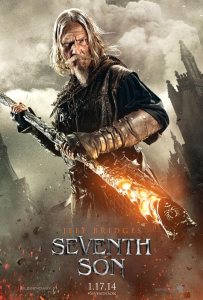
- Seventh Son (2014), Sergey Bodrov – Has a real 80s throwback vibe. More of a rollicking adventure film than a fantasy one. Looks kind of decent when they are not bothering with crappy CGI. A great cast bringing the awesome silliness. Awfully plotted, though in an endearingly bad way. Much like Jeff Bridges’ on-point quip game.
- Obvious Child (2014), Gillian Robespierre – Jenny Slate is awesome. She is really good at the emotional stuff and at conveying that late 20’s point in life. Not a huge amount of substance to the film. But it’s really well acted and good supports help to maintain the tone. Not really the ‘abortion rom-com’ as advertised, rather it makes a couple of nice, very valid points but aside from that it’s just part of the story. Endearing.
If you only have time to watch one Carol
If you only have time to watch two Obvious Child
Related beermovie.net articles for you to check out: Worth Watching February 2015 and Worth Watching February 2013.
Like what you read? Then please like Beermovie.net on facebook here and follow me on twitter @beer_movie
When Marnie Was There
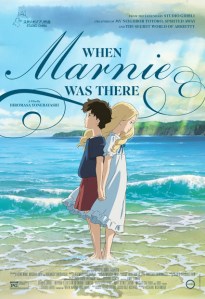
At the start of this year, I made myself some goals in terms of viewing for 2016. Just some directors and areas of film that I would like to work my through, including one studio. That studio was the iconic Studio Ghibli and I thought I’d start off at the end with When Marnie Was There (2014).
This is a film centred on notions of teen anxiety. Although the film wanders out from there on different paths, it always returns to that to remind you that’s what the film is revolving around. The emotional stakes are intense, as the teenage main character Anna struggles with realistically presented mental issues such as anxiety and self-worth. These are presented in a way that will strike close to home if yourself or those around you have fought with those. As a result of her illness, Anna goes to stay with her aunt and uncle, which also allows the film to delightfully contrast urban attitudes and stresses with rural sensibilities. The latter are encompassed by the aunt and uncle who are gentle, tender and patient people beautifully helping to nurse Anna back to fuller health. In addition to the portrayal of mental health, the emotional intensity is also increased through the themes of betrayal and familial mystery that run through the core of the film.

Every time I start up a Studio Ghibli film, I am immediately struck by the animation. It is not just that it is ‘hand-drawn’ in this world of computer animation, but also how the studio uses that. In this film it is more subtle than in some of their others, with the time spent straddling the real world and a fantastical one weighted heavily towards the latter. But even with that level of restraint, the visuals still provoke plenty of emotion, through their simple beauty but also how in how they help to tell the narrative. There is a quiet beauty in the imagery, think more about how your eye is drawn to a scene of a watermelon being chopped rather than any wild Princess Mononoke (1997) fantastical creatures or sword fighting.
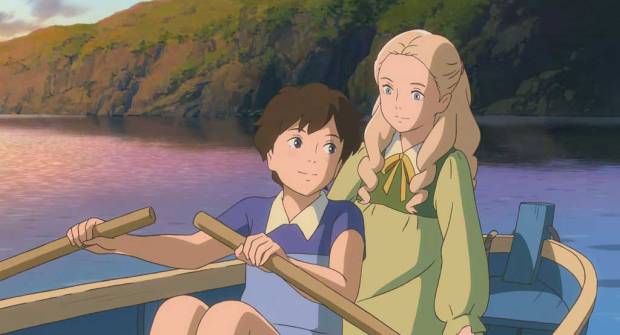
One point of interest for me was that I picked up some real queer overtones to the film. The relationship between Anna and Marnie unfolds like a romance, specifically a lesbian one. Both characters refer to the other as their “secret”. They take things slowly and as it progresses so does the length and tenderness of their physical contact. A late plot reveal means that any overtones do not fit in with the film more broadly, but I still found them to be quite stark. Perhaps this is Ghibli’s A Nightmare on Elm Street 2: Freddy’s Revenge (1985). A film with very clear queer themes, but many involved in the production were unaware of those overtones.
Verdict: When Marnie Was There is not one of Ghibli’s absolute best films, but it is certainly one of their most emotionally intense. The simple, central arc of Anna’s mental illness is very satisfying, and the film finishes with a crushing and emotional kicker. Stubby of Reschs
Related beermovie.net articles for you to check out: Princess Mononoke and The Cat Returns.
Like what you read? Then please like Beermovie.net on facebook here and follow me on twitter @beer_movie
Worth Watching January 2016
Always a busy time of year, January was a big month for me. Catching up with films I missed from last year, along with starting my 2016 on some selected directors. Some of the not worth watching films were really quite dire, but despite that this was a pretty good month. I really liked a lot of films I’d not seen before from big name directors and there was some fun genre stuff mixed in there too.
Worth Watching
- Backcountry (2014), Adam Macdonald – This, somewhat conventionally plotted film, falls into the ‘why you should never under any circumstances go camping horror subgenre. The foreshadowing of the eventual bear attack is cleverly done and indeed there are a lot of good moments amongst the conventional story. The sound design is a really striking focus at the start of the film and cleverly creates tension too. Film is sharply shot as well, making good use of shot length and differing focus. There’s some great use of that same conceit as The Reef (2010) where real footage of animals is cut in to the narrative to make the tension a whole lot greater. If you’re into well-acted, intense creature horror, with a healthy lashing of leg-snappin, then you can do much worse than this.
- Advantageous (2015), Jennifer Phang – If stylish, female driven sci-fi sounds like your kind of jam (it should) then this is worth checking out. It’s a subtly done near-future where the worldbuilding is interesting in that not everything has changed. There are a couple of very good female lead performances and it is very much a female centric film. Thematically It focuses on the dynamic of a struggling family, how living pressures impact heaviest on females, aging, women in the workplace and the value of humanity in the face of exceptional technological developments. That sounds like a lot, and occasionally the film does feel a little overburdened with thematic concerns and the budget shows through at times too. But for the most part, the feminist and racial issues are weaved in well to a quite heartbreaking and oft chilling film.
- Somewhere (2010), Sofia Coppola – Films about aimless hollywood party brats finding themselves are not usually my deal. But then again they are not usually directed like this. Stephen Dorff gives a good performance as the aimless party dude spinning his wheels in a sea of booze, strippers and so on. His daughter comes into his life in a way that could be trite, but instead she helps him to recognise the sea of artifice in which he is drowning in a quite genuine feeling way. Coppola shoots this interestingly, people filling up large parts of the frame and action dropping out of it. This is a very quiet film, too quiet for some. Much of the early going is just Dorff alone with his loneliness. It is this quietness that helps the film avoid becoming cliché though. And Dorff and Elle Fanning strike a really substantial onscreen relationship. This is a really beautiful film to me.
- A Very Murray Christmas (2015), Sofia Coppola – I didn’t really have that much expectation for this, being only a moderate fan of Murray and no real fan of Christmas specials. But this is great. Songs are used to some nice storytelling effect and a little of Coppola’s visual style finds its way in too. It’s really bloody funny, with a mild mockumentary vibe early on. Everyone is great in it and having a lot of fun. I thought Miley Cyrus was excellent, even if I didn’t love the dreamscape conclusion. But majorly adored everything in the bar.
- Ricki and the Flash (2015), Jonathan Demme – Unfortunately ignored on initial release, perhaps due to having a monumentally awful trailer. This has a glut of interesting ideas including a central character in Streep’s failure of a mum, the likes of which we don’t really see on screen. Also a rumination on when a quest for greatness falls massively short. It’s well performed from all, Kline, Streep and all the supports. Very well written, a funny script that amusingly captures those disastrous family moments whilst also going some dark places. A quite emotive experience. Both the main character and the film are a willing shout of authenticity into the void of pretension.

I guarantee you, the film is approximately a trillion times better than this abomination of a poster
- The Hateful Eight (2015), Quentin Tarantino – was lucky enough to catch this on 70mm and I loved the pomp of seeing it that way. The intermission, snow swept widescreens, the program, the intermission and an incredible Morricone score blasting. But for all that it’s only an ok film, and one that exhibits all of the issues of late career Tarantino. I preferred it to Django, but the tonal unevenness suggests he needs someone to reign in some of his ideas. The cartoony schlock of the violence takes you out of the film, as does the inexplicable voiceover that suddenly appears after two hours. He’s also not assured as a comedic writer. He puts really horrific stuff next to his brand of humour in a way that does not work. In my crowd people also laughed a lot at the violence toward women, a problematic response, but one that it felt like Tarantino was angling towards. That, and his teenage obsession with the ‘N-word’ mimic the tired and unincisive provocation for provocation’s sake of Ricky Gervais. But the performances are great, especially from Walton Goggins and Channing Tatum and it is fun to see the chamber mystery playing out buried beneath the Western iconography. Just wish Tarantinos ego, trying to create some notion of the auteur, didn’t continually get in the road.
- She’s Gotta Have It (1986), Spike Lee – Lee’s first film is also a relatively unconventionally constructed one. Characters talk straight to the camera and the scene is set through black and white still photos of Brooklyn. Struck me a little as a more self-aware, schooled in film iteration of a Cassavetes film. He has a great eye for shots – a profile close-up of two characters in profile experiencing sexual ecstasy. The acting is on occasions distractingly rough, but also very god at times, especially from Tracey Camilla Johns who nails the main character the film revolves around. Spike Lee is decent too actually and brings patter and comedy to the script with his performance. It focuses very much on sexual perceptions of women, and the construction of it all swirling around one woman draws this theme out well.

- Far From the Madding Crowd (2015), Thomas Vinterberg – This Thomas Hardy film is an adaptation like many that have come before, but it is a bloody beautiful and well acted one. The quality of the filmmaking, especially the classical and nuanced acting, mean what could feel like yet another bland adaptation instead manages to pop off the screen. Carey Mulligan totally inhabits and creates her character, mainly through the cheekiness. It’s a film almost solely concerned with love, which mean some choices in that regard are a little hard to reconcile in one subplot, especially how the main character had been established prior to that. The core relationship between Mulligan’s Bathsheba and Gabriel is really smartly and gently drawn though. And It features and ending that is wholly and totally satisfying. One the film totally earns.

- Everything or Nothing (2012), Stevan Riley – this making of doc focusing on the James Bond series is above average, but still probably just for fans. Great trivia nuggets abound – Christopher Lee was Ian Fleming’s distant cousin! It is more focused on the personalities behind the film than deconstructing the films’ production. But that’s not so bad as it does a good job of examining the flaws of Broccoli, Fleming and others. There are a bunch of great talking heads including the aforementioned Lee, the larrikin George Lazenby, Roger Moore who seems to have a great attitude toward the films and Ken Adams in particular.
- An Old Mistress (2007), Catherine Breillat – This is an interesting film, made all the more so by the sorta-theatrical manner in which it is performed. Part of that comes from the lush period trimmings. Asia Argento has a great presence to her onscreen, strangely both formal and laconic in a strange way. The script is very talky but still quite intelligent. The flashback structure does rob the narrative of an intensity it could have used. A portrait of passion that bothers to present both sides of that passion. Passion that cannot be escaped, no matter how much you want to. Also a surprisingly great portrait of grief.
- The Dressmaker (2015), Jocelyn Moorhouse – A stylish and eccentric extension of Australian film culture and a reinterpretation of ocker culture more broadly. Refreshingly driven by females in front of and behind the camera. It’s all wildly original and uniquely, overtly Australian too. Kate Winslet is as good as she’s ever been here, delivering an artful and passionate performance and handling an array of tones supremely well. The writing and performance of Hugo Weaving’s character turns something that should have been a caricature into something with both poignancy and humour. Which is a cipher for the whole film really. A film that is crushing, devastating and cerebral. Winslet’s Clint Eastwood-esque intro is probably my favourite 2015 film moment.
- Ai Weiwei: Never Sorry (2012), Alison Klayman – What an incredible person. The film gives great insight into his process initially. Then shifts to focus more on his social activism. A lot of pretty confronting stuff here about the horrific 2008 Sichuan earthquake and Weiwei’s attempts to expose the government’s cover-up attempts. Also a terrifying insight into contemporary Chinese surveillance and oppression. Illuminates the man as well, his family history and relationships. Shows his bravery and passionate streak. But also his imperfections and at times uncaring nature. The film looks brilliant too, an appropriately artistic approach. As great as all the examination of his social causes is, I would have liked to see more focus on his art throughout the film.
Not Worth Watching
- Dumb and Dumber To (2014), The Farrelly Brothers – A strange film. The timing is off in that the original was so beloved, but even that had faded by the time this was made, and it bombed massively. A suspicion that this style of comedy and delivery doesn’t work these days is supported by the final product. There are a couple of moderately inspired moments – the explanation for the long delay in making a sequel for example – and Daniels and Carrey are talented enough to draw the odd laugh out of you. But most of the jokes are eye rolling levels of shithouse. Along with a massive helping of real crassness, particularly directed at the female characters. Close to unwatchable, and distasteful.
- The Voices (2014), Marjan Satrapi – The basic pitch – man hears the voices of his pets when off his meds – sounds original and ripe for horror goodness. The execution though, despite the occasional piece of inspired design work and some excellent female performances from Weaver, Arteton and Kendrick; leaves much to be desired. A lot of that is due to the writing, which has a wildly inconsistent main character seeping into a wildly inconsistent story in general. It’s quite disturbing, with a take on mental illness that is interesting in theory but quite distasteful in practice.
- Christine (1983), John Carpenter – Carpenter adapting Stephen King turns out out be kinda goofy, especially the teen film elements. It’s set up in car-making 1957 Detroit with “Bad to the Bone” on the soundtrack. Anything with the car is good fun, indeed it works a lt better than any murderous car plot really deserves to. That’s thanks to Carpenter’s craft which always shines through. The film looks great too, the car repairing itself scene is especially arresting. In the end though, it’s a little too much goofy teen flick, not enough killer car.

- The Ridiculous Six (2015), Frank Coraci – There was a fair bit of intrigue when Sandler signed a multi-picture deal with Netflix. Well any thought that deal would be used for good has been felled in one decidedly unfunny, not to mention racist, swoop. Even in the moments it is not being offensive, the film is utterly and awkwardly unfunny. It is seriously denigrating to Native Americans in a way that makes you wonder why Netflix signed off on this. Boring and even more lacking in intellect than the standard modern day comedy. None of the exceptionally talented cast come out of this well. Rob Schneider clunks as a half Mexican and Taylor Lautner would be the most embarrassing thing about one of the most embarrassing films ever made if it were not for the presence of Vanilla Ice as a slang slinging Mark Twain. Just awful.
- The Revenant (2015), Alejandro Gonzalez Inarritu – Yeah sure it looks like it was a tough shoot. That’s not what makes a good film though is it? And constant, unrelenting brutalism does not give a story thematic depth in and of itself. Nor does said brutalism inherently make any statement on what it means to be human. At times, it veers almost into the comic – the Hoth moment for example. Visually it’s a mixed bag. The widescreen landscapes are undeniably arresting while the canted close-ups feel unique but overused. But it often felt like it had an over-digitised sheen to me. Nowhere near worth the huge swathes of time it takes.

So much Leo bro
- Looking for Grace (2015), Sue Brooks – A strange film. Overwhelmingly quaint, until it veers sharply into heavier territory in a way the script hadn’t earned at all. Totally unnecessary fractured narrative structure too. There are some good performances, but the film also manages to over-direct a number of really talented performers like Radha Mitchell and Richard Roxborough into rough, tonally ill-suited performances. One of the main issue is that any potential for stakes is removed immediately, leaving the rest of the film listless. An unsatisfying hodgepodge of comedy and drama.
- Self/Less (2015), Tarsem Singh – I’ve always been a fan of Tarsem’s films, but that’s been based on his phenomenal visual inventiveness. This very basic and overfamiliar sci-fi story features none of that, making it a slog. Minimal effort is taken to set up the logic of this body-swapping search for immortality enterprise. The filmmaking is lazy too, relying on montages too much and showing nothing out of the ordinary. Script is bad as well, especially the human motivations and interactions, which are at times comically off the mark.
If you only have time to watch one The Dressmaker
Avoid at all costs Dumb and Dumber To
Related beermovie.net articles for you to check out: Worth Watching January 2015 and Worth Watching January 2013.
Like what you read? Then please like Beermovie.net on facebook here and follow me on twitter @beer_movie
Star Wars

Like everyone, Star Wars has been on my mind of late. So when I saw the original trilogy pretty cheap on VHS a while back I snapped them up, for a more faithful(ish) experience compared to the far too tinkered with blu-rays that are out there. These were never formative films for me in the way that they were for so many others, or the way the James Bond films or Jurassic Park (1993) were for me. I saw them as a kid, recalled liking them, but that was the extent of it.
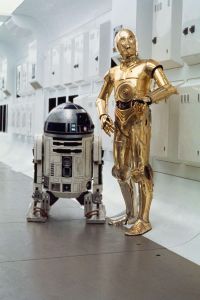 For me, Star Wars (1977) is miles away the best film in this franchise. It delivers a lean narrative, heavily influenced by classical adventure story tropes, with a sense of fun. It goes character intros (without labouring unnecessary mythology), a big action beat, regroup, bigger action beat. It really is as simple as that. But within that structure Lucas delivers a film that would spawn a legacy probably unmatched in some ways in film history. That the storytelling feels so informed by classical tales is not altogether a bad thing. Lucas is repackaging beats that have been go-tos for centuries, but making them feel at least a little inspired. It helps that with all the classical inspiration, the film is also happy to do a few unconventional things. For example, Darth Vader is revealed in no time flat. Most films would hold that back for an age, whereas this one sends him out front and centre within five minutes. The world-building of the film is an interesting aspect. We are exposed to different worlds early on and that is effective. But it’s based totally on design and physical details (or often a single physical detail) rather than any level of in-depth world-building.
Carrie Fisher gives the pick of the performances and gets reasonable screen time to go along with that, unlike Star Wars The Force Awakens (2015). Her badarse heroine s is perhaps the most original feeling character too. As good as the characters of Luke Skywalker and Han Solo are, they are very much archetypes. Lucas’ propensity for kiddie characters is apparent from the get-go too, though not overbearingly so. It’s one of the paradoxes of the Star Wars phenomenon I guess that those characters are pretty interminable in the movies, but also played a large part in driving the phenomenon that the series would become. This one is more of an ensemble piece than I recall, with Obi-Wan and the droids playing large parts, along with the three central figures. Given our current CGI saturation, the effects in Star Wars jar initially. But that fades quite quickly as the artistry, particularly in the model work, becomes apparent. That level of design artistry is so important, because let’s face it some of the character design could have gone so wrong. Designs like those of C3PO or Vader, could have looked totally silly if they were not executed so very well.

Of all the achievements of this film (and I think the original trilogy more broadly), it is John Williams’ score that may be the pinnacle. By now truly iconic, in the world of the film it is so lush and heightening. It’s not just that the score is so damn good, it’s that Lucas uses it so well. The introduction of the character of Luke, such an important moment for the entire franchise, is basically made by the soundtrack. The sound design is similarly exceptional, the whooshes of the dogfights obviously, as well as smaller flourishes like Vader’s laboured breathing. The editing though has the bemusing quality of a film student looking to impress. It is distracting and recalls Homer Simpson’s obsession with star wipes so much that I was almost a little bummed we didn’t see one here.
Verdict: Star Wars is a film of simple charms –clear adventure storytelling, a worthwhile set of sci-fi worlds, decent characters and great space-set dogfights. Here, George Lucas delivers those charms in a way that he, or anyone else, has never been able to replicate since. Pint of Kilkenny
Progress: 133/1001
Related beermovie.net articles for you to check out: Spoilertastic Star Wars The Force Awakens review and Guardians of the Galaxy.
Like what you read? Then please like Beermovie.net on facebook here and follow me on twitter @beer_movie
 Beermovie.net