The Gospel According to St Matthew

Pier Paolo Pasolini is an interesting dude. Actually that’s underselling it greatly. Pasolini may be the most interesting dude in cinema’s history. And perhaps the most interesting thing this gay, Marxist, atheist artist ever did, was make The Gospel According to Matthew (1964), the definite cinematic account of the life of Jesus.
In terms of construction, the reverence that Pasolini has for the gospel as a piece of literature, makes the film play like a Shakespeare adaptation. There’s a faithfulness to the dialogue that initially jars, but quickly comforts the viewer through its familiarity and artfulness. The film is solemn and artistic, wordlessly creating a weight to moments, emotions and words that you can feel. The film opens on a close-up of the pregnant Mary’s face, centring her and the human, not deified, aspects of the birth of Jesus. The film is sparse in terms of exposition, presumably relying on the general familiarity with the source material. The story progresses almost as a montage of his greatest speeches for a time, effectively and rapidly establishing Jesus’ wisdom. The films builds through these speeches, with the words gaining more power and weight as the narrative goes along. There is an interesting lack of miracles or God in the film, rather casting Jesus in an interesting light. He talks of pitting family members against each other, while the scenes of him throwing down with the orthodoxy are the best of all. The film pulls no punches either in its approach. Both to paint a portrait of Jesus that is perhaps not what is expected, and in presenting the reality of the world as it was. There is an infanticide scene in particular that is very tough going. Overall there is a power to imagery and silence in the film. The wordless power of the crucifixion scene, boosted by the soundtrack, is very powerfully done.
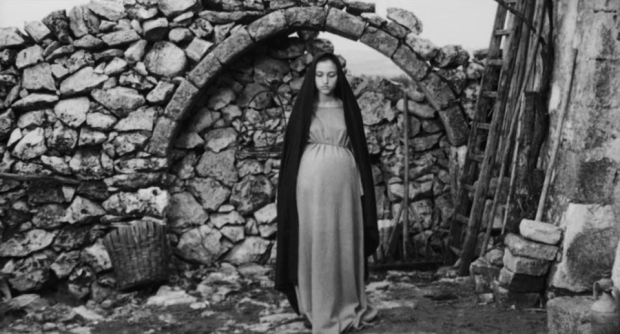
Where you really see the director behind the film shine through, is in the subversive nature of Jesus. This is the Jesus of class struggle. A subversive, passionately geared toward overthrowing ingrained systems of power. An anarchist. Sure that’s inherent in the Jesus of the bible (if not the Jesus of today’s most prominent Christian movements), but Pasolini amplifies that over trite miracles. The focus of this cinematic Jesus (and by extension presumably the director) is blowing up the self-interest of those with unearned religious power. He ‘holds no distinction from man to man’. Again Pasolini emphasising the socialist aspect of Christ. There is a dichotomy to Jesus in that he is both man and more than man. Pasolini shows this through showing the way in which he renounces his family and other actions that appear questionable. As well as his very human grief at the death of John the Baptist. On the other hand is the depth of love he shows to the family he builds, of all those who have faith. A well of love that comes from a spirituality that transcends his biological humanity. Perhaps spiritual is too twee a word for The Gospel According to Matthew. Elemental may be more accurate and more in line with what Pasolini was angling for. This aspect is throughout the film. In the movement of people across landscapes, the acknowledgment of God, the purity of a child (any child), the great expanses of the physical environment and how Jesus occupies and moves through that expanse.

Pasolini chillin with Jesus
Verdict: This film from 1964 may well be the portrait of Jesus that 2016 needs. The historical figure, a fierce subversive, has long been highjacked by the right for their own devious means. Here is an elemental picture of the radical, delivered by a cinematic radical, lifted straight from the text of the bible. Longneck of Melbourne Bitter
Progress: 143/1001
Related beermovie.net articles for you to check out: Ben-Hur and Ordet.
Like what you read? Then please like Beermovie.net on facebook here and follow me on twitter @beer_movie
I, Daniel Blake
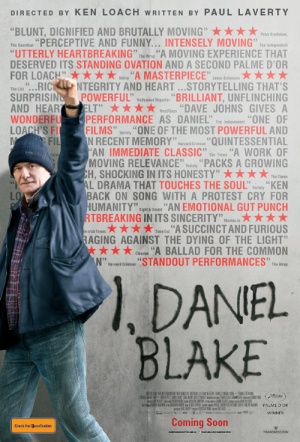
Director Ken Loach is a champion for people who rarely have one in the field of cinema. Hell he is a champion for people who rarely have one in broader society, let alone the arts. I, Daniel Blake (2016) is as indignant and timely a film as the 80 year old has ever made – crushing, empathetic and infuriating. In the screening I was in, you could feel the energy pulsing through the audience as each injustice was wrought on the characters. The film sees Daniel Blake caught in the confusing maelstrom of the welfare system in England. A situation that leaves an honest man barely able to eat or get by.
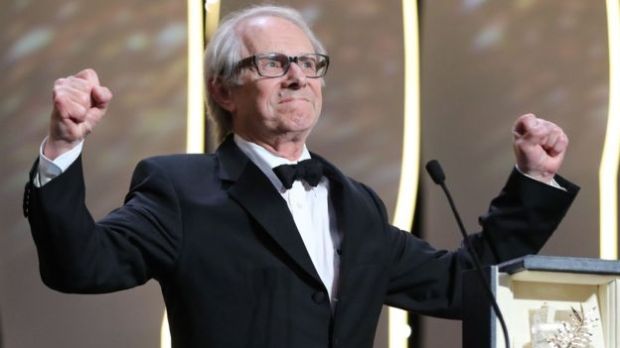
The great Ken Loach accepting the top prize at Cannes
Whilst the film is very specific to England, it confronts issues that also affect working class people in Australia as well as elsewhere. Conservative governments, fit to burst with privilege, see humiliation as an acceptable deterrent for welfare. They set out to frustrate those who desperately need help into abandoning hope because of the ‘system’. The film achingly depicts how state structures are used not just to humiliate, but to totally dehumanise those who most need the exact opposite in our society. The blame for this is squarely laid at the feet of conservative power, with their obsession for privatisation and savings above all else. Champions of ending welfare, they have never experienced hardship, so they can simply not fathom how others have. But all this is not achieved through staid or even generally depressing means. At the heart of the film is the (platonic) relationship between Dave Johns’ Daniel and Hayley Squires’ Katie. A single mum who Dan helps to get by in shocking circumstances. The heart and camaraderie of those in our society who have the least is one of the most uplifting elements of a film that for the most part is quite the opposite.

Verdict: The most important element of Loach’s filmmaking and worldview is his affection and respect for those he is depicting. I, Daniel Blake shows his sharp eye can turn equally to the oppressive mechanism of the state and the real people who are crushed by it. A quietly devastating film. Longneck of Melbourne Bitter
Related beermovie.net articles for you to check out: The Angel’s Share and Jimmy’s Hall.
Like what you read? Then please like Beermovie.net on facebook here and follow me on twitter @beer_movie
Shin Godzilla
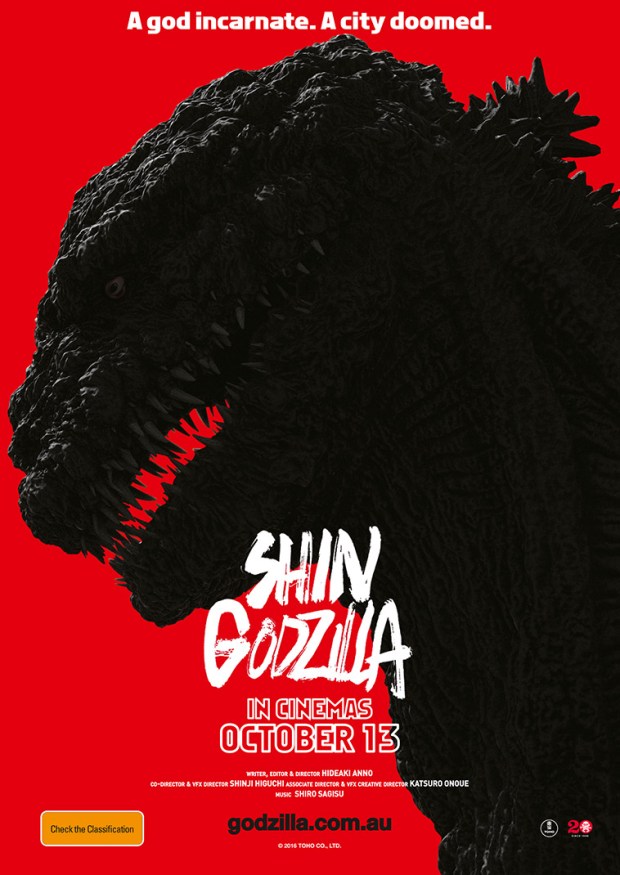
There are plenty of issues with the world of cinema in 2016. But it is hard not to be a little optimistic when a new Toho Godzilla flick gets a good cinematic run, joining the western Godzilla franchise that Gareth Edwards kicked off a couple of years back. Personally I could handle two Godzilla series running parallel for years to come.

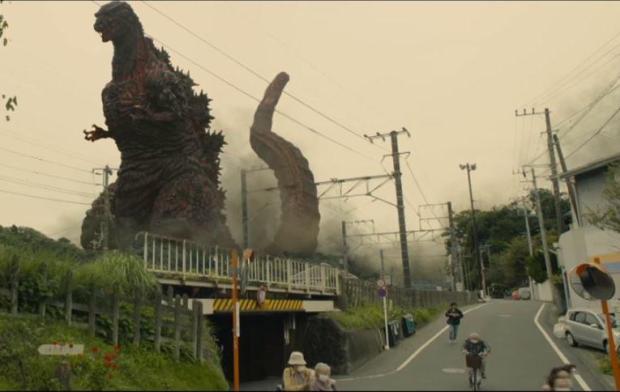
Mo-cap work on Shin Godzilla
Shin Godzilla (2016) is the first Toho Godzilla film since Godzilla: Final Wars (2004). The film is a reboot, taking place in a modern day Japan that has never faced the beast before. Especially early on, this is a manic film. The opening 15 minutes is a cacophony of dialogue, characters, places and meaningless government taskforces. Although impossible to follow, this sets up what is at the heart of the human plot elements – a deep dive into the bureaucratic and ministerial response to a disaster. The monster arrives early, looking far from how I expected it to, but clearly evoking Godzillas past. Coming so fast on the heels of the relatively popular and well received American incarnation, there was a fear that Shin Godzilla could lack that distinctive Toho identity. The appearance of the main attraction is one of many pieces of evidence that prove we shouldn’t have been concerned, and that Toho have no interest in changing how they have always brought the character to life. Whilst the vibe of the monster is similar to what the company has given us previously, the evolving nature of the character is a great asset. The monster evolves as the film progresses, giving a different visual look, different powers and representing a different challenge to its human combatants. So whilst the film only features one monster, it essentially functions as a few different ones. Also nicely done in the plot is how the action escalates. The first extended military engagement is a highlight, the cool progression of weaponry brought to bear on the creature who happily saunters through it all. However the film does have too many stretches where Godzilla is dormant, which sucks a fair bit of the life out of the film.
If there is one moment that you will know for sure if Shin Godzilla is for you, it is the first appearance of the monster. Bug eyed, low to the ground and reminiscent of film monsters many years past, it is quite a unique thing to see in a 2016 cinema. My jaw swung open and I immediately fell in love with what this film was doing. But I could understand people rapidly assessing what they had gotten themselves in for as they copped a look at that. The monster is reminiscent of the rest of the film, both stylistically and thematically. Many elements of the film, the characterisation and destruction, share a schlocky, delightful throwback vibe to them. The mo-cap/CGI rendering of the monster mimics the man in the rubber suit vibe of films past, rather than the slick sheen of American iterations. Understandably given the ongoing horrors of Fukushima, nuclear concerns are situated at the heart of the film thematically. Complementing that focus are issues around laboured governmental decision making and the impact that has on making already dire situations even worse. Questionable international relations are also evoked as the USA decides, more or less unilaterally, to nuke Tokyo. The film is situated intelligently in the 20th century history of Japanese militarism. You can feel the weight of decisions made to take up arms and engage the might of the armed forces, the pall of WWII hanging over them. And of course the most important takeaway, as with all Godzilla films, is that “man is more frightening than Gojira”.
Verdict: Shin Godzilla is a proud throwback, not concerned with delivering a similar experience to what Edwards and co brought to screens. This is a film that will delight fans of the earlier Toho fans, and may also garner new ones with the astute social commentary complementing the schlock. Pint of Kilkenny
Related beermovie.net articles for you to check out: King Kong and Avengers: Age of Ultron.
Like what you read? Then please like Beermovie.net on facebook here and follow me on twitter @beer_movie
Worth Watching September 2016
Bit of a mixed bag for September. A couple of new releases were duds, but overall the year continues to improve with a bunch more excellent new releases. I also dug further into the filmographies of a couple of directors I really like, such as Spike Lee, Herzog and a few more, which yielded really good results.
Worth Watching
- Grace and Frankie Season 1 (2015), Marta Kauffman & Howard J. Morris – Four great characters at the core. They are a touch broad at least initially, but they have a lot of texture to them by the end. Not simplistic in what it’s saying. The two men coming off as assholes at times is a good approach. Very funny, but never neglects the complexity of the situation – the sense of loss that abounds basically everywhere. Not all quirky old lady buddy comedy. The performances are all good, though Lily Tomlin is the clear MVP bringing a hilarious spark to Frankie, a character that could have been a caricature. Late in the season, it really gets its patter, timing and extended cast of characters down.
- Perfect Strangers (2016), Paolo Genovese – An interesting enough twist on the dinner party where secrets are exposed subgenre. A smartphone based plot makes it a modern feeling update. A charmingly performed avalanche of characters, though most of the performers are excelling at being distinctly unlikable. Even when it goes some obvious places, it does so with charm. Has a mix of poignancy and silly comedy that works pretty well. Takes a bold choice on the ending that initially frustrated me, but really made the film linger in my mind.
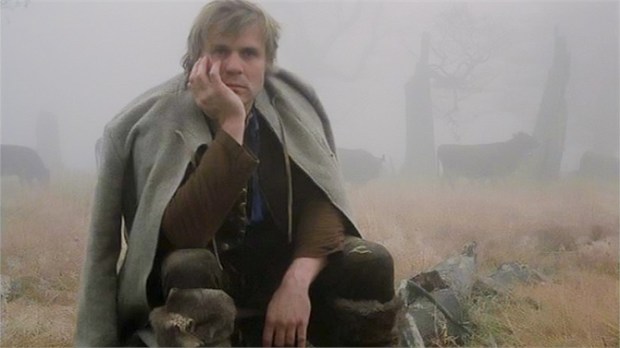
- Heart of Glass(1976), Werner Herzog – This very early Herzog feature screams 70s Euro arthouse with long dialogue free stretches, opera etc. But it’s also distinctly Herzogy with the oblique voiceover referencing both apocalypse and renewal, and the kinetic stock footage of nature cut in. A world of superstitious villagers, a soothsayer and a lost glass recipe. At times hard to take in, but the sense of chaotic confusion and desperation amongst the villagers is well conveyed. Also some really good sequences of artisans at work. Liked it a lot, though its ethereal notions may frustrate.
- Bad Lieutenant: Port of Call New Orleans(2009), Werner Herzog – I loved this. Perhaps the best distillation of Herzog’s unique worldview in a fictional film. Follows Nicolas Cage’s broken, desperate, corrupt, addict of a cop in post-Katrina New Orleans. Cage is excellent, bringing an appropriately grotesque physical presence, lumbering and hunched. His performance is all tics, wild eyes and comedic timing, which is exactly what the film calls for. You really ride with the character the whole time, all the ups and downs. The supports in Val Kilmer, Xzibit and Eva Mendes are also really good. The score is great too, enhancing the dirtiness and atmosphere of the film. But amidst all the randomness is a simple crime story structure – cops running down leads, interviewing suspects. The dark descent of a man is a common theme of Herzog’s. This film tracks it better than his more lauded efforts.

- My Soul to Take(2010), Wes Craven – Certainly lesser Craven, but the man just knows how to make an interesting slasher. A split personality killer returns 16 years after his apparent death, slaying kids born on the day he died. Craven always subtly tweaks the genre. Here the film toys nicely with the notion of whodunit, which is not really a slasher hallmark. Frank Grillo has a good presence for a cop whilst the teens are all good cipher characters. One of a few late films where Craven started to mix in elements of the teen film, relatively well too.
- Misery (1990), Rob Reiner – A fantastic, contained psychological thriller. In some ways a preview of where obsessive fandom would be 25 years later with an author held hostage by a super fan. There are great performances. Obviously from Kathy Bates, but Caan works off her in a really great duo. It’s awesome to see Lauren Bacall pop up too. The film escalates really well, as Bates’ character reveals herself. There’s some very dark humour and the darkness spills over early in a great scene where she finds out he killed her favourite character. It’s a cerebral game, as he starts to toy with her. And it gets vicious toward the end. Even though it mostly takes place in a single room, it’s interestingly shot with care given to camera placement and big moments punctuated by zooms on to character’s faces. Annie Wilkes is a great character and Bates brings her to life strikingly.

- Tunnel (2016), Seong-hun Kim – Tense Korean genre effort with a deliciously simple premise – dude gets stuck in a tunnel is basically it. The film has some great special effects. The outside/inside structure works really well. Interestingly it is the big, effects laden set pieces that work the best, as opposed to the quieter character moments. It perhaps doesn’t all quite come together. On a plot level all of the characters and institutions make too many unrealistically dopey decisions, and it foreshadows the shit outta some stuff. The soundtrack is distracting and used at a lot of unnecessary moments too. And it never really captures the claustrophobia of the situation. But there is one exceptionally emotional moment, carried by Doona Bae in the lead female role. A few of them hit hard late in the film actually, which meant I found myself utterly invested towards the end.
- The Resurrection of Jake the Snake (2015), Steve Yu -Taps into the psychology that made him so great as a wrestler. Gives you an early, very emotional, glimpse of his fall. Also gets to the fundamental lifestyle/career of a pro-wrestler that makes them addicts of all kinds. A dark fuckin life has left Jake Roberts a broken down dude. At times it does feel a little like an infomercial for DDP Yoga and it gets a little repetitive. But more of it is a really great portrait of an addict and addiction. Moments like seeing a man realise he’s been a really shit father, just like he always promised himself he wouldn’t be, are powerful to watch.
- Crooklyn (1994), Spike Lee – A great portrait of an African American neighbourhood, accompanied by a perfectly selected soundtrack. The kind of film that reminds you why Lee is such an important director. Generally never see neighbourhoods like this onscreen. Focuses in part on the struggle of artistic pursuit in the face of brutal societal monetary pressure. But is more just a collection of one family’s tales over time, rather than anything particularly plot-focused. There are some very emotional beats toward the end though. The characters grow on you. No clumsy setup, is just that by the end you are totally on board with them.

- Girl Asleep (2015), Rosemary Myers – Great to see films like this being made in Australia. Stylish as fuck. Shot in 4:3 and delightfully framed. Just the right side of Wes Andersony, aka not annoying. Performances are all good but Bethany Whitmore is exceptional. The whole film perfectly captures that time of life, of being 14 going on 15. Such a charming film, I can’t really imagine people not loving it. There is a long fantastical detour, which could jar or feel like a throwaway. But here it amplifies the themes of the film really nicely.

- Cigarette Burns (2005), John Carpenter – A ‘Masters of Horror’ entry. Interestingly written by film critic Drew McWeeny. The loving film nerd touches in the script are one of the major positives in this pretty minor, albeit scary and fun, effort from a legend. A film about film, the opening line referring to the magic of the medium, the threat coming from a mythical haunted film as well as various references to festivals and archives. Also considers the lasting effect that a film can have on people, as well as the form and practice of horror filmmaking. All of which is in the script, not necessarily the filmmaking. The conclusion goes some schlocky, gross places, perhaps struggling to pay off what has been set up.
- Midnight Special (2016), Jeff Nichols – A sci-fi road film erupting out of a Texas of cult-like conservative Christianity. There is a great sense of mystery as a kid deity is kidnapped by his dad and they race down highways with both the church and the feds in pursuit. It is really well performed. Child lead Jaeden Liebherher, Joel Edgerton, Michael Shannon and Adam Driver in what I think is his best performance yet. It’s not a story dripping in originality. But it takes sci-fi tropes and turns them into a mediation on the nature of being a parent. The film also ponders unconventional forms of parenting, such as fostering, and the struggle of sending your child out into their own world. It is rare to see these themes examined through a unique prism such as this. Nicholls brings a lot of craft to the film, and the score is incredible. Spooky, melodic and driving. One of the year’s best.
- Sisters (2015), Jason Moore – A patchy effort. But especially in the first half there is some very funny scripting, not hurt at all by the fact it is Amy Poehler and Tina Fey delivering it. Taps into nostalgia for childhood, for your stuff and formative experiences. Their connection from years working together means you buy them as sisters. There are some great comedic performers in supporting roles, such as Kate McKinnon and Maya Rudolph, though they are a little wasted. The second half is very, very rough. Nowhere near the charm of the first not to mention Fey’s usual racial blindspots really come out.
- The Red Turtle (2016), Michael Dudok de Wit – You won’t see anything else like this bold film in cinemas this year. An essentially wordless shipwreck film with some of the fantastical mixed in. Those fantastical elements are a sightly mixed bag and they contribute to the film dragging a little through the middle. But they also provide some of the film’s most poignant moments. The soundtrack is great, particularly in the way it interacts with the very old school textural animation. The storytelling is a little off at times, particularly the second half where it meanders and goes some strange places. That is definitely a minor quibble though.

- Life Happens (2011), Kat Coiro – Chose this because I dig the cast, in particular Krysten Ritter and Rachel Bilson. The latter is ok, but doesn’t have all that much to do. But Ritter (also on co-writing duties) is one of the chief reasons to tune in. She really convinces and helps the film to convey just how fuckin hard it is to be a parent. Cool to see a single mum as the lead in a rom-com. Some of those more straightforward rom-com elements are a little cloying, with male lead Geoff Stults not able to match Ritter’s charisma. But the astute consideration of being a parent and how that changes you, makes this different enough from the norm to be worth recommending.
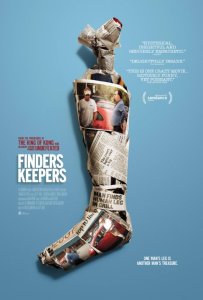
- Finder’s Keepers (2015), Bryan Carberry & Clay Tweel – An absurdist documentary that starts hilarious and gives way to a portrait of sadness. Set in a very southern, ‘redneck’ world, where everyone in town knows the fourth generation mortician. The ‘man finds a severed leg in a bbq he buys’ pitch gives way to an examination of guilt and family issues at the heart of the story. There is some nice examination of how class issues play out in small towns and the film comes with a readymade villain in the deluded and greedy Shannon (who finds the leg and sees that as his big break into stardom). It feels stretched at times, but there is enough thematic weight here to maintain interest.
- Kubo and the Two Strings (2016), Travis Knight – Ethereal yet tactile, both in looks and plot. There are some straight up horror elements to darken the fantasy tropes. The voice cast is over-familiar in a distracting way. But this is a rip-roaring and funny adventure film. Combines the jokiness of a Western style animated film, with the quest based structure of fantasy fiction. Love the ending too, taking a totally different tact to the big battle. A film full of incredible craft.
Not Worth Watching
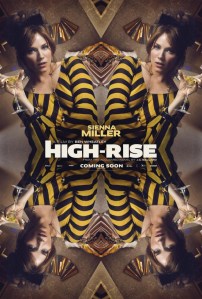
- High-Rise(2015), Ben Wheatley – Rubbed me up the wrong way from the very beginning. Feels far too deliberate, as well as visually uninteresting. Actually as far as I can tell, Wheatley brings very little to this at all. Takes Ballard’s already unsubtle piece and makes it blunter. Though managing to have less to say at the same time. Luke Evans is woefully miscast, Hiddleston is decent whilst Sienna Miller and Elisabeth Moss give the film’s best performances. Narrative doesn’t build and surge as it should. Rather it clunks and lurches, which is a large part of the reason it’s essentially toothless. Takes the more (potentially) schlocky elements of the book and makes them surrealist instead. A choice that doesn’t work.
- Bernard-l’hermite (1930), Jean Painleve – Can tell this is an early work of his. No real connections between the footage and any thematic consideration. Using stark imagery to suggest something monstrous. There is manipulation in all documentaries. The issue is that with Painleve it often, for example here, feels exploitative.
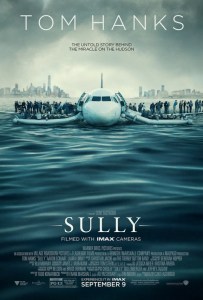
- Sully (2016), Clint Eastwood – This is a totally flat effort. Plainest possible telling of a story that is unexceptional, at least in Eastwood’s hands. The director is not able to articulate onscreen what makes the actions of these people at all remarkable. The approach gives no thrill, no sense of the terror. All we get are these strangely evil, and inept investigators culminating in a comical public hearing where the reveals are meant to take our breath away. But they barely elicit a shrug. The awful fuckin dad joke the film ends on sums up the movie really.
- Superman/Batman: Apocalypse (2010), Lauren Montgomery – These films have a strong sense of assuredness and this one is no different. That is coupled with a good sense of place, the working class docks of Gotham for example. However a lot of that disappears when the film heads off-world for a lot of the run time. These less grounded sequences feel rushed and the fantasy moments don’t feel anywhere near as weighty as they should. The film also only works so-so as an intro for Supergirl. There is much to like, the dichotomy of the two titular characters is really strong and some of the action is really clearly & physically conveyed. But the issues outweigh the good unfortunately.
If you only have time to watch one Girl Asleep
Avoid at all costs High-Rise
Related beermovie.net articles for you to check out: Worth Watching September 2015 and Worth Watching September 2013.
Like what you read? Then please like Beermovie.net on facebook here and follow me on twitter @beer_movie
Los Exoticos

I have always been a wrestling fan. There has always been an allure to the over the top storytelling and athleticism that the ‘sport’ brings. A unique blend that when done well, is hard to match for pure entertainment. However something that myself and many other fans of wrestling often struggle with is the problematic portrayal of homosexuality (and basically all minorities actually) in the art form. This is based on my wrestling consumption which has been 99% American. Los Exoticos (2013) is a documentary glimpse into the tradition of drag wrestlers, or exoticos, in Mexico, a much more positive approach to the portrayal of minorities in wrestling.
 Mexico, along with the USA and Japan, is one of the big three wrestling nations. Los Exoticos does an excellent job of outlining the integral place of the exotico tradition in Mexican wrestling culture. The makeup and character of an exotico is likened to a Luchador’s mask, which is a powerful symbol in Mexico (luchadors often square off in high stakes ‘mask vs mask’ matches, where the loser is never permitted to where a mask again). The film also contains a lot of great historical and stylistic analysis of the exoticos. Where they fit in to wrestling and the evolution of the form as societal attitudes changed, with more overt acknowledgements toward homosexuality. Though the open embrace of these performers, the fact that they compete not just amongst themselves but against masked luchadors and are respected as athletes, shows homosexuality is much more acknowledged in Mexican wrestling, the film does not shy away from the homophobia (both historical and contemporary) that these men suffer. We see that they are subjected to more sustained abuse from the crowds, specifically focused on their sexuality. However the telling of the film is a little workmanlike. It meanders along, going down on tangents that are not well integrated into the core themes of the film and there are long sequences of footage that are not explained or examined. It is not bad per se, just a little plain.

Los Exoticos is at its best when discussing the connection of the exotico tradition to gay identity. It seems that it is a rite of passage of sorts for gay Mexican wrestlers to perform as exoticos. Whilst previously, many exoticos were straight (and a number of older, straight wrestlers curmudgeonly complain about the current status of exoticos, with a fair bit of ‘back in my day’ style muttering) nowadays there is a strong connection between homosexuality and performing as an exotico. Much of their in-ring work relies on this, playing on notions of gay panic, with lots of kissing of opponents for example. As well as this, the film illustrates the importance of exoticos to the broader LGBTQ movement in Mexico. Their prominence, ability and general acceptance in a traditionally heterosexually dominated realm is a powerful piece of symbolism. Interviews at a gay rights rally show the inspiration these performers provide for a lot of members of the community. One of the great joys of good documentary filmmaking is having your worldview expanded. Even as a lifelong wrestling fan, I was not aware of exoticos and the role they played in Mexican wrestling, not to mention their courage and dynamic wrestling ability. To gain an appreciation for all of that through the film makes it easy to forgive some of the deficiencies in the filmmaking.
Verdict: This film is a must watch for anyone interested in wrestling or sexuality whatsoever. The filmmaking itself is perhaps average enough to mean that if you don’t have those particular interests you could give it a miss. However give it a shot and I doubt you will be disappointed or come away without a new appreciation for these wrestlers. Stubby of Reschs
Related beermovie.net articles for you to check out: Songs for Alexis and Gayby Baby.
Like what you read? Then please like Beermovie.net on facebook here and follow me on twitter @beer_movie
Seven Samurai

Akira Kurosawa’s Seven Samurai (1954) was perhaps one of the first ‘world’ films to really break out. Especially 5-10 years ago this was a film that budding cinephiles yearned to see and talk about. It also inspired the much loved American-west set remake The Magnificent Seven (1960) which would further cement the film’s ongoing legacy. However the intimidating run time (well over three hours) and the fact there are just so many damn films to get to, meant I only recently checked this one out for the first time.
Seven Samurai begins with a plot structure the film innovated, but which by now you would have seen a million times. A village, under repeated assault from bandits and realising the existential danger a post-harvest raid would pose, sends representatives into the city to attempt to locate some samurai and convince them to defend their homes. Though not without its charms, this opening section is a bit of a slog, laboured to the point it can feel a little boring. There are some nice comedic moments though and Kurosawa excels at establishing the sense of a land of great poverty which establishes the stakes for the entire film and the importance of the central task. However once the recruitment starts picking up steam so does the film, and things really start to zip along. This first act also establishes a social dynamic that is one of the film’s two sources of tension (the other, more obvious one being the crew of murderous bandits). The villagers are in a bind. They are utterly reliant on the samurai, needing to pay them for protection. But they are also terrified of them with fears of a murderous or sexual assault rampage sweeping through the village. The titular seven are a fun, unique crew. Makes the viewer want to see how they will interact and if their attitudes can co-exist enough to achieve the task at hand.

The script is responsible for establishing a lot of this, achieving the difficult task of bringing out the dynamics of the individual members and how they function as a troupe. These individual aspirations and group dynamics also evolve really well as the film progresses. Similarly, the writing of the long battle stretches, especially how the tactics evolve under pressure as the situation changes, makes for some of the best ‘war’ sequences ever. The second half of the film is a succession of military style training, tactics and brutal fights that makes plain why this film deserves its classic status. It’s also quite a vicious, murderous film. A great example of how a film foes not have to be bloody to be really violent, and at times barbaric. It’s also a film about process. Preparations, tactical planning, back and forth discussions of strategy. Again all written with a clarity that makes it super engaging and immersive. The writing is responsible actually for it being a much more immersive portrait of war than any other example of the genre.
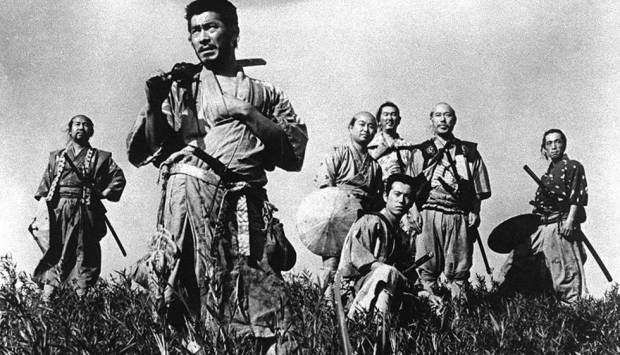
The film also operates on numerous levels. As a siege film it is tense and genre heavy. It is saying societal level things about militarisation, as well as the role of a government to protect, to lift up and also to tax. But then it is also charming, featuring witty jokes and commenting on new love and the maintenance of it. Much of the film is stylistically way ahead of its time, still feeling fresh today. The use of slow motion when someone dies is an incredible flourish that has been mimicked ever since. Even just the use of close-ups during conversation, adds so much to the weight of individual scenes. As well as the style, the entire film is enhanced by the presence of Toshiro Mifune. Here he proves why he was one of the greatest movie stars that ever lived. He had a presence to him onscreen that transcended, though was heavily reliant on, mere acting ability. Able to balance the hero and fool elements of this character like few others would have been able to, Mifune’s Kikuchiyo becomes the clear charismatic anchor point of the film.
Verdict: Especially after the first 45 minutes, Seven Samurai is a feat of very crisp, clear storytelling. Time has not blunted the film at all over the past 60 years. It is still a vicious, cerebral and immersive examination of warfare and community that deserves its place in any canon of truly great cinema. Longneck of Melbourne Bitter
Progress: 142/1001
Related beermovie.net articles for you to check out: Dawn of the Dead and Yojimbo.
Like what you read? Then please like Beermovie.net on facebook here and follow me on twitter @beer_movie
Scream

Wes Craven and the slasher just go together and he is probably the most creative exponent of the subgenre we have ever seen. He combined the prototypical teen slasher with supernatural elements in A Nightmare on Elm Street (1984), went meta with the same series in New Nightmare (1994) and even his lesser efforts such as Shocker (1989) or My Soul to Take (2010) toy with the genre in some way. However of all his films, it is Scream (1996) that is his most radical reinterpretation of the formula.
From the very start, Scream is about the dual goals of expressing a love for slasher films as well as delivering a bloody good one. The film opens with Drew Barrymore’s character just about to watch a scary movie. A phone call leads to a deadly game of horror film trivia and one of cinema’s more memorable opening sequences. From there the film shifts into a teen slasher with Neve Campbell on one front, and an interested media helmed by Courtney Cox on the other. There are the general tropes of partying and cool kills (getting mashed by garage doors an obvious highlight of the latter). But the media interest and hype around the killings also adds another dimension to the film. However most notable is the constant allusions to, and invoking of other horror films, including Craven’s earlier work. The film sticks hard to the high concept premise that it sets up and explores ideas through this such as the notion that a life is like a movie. Plus unlike some other meta-horror films, this one is constantly respectful toward the genre. At times it plays as exceptional homage to the genre’s greatest hits, such as the close-ups of people in the throes of terror. The meta approach to the film also means it is laden with references, that I am sure would open up more to me on a second viewing. There is a sense though that the film slightly loses the narrative thread a little as it goes along. The finale is perhaps not as well set up or magnetic as it could have been. Having said that, the final twist is a gem, especially if you have somehow remained spoiler free for the past 20 years.
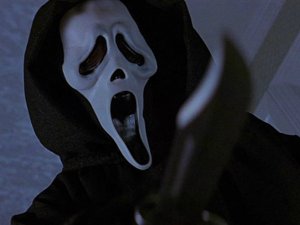 The greatest achievement of Scream is the script, which may be the best horror script of all time. It is damn hard to be both as meta and as effective in the genre as this. Not to mention the level of tension achieved while all this is going on is quite remarkable. The choices made in terms of doing what’s expected are a pretty masterful manipulation of the audience. At times it’s exactly what you are expecting, whilst at others the expectation is totally subverted. It is a great way to engage with horror clichés. The assured hand of Craven is all over the film, with numerous small choices enhancing the overall experience a lot. The casting is nailed, with a funky mix of Neve Campbell, Drew Barrymore, Courtney Cox, Rose McGowan, Henry Winkler and David Arquette combining for loads of fun, with the necessary acting chops to back it all up. The ensemble is important but Campbell is the clear star. It is a very good performance. She looks so tired and beaten down in a very real way by how her life has been progressing, and brings the audience along as she sinks even lower. The score (recently re-released on vinyl) is excellent, and fits into the overall approach of reverence to the genre’s past coupled with innovation. There is a real A Nightmare on Elm Street vibe to this element of the film, with a fair hint of Psycho (1960) too. The way that both score and sound design are used to punctuate everyday moments, with whooshes and emphasis creates great tension, without ever being cheap about it.
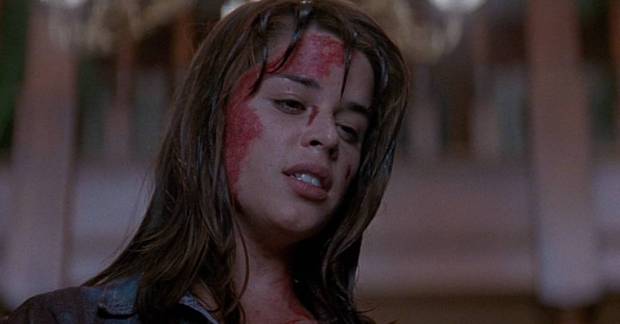
Verdict: If Scream is perhaps slightly below the standard of Craven’s very best work, that speaks more to the quality of his output than the film specifically. However it is one of his most interesting films, and as far as reflective and meta-horror goes, this is a classic. Pint of Kilkenny
Progress: 141/1001
Related beermovie.net articles for you to check out: A Nightmare on Elm Street and Never Sleep Again.
Like what you read? Then please like Beermovie.net on facebook here and follow me on twitter @beer_movie
Worth Watching August 2016
August turned out to be an overwhelmingly positive month, with only one dud among the whole lot. In fact there are a few of my absolute favourites of the year in here, probably all of them from quite unlikely sources.
Worth Watching
- Lights Out (2016), David F. Sandberg – Has its issues but I liked this. Terrifying, though the scares are gimmicky and repetitive. Well performed, especially by Teresa Palmer who carries the film. The attempted mythos is a little silly but there are more original things here than average. The film gives the audience enough credit to do something really bold and shocking with the ending too. It also retrospectively gives the rest of the film more meaning and emotion.
- Point Break (2015), Ericson Core – In time this film will rightfully claim its place in the canon of good-bad movies. The dialogue is otherworldly in its awfulness. You will laugh a lot. None of that was intended by the filmmakers, but it is absolutely hilarious. It’s gloriously dumb. Extreme sports action sequences linked together with grizzled Ray Winstone mugging. You can’t get better than that. There’s also a healthy dash of spirituality seemingly mined from the depths of high school instagram accounts. Perhaps the worst dialogue ever. Iconic.
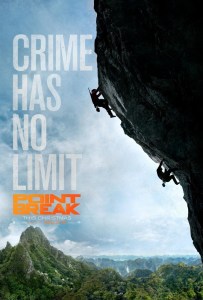
Lolz
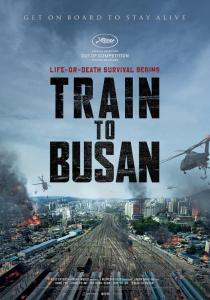
- Train to Busan (2016), Sang-ho Yeon- Stunning. One of the films of the year and perhaps my favourite zombie film ever. Creepily performed and well brought to life. The plotting is pitch-perfect. The way the events of the film rise and fall, escalating really nicely. Some of the character stuff early does not sit quite right. But over time that becomes as great a part of the film as any. Fuckin emotional too. Meaningful character arcs carved out in the midst of the zombie induced chaos. And that chaos is full of really awesome action set pieces that never lack clarity.
- The Hitch-Hiker (1953), Ida Lupino – Opening title card is super modern. Sucks the audience in, warning that the facts are real and someone in the audience could be behind it. Dripping in style from the credits on, creative about what the frame encompasses, use of shadow and constrained location of a car. Film brings a pretty terrifying serial killer hitch-hiker to life through simple, clean and dark storytelling. The psychology of the villain, his exercising of what he considers to be masculine power and the thrill of control is reminiscent of trends in crime fiction that would follow many decades later. Taut filmmaking with great performances, especially from William Talman as the villain.
- Spotlight (2015), Tom McCarthy – I wasn’t sure how I would go with this, but it is as good a straight up drama that I have seen in a few years. Tells a story quite specific to Boston and the very deep, problematic ties between the church and numerous aspects of the community (police, lawyers, media). Is also an excellent portrait of investigative journalism. The swirling build of an investigation, the process that has to be stepped through and devotion of those inspired by it. The huge ensemble cast is really exceptional and like he always seems to, Mark Ruffalo stands out. But they are all brilliant. Feels like a very true to life film. There’s a sense of timing to the film, the way the editing, dialogue and score all work together. Pretty much as good as pure storytelling on film gets.
- Women He’s Undressed (2015), Gillian Armstrong – This tale of an underappreciated (at least these days) early Aussie costume designer is a mixed bag. The treating of the identity of his male lover as some great mystery, or the use of a stand-in for unnecessary commentary from the subject were both unwelcome. But the straighter talking heads stuff, focusing on his career and adventurous life, is great and informative. For film fans there’s also some really good delineation of the differences between the classic studios. Also the history of homophobia in Hollywood is examined. Ends up being a portrait of a life in Hollywood vaguely filtered through Orry Kelly’s life, but capturing the up and down of his career quite well.
- Penguins of Madagascar (2014), Eric Darnell & Simon J. Smith – Totally disposable, but a lot less annoying than plenty of other animated efforts these days. Starts off with a cameo by Werner Herzog playing himself which is as awesome as it sounds. Also a film where I suspect a lot of this stuff would be going over kids’ heads. Not all that original, but has a nice anarchic spirit to it. Randomness to the humour lifts the stock standard plot. And there are plenty of chuckles to be had.

Werner Herzog as he appears in the film
- Justice League: Doom (2012), Lauren Montgomery – Certainly not a hand-holding origin story as we are used to from superhero films. Though all the characters, especially Cyborg, get nice character moments toward the start. The scripting is quite funny, heavy on the cheesy wisecracks (which are mainly endearing). The story structure is simple but inspired, with one baddie pairing off with each goody. It’s well pieced together too, there are heaps of story strands but the storytelling is really clear. The visuals are great too, action sequences and shape-shifting creatures.
- How to be Single (2016), Christian Ditter – I like both Alison Brie and Rebel Wilson onscreen, especially the former. Watched this whilst sick and it was the perfect soothing film for that. Plus the female to male character ration is like 4:1. Which is always a good start in a comedy. There’s no real sense of story, but all of the cast are pretty charming. Forgettable, but totally fine.
- Suicide Squad (2016), David Ayer – This is not a well made film. It’s a mess. Almost an absurd one. I liked it though. Enough of the characters are fun. It’s really well performed by basically everyone. Though Leto’s Joker is essentially unwatchable. Does some interesting things with the villain. Interesting that both the big bad and the main hero who makes the decisive action are female. But the use of soundtrack is a major misstep, even if you can see what they are going for. And the central mission of the film is too long and often dreary. This is not good work by Ayer. But others make it worthwhile. Though it does have some legit problematic elements.

- National Gallery (2014), Frederick Wiseman – Opening (and closing) on silent shots of paintings, essentially recreating the experience of the gallery. A wonder of editing, moulding footage together. Not as stagnant as I expected, the camera dynamic in conversations. The combination of minutiae and story means it’s not at all boring. Storytelling comes both in how the film uses images to convey meaning and how the paintings do the same. A great window behind the scenes of an institution like this.
- Parks and Recreation Season 6 (2013), Greg Daniels & Michael Schur – Haven’t watched the show for a few years, but within literally 3 minutes I felt right at home. A hilarious show, with some of the best comedy characters ever. So many of them too, Ron Swanson, the incredible Leslie Knope and Aziz Ansari’s Tom Haverford who really shines this season. Also great guest stars such as Tatiana Maslany and Kristen Bell. Perfectly written – silly, cutting and damn funny.
Not Worth Watching
- Eddie the Eagle (2016), Dexter Fletcher – I was in the mood for something light, but this was very plain. The trailers that made it feel like a remake of Cool Runnings (1993) did not lie, because it hits a lot of the exact same story beats. Egerton is hammy, not helped by constant close-ups of his face mugging being the main storytelling technique. Nothing is really great, the script and score both average whilst the use of CGI on the jumps should have been avoided. Aiming for a trumped up version of 80s sports films but it’s just a bit annoying. Even Hugh Jackman is muted. Never involves you in the main character’s journey or taps into the inherent tension of the sport.

If you only have time to watch one Train to Busan
Avoid at all costs Eddie the Eagle
Related beermovie.net articles for you to check out: Worth Watching August 2015 and Worth Watching August 2013.
Like what you read? Then please like Beermovie.net on facebook here and follow me on twitter @beer_movie
Fargo

More and more, I am finding that I am a sensibility guy. There are some directors whose sensibility and worldview I immediately connect to, or am enamoured with – Terrence Malick and Wes Craven being perhaps the two that most immediately spring to mind. This works both ways though, and there are certain beloved directors whose craft I can respect, but that fail to move me on an enjoyment or thematic level as much as most people. I spoke of this when reviewing Scorsese’s Casino (1995) recently, and in addition to Marty it is perhaps the Coen Brothers who connect with me the least.
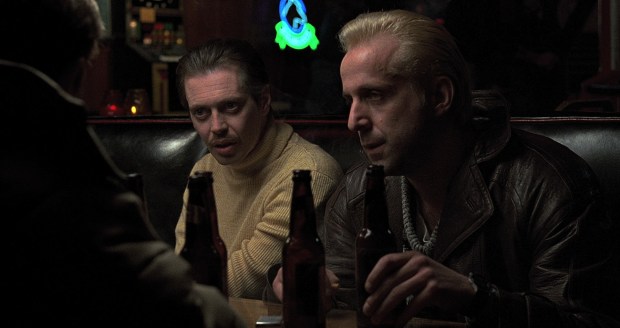
Whilst Blood Simple (1984) was their first film, it was Fargo (1996) that really vaulted the duo onto the indie map and they have never looked back. Speaking of sensibilities, the Coens have a very unique one. So much so that it is disconcerting to the viewer in its unconventionality. We are used to certain structures and beats that are rarely delivered in the order or pacing that is expected. Of course, subverting expectation is certainly not a bad thing in and of itself. But it perhaps hurts the overall impact of this film, particularly on a purely narrative level. The first period of the film is focused on William H. Macy’s Jerry Lundegaard, a down on his luck car salesman looking to get rich quick through organising a kidnapping of his wife that will force her loaded dad to come up with the ransom payment that Jerry will share with his hired goons. There is a deep well of thematic complexity with this character, a normalish guy in way over his head, which forces him to forsake his family. It is not until the half hour mark that we meet Frances McDormand’s Marge Gunderson. A heavily pregnant police detective brought in to investigate the murders this scheme has wrought. The film is at its best when it ratchets up the action and violence. There’s a coldness to Peter Stormares’s hired goon that fits perfectly into the snowbound landscapes. Overall there is a weird mix to the tone. Drama and black comedy but laced with the occasional piece of heightened Tarantino style dialogue or a silly character.

Marge is a great character, immediately exceeding the somewhat dreary and languid setup of the film. Everything about the story thread with McDormand at the core elevates the film. The writing of the procedural elements offers an auteurist take on the genre tropes of crime fiction, as she runs down the various clues on the case. The character and performance are excellent examples of quirk without grating the audience. Pregnant, wide-eyed, diligent, brilliant and hilariously written and performed. The arrival of McDormand and Marge change the film totally, the character giving the film something to anchor on, settling it in a really good way. She makes the straight comedy scenes a lot funnier and the investigative angle gives the plot the purpose and conventionality it needs. Of course the focus on Jerry is not abandoned and that part of the film still feels flat. In large part that is because the character is such a weak one. The film is really ‘about’ this character if anyone. But he’s so unsympathetic, with vague motivations and that comes off as needlessly oblique rather than mysterious, and I do think the character makes the film weaker overall. The real Ned Flanders vibe coming from Macy’s performance at times didn’t exactly help bring me along either. After McDormand, Peter Stormare gives the best performance. He has this wonderful elemental presence of danger that looms over proceedings and is thankfully not overused.
Verdict: There are two ways to think about Fargo. About 30 minutes’ worth are a very good, very original lean police procedural. The rest is a dramatic black comedy let down by a weak main character in Jerry. However McDormand and the character of Maggie are so great that the film is worthwhile simply for her presence. Stubby of Reschs
Progress: 140/1001
Related beermovie.net articles for you to check out: Serpico and The Asphalt Jungle.
Like what you read? Then please like Beermovie.net on facebook here and follow me on twitter @beer_movie
Worth Watching July 2016
July was a mixed month. There were a couple of recent hyped genre releases that I was really excited for which underwhelmed. But on the positive side of things, there was a really good variety of stuff worth my time including recent big releases, docos and a few of my favourite 2016 releases so far.
Worth Watching
- Inside Amy Schumer Season 1 (2013), Amy Schumer & Daniel Powell – I quite liked this, but it took me a while to get through. Struggled with the standup interludes which are much more miss than hit. But laughed a hell of a lot at some sketches. Schumer is working through her politics through the season and some of that is a little misjudged. Unrelentingly crass which may work or not, depending on your mood.
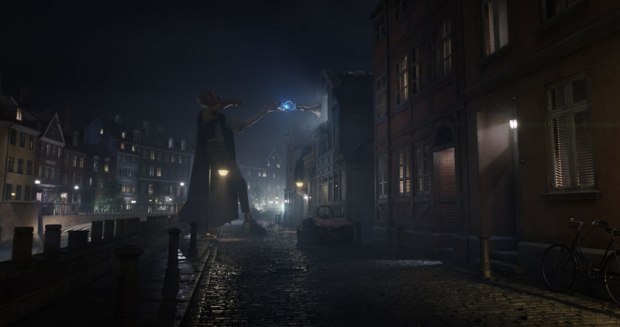
- The BFG (2016), Steven Spielberg – Plenty of the storytelling magic possessed by Dahl and Spielberg is on the screen here. Utterly charming from the very first appearance of the titular giant. Rylance’s performance is quite incredible. Has a great physicality and presence. Film looks wonderful, especially the main giant and there is also a nice fantastical bent to the rest of the environments too. The John Williams score provides an ideal accompaniment. A perfect family friendly sensibility.
- Chocolat (1988), Claire Denis – Denis is excellent at conveying a sense of place, specifically Africa, in the films I have seen. A slow film about the journey of colonialism. Told mainly through the relationship between the youngish male servant and the white French family. There are some weird vibes between some of the characters, and I’m not sure how on top of that at all times the script and performances are. The film is almost too subtle. But worthwhile in the way it captures the attitudes of day to day colonialism, rather than any attempt to chronicle the broad sweep of colonial rule. Notions of the ‘motherland’ in relation to colonialism a constant theme.
- Unbroken (2014), Angelina Jolie – So much of this threatened to be stock standard WWII fare. And plenty of the story is. But Jolie has an interesting visual style and brings a unique viewpoint to the character moments. The uneasy mixture of bravado and trepidation of young man at war is captured well. There are some really well and clearly staged dogfights early on. The conventional second half is still rendered in an engaging way. And it has one of the best of those ‘real people’ codas that are so infuriatingly popular.
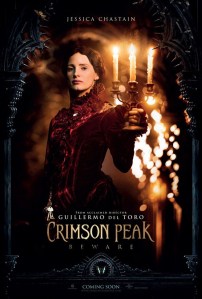
- Crimson Peak (2015), Guillermo Del Toro – After watching this I realised I really haven’t seen much of Del Toro’s work. And I need to. A visually arresting gothic tale. So much focus on sets, costumes and use of colour like we never see. The story is a touch slight. But it ends well, with an incredible sequence. And there is just so much really creative stuff you won’t mind. The score is grand and lush. The film melds the drama, romance and horror genres in a way that’s creative yet familiar. The performances from Wasikowska and Hiddleston are really excellent. Chastain gives a strange turn, but the bloody drawn out knife fight between her and Wasikowska is the highlight of the film.
- The Walk (2015), Robert Zemeckis – Something about Zemeckis and his (naïve, schmaltzy) storytelling just works for me. Can tell this has been wholly designed for a big, 3D screen. But it still did enough for me on 2D blu-ray. It’s an interesting mix of elements that work and that really don’t. Joseph Gordon-Levitt gives a good performance. The stepping through of the processes behind the stunt are strangely engaging. The romance is undercooked though and it really meanders. But then it delivers poetry in the big climax. There is too little conflict or tension for the relationships between the characters to really engage at all. A unique effort from Zemeckis.
- Goldstone (2016), Ivan Sen – Sen’s follow up to the incredible Mystery Road (2013) is another thoughtful, complex and violent effort. He is making detective stories like no one else right now. This film has so much to say about the state of our country. Perhaps it has always been like this, but the forces that keep it this way are constantly changing. The director has also composed one of the scores of the year here. Aaron Pederson brings a different Jay Swan to the screen and its fucking badarse. Sen may well be the best crafter of 3rd acts in world cinema. Here is another crushing, pitch perfect crescendo of violence and thematic resolution.

- The Mermaid (2016), Stephen Chow – Delightfully weird. Images of environmental destruction, pollution, deforestation and dolphin massacres give way to an awful special effects laden something or other. There is more visual ambition here than any other film you’ll see this year, even if not always executed well. I struggled with the storytelling sensibility for quite a while, but all of a sudden the absurdism becomes quite winning. It’s really funny too, with a very silly brand of humour. It’s very well written, laugh out loud stuff with a solid note of grand romance toward the end.
- Ukraine is not a Brothel (2013), Kitty Green – A punk vibe is brought to the very specific story of feminism in Ukraine and a societal lack of awareness of it there. A fight against the post-soviet conception of all Ukrainian women throughout the world being sex-workers. And the overriding patriarchy of the society. The film also examines the performative dimensions of protest and the intersectionality or otherwise of this particular feminist group. The complexity of the ideas are allowed to come out. Though there is a late twist of sorts that whilst shocking, is a bit contrived and risks turning it into a conspiracy film.
- Smokin’ Aces (2006), Joe Carnahan – One of the more underrated crime films of recent times. If I was going to be a smartarse I would say it’s the type of film Tarantino wishes he could make. Good patter to the dialogue. Dodges exposition with a succession of super-fast snappily written scenes of blokes in the pub or FBI meetings. Delightful hints of the absurd and black comedy impinge on the central narrative. It’s the best Jeremy Piven has ever been whilst Alicia Keys and especially Common are really great. Violent, stylish and does some interesting things with time, folding it in on itself, overlapping it. But in really clear ways. Classy schlock.

- The Handmaiden (2016), Chan-wook Park – A wild, at times silly film. But once it establishes the actual plot through-line I kinda loved it, despite the structural shenanigans that annoyed me along the way. One of the most erotic, explicit films I’ve seen in a mainstream cinema. It looks lush and artful whilst the two female leads Min-hee Kim and Kim Tae-ri deliver two totally different characters. They suck you into the mental space of the characters superbly. There’s a lot going on and a lot to take in. You can easily forgive the imperfections because it’s a singular, bold take.
- Love & Friendship (2016), Whit Stillman – Kate Beckinsale steals the show here. She connects with the rapid patter of the script and makes it sing. It’s slight, in an Austen way. And both wryly amusing in an Austen way and rambunctiously hilarious in a non-Austen way. A lot of the latter comes from Tom Bennett who basically crashes into scenes doing a stand-up routine and makes it work within the world of the film. Performances all round in addition to Beckinsale are really excellent. Hers is the most interesting character though, chasing and attaining a lot of men and sex. And ‘gets away with it’ in a way you would perhaps not expect from the source material.
- Yakuza Apocalypse (2015), Takashi Miike – Drenched in blood from the start. Some pretty shocking stuff in here at least early on when the tone is quite serious. At their best, the fight sequences function effectively as storytelling. Then after about 30 minutes the el cheapo costumes and absurdity start. At which point it’s a very different, but totally acceptable film. The storytelling is poor, but they do some interesting stuff with the mashup of the Yakuza and zombie genres.
- Star Trek Beyond (2016), Justin Lin – Lots of fun. I liked it. I wrote a full review for An Online Universe which you can check out here.
Worth Watching
- Tickled (2016), David Farrier & Dylan Reeve – Much hyped. But this is a not very good film about a moderately interesting story. Feels like it is a building to a monumental crescendo. But it just lands a bit flat. Never landed the big gotcha moment it was angling for. Also feels like there are so many missed opportunities in terms of story, motivation and theme here. States toward the end that this has been a film about power. But that is never really interrogated through the film. Which is a shame, because there is much potential here for that. Bland filmmaking, but potentially still worth a look if you know nothing of the story.
- Pride and Prejudice and Zombies (2016), Burr Steers – The first line of the whole film made me laugh. And that was the biggest highlight of the film by a mile. Nowhere near as fun as I’d hoped. Quite heavy on the gross violence, but totally bloodless. The effects tap into the fun horror vibe the rest of the film should have nicely though. In fact a lot of the composite parts are serviceable in a comedy-horror way – design, costumes and soundtrack. And the lead performance from Lily James brings a good sassy presence and comedic timing. But the tensionless storytelling and script is woeful as are the slow, undercooked and ugly action scenes.

- 10 Cloverfield Lane (2016), Dan Trachtenberg – This was a real let down. The logic of it all feels awry early and never really straightens out. The plotting and script feel underdone in the way it attempts to evoke real life events, and to an extent the first film. There is very little atmosphere created from situations that should be dripping with it. I do love the final reveal and setup for the sequel (which most seem to hate). But the journey there is laborious and just feels dreary. Hard to explain. Almost feels as if you can see the director’s brain ticking over onscreen and the whole feels over-contrived as a result.
- The Big Short (2015), Adam McKay – Wooh boy I hated this film. The styling is overbearing. Just no subtlety to anything. The OTT costumes, talking straight to the camera, music and editing are all far too blunt. Simply making bullshit finance twaddle understandable does not make a good film. The film feels like a pile of exposition as a result of this approach. Wilfully anti-humanist or interested in the plight pf people. Essentially the only thing that stands out in a positive way is Carrell’s performance. A preachy film which I think may have negative levels of people of colour or women. I expected to hate the characters in this. Did not expect to hate the filmmaking equally so though.

- Bone Tomahawk (2015), S. Craig Zahler – This favourite from last year does not fuck about with its truly gruesome opening. Really well acted, especially from Matthew Fox and a wounded, emotional Patrick Wilson who is especially good. But the script is only ok and the ‘evil Indians’ plot is one that I am pretty over. Perhaps I found the plot to be overly simplistic. Makes a late shift into horror territory, but it feels meaningless as the shift is not really earned. And it turns into gross torture porn too, with the vilest kill I’ve ever seen onscreen.
If you only have time to watch one Goldstone
Avoid at all costs The Big Short
Related beermovie.net articles for you to check out: Worth Watching July 2015 and Worth Watching July 2013.
Like what you read? Then please like Beermovie.net on facebook here and follow me on twitter @beer_movie
 Beermovie.net