SFF 2015: Slow West

Directed by the awesomely named John Maclean, Slow West (2015) is a rare festival Western. Somewhat surprisingly the film attempts to mix in a heavy dose of laughs along with the standard elements of the genre that we all know and love.
Slow West focuses on Jay played by Kodi Smit-McPhee, a young Scotsman travelling to the ol’ West to reconnect with his girlfriend who was forced to flee her homeland. The main body of the story focuses on Jay’s journey westwards across America under the ‘protection’ of Michael Fassbender’s Silas. The creation of this relationship is pretty clunky. The obvious switch from an almost silent, adversarial Silas, to a chummy father figure is not at all earned. You know it’s coming and sure enough it is simply plonked there to tick off a plot beat, rather than establishing it through storytelling. There is one interesting plot twist that comes really early on. But that is the highlight of the storytelling and does not particularly elevate the rest of the film along with it. Tonally, the film is hard to embrace as well, laden with a lot more humour than anticipated. Initially the humour felt like it was going to work. It was wry and reflected on the harshness of the environs. But it continues to get more and more shrill, culminating in a sight gag that would not have felt out of place in A Million Days to Die in the West (2014). That one was actually kind of funny, but the experience of being bombarded with more and more silliness whilst trying to care about the stakes of the plot did not work for me, and results in a film that feels far too light.

Aside from it being a festival Western, the main attraction for Slow West is the cast – Smit-McPhee, Fassbender and Ben Mendelsohn leading the way. Whilst no one is terrible, you could hardly say anyone is particularly excellent. Fassbender feels like he is just getting by being Michael Fassbendery and Schmidt-McPhee doesn’t feel like he has the gravitas to sell you on the cross-continental quest he is undertaking. Perhaps this is the script’s fault though, as the emotional setup of the film is very strange. Of the three, Mendelsohn is the best, typically looking like he is having an absolute ball as a mugging bad guy. Actually the only aspect of the film that particularly stood out to me was the score. It assists the journeying elements of the film and did a better job of conveying the adventurous westward march the men were on than the script did.
Verdict: Even a cast as good as this cannot overcome the film’s uneven tone. It simply cannot decide if it wants to be a silly Western comedy or a thriller with some real weight and emotion. Some people in my screening seemed to get a kick out of the humour onscreen, but I struggle to recommend this one at all. Schooner of Carlton Draught
Related beermovie.net articles for you to check out: SFF 2015: The Bolivian Case and CIFF 2014: The Salvation.
Like what you read? Then please like Beermovie.net on facebook here and follow me on twitter @beer_movie
SFF 2015: The Bolivian Case
It’s film fest time once again. The Sydney Film Festival is one of Australia’s biggest, and next weekend I’ll be attending for the first time since I lived there, a good eight years or so.

I have been lucky enough to be able to catch a couple of films in advance though, including The Bolivian Case (2015). This doco, focusing on a drug ring importing cocaine from Bolivia to Norway, comes out of the interesting production company United Notions. As well as a killer name, the company seems to have a unique perspective and goal in mind, based across Australia, Bolivia and the States and aiming to create challenging ideas driven cinema.
The Bolivian Case fits in nicely with this perspective, turning a story about three young Norwegian women into a discussion of justice, media morality and societal lust for tabloid trainwrecks. Even without all of that, the film would have been an interesting one – not one but two of the women escape whilst on bail, the dynamics of the ongoing case in Norway are delved into, the women fall in love and give birth in jail and there is the smarmiest, most punchable lawyer in the history of smarmy punchable lawyers. The behaviour of the Norwegian government is also examined. They seem content to leave one of the women to rot in Bolivia, whilst going out of their way to illegally assist the others escape. Occasionally, especially early on, it is a little difficult to follow who is who and keep up with the two strands of the story (one in Norway and one in Bolivia). And perhaps the two stories never quite come together entirely as it still almost feels like two films at the end. But once the characters back in Norway are built up in the same way that director Violeta Ayala does with those jailed in Bolivia, that strand of the film becomes more engaging. To the point where it possesses the film’s biggest emotional punches. The ‘action’ highlight of the film comes as one of the women, Stina, decides to flee whilst on bail, child in hand. Ayala finely crafts this period of the film, having it play like a bit of a heist or escape film.
 Another film may have solely focused on this spectacular escape, aided by shady government dealings and the media ‘paying’ to create news. The Bolivian Case has broader points in mind though. Even the escape is examined more from the point of view of what it says that a media organisation would hire mercenaries to get her out. They are essentially creating news by assisting someone to flout the laws in another country. Surprisingly, this behaviour seems to be met more or less with cheerleading in Norway, with Stina’s return apparently a triumphant one. I can understand that aspect if she proclaimed her innocence. But the way I read it was that these women were pretty clearly guilty. The film also focuses on the sensationalism that the case is met with in Norway especially when the women fall pregnant in jail. Australia has seen similar tabloid obsession in recent years, in particular with the case of Schapelle Corby, jailed in Bali for drug offences. There is clearly something universal about the plight of people, particularly young females, jailed overseas that brings the tabloid masses running. In fact the media seems able to craft the narrative of the case in Norway. One of the women is portrayed as the quiet religious girl from a rural area. The one stuck back in Bolivia is painted as the untrustworthy ringleader. The media is able to craft the heroes and the villains of the story. Class, status and even physical appearance all influence the tale that they are spinning. Which is problematic in itself, but when these artificially created notions seep into the ‘justice’ meted out in the court system, it goes from problematic to offensive. Unfortunately this kind of pre-judgement is all too common, whether aided by the media or not, in many places not just Norway.

Verdict: The Bolivian Case is a slick and timely doco that examines the seemingly universal tabloid obsession with pretty young women locked up abroad. It goes further than that though, making pertinent points about the issues of media influencing justice and the way that class and first impressions influence the way that criminals are treated. Thankfully though the film never becomes dreary or a bore to watch whilst doing all of that. Pint of Kilkenny
Related beermovie.net articles for you to check out: SUFF 2014: Freeload and CIFF 2014: Songs for Alexis.
Like what you read? Then please like Beermovie.net on facebook here and follow me on twitter @beer_movie
The Beermovie Podcast Ep 1: Paul Anthony Nelson and Ed Wood

This is something I’ve talked about for a long time, but it’s finally here. The first episode of The Beermovie Podcast. Part of the reason I haven’t been writing and commenting as much as usual has been my focus on this, so I hope you dig it. These are going to be monthly chats between someone involved in the film industry and yours truly. Each episode will focus on the work or interests of the special guest, before an in-depth look at a film of their choice.
The first episode features filmmaker and podcaster Paul Anthony Nelson. We cover off on a whole heap of topics (chapters outlined below if you want to skip to something in particular), including Paul’s films, microbudget filmmaking, the podcast Hell is for Hyphenates and finish off with a solid chat about Tim Burton’s Ed Wood. There were a few sound issues toward the end, but hopefully it’s not too much of a distraction.
If you’re keen to have a listen, you can download it on iTunes here or listen on Soundcloud here. If you like what you hear subscribe, let me know and if you can, take the time to leave a review.
Chapters:
0.00 – Intro and the slightly random question Paul’s favourite Paul Anthony Nelson film
5.34 – Paul’s highly successful podcast Hell is for Hyphenates
24.23 – Microbudget filmmaking
42.00 – Tim Burton’s Ed Wood
You can check out the work of Paul’s production company Cinema Viscera, including the films we chatted about here and his fantastic podcast Hell is for Hyphenates here. The Beermovie Podcast themesong is from Horenco. Check out his work here.
Related beermovie.net articles for you to check out: Forgotten Filmcast Episode 22 (featuring me) and The Film Brief podcast.
Like what you read? Then please like Beermovie.net on facebook here and follow me on twitter @beer_movie
Mad Max
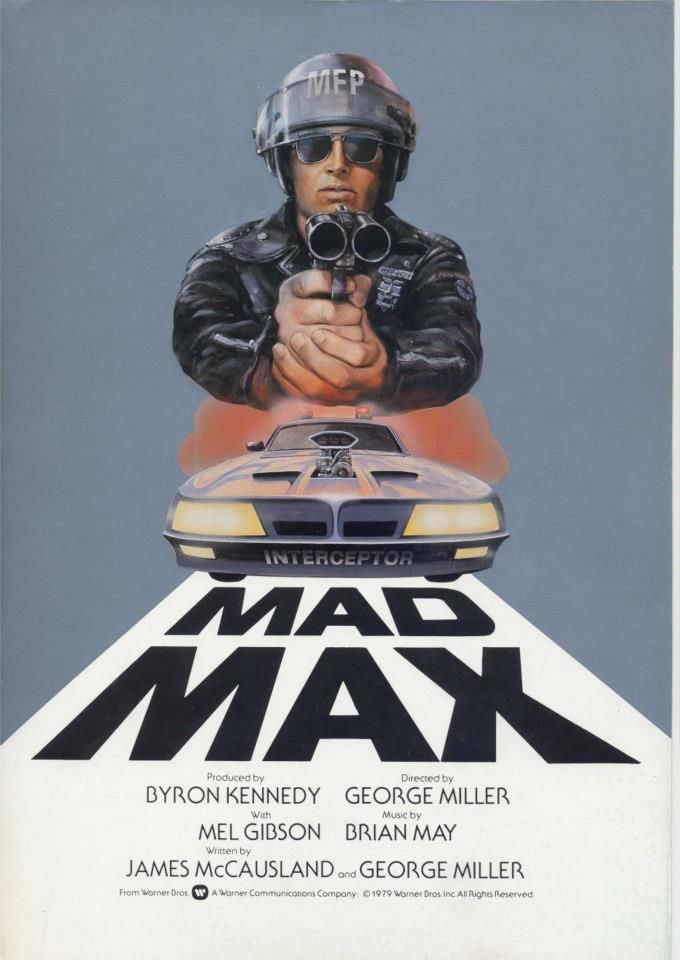
No film has ever dominated my twitter feed quite like Mad Max: Fury Road (2015) these last couple of weeks. Recognising that the series was a large gap in my personal filmography, I jumped back and took a look at the earlier films before checking out the new one, starting with Mad Max (1979).
 The first film is perhaps less well known that Mad Max 2: The Road Warrior (1981), especially in the States, but it’s a film that I much prefer and that I think has aged a lot better. There is a unique balance to proceedings, which are quite lightly plotted. Early there is constant action and kinetic energy being splashed all over the screen. Then the film settles, building out the world a little and focusing on the family elements of the plot, before kicking into overdrive for a really quite short final revenge sequence where Max turns very much from content, into mad. Up until that final part of the film, the main thematic propulsion simply comes from a dude struggling with what his job says about him as a person. A struggle many of us face and which helps to make this the most relatable film in the series. Indeed there is a universality to most of what is happening. The audience is happy to see Max bring his violent revenge to bear at the end of the film, due to the intimate understanding of what has been taken away from him by the villains of the film. Especially as it is brought about by one of the most coldly violent murders you will see on screen.
The word building in the film is simultaneously sparse and effective. Miller never feels bothered to overly flesh out the world with intricate levels of detail. As someone who grew up in rural Australia, the sparse, empty roads and fields were incredibly familiar. Thought the focus is not on effects or hi-tech futurism, the vision it builds is still pretty nightmarish. Some small flourishes – the search for fuel, a seemingly tiny population and ‘Prohibited Area’ signs – go a long way. This is a near future that is lawless, seemingly reigned over only by incoherence. Another aspect of this lawlessness is built up in the film through the invocation of the Western genre, which was so heavily focused on film’s most iconic ‘wild’ setting. The way people dismount their motorcycles, a focus on boots and jackets and the adjusting and removal of helmets are all lingered on, recalling Eastwood or similar riding in on a noble steed. These flourishes also feed in to the writing of the film which focuses heavily on building the psychology of the characters. On one level there are goodies and baddies, but dig a little deeper and what characterises a villain and what characterises a hero becomes far murkier. The performances support this, especially from Hugh Keays-Byrne as Toecutter, a character who has an aura and seeping malevolence which inspires his followers. Characteristics that Immortan Joe, played by the same actor in the franchise’s most recent, also has tons of. There is something towering, discomforting and ominous about both of those turns by Keays-Byrne. The baby faced Mel Gibson is also excellent, especially when turning and gaining his revenge. The actions sharply conflicting with the innocent face and family man of the film further detailing the psychological trauma that has been wrought upon him. And it’s always great to see Steve Bisley on screen as well.
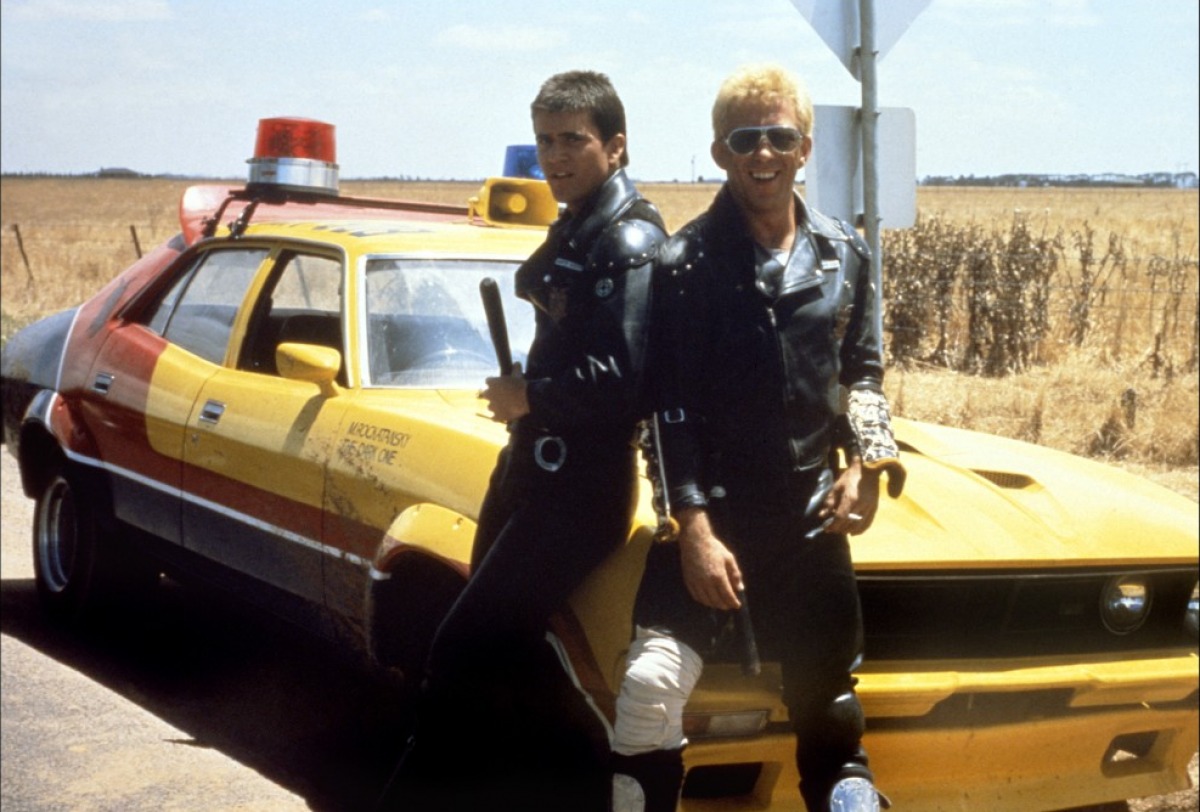
After seeing this film and Fury Road, it is fair to say that no one does vehicular mayhem quite like George Miller. Everything is so real feeling in this film and you feel the impact of every collision. It makes you wonder how on earth Miller got this film made really. The stunt work in the film is heart-stoppingly thrilling as cars and motorbikes converge violently over and over. Coupled with that is the camerawork, simply showing the action safe in the knowledge that the crowd will lap up every collision and explosion. The camera is also used to great effect to create tension. The sequence running from a forest, to a beach and then back to the forest is the tensest in the whole film, with nary a car in sight. Miller achieves this with slight movement of the camera, flitting in and out of the trees and masterfully controlling what is in the frame.
Verdict: Those taking a look at Mad Max for the first time, expecting the same level of freneticism Mad Max Fury Road delivered, may well be a little befuddled by what they find. But whilst it is different, it is no less unique and is a film that should be sought out by any action or sci-fi aficionados who have somehow never seen it til now. Pint of Kilkenny
Progress: 127/1001
Related beermovie.net articles for you to check out: The Great Escape and Quick Review: The Adventures of Priscilla Queen of the Desert.
Like what you read? Then please like Beermovie.net on facebook here and follow me on twitter @beer_movie
 Beermovie.net