High Noon
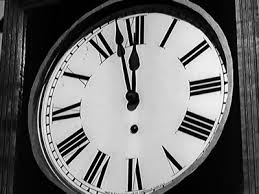
If 24 was a classic Western – and it really should be – it would most likely be High Noon (1952). The clock rules in High Noon, slowly ticking down to an archetypal Western showdown between the law and the baddies.
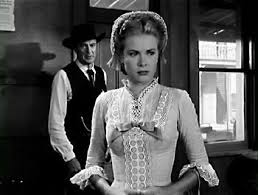 The film is all set in one day, which happens to be the wedding day of local Marshal Will Kane and Amy Fowler, played by Gary Cooper and Grace Kelly respectively. The Marshal is retiring from his job into a more peaceful new life with his Quaker missus. Their happy day is ruined by the return of the fiendish Frank Miller, who Will had put in jail some time earlier but has just been pardoned. After abandoning an attempt to flee, to the disgust of his wife, Will returns to town in order to confront his nemesis when he gets off the train. The rest of the film is devoted to an almost real-time countdown for the train to arrive, as Will tries to get a crew together to support him in standing up to the thugs, wading through a sea of small town politicking to do so. Unfortunately though he seems desperately low on support from the townspeople. The film is an interesting mix of classical and innovative approaches to the genre. The final showdown between the foes is pretty standard in the realm of iconic Western. The tense but slow-burn build up, which in many ways is extended bouts of diplomacy is not so standard. A different psychology is at play to most Westerns I have seen with much less of a focus on action. Similarly the scenery consists of predominately agricultural land and the town rather than the open, sweeping John Ford style American plains and valleys.
Running down the list of the cast of this film, it would have to be close to the greatest cast ever put together for a Western – Grace Kelly, Lon Chaney Jr., Lee Van Cleef and Gary Cooper. They are all in good form here as well, especially Kelly and Cooper as the (un)happy newlyweds. Both of them are helped by the fact that there are some really interesting elements to their characters. Kelly’s Amy has a fervent belief in her religion and the pacifism that it entails which is examined on a number of occasions in the film. On the other hand, Cooper’s Will is not just a whitewashed, perfect hero. He loses his cool, hits people, doesn’t seem to have all that many friends in town and could most certainly treat his new wife a whole lot better. Directed by Fred Zinnemann the film is astutely shot. Much of the action takes place either indoors or in the confines of the town, so it is shot much tighter than most Westerns. It is opened up a little by the use of some funky camera angles, such as a close-up of a wagon wheel as the wagon bounces along at great speed.

I really enjoyed High Noon, it manages to blend the iconography of the Western with a pretty original approach to the storytelling. It is not one of my absolute favourite Westerns, but if you have any interest in the genre, then this is one you probably want to tick off.
Verdict: Stubby of Reschs
Progress: 89/1001
Like what you read? Then please like Not Now I’m Drinking a Beer and Watching a Movie on facebook here and follow me on twitter @beer_movie.
The Masque of the Red Death
Roger Corman is undoubtedly the king of B movies, renowned for films featuring cheap dialogue, titillating female characters and huge monsters. The cycle of eight Edgar Allan Poe adaptations that he directed from 1960 to 1965 in tandem with star Vincent Price 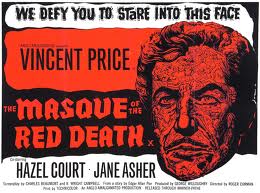 were the closest that Corman ever came to physical acclaim.
The Masque of the Red Death (1964) is the penultimate film in that series and the only film of Corman’s that features on the 1001. It is not surprising that he was able to create a film of such atmosphere and quality, because even when bringing to the screen his silliest visions, there was no doubting the quality of his craft. He also had an incredible eye for talent, helping to launch the careers of a whole range of film icons, Martin Scorsese and Jack Nicholson to name just two. Indeed Nicholas Roeg, who would go on to direct films such as Walkabout (1971) and Don’t Look Now (1973), was the cinematographer on this film. The Masque of the Red Death is an adaptation of the Poe story of the same name. One of the most notable achievements of the film is that it is able to stay true to the spirit of what is a very short story, whilst making the necessary expansions to get it up to feature length. The film sees a plague sweeping across the land which forces Price’s prince to hole up in his castle with a bawdy bunch of friends for some partyin and Satan worship… as you do. Once there of course, many moody and atmospherically creepy happenings begin to take place.

Vincent Price is a really great actor. Yeah his range might have been a touch limited compared to some, but Price did his thing very well. And as the tyrannical Prince Prospero, Price is chewing the scenery left right and centre with aplomb here. It is lovely scenery too, because the design is perhaps the best thing about the film bucking the usually rather cheap standard of Corman films. Apparently the very cool castle set was inherited from another production which may help to explain some of this though. The castles and set dressings are fantastic as are the costumes that adorn the Red Death and his associates. Especially for the time, there are some pretty interesting moral things going on in the film. From Prospero’s continual assertions that “God is dead” to various deals with the devil and an intense sequence where a man in an ape suit is calculatingly burnt alive.
As a fan of Poe’s work, it is a treat to see it interpreted in a manner that is both so original and yet so adept at bringing to life the spirit that is in his writing. The Masque of the Red Death is also a perfect chance for Corman and Price to show their real quality as director and actor respectively. If you are a fan of Edgar Allan Poe’s work, or of classic horror filmmaking, then you should definitely take a look at this one.
Verdict: Pint of Kilkenny
Progress: 88/1001
Like what you read? Then please like Not Now I’m Drinking a Beer and Watching a Movie on facebook here and follow me on twitter @beer_movie.
Ghost Busters
For some reason Ghost Busters (1984) was never a real formative film for me, despite some of my absolute favourites coming from that era. I am sure I had seen the film on TV years ago, but I only had pretty vague recollections of it, making this viewing almost like seeing it for the first time.
It’s weird that whilst the 80s was a pretty dire time for some other art forms (I’m looking at you music), it was a great time for film, especially popular film. Ghost Busters is a definite part of that. This New York set film sees three academic scientists who are kicked off campus go into the ghost hunting business. Lucky for them, that is a field of work that happens to be in high demand at the time. Much of the humour in the early parts of the film comes from the sheer lack of experience or knowledge that our heroes have about what the hell they should do when they happen upon a ghost. This makes their early experiments in ‘ghostbusting’ hilariously fraught. But luckily for the folk of New York, they are also generally successful in these endeavours. Especially as the supernatural goings-on really ramp up, culminating in a Stay Puft Marshmallow Man Godzilla sized beast rampaging through the streets. As will happen. The supernatural happenings are driven by what I assume were some pretty impressive for the time special effects that by and large have aged relatively well. There are some definite exceptions to this rule, but the effects are there to only enhance the other aspects of the film, they are not the focus of the film itself. A lesson there for many a filmmaker I think.

The two major strengths of the film are the sharp comedy of the script and the fantastic cast. Two of the stars of the film, Dan Aykroyd and Harold Ramis were also on writing duties. What they turned in was a wryly comedic gem that will have you chuckling throughout, without feeling like you are being beaten over the head with an endless bombardment of jokes. Another major credit to the script is that it actually gets stronger as the film goes on, with many of the funnier lines coming toward the end of the film. If you really wanted to quibble, there is a plot diversion and character or two that are underdeveloped, but in reality it is highly doubtful you will notice. Plus, as with any high quality film of this ilk, there are a bunch of really quotable lines peppered throughout. Most of them are delivered by Bill Murray, such as the classics “he slimed me” and “cats and dogs living together”. Murray is definitely the star in terms of screen time and his performance is really good too. He is able to comfortably nail both wry, dry humour as well as the odd bit of silliness. He is really well supported by basically everyone else as in the film, with my personal favourites here being Rick Moranis and Sigourney Weaver. Moranis especially creates a really full and fun character in his short time onscreen. Man I love that guy, watching this film brought back plenty of memories of a film that definitely was a formative one for me, Honey, I Shrunk the Kids (1989).
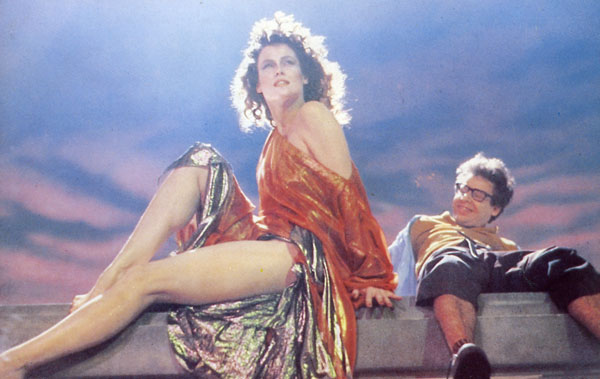
In the end, Ghost Busters is just about as fun as a film can hope to be, managing to mix elements of comedy, horror and fantasy all together to come up with something highly original. I can definitely see why this is an absolute favourite of many and a really formative film for a lot of huge film fans.
Verdict: Pint of Kilkenny
Progress: 84/1001
Like what you read? Then please like Not Now I’m Drinking a Beer and Watching a Movie on facebook here and follow me on twitter @beer_movie.
I will be live tweeting a film this weekend, so please head here to have your say on what film it should be.
Live Tweet Poll: A Classy One
I really enjoyed the first live tweet film review I did of The Creature from the Black Lagoon (you can check out the result here). It also has the added benefit of saving a little time, because you are able to watch and review the film at the same time.
The idea behind live tweeting, in my mind at least, lends itself to B movies and films that you can take a more lighthearted approach to. This time however, I thought I would take a shot at a more critically acclaimed film, from the 1001, to see how that turned out. I will be live tweeting the film next Sunday the 23rd at 2:00pm. Be sure to follow me on twitter to be involved.
I think it’s more fun for you guys to choose though, so which of these 5 acclaimed films should I live tweet? Be sure to leave a comment with your choice.
The Wrestler (2008) dir by Darren Aronofsky

The Outlaw Josey Wales (1976) dir by Clint Eastwood

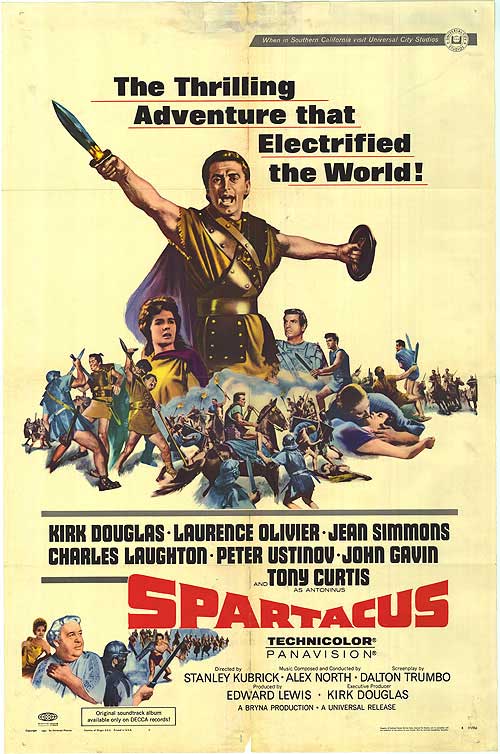
Spartacus (1960) dir by Stanley Kubrick
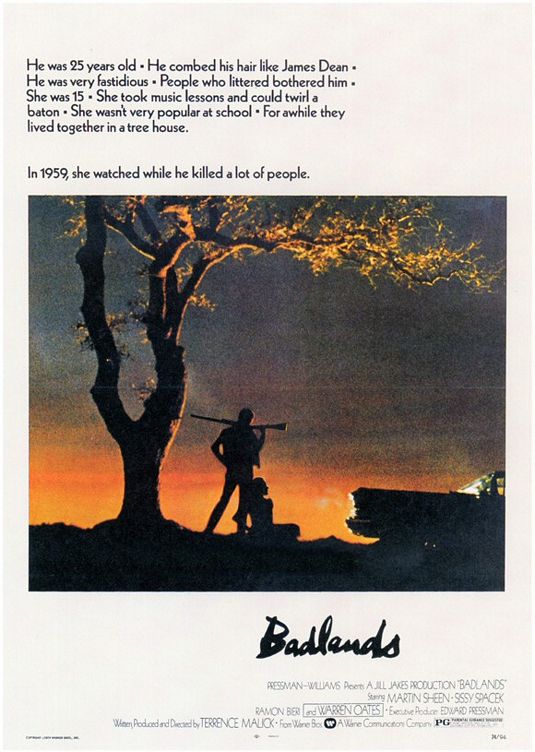
Badlands (1973), dir by Terrence Malick
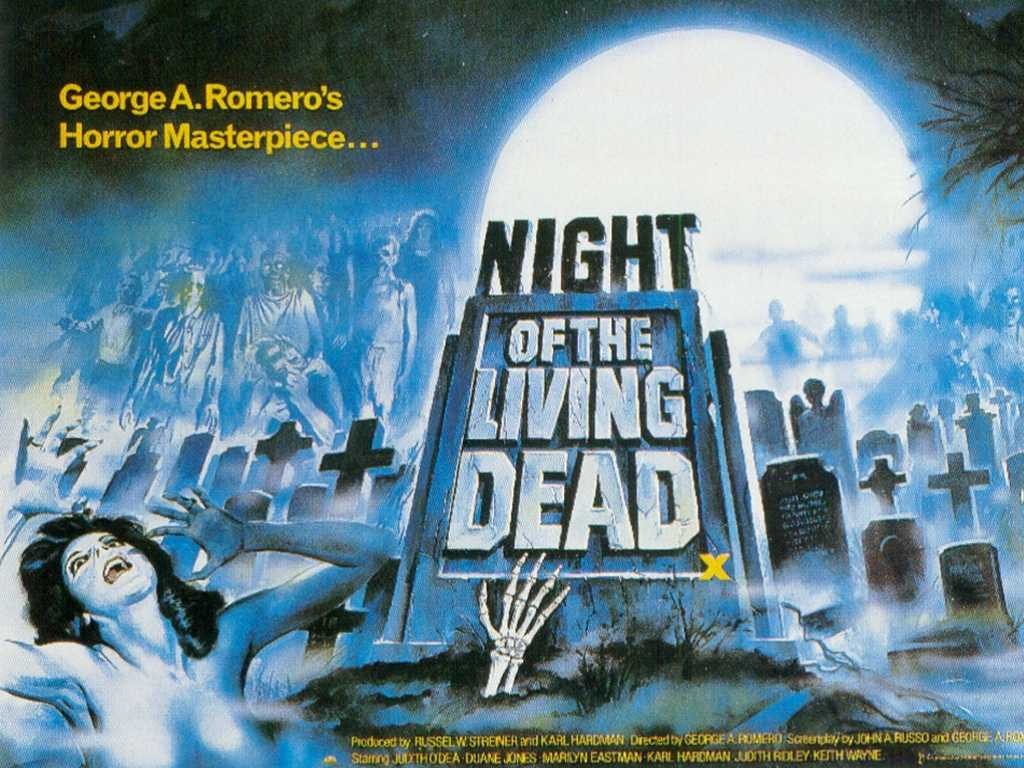
Night of the Living Dead (1968), George A. Romero
Like what you read? Then please like Not Now I’m Drinking a Beer and Watching a Movie on facebook here and follow me on twitter @beer_movie.
Downfall

When Downfall (2004) was released, I recall that there was a fair bit of controversy that surrounded the film. I could be wrong, but I believe much of this was due to the fact that film was unafraid to show the human side of Adolf Hitler. Personally, I don’t see an issue with this approach, because unfortunately Hitler did exist, he was human and he was responsible for evil that is in essence indescribable. And Downfall does an exceptional and necessarily harrowing job of bringing this to life.
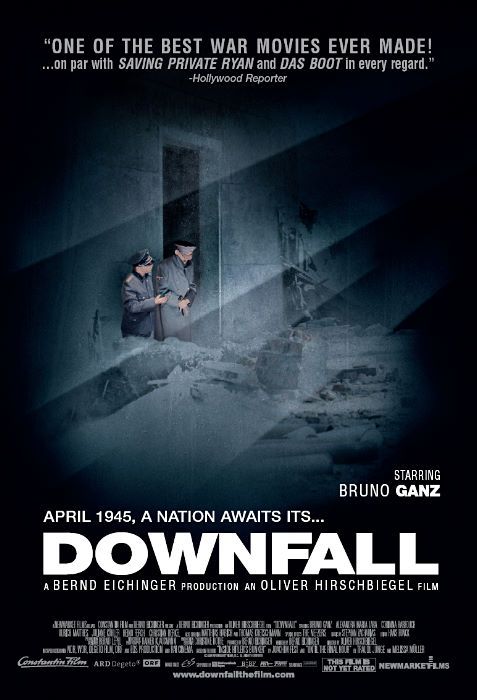 The film opens with genuine footage of an elderly women speaking to the camera with regret at her naiveté during the Nazi years. It is not clear initially who this woman is (I thought it may be Leni Riefenstahl), but all will become clear after watching the film. The film then shifts into the main body of proceedings, which depict Hitler’s final days as the Nazi hold on Berlin crumbles all around him. Different people have different expectations when viewing a war film. For me, to consider any war film as great, it has to make plain one thing – war is fucked up. This film achieves that I think. It expertly brings to life the very real and very visceral terror of being involved in war, even if you are ensconced in the inner circle of the Nazi command. And despite its total focus on the Nazi side of things, the film’s messages about war are universal. The imagery is powerful and the war scenes look extremely realistic and immediate, taking advantage of what I suspect is a pretty substantial budget. In additional to all of that, the film is quite educational for those, who like me, are not entirely familiar with how the war unfolded. The disconnect between Hitler and his armed forces in the closing days of the war for example is shown.
Downfall is for all intents and purposes a character study of Adolf Hitler. He is the central character and all of the film’s events revolve around him. The film does portray Hitler as more human than monster. But to criticise the film for this, is to me, a little strange. By having Hitler human, it gives the film a jolt of realism. At times he is quite polite and dare I say it, a nice guy. He is also a little broken down and hunched throughout. This is the point though, Hitler was exceedingly evil and also a human just like the rest of us. Which makes it all the more important that Downfall is able to show the absolutely unhinged nature of his ideals and plans. Bruno Ganz’s portrayal of Adolf shocks each time he lets out his explosive and rage-filled side. I think this makes him all the more a disturbing character than if he was shown as just another raving cinematic madman. Indeed Hitler’s eventual suicide is portrayed in such a way that you do sense some of his humanity and vulnerability in the face of death. Challenging? Yes, but in my opinion in no way manipulative or questionable. The film also sheds a light on those around Hitler, showing, though perhaps not analysing, the blind devotion that the leader inspires in his followers.

Downfall is confronting, as it definitely should be. The film manages to bring something new to a cinematic exploration of World War II, in particular the way it deals with the character of Hitler. If you have any interest in this shameful chapter of human history, then Downfall is worth making the time for.
Verdict: Pint of Kilkenny
Progress: 83/1001
Like what you read? Then please like Not Now I’m Drinking a Beer and Watching a Movie on facebook here and follow me on twitter @beer_movie.
A Day in the Country

Renoir
Jean Renoir is one of those towering figures of world cinema. The only film I had seen of his is Boudu Saved from Drowning (1932), which I love, but which I do not think is entirely representative of his broader body of work. I was luck enough to catch A Day in the Country (1936) on the big screen at Arc Cinema recently, as part of a program of the short films which were featured in the most recent Sight & Sound poll.
The film is a gentle look at the societal mores and conventions of the time, a comedy of manners of sorts. A group of Parisians funnily enough spend a day in the country, focused around drinking, eating, sleeping, rowboats and a little fishing. The most engaging aspect of the film is when it contrasts the deeply engrained attitudes and desires of an urban mindset with those of a rural one. Two young local men who are lazing about at the country inn decide that they will attempt to seduce Henriette and her mother, whilst the other men are off tending to their fishing rods. Sylvia Bataille, who plays Henriette, gives the best performance in the film, as a young naive woman with an utterly bland fiancé.
Apparently the film is actually unfinished, though you cannot really tell. In terms of running time, it is a long short film, so perhaps it was originally envisaged as a feature film. What is here though is beautifully shot, even the simplest of images, such as the women enjoying their time on the swings, are a joy to look at. Whilst it is a very different film to Boudu Saved from Drowning you can see Renoir’s ability as a humour stylist as the script has a fair bit of humour in it. The film got a lot of laughs in the crowd I saw it with and the comedy is for the most part very successful, even today. Indeed the dialogue of the script is one of the film’s real achievements, full of double entendres, there are numerous layers to absolutely every line.

A Day in the Country is a sumptuously shot, if gentle, look at a specific time and place. It perfectly illustrates many of the societal constraints that dominated that time and place, which I am glad are not a part of my life. It is engaging, even if the connection between characters is not established enough to support the emotional dénouement that is aimed for.
Verdict: Stubby of Reschs
Progress: 81/1001
Like what you read? Then please like Not Now I’m Drinking a Beer and Watching a Movie on facebook here and follow me on twitter @beer_movie.
Silent Film Week: The General
 Buster Keaton, along with Charlie Chaplin, are the contemporary faces of film comedy from the silent era. Whilst Chaplin was probably more renowned during their actual careers, if anything Keaton’s reputation and Filmography is probably more renowned today. In a career of almost universally loved features, The General (1926) is generally considered his greatest work.
The film is a phenomenal one, partly because it works on a bunch of levels and functions as an example of multiple genres. This is in my view probably the best comedy in history. Add to that the fact that it is also a wonderful love story, action film, war film and example of stuntwork and you can see why it is so loved. Keaton plays Johnnie Gray, a train engineer who attempts to enlist for the South during the Civil War. His application is rejected on the grounds that his work as an engineer is more important to the cause. His beloved Annabelle however does not know the reasons behind his rejection and accuses him of cowardice, no longer wanting anything to do with him. Fast forward a year and the devious North have hatched a plot to steal a train from the South and utilise it to blow up their supply routes. The train they happen to steal is being driven by Johnnie and also has Marion accidently stowed away.
What follows is surely the greatest chase sequence in all of cinema, lasting a good half an hour. The whole thing is helter skelter and Keaton also somehow manages to give proceedings a simultaneous feeling of both danger and fun. A sequence where our hero is actually sitting on the front of his locomotive balancing large pieces of wood perhaps the most iconic example. Keaton delivers plenty of these iconic images actually, such as him sitting on the wheel of the train as it moves and the huge set piece involving a train and a burning bridge toward the end of the film. The director/star must have been quite the athlete in his day, because the stunts that he pulls off will leave your jaw dropping. It doesn’t hurt that the actor is always willing to put his body (and probably his life) on the line, over and over. A totally fearless man, who knows how he would survive in today’s Hollywood, filled with insurance policies and stuntmen. On a comedic level, one of the reasons that the film succeeds so spectacularly is because Keaton employs a wide array of techniques to garner laughs – from typically over the top slapstick to much subtler, clever methods. The score on the version I watched (which is also the one I am giving away this week), composed by Joe Hisaishi in 2001, is fantastic and really enhances the viewing of the film. As does the fact that the print is a wonderfully sharp one. It is great to see older films being restored and presented in this way.
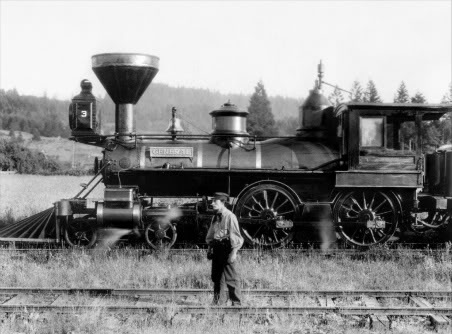
To put it bluntly, The General is a masterpiece. It is one of my top 5 favourite films of all time and on many days it would be my number 1. If you haven’t seen it, then I highly urge you to seek it out. I think it is probably the most charming film I have ever seen and also such a brilliant example of the comedy genre.
Verdict: Longneck of Melbourne Bitter
Progress: 80/1001
Want to win a copy of The General thanks to Madman Entertainment? Check out all the details here.
Like what you read? Then please like Not Now I’m Drinking a Beer and Watching a Movie on facebook here.
The Asphalt Jungle
Even though he has a towering reputation, in some ways I think John Huston is still a slightly underrated director who is viewed as somewhat more of a studio hack, albeit a really bloody good one, rather than a man with a truly great artistic vision. Upon viewing The Asphalt Jungle (1950) I became even more convinced that he is definitely the latter.

The Asphalt Jungle is a heist film, following a fresh out of jail con as he puts together a big jewellery store job. The film shows the entire process as the ringleader sets about finding the start-up cash and the right team to pull off the job. This is a really interesting part of the film, feeling like a genuine insight into the machinery that sits behind a heist such as this. The heist itself actually comes midway through the film and it is once it has taken place that the intrigue really starts up. The crosses and double crosses amongst the gang and the machinations and issues with dividing up the loot that take place are clearly influential on a huge number of crime films that would follow in the decades to come. Given that the film was made under the Hays Code, it is no spoiler to say that they do not get away with it in the end. But it is a tribute to the script that even under these harsh, restricted times, the ending of the film is not that simple. In many ways the character of Dix has a happy ending, finally getting back ‘home’.
Sometimes when watching a film, one thought dominates my thoughts about it. In this case, my notes were dominated by the word ‘edge’. There is just such a hard fuckin edge to this film. The script surely contains one of the absolute greatest couple of hours of dialogue ever committed to the page (and then transferred to the screen). The dialogue is non stop incredible with a streetwise feel to it, like it was stolen from a classic hardboiled novel or something like that. Everything about the film lives up to that too. The characters, their interactions, the acting that brings all of this to life. The characters themselves are really interesting and the film does a really impressive job of drawing out some of the human and family undercurrents that motivate them. This never becomes the focus of the film, but it allows the viewer to see and know what is driving each of these characters. Huston gets in on the action too. The film is quite beautifully shot and every single scene is quite thoughtfully framed as well. There is something else about the film that just feels really cool. An atmosphere that is generated by all of the intangibles, one soaked in gambling, drink, women, cigarettes and coffee. Not to mention the brilliant title that you can’t help but think of as you watch the film, especially when it draws out ideas of the difference between the city and the country and the different types of jungle that occur in the modern world (well 1950s world, but still today too).
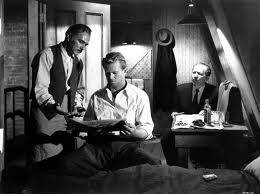
The dialogue in this film is absolutely all time. A heist film, with just a hint of noir, in its execution rather than its themes, I really highly recommend this film. Great acting and an even greater script make this a truly satisfying crime caper.
Verdict: Pint of Kilkenny
Progress: 78/1001
Like what you read? Then please like Not Now I’m Drinking a Beer and Watching a Movie on facebook here
Ordet
I have had Carl Theodore Dreyer’s Ordet (1955) sitting on my DVD shelf for a few months now. For some reason it is one of those films that I would just never get around to popping into the player, perhaps thinking that it looked a little slow and boring.
 Well I finally got around to chucking it on the other day and man am I glad I finally made the effort. This film is a phenomenal exploration of some weighty themes, family and faith chief amongst them. The film takes place on Borgen farm where an entire family resides – the family patriarch and his three sons, one of whom is married, another whom is mad. This mad brother believes that he is Jesus Christ returned to earth. One of the great accomplishments of the film, in particular its script is that there is no single protagonist. Rather, the viewer becomes caught up and utterly engaged with the arcs of a whole bunch of characters. The youngest brother Anders, who wants to marry but is rejected by both his father and hopeful father in law. Mikkel who has rejected his faith. Johannes who believes he is Christ. The caring and heavily pregnant Inger. And finally the family patriarch Morten, the eldest amongst them, but in many ways the one most capable of change.
It is difficult to give a plot synopsis of the film that does the film justice. It is a character study of all of these characters. It is also a really intense exploration of the theme of faith that manages to straddle both a time past where faith was the norm and an increasingly logical world. There is incredible depth and nuance to the themes of faith in the film. Ones that can perhaps not be totally absorbed in a single viewing. The power and frustration of prayer is explored. Johannes is a gifted religious scholar who has seemingly been turned insane by his studies or perhaps the pressure of his father who saw him as no less than a “renewer” of the Christian faith. The possible inherent ‘craziness’ of a belief in God. The relationship if any between the ideas of faith and of ‘goodness’. The difference between a blind and shallow faith in God and a deep thinking, exploratory faith. Perhaps more than all of these is the theme of religious intolerance that runs through the film, especially professed by the subplot of Anders’ love for Anne and their attempts to become engaged. It is incredible just how relevant today a number of the themes explored here are. I can understand how heavy and boring a lot of this can perhaps sound. But it is not, and it is a testament to the script that you will find yourself never less than enthralled and engaged by it all. There is a lightness of touch in bringing all of this to life and also a great balance between thematic exploration and narrative.
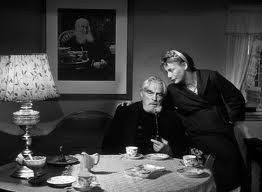
The film is beautiful to look at. It is rural life rendered in phenomenal sharp black and white cinematography. Dreyer’s direction is really great at conveying place through the shots that are chosen. See the opening sequences conveying the rural, the windswept and the dunes. Matching the cinematography is the sound design. The incredible whistling of the wind in the early scenes and some really innovative flourishes throughout the film. Sounds that spill over from one scene to the next for example. The performances are all excellent. Emil Hass Christensen as Mikkel has a stoicness that is more than a little reminiscent of Max Von Sydow in The Seventh Seal (1957). Henrik Malberg who plays Morten Borgen is an absolute stud of an actor, he is grizzled yet deep thinking with his “peasant’s pride”. Perhaps best of all is Birgitte Federspiel as Inger, the female focus of the film who goes through so much but who is an incredibly strong feminine figure.
Put simply, Ordet is one of the greatest films I have seen for a very long time. It may not be for everyone, but if you are into ‘classic’ cinema especially if you have the patience to go along with something slow moving and spiritual, then this one is definitely for you. This is an at times harrowing watch with some crushing moments, but it is well worth investing the time in.
Verdict: Longneck of Melbourne Bitter
Progress: 77/1001
Like what you read? Then please like Not Now I’m Drinking a Beer and Watching a Movie on facebook here
Dracula (1931)
Bram Stoker’s brilliant classic of English literature Dracula, first published in 1897, has produced numerous film adaptations – from the sublime, like Nosferatu in both its 1922 and 1979 iterations; to the garbage, Francis Ford Coppola’s Bram Stoker’s Dracula (1992) for example. Though I acknowledge my views on the latter are not universal.
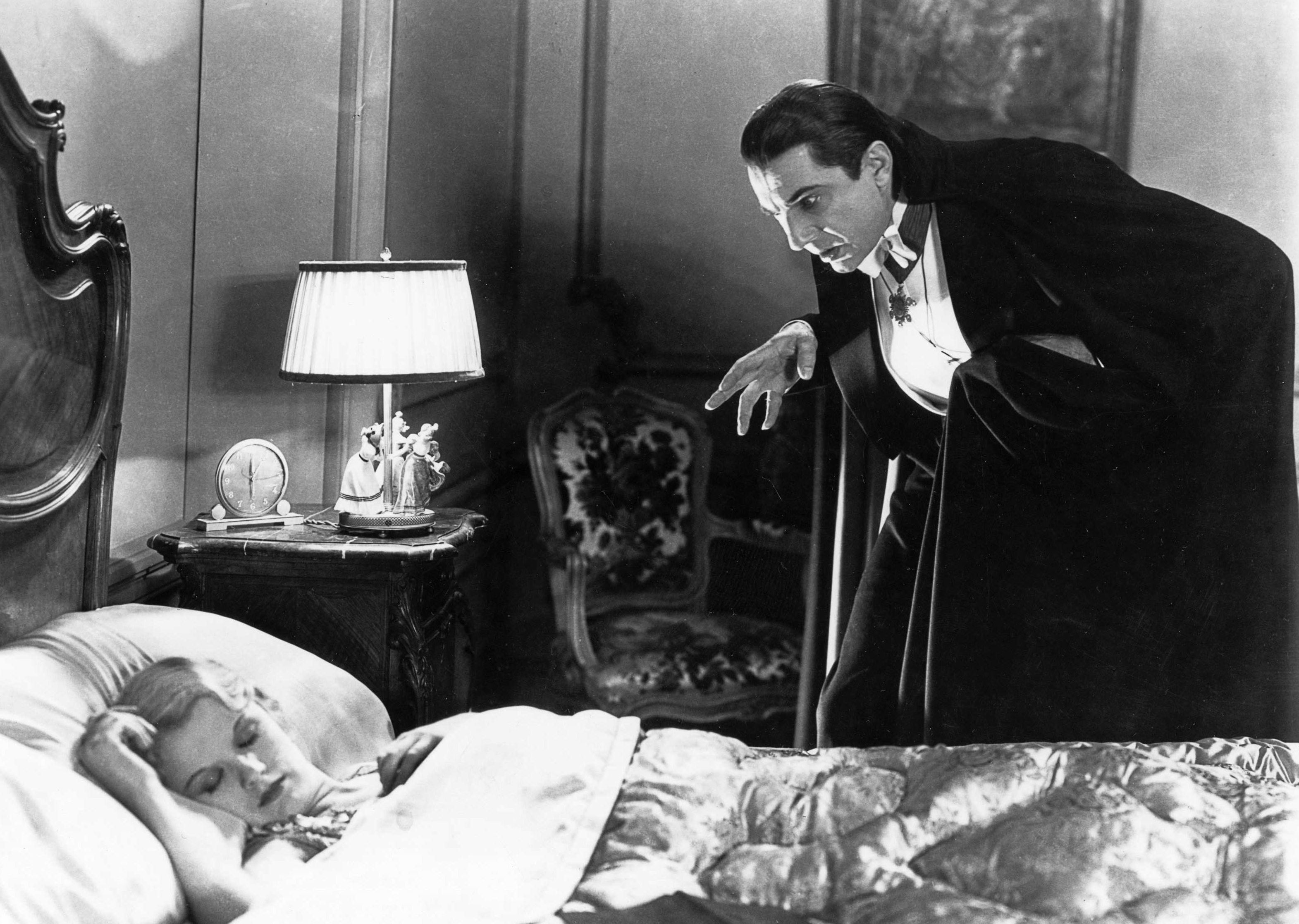
Dracula. Lurking.
Arguably no film adaptation of the novel has produced a more iconic interpretation of the novel’s central character though than Tod Browning’s Bela Lugosi starring Dracula (1931). Browning’s is a Dracula tale full of towering castles crawling with terrifying life forms (including somewhat absurdly an armadillo), an incredible orchestral score, those iconic Universal Horror sets (which intriguingly hosted the shooting of a Spanish Language version of Dracula at night at the same time this film was being shot) and plenty more that brings the atmosphere. The film is just so wonderfully staged. Apparently it is based heavily on a play based on the book and that sort of shows in the construction of the film as a whole, especially the way in which characters are introduced and plotlines set up. In comparison to most adaptations of Stoker’s novel, Dracula spends very little time in Transylvania, rather getting rather more quickly into the London set part of the story. The Transylvania set part still contains some of the most fun parts of the film. The scene where Dracula first sees his houseguest’s blood is pretty fantastic, with a dynamic camera zooming in to emphasise Dracula’s bloodlust. Before Lugosi comes out with the zinger “I never drink… wine”. It is undeniable that this 80 odd year old film does clunk at times. There seems to be a particular obsession with close-ups of Lugosi’s face shrouded in darkness, with only a strip of light over his eyes.

Dwight Frye who is so good as Renfield
It is impossible to talk about this film without discussing in depth Lugosi’s turn as Dracula. Indeed when most people think of Dracula, the image they have is not Stoker’s Dracula, it is Lugosi as Dracula. Look no further than last year’s fun animation Hotel Transylvania (2012), a film where Dracula as voiced by Adam Sandler looked a whole lot like Lugosi. Initially when watching the film this time around (I had seen it about 10 years ago), I was wondering if Lugosi’s performance was so iconic because of the actual performance itself, or just because of how his character looks. But it is immediately clear that Lugosi’s actual performance is really ace too. He has this shtick which he works throughout the film that just makes him seem to truly inhabit the role of Count Dracula. His Dracula is the bogeyman, both literally and figuratively, the dark force lurking in the shadows outside of a woman’s house in the darkness of night. It is easy to see why when so many people think Dracula, they think Lugosi. There is somewhat of a paradox at work here though. Because whilst Lugosi’s performance is stellar, he is not given the chance to show off his chops too much. Indeed Browning seems content to predominately focus on his (admittedly awesome) iconic look. Lugosi has some excellent support from other actors in the film too. In particular Dwight Frye as Renfield is really something else. Initially he hams it up wonderfully as the stranger in Transylvania who finds himself the houseguest of Dracula. Once he is sent mad by whatever occurs in that castle though, Frye’s performance becomes even better, as he is transformed into a Peter Lorre-esque force of nature. His performance is probably the most horrifying aspect of the film, at least it was for me.
Dracula is a very clever version of this ubiquitous tale that has stood the test of time and definitely deserves to be watched. It has to be seen to witness what is the most famous interpretation of the character of Dracula. But rest assured there is plenty else here to hold your interest as well.
Verdict: Pint of Kilkenny
Progress: 75/1001
Like what you read? Then please like Not Now I’m Drinking a Beer and Watching a Movie on facebook here
 Beermovie.net