Silent Film Week: The General
 Buster Keaton, along with Charlie Chaplin, are the contemporary faces of film comedy from the silent era. Whilst Chaplin was probably more renowned during their actual careers, if anything Keaton’s reputation and Filmography is probably more renowned today. In a career of almost universally loved features, The General (1926) is generally considered his greatest work.
The film is a phenomenal one, partly because it works on a bunch of levels and functions as an example of multiple genres. This is in my view probably the best comedy in history. Add to that the fact that it is also a wonderful love story, action film, war film and example of stuntwork and you can see why it is so loved. Keaton plays Johnnie Gray, a train engineer who attempts to enlist for the South during the Civil War. His application is rejected on the grounds that his work as an engineer is more important to the cause. His beloved Annabelle however does not know the reasons behind his rejection and accuses him of cowardice, no longer wanting anything to do with him. Fast forward a year and the devious North have hatched a plot to steal a train from the South and utilise it to blow up their supply routes. The train they happen to steal is being driven by Johnnie and also has Marion accidently stowed away.
What follows is surely the greatest chase sequence in all of cinema, lasting a good half an hour. The whole thing is helter skelter and Keaton also somehow manages to give proceedings a simultaneous feeling of both danger and fun. A sequence where our hero is actually sitting on the front of his locomotive balancing large pieces of wood perhaps the most iconic example. Keaton delivers plenty of these iconic images actually, such as him sitting on the wheel of the train as it moves and the huge set piece involving a train and a burning bridge toward the end of the film. The director/star must have been quite the athlete in his day, because the stunts that he pulls off will leave your jaw dropping. It doesn’t hurt that the actor is always willing to put his body (and probably his life) on the line, over and over. A totally fearless man, who knows how he would survive in today’s Hollywood, filled with insurance policies and stuntmen. On a comedic level, one of the reasons that the film succeeds so spectacularly is because Keaton employs a wide array of techniques to garner laughs – from typically over the top slapstick to much subtler, clever methods. The score on the version I watched (which is also the one I am giving away this week), composed by Joe Hisaishi in 2001, is fantastic and really enhances the viewing of the film. As does the fact that the print is a wonderfully sharp one. It is great to see older films being restored and presented in this way.
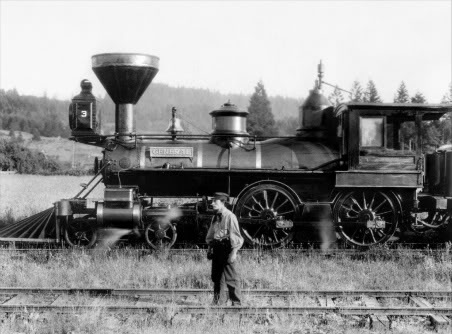
To put it bluntly, The General is a masterpiece. It is one of my top 5 favourite films of all time and on many days it would be my number 1. If you haven’t seen it, then I highly urge you to seek it out. I think it is probably the most charming film I have ever seen and also such a brilliant example of the comedy genre.
Verdict: Longneck of Melbourne Bitter
Progress: 80/1001
Want to win a copy of The General thanks to Madman Entertainment? Check out all the details here.
Like what you read? Then please like Not Now I’m Drinking a Beer and Watching a Movie on facebook here.
Trailer for your Weekend: White House Down
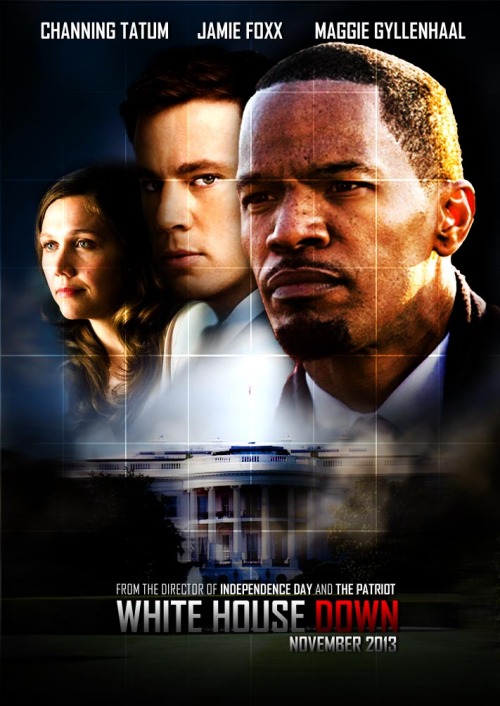
A quick interruption to Silent Film Week, to bring you something loud, boisterous and most likely daft from the mind of Roland Emmerich, the master of those three things. His latest effort is White House Down. And as you can see from the trailer below it appears to be an excuse for the ever subtle Mr Emmerich to mash some more American landmarks. Will it bring anything more to the table? Doubtful, but I guess we will just have to wait and see.
Like what you read? Then please like Not Now I’m Drinking a Beer and Watching a Movie on facebook here.
Silent Film Week: The Short Films of D.W. Griffith
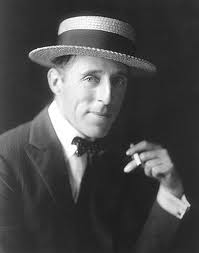
The great D.W. Griffith… who appears to have borrowed Buster’s hat for the occasion.
I was really lucky that when preparing for this week focused on silent film, Arc Cinema at the National Film and Sound Archives happened to show a series of D.W. Griffith short films. I won’t give you a history lesson on Griffith, but rightly or wrongly, he is generally considered the father of the American feature film industry and is most (in)famous for classic silent features such as The Birth of a Nation (1915) and Intolerance (1916)
Before features, Griffith also made literally hundreds of short films. The night at Arc showcased 7 of them and they really showed a huge range of interests from the director. They also illuminated him as a bit of a “leftie” as one of my friends put it, with concern for those in poverty, anti big business sentiment and searing indictment of white treatment of Native Americans all featuring in these films.
I have seen a fair bit of silent cinema and on a select couple of occasions on the big screen. But this screening was the first time I had seen silent cinema with a live accompaniment. And it was something else. The pianist they had there was amazing and her engagement with what was taking place onscreen was literally watching art being created right there and then. Not at all distracting from the films though, but managing to heighten them and elevate them. If you ever get the chance to see silent cinema with a live accompaniment, I cannot recommend it to you highly enough.
Luckily for those of you without an incredible archive style cinema nearby, all of the films I saw the other night are available on Youtube. So rather than write detailed reviews of the films, I decided I would share them with you here. I have ranked them from my least favourite to most favourite, and given you a couple of brief thoughts too. Don’t let some of the lower ranked ones pass you by. I would say that all of them, except for perhaps #7, are really well worth your time.
I really encourage you to take the time to check some of these films out. Let me know what your favourites and least favourites are below.
#7: The Sunbeam (1912)
The first film was the weakest for me and probably the only one I would say that I actually didn’t enjoy. Check it out for yourself, but I found it rather old fashioned (a silly thing to say about a film 100 years old I know, but the others did not feel that way) and a little simplistic emotionally. Tis a very traditional drama type film I thought, that was a little staid.
#6: An Unseen Enemy (1912)
This sort of a heist film is the first screen appearance by the Gish sisters, the iconic Lillian and her lesser known sibling Dorothy. You can definitely see why Lillian would go on to become such a star, because the two of them bring an incredible spark onto the screen. One of the slighter films that was shown, this is still worth checking out, for the leading ladies at the very least.
#5 The Mothering Heart (1913)
This one starts off rather melodramatic and dated, but once the plot kicks into gear over adultery, things get interesting. The two main characters, who seem so bland initially, add some layers of depth actually, especially as financial success changes one of them. Not harmed by having another excellent, and crushingly emotional, performance from Lillian Gish either.
#4: The Musketeers of Pig Alley (1912)
Often referred to as the first gangster flick in all of cinema, this is the film I had heard most about before seeing the screening. Whilst not my favourite, it is still utterly intriguing and it is fascinating to see just how much of the iconography that would go on to characterise gangster film is already here. It is a simple tale of the swaggering Musketeers, the local gangsters and their interactions with the fuzz and a young couple they terrorise. As well as being a historical curiosity, the film has some interesting things to say about crime as well.
#3: Ramona (1910)
The subtitle of this film is “White man’s injustice to the Indians” and it is an effective, but really quite bleak look at the mistreatment of the indigenous inhabitants of North America. The film also resonated with me as an Australian because it had so many parallels with what took place (and continues to take place) in this country. It is a love story, of a love that is forbidden but will not be denied. However this confronting film is not a happy love story and the lead female performance from Mary Pickford is harrowing in its execution. Definitely one to watch.
#2 A Corner in Wheat (1909)
After the disappointing first film of the night, this one blew me away. It looks incredible in comparison, the location shots on farms are especially great to look at. It is incredible that in such a short running time, Griffith manages to show a whole industry (in this case wheat) and the devastating effects of massive commerce. It is incredible how long we have worshipped money above all other masters. The crosscutting between a fatcat stockbroker and the salt of the earth folk just conveys so much. I really encourage you all to watch this one. Especially to see a rather shocking scene that I won’t spoil for you (I found it pretty intense though).
#1 The Painted Lady (1912)
As much as I loved the number 2 film, I just could not overlook this film as my favourite of the night. It is really something else and I cannot urge you enough to check it out. A love story of vague sorts. This is just the basis for Griffith to explore body image, the fundamental notion of popularity and loneliness. Astoundingly handled for a film of this vintage. The film also features a great performance from Blanche Sweet, who shows off some serious chops when portraying the wrenching conflicting emotions that her character is being subjected too. I struggle to think of a better performance in any silent film, short or feature, actually.
Want to win a copy of The General thanks to Madman Entertainment? Check out all the details here.
Like what you read? Then please like Not Now I’m Drinking a Beer and Watching a Movie on facebook here.
Silent Film Week: The Golem
The Golem (1920) is actually the third in a series of German films chronicling the Jewish folk character, though this is a prequel to the two previous films. Those two are considered ‘lost films’ however, so this is the rendering of the tale that most will think of if you are discussing a silent version.

The film sees the Jewish community of a city threatened with exile due to, among other things, their “magic”. In order to remedy this, the elders in the community bring back to life The Golem, as a saviour of their people. The character is in some ways an ironically Christ-like one. Obviously any film that has a Jewish community threatened is going to have a certain level of resonance, even one that preceded World War II by close to two decades. But it is impossible to watch the film except through that prism, which I think does imbue the film with a level of power. The film chronicles the struggle of the rabbis and their Golem to win their right to stay in the city through intimidation and various other means. One of the issues that I had with the film is that it was not always entirely clear what was happening. Neither it is entirely obscure, I just feel that in terms of coherence, the narrative could have been a little sharper. The film does weave a lot of magic into the narrative, with astrology giving a rabbi the first hint of trouble looming, as well as the Frankenstein-esque animating of The Golem from inanimate materials. The film also moves along at a really fast pace, the viewer is bombarded with plot developments and action, which is a little different to many silent films which traditionally took a more measured approach to pacing.

Paul Wegener, who in addition to playing The Golem, directed & wrote the film
Without a doubt though the greatest technical achievement of The Golem is The Golem character itself. Even during its creation, the design and effects really are wondrous to behold. The close-ups of hands, working the clay like material that he is brought to life from look amazing. Not to mention the fact that when The Golem comes alive, he looks incredible. It is an iconic look and I would not have been surprised if James Whale and Boris Karloff took some inspiration from the figure when coming up with their Frankenstein (1931). If there was a 1940s American remake, Karloff would definitely have gotten the gig. The film more broadly does feel somewhat akin to the sensibility that Universal brought to the horror genre, as well as its more obvious connection to German Expressionism. Paul Wegener in the role of The Golem, makes this character just as iconic in appearance and rigid movement as Karloff would do numerous times in the decades that followed. The movement in particular is unsettlingly deliberate but also it is confronting because there is no way to know what the character is going to do next. The relationship between The Golem and his creator does take on an even more overt Frankenstein feel late in the film with the creation suddenly not particularly wanting to be switched off as his creator has the power to do. Thematically the later parts of the film do take on an intriguing turn, veering into the sci-fi esque notions of Shelley’s original novel and even suggesting some of the ideas that Philip K. Dick would later explore in his iconic writing.

Wegener in character
Aside from the central figure, the other technical aspects of the film are a marvel given its vintage. The sets are reminiscent of Melies, who James discussed in yesterday’s post. They brilliantly convey a world that whilst grounded strictly in reality, is frequently witness to the fantastical. The lighting as well is really strong in the film and combines with the set design to create intensely strong imagery. I have to admit that my knowledge of Jewish folklore or even the history of the Jewish people more broadly is slight. So from that perspective it is difficult for me to entirely process the perspective that the film comes from. We see anti-Semitism from the local Christians who are the ones trying to rid the city of the Jews. Here the audience is clearly supposed to side with the Jews who are being so unfairly slighted. This part of the film feels like possibly a piece of Jewish propaganda or just a creative rendering of reality. But some later parts of the film can feel almost genuinely anti-Semitic, with an intense focus on the shifty reliance on magic amongst the Jewish leadership.
The Golem is pretty incredible stuff. The effects and ‘world’ that is created is pretty incredible to see over 90 years later. The narrative is slight and the ending rather absurd, which prevents it from reaching incredible heights. But it is still a very enjoyable film and one that all movie buffs should check out.
Verdict: Stubby of Reschs
Want to win a copy of The General thanks to Madman Entertainment? Check out all the details here.
Like what you read? Then please like Not Now I’m Drinking a Beer and Watching a Movie on facebook here.
Silent Film Week Guest Post: Hugo and Melies
James from Mr Rumsey’s Film Related Musings has kindly contributed this article for Silent Film Week which takes a look at Martin Scorcese’s Hugo and the relationship it has with the films of Georges Melies. It is an absolutely cracking article and I hope you enjoy reading it as much as I did.

Perhaps almost incorrectly labelled as a kid’s film, Hugo (2011) is as much a love letter to the medium of film as it is a family adventure movie. This is Scorsese reminding us why we all love films as much as we do, and he’s looking back with a particularly fond eye to Georges Méliès and to the inventive short films that he made between 1896 and 1913.
Set in Paris during the 1930’s, we follow the story of a young boy named Hugo Cabret (Asa Butterfield), an orphan who lives within a train station’s walls and who spends his time tinkering with machinery and clocks the way that his father taught him to. His father’s love for the movies transferred over to Hugo, and that love is taken up by the film and held proudly for all to see. It’s no secret that this is a celebration of the medium, as Hugo’s adventure leads him through what’s almost a history lesson in early film making, famous events such as the Lumière brothers’ screening of L’Arrivée d’un train en gare de La Ciotat (1896) are depicted, but the films’ real focus is on the highly imaginative works of George Méliès.
When trying to pick an example from Méliès’ work to discuss here I was faced with a near impossible decision, I could honestly have picked any of them, and if you are not familiar with his work then I strongly suggest that you head on over to YouTube and check some of them out. It would be well worth your time. Anyway, the film that I picked out for this post was his Cinderella (1899). Here you can see numerous techniques at work which he has now became famous for, such as the stop trick where the film is stopped, the actor/actress moved, and then the film starts again in order to create the illusion that the person has vanished, or in some of the cases here, an object is transformed. Aside from the visual trickery, this film starts off pretty much as we would expect it to. It’s the recognisable fairy tale which we are all familiar with, and everything seems relatively normal. But then we are suddenly surprised by the wonderful method that he chooses to use in order to depict time. It’s not only very effective and startling, but also, for me at least, it’s really rather fun.
It’s when looking back on Méliès’ films that I came to wish that Hugo could have been more inventive, had played with its form and our expectations to a greater extent. It would certainly be suiting considering the legacy that it is celebrating. It’s for these reasons that I believe that the film absolutely deserved to be shot on digital and in 3D. It is in actual fact the perfect treatment for such a film. It celebrates film, and the childlike pleasure that we get from seeing films, and whilst it looks back with a very fond and grateful eye on the past, particularly Méliès, it also absolutely celebrates innovation and the desire to try new things. Is Hugo as imaginative as Méliès? Not by a long way, but then that’s hardly surprising. Yes, I would have liked it to have stretched itself a little more, and yet it still delivers a satisfying story which is backed up by a great cast including Asa Butterfield, Chloë Grace Moretz, Sacha Baron Cohen, Emily Mortimer, Helen McCrory, and features a particularly strong performance by Ben Kingsley. It’s a heart-warming film that delivers adventure and a childish delight in the exciting world of storytelling, whilst also somehow being a film history lesson and a celebration of movies both old and new.
Verdict: Pint of Kilkenny
I want to leave you with another one of Méliès’ films, this one is particularly vivid, and I think frankly is nothing short of spectacular. The richness and vibrance of the hand painted frames is something to behold. Please spend a few minutes with The Merry Frolics of Satan (1906) and see what you think of it!
Want to win a copy of The General thanks to Madman Entertainment? Check out all the details here.
James is the creator and writer of Mr Rumsey’s Film Related Musings. Be sure to check out his site for a continuous stream of really fantastic reviews of a wide variety of movies, both old and new.
Silent Film Week: Within Our Gates
 Within Our Gates (1920) directed by Oscar Micheaux is the oldest surviving film by an African American director. Indeed, being responsible for directing, writing and independently producing 40 films in his lifetime, Micheaux can lay claim to being one of the most prolific African American filmmakers of all time.
The film ambitiously weaves together a number of narrative threads. These include a love triangle, a woman attempting to raise funds for the survival of a school for African American children in the South, a crime story or two and numerous broader explorations of African American life in the early 20th century. Indeed it is useful to think of the film in this way, as a broad exploration of the conditions and racism of the time. Personally I found that trying to follow the individual narrative strands left me a little lost as to exactly what was going on. I did find this quite frustrating, not knowing exactly what was happening. And perhaps that is more a criticism of me as a viewer rather than the film itself. But I think that the fact I was struggling to keep up meant that the film did not grab me by the throat early on, leading me to be pretty unengaged throughout.

The thing that the film succeeds most in doing is rendering a portrait of just what life was like in the U.S at this time, a country starkly divided into North and South. A place where even in the more hospitable north, there was still the “occasional lynching”. This is no sugar-coated view of the world, even in this version, which apparently had to undergo numerous cuts before the Chicago censors of the day would allow it to be released. There is some confronting violence against women depicted along, with almost continuous racism. Stylistically the film is very sharp, Micheaux was clearly a highly talented filmmaker (his style was reputedly derided in the 20s). Whilst I have criticised the coherence of the narrative, which I do maintain is probably the major weakness of the film, the editing of Within Our Gates is really quite excellent. It is impressive in the way it manages to weave the different narrative strands together, occasionally juxtaposing images side by side to great effect.
There is a lot of really intriguing stuff to see and admire in Within Our Gates, both as a historical document and as a piece of film art. But overall, it just does not hold up for me as a cohesive whole. This means it is relegated a little to the status of important film history curiosity, rather than fully fledged classic.
Verdict: Schooner of Carlton Draught
Progress: 79/1001
You can check out the entire film here, to see if you agree with my thoughts:
Want to win a copy of The General thanks to Madman Entertainment? Check out all the details here.
Like what you read? Then please like Not Now I’m Drinking a Beer and Watching a Movie on facebook here.
Silent Film Week: Silent Movie

Silent Movie (1976) is one of a small number of silent films made well and truly after the end of the silent era, with The Artist (2011) and the Australian film Dr Plonk (2007) the only others that I can recall as fitting the bill (that’s just off the top of my head though, no doubt there are many others). I was pretty excited for this Mel Brooks effort, overacting and other tropes of silent movies are definitely ripe for the spoofing.
Unfortunately though, I was left utterly underwhelmed by this really quite tiresome film. It is the first Mel Brooks film I have seen and I know he has a big reputation amongst many astute film lovers. So hopefully I find more enjoyment in his other films. The first joke of the film comes in the first second with a very clever opening intertitle. The laughs were not very consistent from that point on though. After a solid opening few minutes where I could see the inspiration of the great silent comedians and what I thought was the influence of this film on The Naked Gun (1988), the jokes began to fall incredibly flat. Also not helping proceedings is the films regular reliance on material that falls foul of contemporary standards of political correctness or good taste (for example a homophobic slur is deployed on multiple occasions, which the audience is meant to find hilarious).

Mel Brooks and his two deeply unfunny co-stars
Plotwise, the film sees Brooks’ character attempting to get his film career back on track by pitching a silent film to some very dubious studio execs, then attempting to woo the biggest stars of the time to appear. The whole notion of silent film seems to be intrinsically linked with movies about movies. As seen in the aforementioned The Artist and also in the classic Singin’ in the Rain (1952). Indeed the only jokes that contained a semblance of wit for me in this movie were those about the film industry. But even these lost steam as the film wore on. There is a little joy in seeing very young versions of Burt Reynolds and James Caan playing hyper versions of themselves. But even these charismatic actors are drawn into the crippling vortex of tedium. A scene set in Caan’s trailer is even more tiresome than most of the other goings on. And before too long, Brooks seems to have gotten over actually parodying the silent form. The film essentially just turns into a (really dire) standard comedy.
What a waste of a fantastic premise. Silent Movie is crippled by many things, but worst of all are jokes that are just lame rather than containing the merest suggestion of wit or inspiration. A film that for me progressed beyond just unfunny or annoying to the level of being really painful to watch.
Verdict: Schooner of Tooheys New
Want to win a copy of The General thanks to Madman Entertainment? Check out all the details here.
Like what you read? Then please like Not Now I’m Drinking a Beer and Watching a Movie on facebook here.
Silent Film Week: Intro and Competition Details
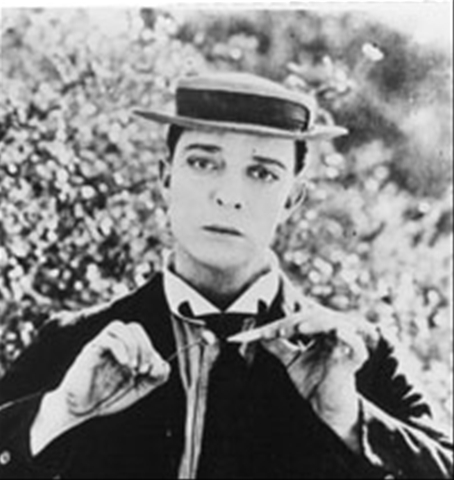
One of the great joys of film history that the 1001 has opened my eyes too is silent film. Watching the literal birth of the art is always amazing. Don’t get me wrong there are just as many rubbish silents as sound films, but some of the greatest comedies, horror flicks, westerns and drama films are from the silent era.
This week on the blog I will be exploring the varied wonders of silent film, along with a killer contribution from a guest blogger. There will hopefully be a little something for everyone as the week will cover a range of genres, shorts and features and even a sound film. The gameplan is to have 7 posts in all (though a few haven’t been written yet so don’t hold me to that.
Thanks to Madman Entertainment I will be running a comp all week, so get involved for your chance to win a copy of Buster Keaton’s iconic The General. You can earn entries in the following ways fine people:
- ‘Like’ the post on Facebook for one entry.
- Comment on the post on Facebook for two entries.
- Share the post on Facebook for two entries.
- Like the post on this site for one entry.
- Comment on the post on this site for two entries.
There will be double entries for The General review that will be up on Saturday and entries will remain open until midnight on Thursday 18 April (Australian time). If you have any questions about the competition, ask me in the comments section or fire and email to drinkingbeerwatchingmovie@gmail.com.
To kick things off, let me know in the comments section what your favourite silent film is and why.
Like what you read? Then please like Not Now I’m Drinking a Beer and Watching a Movie on facebook here.
Trailer for your Weekend: Citizen Hearst

Sometimes I post a trailer in this feature that really does not take my fancy, and this week is one of those times.When I saw the title of this forthcoming doco, I was really excited. A peer into the life of the man that so famously inspired Citizen Kane, one of the greatest films in history. Erm no. This appears to be a trailer for a bloody ad for the media empire that Hearst built. Count me out.
Am I being too harsh?
Like what you read? Then please like Not Now I’m Drinking a Beer and Watching a Movie on facebook here
Worth Watching March 2013
Here is the round up of all the films that I did not feature in depth elsewhere on the site for the month of March. A couple of really fantastic older films, perhaps strangely not on the 1001, managed to outweigh the sour taste of some of the newer entries on this list. Be sure to share your thoughts in the comments section below.
Worth Watching:
- The Indian in the Cupboard (1995), Frank Oz – I have vague recollections of my old man taking me to see this when I was a kid. And re-watching it now, I see why I loved it back then. Tis really creatively shot and put together, with some noticeably fantastic sound design. Not to mention Richard Jenkins! (No, I can absolutely not review a movie he features in without mentioning him). The film actually has some really interesting themes for kids to see, mixing in a little darkness and commentary about Native Americans on film at times. This is a really great fantasy tale grounded in the reality of family life. I recommend it highly.
- The Dish (2000), Rob Stich – Sam Neil is an utter dude, such a great actor. This gentle Australian comedy masterfully creates a sense of time and place. It chronicles the moon landing and the pivotal role the small Aussie town of Parkes played in it. Some wonderful characters to root for and a rich vein of very Australian humour make it worth your time.
- Holy Grail: The T206 Honus Wagner (2013), Colin Barnacle and Nick Barnacle – I can’t remember on whose site I first saw this, so thanks for the tip whoever you are. A cracking short which illuminates baseball history through discussion of baseball cards, including the titular holy grail. Crams a lot of interesting stuff into the short time: fraud, the philosophy of trading cards and shady business dealings.
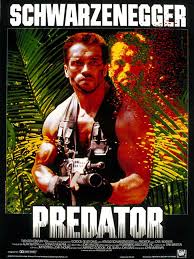
- Predator (1987), John McTiernan – I can’t believe I have left it so long to see this film. A great sense of humour and a great cast. I’m talking Arnie in cigar chomping mode, Apollo Creed and Jesse ‘The Body’ Ventura. Vintage 80s ham, yet it really nails the sci-fi by way of straight war film feel. A really awesomely stylish and violent action film that I consider a classic.
- A Good Day to Die Hard (2013), John Moore – As far as action flicks go, this one is old skool and very loud. It is also just action packed enough to overcome a story that is both a bit flat and a bit nonsensical at times. The big set pieces, especially an extended car and truck chase early on, are what stand out here.
- Cleopatra Jones (1973), Jack Starrett – A cracking entry into the blaxploitation subgenre. Tamara Dobson is amazing as the central, titular spy. Cleopatra is a great, karate skilled spy who answers to no one. Really cool to see a film where both the hero and villain are female. A killer car chase and a convincing exploration of the racial politics of the time round out a satisfying film.
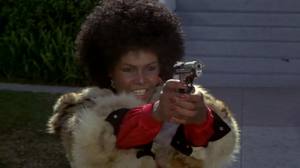
The awesome Tamara Dobson in action
- Oz the Great and Powerful (2013), Sam Raimi – It’s not as epic as it could be and Franco is all hammy and not his usual self. But this is really quite a good film. Michelle Williams gives a wonderfully nice performance and a talking monkey played by Zach Braff which I thought would blow is a really fun character. The film looks incredible too, with the 3D being really vibrant and popping off the screen.
- Cloud Atlas (2012), Tom Tykwer, Lana Wachowski and Andy Wachowski – Epic in length, this actually feels longer than its 3 hour running time. But the ending somehow manages to tie all the strands of this tale together exhilaratingly. In fact the entire film somehow manages to be not at all difficult to follow, a testament to the script by the three directors. The boldest choices here – separate directors and actors in multiple roles (across multiple genders and races) – pay off in spades.
Not Worth Watching:
- G.I. Joe: The Rise of Cobra (2009), Stephen Sommers – Ugh. What an incredibly loud and stupid film. The whole thing has a horrid CGI look to it. The actors here are either really terrible, or slumming it for some reason (Joseph Gordon-Levitt and Brendan Fraser lead the latter brigade). One of the crappier films ever made.
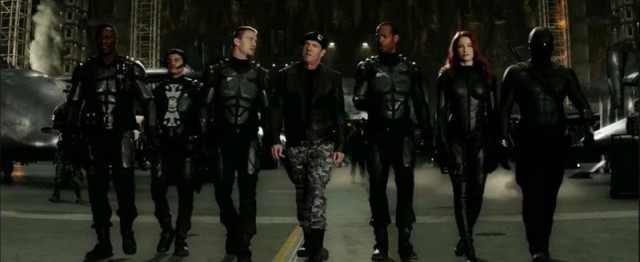
The craptacular team of Joes
- Sarah Palin: You Betcha! (2011), Nick Broomfield and Joan Churchill – To be clear, Sarah Palin is an idiot. But this film is pervaded by a snide, mockingness that I really don’t like in my docos. I am not really sure what Nick Broomfield is aiming for in this. He inserts himself in the film and just comes off as amateurish. Is that what he was going for? The film has no legitimacy, with numerous assertions made but not backed up in any way. More a succession of personal attacks on Palin.
- The Incredible Burt Wonderstone (2013), Don Scardino – There is very little incredible about this film which is decidedly average at almost every turn. The lone exception is Jim Carrey’s hilarious extreme magician. But is it too much to ask for a hollywood comedy that is not uber sexist. I don’t understand what Olivia Wilde and especially Gillian Jacobs are doing here. And I have no time for the any attempt at having the word rapist used in a comedic context.
If you only have time to watch one Predator
Avoid at all costs G.I. Joe: The Rise of Cobra
Like what you read? Then please like Not Now I’m Drinking a Beer and Watching a Movie on facebook here
 Beermovie.net