Serpico
Before you see any images onscreen in Serpico (1973), you hear the urgent wail of a police siren. In case you didn’t already know, this lets you know that this is a film all about the police. Good cops (well one, possibly two) and bad cops (numerous).

The film opens with Pacino’s titular whistleblower cop being rushed to the hospital with a nasty gunshot wound to the face. The audience soon learns that Frank Serpico had very few friends on the force, casting suspicion on a fellow policeman being the perpetrator of the shooting. From this point, the film goes back and paints a picture of what led to Serpico’s shooting. One of the real achievements from director Sydney Lumet is that he is able to successfully portray the institutionalised corruption of the NYPD. Things start out small, free lunches and other tiny perks in return for the fuzz looking the other way. But increasingly, as Serpico spends more time on the force, the corruption seeps deeper and deeper. Pacino’s stand-up cop refuses to be a part of it, ironically drawing suspicion from his colleagues because he is too honest to take money on the side. Most of the film sees Serpico attempting to get the powers that be to act on the rampant corruption that is plaguing the force.
 Serpico is shot with a gritty realism which enhances its impact. Early on Pacino’s young cop is an idealistic, clean cut rookie. He is immediately an outsider with his colleagues. In a workplace where everyone must conform, hence the uniform, Serpico stands out with his ever-growing beard and increasingly ‘hippyish’ interests. I mean he reads books – what a weirdo. This is a masculine world, and only what the folk of the NYPD consider ‘manly’ will be accepted. It is when shot with this realistic, at times confronting style (an early rape is especially stark in its rendering) that Serpico works best. A couple of regressions into sappy montage, a particularly bad one establishes his idealism with a longing gaze at the framed photo of the ‘Patrolman of the Month’, are not nearly as appreciated. The character of Serpico is an interesting one, he is not just a good cop trying to get the force back on track. His interest in philosophy and ballet are counteracted by a nasty temper, often directed harshly at the women in his life. These women, despite deserving better, always become secondary to Frank’s endless pursuit of bringing to light the corruption of the force. As such, Serpico pushes them, and his only true friend, away from him.
Despite being a relatively simple story (the story not really being the point), Serpico is a morally dense film, exploring amongst other things the nature of crime & punishment; and the relationship between the two. If you consider what is occurring onscreen, you can take a lot away from this film. It will make you reconsider the nature of the police force and the role that they have, and should have in a society. It will also cause you to ponder who should police the police (probably not “the coastguard” as Homer Simpson once suggested). As well as being all of these things, Serpico is also the tale of a man’s failed ambition. Serpico is a man who wants nothing more than to be a good, honest, successful policeman. The son of a shoe repairer, he has raised himself up to this honourable position and he yearns to raise himself to the level of detective. But all that occurs is that these ambitions are shot down by treachery and corruption, things that Serpico has no interest in.
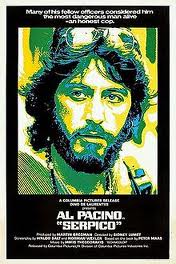
Featuring a really good performance from Pacino, sans his patented histrionics, Serpico is a cop film well worth catching up with. It is a film that is to be both enjoyed, and thought about, including long after the final credits roll.
Verdict: Pint of Kilkenny
Progress: 71/1001
Trailer for your Weekend: Identity Thief
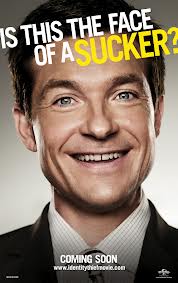
Even though I thought 2012 was a relatively good year for comedy, my default reaction to a new mainstream entry into the genre is skepticism.
So I am naturally skeptical about Identity Thief. I think it has some things going for it. I was a fan of Horrible Bosses and a few of the same people seem to be involved in this. And despite being one of the few people who hated Bridesmaids, I thought Melissa McCarthy was by far and away the best thing about the film. I think the cast is pretty interesting actually, I’m a big fan of Amanda Peet and she has not been in much lately. There is nothing in this trailer which convinces me this is going to be impressive, but I will be certainly checking it out when it is released to see the result.
Like what you read? Then please like Not Now I’m Drinking a Beer and Watching a Movie on facebook here.
Cabaret
Set in early 1930s Germany, the Liza Minnelli starring Cabaret (1972), is considered one of the greatest musicals of all time. Whilst there are definitely song & dance numbers that are a large part of the film, for me the film does not feel like a musical as such. The songs merely form part of the background to what is an exceptionally clever and adult piece of filmmaking.

Cabaret is an incredibly original film. From the big opening musical number where the focus is on other dancers in the club, rather than Minnelli who is hidden away at the back, the film just does things differently. Plot wise, the film is a love story of sorts between Minnelli’s bombastic Sally Bowles and the newcomer to Berlin, the Brit Brian Roberts played by Michael York. Brian is a naive force, not ready for the swirling mix of a new country, cabaret, cigarettes, booze and sex which revolves around Minnelli’s character. In its second half the film descends into ever evolving triumvirates of jealousy, the last one which takes up the most time, is the boldest and the cleverest. It leaves you questioning and double questioning the motives, love and lust of all those involved. Whilst the first half of the film is good, though a little up and down, the second is exceptional, taking the film to places I could not have dreamt of. Complex, dense and brilliant places. I won’t go into too much detail of what they are, because it is best to discover these surprises with minimal knowledge of what is to come. Needless to say though, it is a pretty bold narrative that is willing to aim its story and message at a genuinely adult audience unlike so many films, even ‘serious’ ones, which feel the need to dumb down their message.
I thought I had the film pegged, I knew it was going to descend into a Nazi-centric ordeal in the later stages. But director Bob Fosse is too clever to take it such an obvious direction. Rather the Nazis continue to loom over the film as an ominous presence, occasionally coming out of the shadows to lay a beating on someone or murder a Jew’s dog, but generally remaining on the periphery of the action. In some ways, they are all the more ominous for this fact as they remain not quite central, leaving the audience to ponder when they will next be injected into the action. The effect is also that the viewer is left to ponder what effect they will have on the characters after the film has finished, as the war years continue to ramp up. The attitudes of some of the characters to the Nazis are also very interesting, especially if they are historically accurate. Viewed by some as nothing more than a fad of young thugs, others (the richer Germans) consider them a good thing. They will get rid of the Commies, and then we (i.e. the German Germans) will get rid of the Nazis. Obviously history shows that is definitely not how things turned out. The film also portrays the ugly narcissism and sheep mentality of Nazism that allowed the scourge to spread throughout Germany like wildfire.

Minelli as she appears in the film
The film is really highly stylised in its shooting, costuming and just overall presentation. It looks excellent and takes you to the time and place that the film is set. The songs, which move from setting the background atmosphere of the cabaret club, to reflecting the narrative action are also really quite good. They are employed very differently to those in a traditional musical. Whilst they do begin to reflect the story, they are never used to drive the narrative. Rather they reflect on it, provide more detailed comment, but do not move the story along. As a young woman experiencing a bold European lifestyle, Minnelli is fantastic, having a unique and very expressive (in a good way) method of acting. Hers is a much more complicated and intriguing character than one is conditioned to expect from Hollywood filmmaking. She is promiscuous, vulnerable, strong, has her hang ups including daddy issues and harbours dreams (or is that delusions) of film stardom. A woman who cannot bear to be constrained by domesticity and family. Whilst Minnelli is undoubtedly the star of the film and the focus of the narrative, all of the smaller roles are equally as interesting and just as well performed by the actors who inhabit them.
Never mind being one of the best musicals of all time, Cabaret is one of the better films of all time. It is a wonderfully eccentric love story, the kind that it is so rare in film history to get. Singularly original and challenging filmmaking, be sure to check it out if you have never seen it.
Verdict: Longneck of Melbourne Bitter
Progress: 70/1001
Like what you read? Then please like Not Now I’m Drinking a Beer and Watching a Movie on facebook here.
Worth Watching December 2012
Finally back on deck after a couple of weeks away for Christmas and New Year’s. Will be working hard to update the site, though the next week and a little bit will probably be devoted to catching up on some final films in order to do my 2012 review.
Worth Watching:
- The Sessions (2012), Ben Lewin – An exceptional film, with three of the best performances you will see. William H. Macy, Helen Hunt and John Hawkes are all brilliant and make this a must. This is simultaneously a touching personal tale of one man’s sexual journey, but also everyone’s sexuality. In addition the film manages to weave poetry and faith into the story masterfully. A story that on paper could have so easily been cliché, but here it is told intelligently, boldly and dare I say it, brilliantly.

These three all give fantastic performances in The Sessions
- Oliver and Company (1988), George Scribner – This very New York centric story is a lesser known Disney effort. Despite the failings, I’ve never seen an uglier Disney film and the odd annoying character spouting annoying ‘streetwise’ dialogue for starters, this has enough charm to win you over. You can really relate to Oliver, the main character and there is a definite charm to the dynamic of the gang. Also interesting to see a homeless dude at the centre of a Disney narrative.
- Choke (1999), Robert Raphael Goodman – This doco brings a philosophical bent to Vale Tudo, the spiritual successor of Mixed Martial Arts. It chronicles Rickson Gracie’s attempt to defend his title in Japan. The effects this has on Gracie’s wife and the politics of the age old striker vs grappler debate are both nicely shown. Less interesting, even for a fan of martial arts like myself, is the presentation of the actual tournament. Here is the film in full, it is quite violent, but there is plenty to interest here.
- Into the Abyss (2011), Werner Herzog – An exceptional examination of one crime and the societal causes and implications of it. Also an examination of crime more generally, the death penalty and the implications of both. Herzog is probably the greatest documentarian of our time. This is a dense, intelligent film – a beautiful examination of something incredibly dark.
- Bigfoot (2012), Bruce Davison – Oh man, starring a former Brady Bunch icon, there is plenty of so bad its good moments here. Lots of CGI madness to keep everyone happy even if it does go on just a little. But if you like comical performances, B-movie fantasticness and plenty of Bigfoot chompin on heads, you will probably get something out of this one.
Not Worth Watching:
- My Week with Marilyn (2011), Simon Curtis – Michelle Williams is a fine actress, but no one can mimic Marilyn Monroe’s sass and charisma, not even her. This should be such an interesting film, but it is bland with no sharpness or edge to it whatsoever. Williams is just a little hollow and Kenneth Branagh is disappointing as a leering Laurence Olivier. Not even fantastic performances from Emma Watson, Judi Dench and Julia Ormond as Vivien Leigh make this worth the time.
- Here Comes the Boom (2012), Frank Coraci – This is amiable enough for much of its running time, but the second half is naff as it comes. By the numbers, ‘save the school’ story is not helped by Henry Winkler hamming it up in uber-annoying form. Though Selma Hayek, Kevin James and even MMA legend Bas Rutten in a relatively major role deliver much better turns.

If you only have time to watch one The Sessions
Avoid at all costs My Week with Marilyn
Like what you read? Then please like Not Now I’m Drinking a Beer and Watching a Movie on facebook here.
 Beermovie.net