La Maison de la radio

Any list of the best cinema documentarians working today must surely include Frenchman Nicolas Philibert. From this Thursday at Arc Cinema, Canberrans will be treated to a limited season of his latest film La Maison de la radio (2013), in which Philibert takes a look at a day in the life of the French public radio station Radio France.
 Philibert is an exponent of an extremely verite, fly on the wall documentary style. At no time at all during La Maison de la radio does he feel the need to get his Spurlock or Moore on and insert himself into proceedings. He does not even get a famous ring in to provide a voiceover. Rather, he just shows the goings on simply, confident that the inherent interest of what is being shown will coalesce into an equally interesting whole. Luckily for Philibert, in this case it works. This day in the life approach allows the film to simultaneously expose the sheer volume of information the station broadcasts each and every day whilst also restricting the film to a set timeframe which makes it relatable and digestible. The editing and multi-camera shooting allow Philibert to successfully convey the cacophony of an organisation of this size and scope. And what scope it is too, we see the recording of classical music, the live broadcast of a cycling race, in depth discussion of untranslatable Japanese concepts, the in-house garage and plenty more.
It is somewhat interesting that Philibert has an increasing reputation as a real auteur of doco cinema when his style is in so many ways so anti-auteur. Perhaps it is because he is so damn good at it. Specifically the construction of the film is what Philibert does so well, perhaps better than anyone else. There is quite an apt sequence in the film actually where an experienced producer is teaching a young employee the art of the news flash. She emphasises the detail of the content, the choice of items and their order. These are the technical aspects that Philibert does so well in La Maison de la radio and which make it such a success. Despite not having a ‘narrative’ as such, the film flows from one vignette to the next in some sort of logical sequence. The attention to the detail and minutiae of life in the organisation is painstaking and I don’t think there is a single sequence that did not hold my attention for the duration it was on screen. Everything is interesting for Philibert, but nothing is too interesting. He dwells in many places in this film but none for too long. He gets in, shows the audience something thought provoking, funny or informative and then gets out of there and moves on to the next sequence.

La Maison de la radio does not quite displace To Be and to Have as my favourite film of Philibert’s, but it is still an exceptionally rich and informative journey into a very specific world. If you are interested in seeing a master of his craft at work and a really cinematic doco, it is well worth checking out. It also contains the best potato peeling scene you will see onscreen this year.
Verdict: Pint of Kilkenny
Like what you read? Then please like Not Now I’m Drinking a Beer and Watching a Movie on facebook here and follow me on twitter @beer_movie.
A Fortnight of Terror: Long Weekend

Given the disappointment of not being able to catch Patrick (2013) during this terrifying fortnight, I thought I should check out a little classic Aussie horror action. Enter Long Weekend (1978).
I always try and keep expectations low when chucking a DVD on. But when the DVD in question has the tagline “their crime was against nature… nature found them guilty” it is quite hard to stop expectations from skyrocketing. Thankfully, Long Weekend more than lived up to the expectation created. The story focuses on Peter and Marcia who escape for a long weekend in the hope of repairing their relationship which has fallen on rocky times. The film begins by contrasting the urban and wilderness landscapes as the couple leaves the city for the weekend. Camping is in some way the intersection between those two worlds, a soft entry into the wild world, so it is notable that is what Peter and Marcia are doing. The fact they cannot leave their city slicker life behind and adjust to the wilderness leads them down some dark paths. Their mistreatment of the environment is an awesomely unsubtle allegory for the treatment of our world, one that still rings as true (truer) now as it did 30 years ago. This is a couple who think nothing of tossing cigarette butts out the window, littering, shooting animals for sport and chopping down trees simply because they have the power. They perpetrate wanton destruction as they focus on themselves and nothing else.
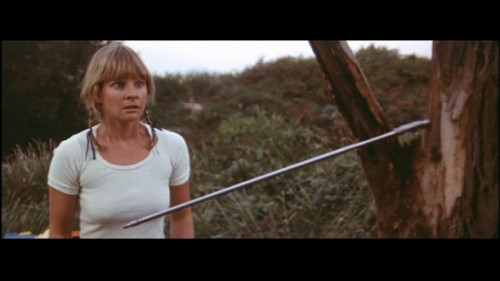
Much of this really fantastic film is not what you would call straight horror. One side of it is an intriguing psychological relationship drama full of secrets, hinted at deception and attempts at controlling behaviour. Then on the other side there are the creepy goings on, with animal attacks, spear guns firing seemingly of their own volition and so on. Both of these would make really taut and fun movies. But combine them, and you have something pretty special I think. The film looks really pretty. The cinematography is first class and the whole visual side of proceedings is helped no end by the fact that the action takes place in some pristine Australian wilderness. Long Weekend is also a delightfully Australian film. As well as looking real pretty, the location serves to create a whole lot of atmosphere. Forests that look stunning lit up in the daytime, take on a positively chilling air at night, lit only by headlights. Then there is the wildlife. Numerous birds, a tassie devil, kangaroos, even a fricking dugong make appearances. It says a lot about the quality of the film’s construction that all of these animals have a menacing presence, yet the film is not particularly over the top or camp. Topical and ahead of its time, this would be an ‘issues film’ if it was not so damn fun to watch.
Before checking it out, I had only ever heard Long Weekend hinted at. But I now consider it to be a bit of a minor Aussie classic. Do your best to track it down if you can (it is distributed on DVD by Umbrella here in Aus) and hopefully you will enjoy it as much as me. A film as atmospheric and taut as this, from a country that supposedly doesn’t make genre films, should be seen by plenty more people.
Verdict: Pint of Kilkenny
Over this fortnight, you have the chance to win an as yet unconfirmed (but definitely choice) prize courtesy of Madman Entertainment, so be sure to get liking and commenting to go into the draw.
Like what you read? Then please like Not Now I’m Drinking a Beer and Watching a Movie on facebook here and follow me on twitter @beer_movie.
The Cinema of Japan: Yojimbo
Here we are with the final post in my week (and a bit) focus on the cinema of Japan. I hope you guys have enjoyed these posts and thanks to the guest bloggers that have helped me along the way. Don’t forget that you have a shot at winning three Japanese films from Madman and entries will close a week from this post going up.
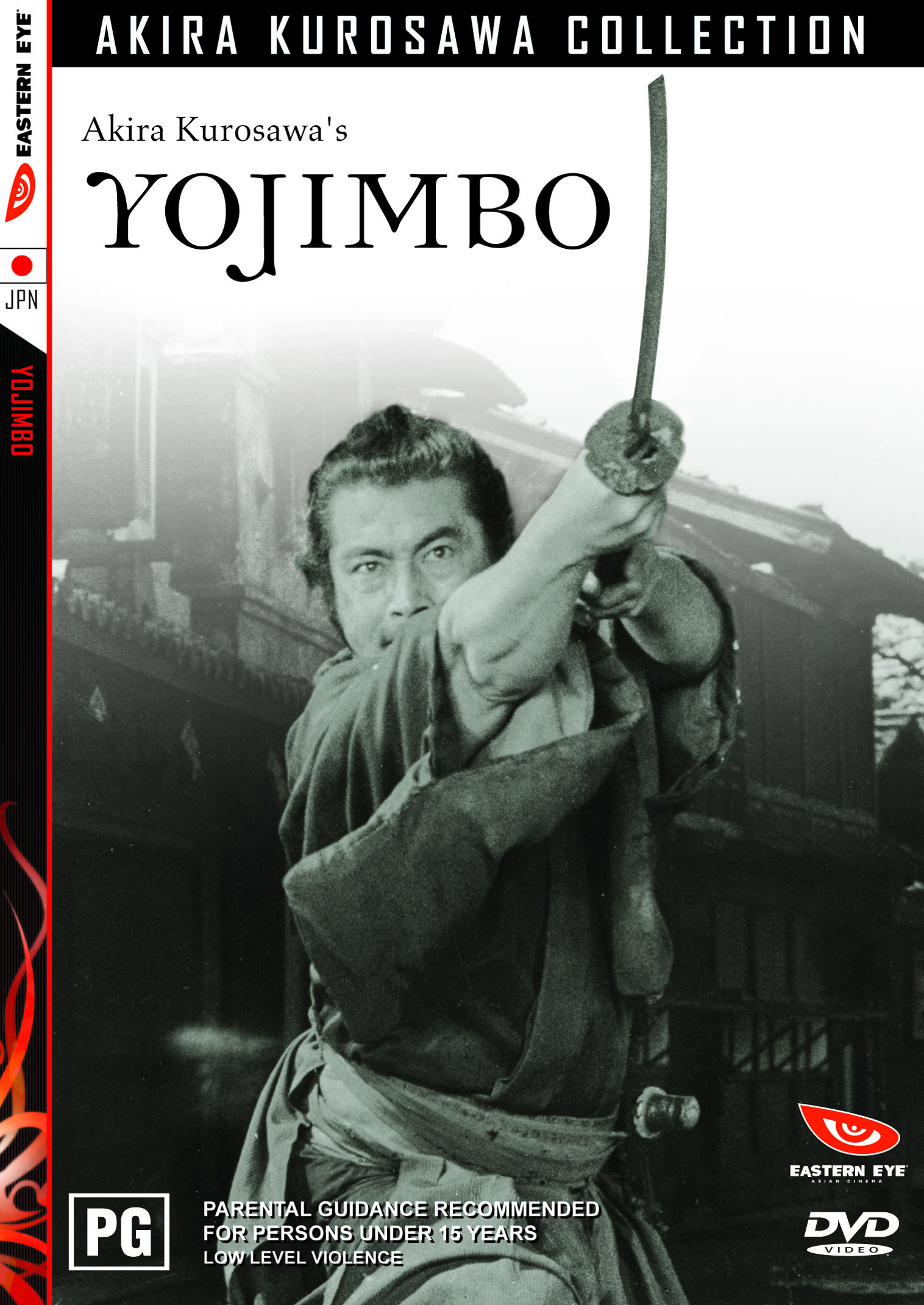
It is a little surprising that Akira Kurosawa’s iconic Yojimbo (1961) does not feature on the 1001. I have seen a few of the great man’s films, but this is the first from what I guess you would call his really classic, samurai focused phase that I have managed to catch.
Apparently this film had a particular influence on (or even just supplied the entire plot for) a whole bunch of Western films. Even if you did not know that fact going in, it is pretty plain to see. A lone, violent man called Sanjuro saunters into town. He attracts the attention of the locals who are transfixed by this stranger. The town that Sanjuro wanders into is in the midst of a bloody and closely fought gang war. After showing his prowess by slicing and dicing a couple of hapless minions, he is courted by both sides looking to buy themselves some muscle. It is these really well scripted negotiations with both sides that take up a majority of the film’s running time. These elongated sequences of both sides bidding for his services are really interesting. They are quite detailed and multilayered, but the script is good enough not to need to get unnecessarily (or even at all) dense. Not get too concerned though. This isn’t Margin Call (2011) with everyone sitting around the boardroom table talking shop. There is plenty of quality sword fighting action to go around as well.
 Sanjuro is actually a really interesting central character. He is I guess an anti-hero. For much of the film he is pretty unlikeable as he plays a bunch of (all admittedly unlikeable) people off against one another. Not exactly noble, he is content to sell himself to the highest paying crew, or preferably just rip them all off repeatedly, causing chaos in the town in the process. As such, it is a bit of an abrupt change where toward the end of the film, we as the audience are meant to now sympathise with this character, because up to that point he has done nothing in the slightest bit heroic. I kind of respected him as a dude who walked to the beat of his own drum the whole way through, but there is a definite jump from that to out and out sympathy. In the end though, after a fair dose of humility is beaten into him, it is hard not to feel the exact things for Sanjuro that Kurosawa was angling for the whole time. It just takes him to be literally beaten down so badly that it is borderline impossible not to feel sympathy for the man for this to happen. The character is played really well by Toshiro Mifune, one of Kurosawa’s creative muses throughout his career. He brings a searing, yet quiet intensity to the character of Sanjuro, keeping his motives hidden from the rest of the characters, but letting them know he definitely always means business.
I am not sure if there is folk source material behind Yojimbo that I don’t know about, but this pretty cool tale definitely did feel like an old fashioned fable to me. Bound by a single town and for much of it consisting of negotiations, it is lucky the script is so good. It is also refreshing in an age of ultra-seriousness in serious film, that this particular flick is not afraid to add in a rich sense of humour to the action. I am not sure if the soundtrack was influenced by classical Westerns or influenced them. But there is clearly some cross-pollination one way or the other which that just feeds into the notion that this is an Eastern Western of top class.
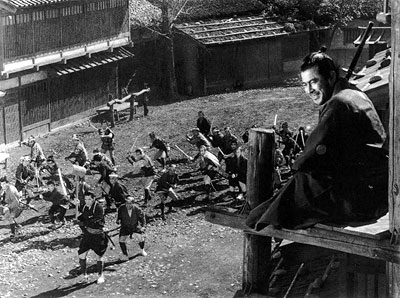
I can definitely see why Yojimbo is not just one of Kurosawa’s most famous films, but also a highly influential one in world cinema. As possibly the best samurai film I have ever seen, a distinctly Japanese genre if one exists, this is a highly apt way to finish off this look at the Japanese cinema.
Verdict: Pint of Kilkenny
This week thanks to Madman Entertainment, you have the chance to win a copy of AceAttorney, Black Belt and Yojimbo on DVD. Head here for all the details on how to enter.
Like what you read? Then please like Not Now I’m Drinking a Beer and Watching a Movie on facebook here and follow me on twitter @beer_movie.
The Cinema of Japan: Tokyo Story

After Chris’s fantastic personal introduction to the works of Yasujiro Ozu yesterday, I thought I would take a look at probably his most famous work – Tokyo Story (1953). I was lucky enough to see the film on the big screen at the Arc Cinema here in Canberra where the film got a really great intro from the head of programming. One of the interesting things he said was that back in the day Ozu was considered “too Japanese” to really succeed internationally. Whilst I love this film and Ozu’s fame obviously extended far beyond his own country, it is pretty easy to see why that opinion was held about him.
 Narrative-wise, the film is gentle but not exactly slow. The influence of Ozu on a myriad of artistic filmmakers that would follow him is plain to see in this regard. Tokyo Story’s greatest lesson is just how intriguing an utterly simple tale can be. The script is wonderful, even though it is telling such a simple story. Often it is hard to make these kinds of stories feel authentic, but there are no such issues here. The script allows the plot to unfold languorously in front of the viewer, spiced with an occasional note of humour. There is a sense throughout that Ozu is gently toying with the filmic form in this film. It gently nudges the heartstrings without pummelling them. It also veers in the second half into something of a road movie, where the personal or spiritual journey is accompanied by a physical one. This all builds to an emotional highpoint that I will not reveal except to say that it gives the film a ‘second wind’ of sorts after it had begun to drag for me, ever so slightly.
Visual poetry is one of those film terms that gets thrown around far too liberally when in fact I think as there are actually very few proponents of it. That said, Ozu is definitely part of that select group. Here, he continually incorporates architecture and the lines of buildings into his beautiful shot composition. This is notable due to the fact that much of the film takes place in urban areas and Ozu’s adeptness at incorporating enclosed physical spaces into his work makes it a lot prettier to look at then it otherwise would have been. Like the plot and the visuals, the soundtrack to the film can essentially be summarised as being quiet but masterful. Not at all intrusive, the soundtrack makes itself known through an occasional flourish that really enhances what is on screen.
 Whilst there is much here that supports the idea that Ozu is a distinctly, if not totally “too Japanese” a director, such as the settings and culture which really could be nowhere but that country, there are also a number of universal elements. Thematically, the concern of parents for their children when they leave home is something that permeates much of the film. Just as this was a major theme of life in 1950s Japan, so it was in 2000s Australia when I left home. If you have left home, you know what I am talking about. If not, then trust me it is coming. More broadly, the film touches on a number of issues related to familial relations, especially the notion of the in-laws and the strains they can place on everyone. The joys that having your family extended by the incorporation of said in-laws is also displayed on screen. Tokyo Story also hit home for me in its exploration of the notion of time. More specifically, the way that we always seem far too busy. Too busy for what is really important. It is a real takeaway from the film and a credit that it is a message that gets through to me, despite leading a totally different life to the ones being led onscreen.
Gentle and artistic, but definitely not boring, Tokyo Story is definitely one to tick off for all major film buffs. It did go on a little too long for me, but Ozu is one of the true original maestros of cinema history. There is a fair chance that he has greatly influenced one of your favourite directors with his approach to the artform.
Verdict: Pint of Kilkenny
Progress: 93/1001
This week thanks to Madman Entertainment, you have the chance to win a copy of Ace Attorney plus two other Japanese films on DVD. Head here for all the details on how to enter.
Like what you read? Then please like Not Now I’m Drinking a Beer and Watching a Movie on facebook here and follow me on twitter @beer_movie.
Upside Down

Upside Down (2012) made next to no splash upon its release, not even managing a cinematic run here in Australia. With its arresting visuals, great concept and a schmaltzy love story featuring Kirsten Dunst, I find it pretty hard to see why.
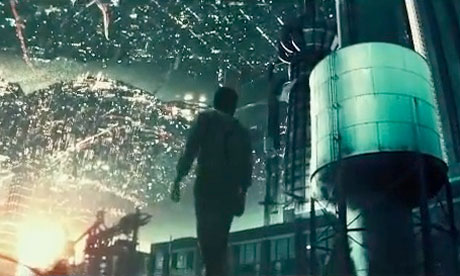
For me personally, a fantastic bloody concept and awesome visuals get a film a long way. Upside Down features both of these things and whilst perhaps it could have done something a little ‘bigger’ with all of this, the film is still really satisfying. Actually perhaps that is part of the charm. All of the big ideas that could have been examined are actually a little secondary here, with the focus being on just a good old fashioned love story. The film takes place in a world that looks a fair bit like ours. However there are actually two planets sitting right next to each other, sometimes mere metres apart. The upper classes, including a manipulative energy giant, live on one planet with the lower classes on the other. It is refreshing that the focus is simply on lovers from these two worlds trying to be together (which is forbidden), rather than on ramming home some grand societal statement.
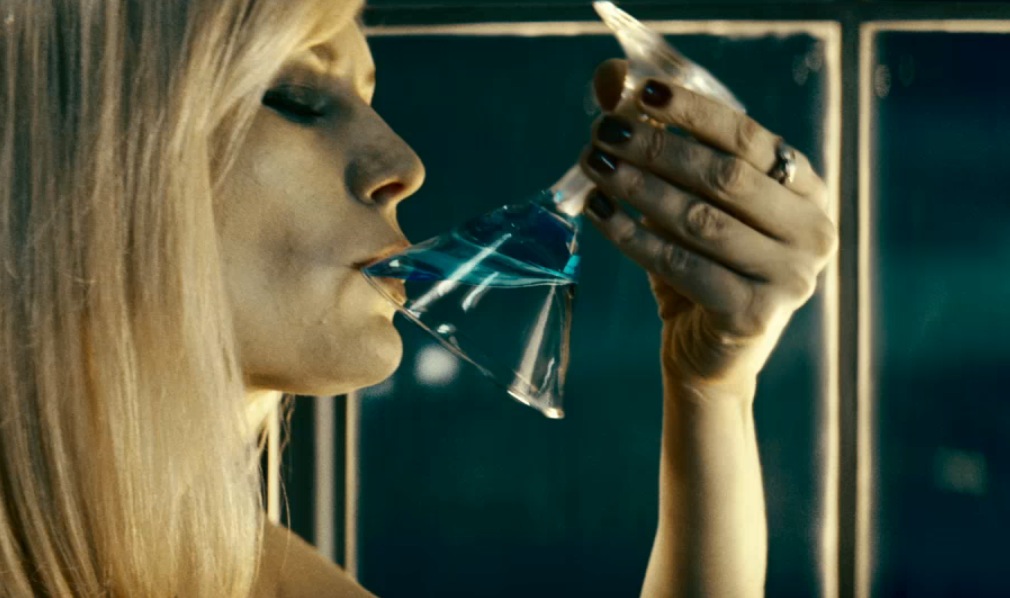 The two lovers are played by Kirsten Dunst and Jim Sturgess. Whilst the former has the bigger profile, it is Sturgess who has the most prominent role in the film. Interestingly for much of the film the periods that Dunst and Sturgess share the screen (which is not all that often) are probably the least enjoyable. It is a little average and schmaltzy. Credit to writer director Juan Solanas though, because this is overcome as the film progresses and the end to their love story, whilst entirely predictable, is also entirely satisfying. I think part of this is because the material gets more interesting as the story spends more time with them apart, focusing in on the life of the Sturgess character to build to its conclusion. Both Dunst and Sturgess are really good in the film. Their performances are likeable and Sturgess shows he can really carry himself on screen. He doesn’t come across as some cookie cutter presence on screen either, has a distinct persona which it would be great to see more of.
I only saw the film at home on DVD but I would have loved to have been able to see it on the big screen. The film looks both whimsical and fantastical, going to great effort to explore the visual opportunities that the concept presents. The whole film, presumably basically all shot on green-screen, looks great and there are some particularly arresting pieces of imagery. The office where work cubicles are on both the roof and the floor, nearly touching each other is one such example. Clearly with the competing gravity of the two planets there are plenty of laws that govern the action. Whilst these are explained a number of times, you are better off just ignoring them really and going with the flow. Like many a time travel film, if you get bogged down trying to work out all of the ramifications of various actions, you will end up doing your head in and missing out on much of the enjoyment that the film brings.
Driven by two fine performances and fantastic visual design, Upside Down delivers on all fronts. Both a really nice love story and a ‘soft’ sci-fi tale, it is a really enjoyable film that also features one or two things that have probably not seen elsewhere.
Verdict: Pint of Kilkenny
Like what you read? Then please like Not Now I’m Drinking a Beer and Watching a Movie on facebook here and follow me on twitter @beer_movie.
Insidious
 Given the presence of director James Wan, I am claiming this review of Insidious (2010) as part of my focus on Australian film. Wan and creative partner Leigh Whannell famously had to head abroad in order to get the necessary financing for their film Saw (2004). It has worked well for them too, with both of them carving out nice little careers in America.
I have been enjoying horror films more over the last year or two, after realising that whilst atmospheric and at their best highly tense to watch, they were not going to leave me all that scared, unable to sleep for days like I feared. Whilst it didn’t keep me up for days, Insidious is one of the scarier horror flicks I have seen. The first half is a near perfect Haunted House jaunt that is seriously tense and creepy. It sees a married couple, played by Rose Byrne and Patrick Wilson, have their son fall into a coma. Soon after, numerous creepy happenings start taking place. One of the best aspects of this section of the film was that it felt like a pretty realistic presentation of how a couple would react to such an intense situation, as fractures begin to emerge in their relationship. The second half, whilst perhaps not purely as successful as the first, successfully takes the story into some interesting and delightfully creepy places. It also leads to a conclusion of the film that is satisfying, and I for one loved the setup for the sequel at the end.
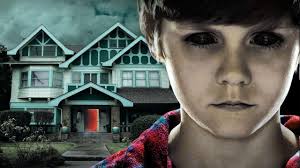
Watching this film got me thinking how little respect or even attention Wan gets here in Australia. His films get decent releases, but there is not the same focus on him as ‘one of our own’ and how well he is doing in comparison to other actors and directors. Perhaps most of that is due to the fact that he is working in the horror genre which does not get the respect it deserves. Hopefully this will change eventually, because on the evidence of Insidious, Wan is one of our very best directors. The film looks incredible under Wan’s stewardship. Even in the scenes of relative normalcy, Wan is very good at using the camera to create tension in a really disconcerting way. He achieves this generally in a very simplistic, old school manner, by really thinking of the best place to place the camera in each scene. A level of thought that is seemingly not bothered with in so many films. I am not for a second suggesting Wan is the next Hitchcock (he isn’t), but the way he thought out his scenes and took the care to think about the spot that placing his camera would bring the most to each scene, reminded me a lot of the great Brit’s work.
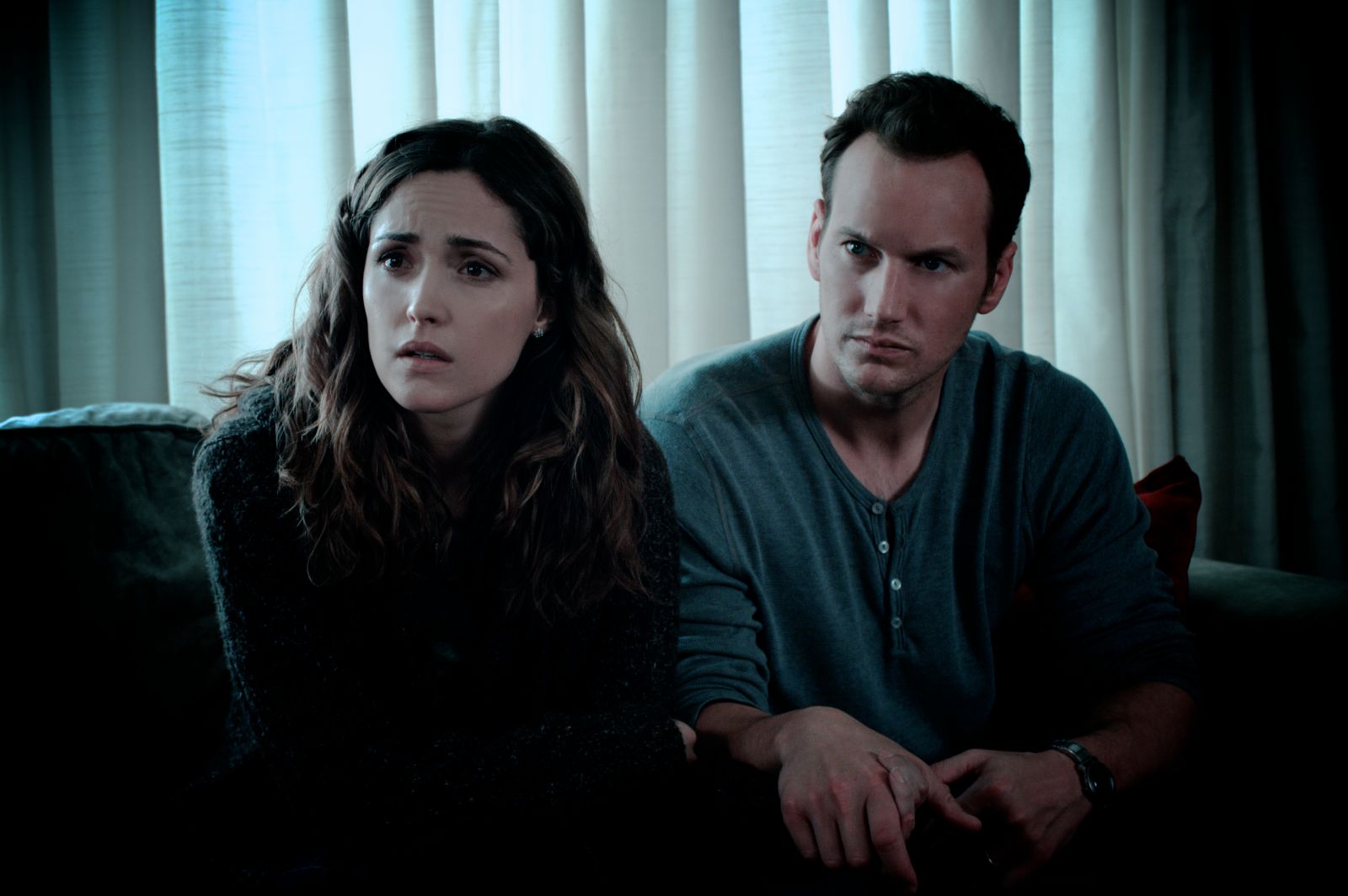 The Aussie flavour to the film leaks over to the cast as well. Rose Byrne, as the female lead, gives the best performance in the film. She is able to give a real sense of her character and the troubles that have plagued her life. Whannell partners up with Angus Sampson to fill a comedic relief slot. I liked the performances of those too, but was not so fond of the characters. Tonally the comedic stylings were just a little too light and not integrated with everything else that was going on. All the performances in Insidious were at the very least decent. Patrick Wilson, whilst in the shadow of his onscreen wife Byrne, is quite good. Lin Shaye as the employer of Whannell and Sampson, does really well to balance her role as part old kook who cannot be trusted, and the only hope for those involved. I also really liked the use of sound in Insidious. One of the major gripes I have with sound in many contemporary horror films is the fact that it is used cheaply to trick people into scares. In Insidious the sound is used to build atmosphere, but more importantly to boost the effect of scares that are already happening on screen.
I’m shamefully behind on catching up with Wan’s films (this is the first I have seen). But Insidious impressed the hell out of me, so I will be getting on to the others. A clever update on the classic haunted house flick that is genuinely scary, I can definitely recommend this film to anyone with the slightest interest in the genre. Or just if you want to see the work of one of the better young directors working today.
Verdict: Pint of Kilkenny
Like what you read? Then please like Not Now I’m Drinking a Beer and Watching a Movie on facebook here and follow me on twitter @beer_movie.
The Imposter – Review and competition
One of the things that movies are great at doing every so often is proving the old adage that real life really is stranger than fiction. The Imposter (2012) is a documentary that achieves that goal better than any film I have seen for a fair while.

For those that don’t know, The Imposter is the story of Nicholas Barclay, a 13 year old boy who goes missing from his San Antonio home. Actually most of the story is about Frederic Bourdin, the person who impersonates him, fooling everyone from the police to Nick’s own family. I won’t go into too many specifics aside from that though, because this is a film it is best to experience with limited knowledge of what takes place. Alone the journey of presenting this amazing tale and the facts that underpin it, the film manages to provoke many trains of thought, or at least it did for me. It repeatedly makes you put yourself in the situation of those people in the film and what they must have gone through. Losing a 13 year old son/brother, finding him again and then having him torn away again for example. It also made me ponder the fact that it was possible that whoever did kidnap Nicholas was able to watch this film, which is a chilling thought indeed.
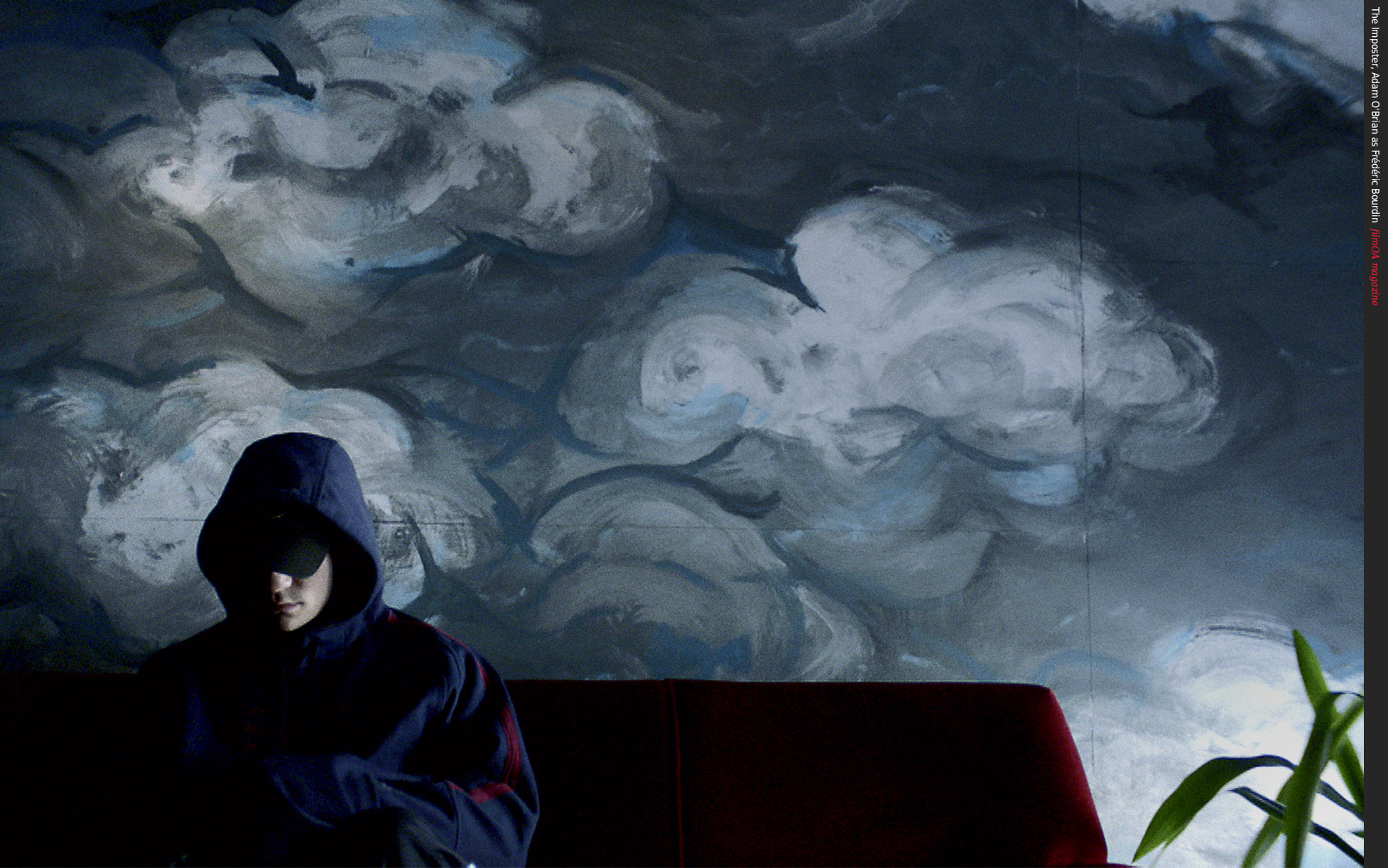
Stylistically The Imposter uses a lot of re-enactments to drive the action. Re-enactments are a bit of a dirty word when it comes to documentaries which is mainly attributable to the ham fisted ones that are a feature of so many TV docos. But the ones in this film are quite good and don’t take you out of the world of the film, as well as being stylishly done and originally incorporated into the rest of the film. Bourdin is the central focus of the film, helped in part by the fact that he was able to record lengthy interviews and participate in re-enactments. He is an incredible person, but not in a good way. There is at various times a sense of pride in the way he managed to deceive so many people with scant (no?) regard for the pain that he was causing in people’s lives. Clearly a sufferer of some form of mental illness, Bourdin is also a victim to some degree. But his unremitting narcissism makes it rather hard to empathise with him for any length of time.
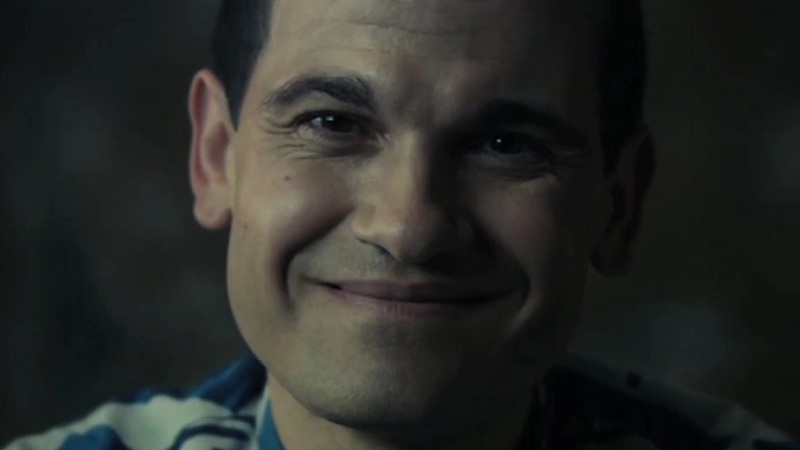 For much of the film your empathy will fall with Nick’s family as they were completely sucked in by Boudin’s horrific impersonation and deception. The filmmakers also call this empathy into question though as the latter half of the film examines the possibility that Nick’s family were involved in his murder and disappearance. The lengthy interviews reveal just how exceptionally calculating Bourdin was in his approach to deception. He unveils the science behind making a succession of people, who really should have known better, believe that he was Nicholas. Frederic is pretty shameless about what he has done. He smiles often throughout the film, even when proudly recounting some of the more heinous deceptions that he spun. Making people believe that his was repeatedly raped by a military sex ring is just one example that he was willing to go to any length to maintain his position.
The Imposter is a deeply sad film. It is hard to know exactly what has taken place. But at the very least a young boy has disappeared and quite possibly died. The people who did it have not been captured. And his family has no closure. Unless they did it, which is not particularly reassuring. If you haven’t already seen it, check this film out. Very entertaining, thought provoking and another example if you needed one in your life that truth is far, far wackier than fiction.
Verdict: Pint of Kilkenny
Thanks to Madman Entertainment, I have a copy of the film on DVD to give away. Comment below for two entries in the draw, retweet or share the details of this review on Twitter or Facebook for two entries and like the review here or on Facebook for one entry. Entries will remain open until midnight on Sunday my time. Open to all readers worldwide. Best of luck all.
Like what you read? Then please like Not Now I’m Drinking a Beer and Watching a Movie on facebook here and follow me on twitter @beer_movie.
100 Bloody Acres

Recently released in Aussie cinemas, and elsewhere around the world on VOD platforms is the helluva fun comedy-horror flick 100 Bloody Acres (2012). Hopefully this film can gain a decent audience around the parts, because it really deserves it. Plus it would be great to see those behind the film, such as the brotherly directorial team of Colin and Cameron Cairnes, get more chances to show off their stuff.
Set in rural Australia, the film follows the Morgan brothers, small business owners with a massive fertiliser contract to fill. Only trouble is that the phenomenal batch of fertilizer they previously supplied happened to contain a secret ingredient… human bodies. An ingredient in short supply. At the beginning of the film, the younger of the siblings Reg finds a body in the wreckage of a car accident. So he snaffles it and heads back to the farm. On his way there, he stumbles across three festival goers, hitchhiking their way to the gig. Reg, eager to impress his big brother, picks them up with a view to turning them into fertiliser. Only, the Morgans aren’t murderers. At least not yet. All the other bodies they included in their product were just found in car crashes.
Back at the Morgan Brothers farm is where the ‘fun’ really starts. It is also where the older brother Lindsay, played by Angus Sampson, makes his first appearance. Sampson will be known to overseas readers from his work in James Wan’s Insidious (2011) and to Aussie readers from a bunch of (predominately comedic) things. Including a bunch of star turns in the Aussie show Thank God You’re Here such as this one:
Whilst the entire cast is good, Sampson is definitely the star here. He plays somewhat against type, being really quite menacing and overbearing and also strikes up a really good chemistry with Damon Herriman who plays his onscreen younger brother. Speaking of Herriman, he provides a well-meaning, if a little dopey foil to Sampson’s unhinged menace. The plot of the film is a clever inversion of the paranoia around hitchhikers in the Aussie outback. All three of the actors who play the hitchhikers are really good, especially so is Anna McGahan as Sophie. She does really well in a role that had it been poorly brought to life could have cruelled the film and made some of the bolder moments in the film feel utterly absurd. Also, this film features by far the best John Jarrett cameo of the past 12 months. Take that Tarantino.
Whilst the mixing of comedy and horror has been done really well by quite a number of films, plenty more have failed miserably in trying to pull it off. Some forget to put any menace or suspense into the horror elements. Whilst others are just miserably unfunny and embarrassing in their attempts to do so. 100 Bloody Acres hits the spot. After a gentle, wry start, the gore picks up quite a lot and whilst the ending is perhaps never in doubt, there is still a decent amount of suspense around exactly how things are going to go down. As for the comedy, it is a definite success, with the laughs ranging from the subtle to the hilarious character of Reg and his interactions with Sophie and ‘Bex’. The other thing aside from humour that the script does really well is that it actually makes you care about the characters. So often in horror/slasher type films the attitude seems to be, we are going to kill them anyway, so why bother making these people interesting? 100 Bloody Acres, while not dwelling over minutely detailed back stories, gives enough interesting tidbits for each character and especially the relationships between them to make you invested in what happens to them. Whether you are cheering for them to end up ground to a bloody fertiliser pulp, or hoping they can avoid that fate altogether. The film also looks really sharp, the cinematography makes the rural settings pop and also picks up every last little bit of grime and gore.

It is really good to see an Aussie comedy-horror film such as 100 Bloody Acres getting a relatively wide release. Even without the comedic elements, this film would be a serviceable little horror flick. But the fact that the humour is well executed and the performances all round hit the spot, make this right up there with my favourite Aussie flicks of the year so far. Go check it out.
Verdict: Pint of Kilkenny
Like what you read? Then please like Not Now I’m Drinking a Beer and Watching a Movie on facebook here and follow me on twitter @beer_movie.
Hail

“My soul’s pretty damaged at the moment”
I never really start reviews with a quote and I am not going to make it a regular thing. However looking back over my notes for Hail (2011), the above line of dialogue from the film seems an apt way to start. Hopefully I can communicate why. Barely seen upon its release, Australian film Hail is an uncompromising drama completely grounded in real life. A real life suburbia the type of which is rarely featured onscreen.
The film begins with a close-up of a painting depicting demons and gods at war. It is a fitting starting point because the film is in many ways an examination of the waging of very individual wars, both internal and external. The film focuses on Dan, who has just been released from prison. There is hope, from him and those around him, that he will be able to get his life back on track. But it is not a fake, glib hope. It is a realistic one. The hope to scrounge enough in a legal manner to get by and maybe spoil the woman you love with a few drinks at the local club every so often. Dan knows that people like him cannot really hope to rise much higher than that in contemporary Australian society. Having said all that, those are goals that you really hope and desire that Dan can achieve, to get his life back on track. The narrative is essentially linear, though not exactly what you would call straightforward. Especially early on, what takes place is more a succession of events and moments – sex, the tender moments afterward, having a drink, getting a job, smoking dope – before things gradually crystallise into a stronger narrative core.

The two incredible stars of Hail
I should warn you that Hail is an exceptionally difficult watch. There are shocking acts of violence. Some are shocking because they explode out of nowhere, others because of the truly heinous nature of what is being committed. Part of the reason behind that is the style in which it is shot. Which is actually a hard style to describe. In many ways, the grainy look and realism is similar to the style that made Snowtown (2011) such an ordeal. But having said that, many aspects of the film are actually shot in a really hyper-artistic, borderline avant-garde manner with images passing by and going in and out of focus. These sequences at times feel like a beautiful relief from the oppressing viewing of the film. Dan never shies away from his past. But as a man who is only just keeping it together, one crushing event brings him totally undone. And it is from this point that the clash of styles I have just mentioned is used to really quite devastating, disorientating effect. The performances are very naturalistic in their execution, the characters are predominately played by non-professionals and the events onscreen reflect in some ways those that these men and women have experienced in their real lives. Daniel P. Jones who plays Dan has a very intense presence onscreen that he channels into moments of both endearment and rage. Indeed, in a good way, he delivers more of a ‘presence’ rather than a traditional performance I think.
Hail is a searing film. A fantastic one, that I don’t think I ever want to see again. It shows one man’s journey through punishment, hope, retribution, all of it encased in layers of lost love and guilt. Watching Dan the character and Daniel P. Jones the actor approach his life, so “frightened of the unknown” is highly original, and highly effecting cinema.
Verdict: Pint of Kilkenny
Like what you read? Then please like Not Now I’m Drinking a Beer and Watching a Movie on facebook here and follow me on twitter @beer_movie.
Silent Film Week Guest Post: Hugo and Melies
James from Mr Rumsey’s Film Related Musings has kindly contributed this article for Silent Film Week which takes a look at Martin Scorcese’s Hugo and the relationship it has with the films of Georges Melies. It is an absolutely cracking article and I hope you enjoy reading it as much as I did.

Perhaps almost incorrectly labelled as a kid’s film, Hugo (2011) is as much a love letter to the medium of film as it is a family adventure movie. This is Scorsese reminding us why we all love films as much as we do, and he’s looking back with a particularly fond eye to Georges Méliès and to the inventive short films that he made between 1896 and 1913.
Set in Paris during the 1930’s, we follow the story of a young boy named Hugo Cabret (Asa Butterfield), an orphan who lives within a train station’s walls and who spends his time tinkering with machinery and clocks the way that his father taught him to. His father’s love for the movies transferred over to Hugo, and that love is taken up by the film and held proudly for all to see. It’s no secret that this is a celebration of the medium, as Hugo’s adventure leads him through what’s almost a history lesson in early film making, famous events such as the Lumière brothers’ screening of L’Arrivée d’un train en gare de La Ciotat (1896) are depicted, but the films’ real focus is on the highly imaginative works of George Méliès.
When trying to pick an example from Méliès’ work to discuss here I was faced with a near impossible decision, I could honestly have picked any of them, and if you are not familiar with his work then I strongly suggest that you head on over to YouTube and check some of them out. It would be well worth your time. Anyway, the film that I picked out for this post was his Cinderella (1899). Here you can see numerous techniques at work which he has now became famous for, such as the stop trick where the film is stopped, the actor/actress moved, and then the film starts again in order to create the illusion that the person has vanished, or in some of the cases here, an object is transformed. Aside from the visual trickery, this film starts off pretty much as we would expect it to. It’s the recognisable fairy tale which we are all familiar with, and everything seems relatively normal. But then we are suddenly surprised by the wonderful method that he chooses to use in order to depict time. It’s not only very effective and startling, but also, for me at least, it’s really rather fun.
It’s when looking back on Méliès’ films that I came to wish that Hugo could have been more inventive, had played with its form and our expectations to a greater extent. It would certainly be suiting considering the legacy that it is celebrating. It’s for these reasons that I believe that the film absolutely deserved to be shot on digital and in 3D. It is in actual fact the perfect treatment for such a film. It celebrates film, and the childlike pleasure that we get from seeing films, and whilst it looks back with a very fond and grateful eye on the past, particularly Méliès, it also absolutely celebrates innovation and the desire to try new things. Is Hugo as imaginative as Méliès? Not by a long way, but then that’s hardly surprising. Yes, I would have liked it to have stretched itself a little more, and yet it still delivers a satisfying story which is backed up by a great cast including Asa Butterfield, Chloë Grace Moretz, Sacha Baron Cohen, Emily Mortimer, Helen McCrory, and features a particularly strong performance by Ben Kingsley. It’s a heart-warming film that delivers adventure and a childish delight in the exciting world of storytelling, whilst also somehow being a film history lesson and a celebration of movies both old and new.
Verdict: Pint of Kilkenny
I want to leave you with another one of Méliès’ films, this one is particularly vivid, and I think frankly is nothing short of spectacular. The richness and vibrance of the hand painted frames is something to behold. Please spend a few minutes with The Merry Frolics of Satan (1906) and see what you think of it!
Want to win a copy of The General thanks to Madman Entertainment? Check out all the details here.
James is the creator and writer of Mr Rumsey’s Film Related Musings. Be sure to check out his site for a continuous stream of really fantastic reviews of a wide variety of movies, both old and new.
 Beermovie.net