The Searchers
John Ford’s The Searchers (1956) has an almost unparalleled reputation, hailed as the greatest Western of all time and receiving Sight and Sound accolades. Personally, I simultaneously like the film, but also struggle to see why it enjoys such enduring acclaim.
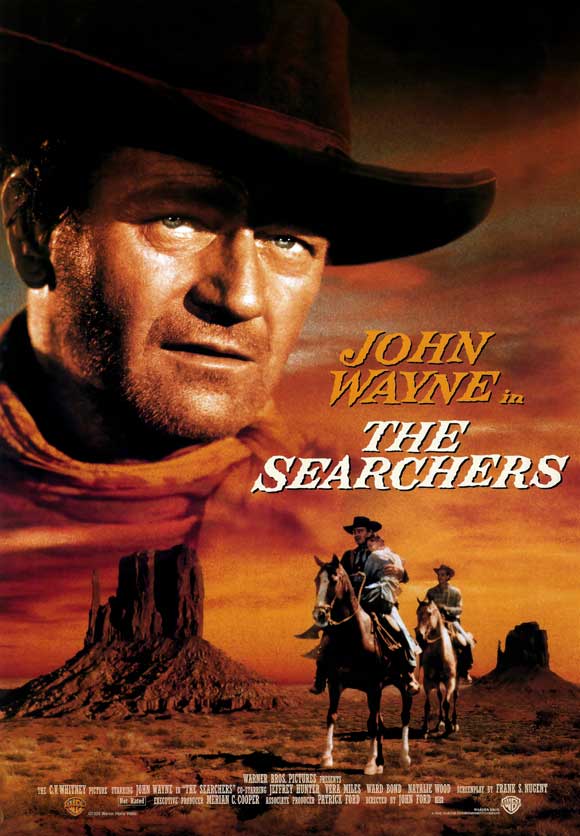
The first shot of the film is an iconic and fantastic one. Initially showing a woman’s silhouette in a doorway, then moving out to show one of the arid vistas that John Ford’s Western’s were so associated with. The plot sees Ethan, played by John Wayne, returning to his extended family after a long time away at war. Soon after, the dreaded Comanche launch a ‘murder raid’ on the family farm, after luring Ethan and some of the other men away from the homestead. Ethan and the others realise that two of the young women have been spared and captured by the Comanche. So they ride out after them. I think the narrative is why the film does not work 100% for me. For starters, I do not entirely feel that Ethan and his comrades are that enthused by the chase. They seem to just be going through the motions. Aside from Ethan’s racism, it is hard to see why they persist in hunting for the Comanche year after year (Ethan does not seem to express that much affection for the girls who have been taken). I guess I just do not see the emotional connection to the girl that they are so intent on reclaiming. The other issue I have is that the film struggles to convey the passage of time through the film. The hunt takes place over the best part of a decade, but it does not feel anywhere near that long.
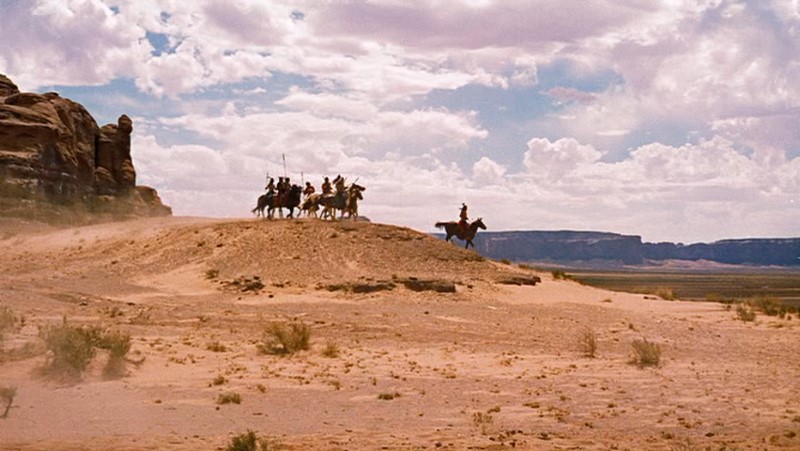
I do quite like this film. It is one of John Wayne’s better performances and a number of the peripheral characters undertake really quite interesting journeys throughout. But unfortunately it is somewhat inevitable that a review of an all time classic that I just do not quite get to the same degree as the consensus will slant a little negative. So apologies for that. I just do not enjoy it as much as a number of other Westerns – Shane (1953), Stagecoach (1939) and One Eyed Jacks (1961) all spring to mind. I think that whilst the real core of those films is made quite plain by the filmmakers, with The Searchers, you really have to dig for it. I think that the most interesting aspect of the film is the character of Ethan. His return from war, then his almost immediate leaving to go out on another ‘war’ of sorts, suggests that he is damaged goods. A man that cannot live without the thrill and focus that a war to fight brings. He needs violence and the ability to inflict violence to get by. This is not just evidenced by his endless pursuit of the Comanche, but also in his interactions with his peers.
The film is quite dark, pulling no punches in setting up the story. Indeed this dark vein never really leaves the film (nor is it really lightened by comedic relief at all, despite some pretty poor comedic relief characters trying their best) – see the moment that Ethan shoots out the eyes of a slain Comanche so that, according to Comanche belief, he will wander purgatory for all of eternity. I have heard differing views concerning the depiction of Native Americans in the film. Personally, I did not think it was at all forward thinking. For much of it, they are two dimensional, wicked villains, with no examination of the motivations of their actions. The Comanche are portrayed as simple minded and backward and overall I just found it all a little degrading. I think the film does improve in the second half. Rather than overplaying the grizzled old man persona to excess, here Wayne seems to loosen up a little and some of that delightfully typical John Wayne humour starts to shine through. And there are some highpoints to the narrative throughout this second half as well, both in terms of emotion and action.

The bottom line is that you should definitely try and see The Searchers, because many a wiser film student than I considers it an all time classic. And I really enjoy it, albeit to a level that does not match its considerable reputation. But if you are willing to dig into the nuance and depth of John Wayne’s character, there is a bit to be found here.
Verdict: Stubby of Reschs
Progress: 74/1001
Like what you read? Then please like Not Now I’m Drinking a Beer and Watching a Movie on facebook here.
The Wizard of Oz

The Wizard of Oz (1939) is one of those films that I recall adoring as a child, but don’t recall seeing since the countless runs our battered VHS copy received (one of the few actually bought rather than just taped off the TV VHS I recall us owning). As such, re-watching it on stunning blu-ray transfer was a delightful mix of the familiar and surprise turns that I had obviously forgotten. There were all these parts that I thought I knew what was going to take place, only for it to go somewhere else entirely.
One of the first joys when I picked it up to put in was the running time on the case – only an hour and forty minutes long. I just assumed for a film of this scope, that well over two hours would have been needed. A modern filmmaker would definitely need that long anyway (Peter Jackson would need about eight three hour films). The film is an example of where economy in storytelling can still yield ‘epic’ results. I did not recall the opening black and white Kansas sequence being quite this long. But I absolutely loved this part of the film. And my adult eyes (admittedly with an assist from my girlfriend’s gorgeous eyes) noticed that all the same actors from this sequence reappear in the Oz-set part of the narrative, which is a fantastic way of linking the two worlds. I will talk more about the shift in a little bit, but that stylistic conceit of having the Kansas part of the film be shot in black and white, with Oz in stunning technicolour, is a simple one that works so well and brings a hell of a lot to the story.

This opening section is so important to the film as a whole because it makes you care deeply about not only Dorothy, but also Toto and their strong bond. That scene where the ghastly old woman takes Toto away from Dorothy is really quite full on. Eventually, though not intentionally, Dorothy escapes from Kansas when her house is swept up in a tornado, which is a quite amazing piece of special effects work. It looks fantastic and sounds the same, with the whistling of the raging wind really increasing the atmosphere. What follows Dorothy’s tornado ride of course is one of cinema’s most famous sequences as she is forced to travel down the yellow brick road to meet the powerful Oz in the hope of making it back home. This all starts with a shot that deserves to be one of the absolutely most famous in all of cinema. Dorothy, opens the door of her black and white cottage out onto the incredible technicolour world of Oz. The camera is positioned behind her, so you see this new world at the same time that Dorothy does. Even today, this scene looks astonishingly good on blu-ray. It must have absolutely knocked the socks off people when they saw it in the late 1930s or early 40s.
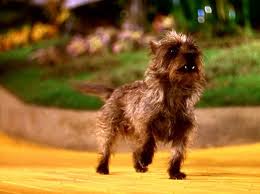 The characters that Dorothy meets along the yellow brick road are some of the most iconic in film history. It is incredible how in each character’s introduction and first song, the audience manages to learn all they need to know about their history and their yearnings. Again, this is the fantastic economy of the tale, so little exposition is required to convey everything that is necessary. The Scarecrow, the Tin Woodman and the Lion all help to showcase the wonderful design of the film, in particular through their costumes that succeed in convincing the audience of the veracity of the fantastical land that they have been transported too. All three performances are wonderful too, especially at conveying the emotional journey that they go through. The characters work as fantastic ciphers, because in the end we are all missing something that we are on a journey to find, just as these characters are. Judy Garland is fantastic as Dorothy, the core of the film, nailing the emotions of a young girl thrust into a miraculous place and making her way through quite an ordeal. Garland manages to simultaneously be vulnerable yet strong, not an easy balance to maintain throughout the story. She also manages to show off some excellent comedic timing in the film. Her acting chops are matched by her singing ones, which showcase her range from the deeper, almost sultry “Somewhere over the Rainbow” through to the jauntiness of the opening song in Oz. Her offsider Toto is equally fantastic, earning his way into the pantheon of great film dogs (up there with Luke the Dog as my favourite). All of these characters mentioned don’t even mention the iconic villain, the Wicked Witch of the West, who to put it bluntly, is scary as fuck.
The script of The Wizard of Oz is a masterful dilution of Frank Baum’s rather helter skelter, delightfully anarchic novel into a heartfelt adventure tale about a journey home. It manages to remain true to the novel whilst changing just enough to make it succeed on screen too. Not all of the delightful randomness is gone though, that’s for sure – the greetings of the Lollypop Guild and the Lullaby League when Dorothy reaches Oz are just one example. The design that I have already mentioned manages to create the world of Oz. It is not just the wonderful costumes, but the hair, make-up and production design work that has gone into each and every setting.
The Wizard of Oz is every bit as good as I recall from my childhood days and then some. The film looks so sharp that it could have been shot today, the performances are great as is the script and the songs are fantastic too. If you can find a copy of this on blu-ray, grab it and prepare to be transported.
Verdict: Longneck of Melbourne Bitter
Progress: 73/1001
Like what you read? Then please like Not Now I’m Drinking a Beer and Watching a Movie on facebook here.
Hold Me While I’m Naked

Hold Me While I’m Naked (1966), directed by New Yorker George Kuchar is an avant-garde film that features on the 1001. The film is available on Youtube (the film is supposedly 17 minutes long, but the versions I could find were only 15), so check it out here before the review if you would like. Or read on for my thoughts before taking the plunge, though be warned I will be giving my own reading of what occurs in the film. Not spoilers as such, just what I took from the film.
Like any avant-garde film worth its salt, Hold Me While I’m Naked does not make a whole lot of narrative sense, at least not in conventional terms. It is up to the individual viewer to interpret the images presented in their own way. I found that the film was a comment on the filmmaking process itself and the manner in which a film is constructed. It is also the psychological journey of a filmmaker as he struggles with the troubles of finishing his movie. His obsessions and hang-ups are both affected by and affect his attempts to complete the film. Obviously, if you wish to watch the film with an open mind then that is the best way to approach it. But if you are looking for a way into the film, consider the aspects and even iconography (there is wonderful shot of a character literally drowning in film) of filmmaking on display. As well as the broader themes of filmmaking, the movie also comments on the specific role of the director as a ‘man apart’. There is a great sequence that shows this isolation as he showers alone, juxtaposed with images of a passionate, ecstatically lustful couple in the shower. This reading of the film is all my own of course and there are numerous other ones, about identity to give just one example.
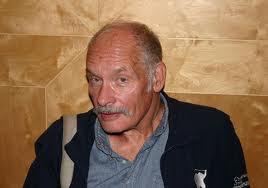
Director George Kuchar
Technically the film is hyperkinetic. The sharp, jumpy editing (which is really well done) combined with the music gets the film racing along in a couple of different directions. This is no shoddy looking backyard production. When it wants to look fantastic, the film does so. Even the opening credits look fantastic. The film is disconcerting to look at though when one is desensitised from watching mainstream film. It all feels delightfully different, with hyperstylised colours and an abrupt manner of conveying the viewer from image to image.
Hold Me While I’m Naked worked for me as a mish mash of images that provoked thought. Be warned, that if you watch the film, you will need to put in some work to put the images in order and glean your own meaning from them. There is enough filmmaking panache here to make that a worthwhile exercise to invest your time in though.
Verdict: Stubby of Reschs
Progress: 72/1001
Like what you read? Then please like Not Now I’m Drinking a Beer and Watching a Movie on facebook here.
Cabaret
Set in early 1930s Germany, the Liza Minnelli starring Cabaret (1972), is considered one of the greatest musicals of all time. Whilst there are definitely song & dance numbers that are a large part of the film, for me the film does not feel like a musical as such. The songs merely form part of the background to what is an exceptionally clever and adult piece of filmmaking.

Cabaret is an incredibly original film. From the big opening musical number where the focus is on other dancers in the club, rather than Minnelli who is hidden away at the back, the film just does things differently. Plot wise, the film is a love story of sorts between Minnelli’s bombastic Sally Bowles and the newcomer to Berlin, the Brit Brian Roberts played by Michael York. Brian is a naive force, not ready for the swirling mix of a new country, cabaret, cigarettes, booze and sex which revolves around Minnelli’s character. In its second half the film descends into ever evolving triumvirates of jealousy, the last one which takes up the most time, is the boldest and the cleverest. It leaves you questioning and double questioning the motives, love and lust of all those involved. Whilst the first half of the film is good, though a little up and down, the second is exceptional, taking the film to places I could not have dreamt of. Complex, dense and brilliant places. I won’t go into too much detail of what they are, because it is best to discover these surprises with minimal knowledge of what is to come. Needless to say though, it is a pretty bold narrative that is willing to aim its story and message at a genuinely adult audience unlike so many films, even ‘serious’ ones, which feel the need to dumb down their message.
I thought I had the film pegged, I knew it was going to descend into a Nazi-centric ordeal in the later stages. But director Bob Fosse is too clever to take it such an obvious direction. Rather the Nazis continue to loom over the film as an ominous presence, occasionally coming out of the shadows to lay a beating on someone or murder a Jew’s dog, but generally remaining on the periphery of the action. In some ways, they are all the more ominous for this fact as they remain not quite central, leaving the audience to ponder when they will next be injected into the action. The effect is also that the viewer is left to ponder what effect they will have on the characters after the film has finished, as the war years continue to ramp up. The attitudes of some of the characters to the Nazis are also very interesting, especially if they are historically accurate. Viewed by some as nothing more than a fad of young thugs, others (the richer Germans) consider them a good thing. They will get rid of the Commies, and then we (i.e. the German Germans) will get rid of the Nazis. Obviously history shows that is definitely not how things turned out. The film also portrays the ugly narcissism and sheep mentality of Nazism that allowed the scourge to spread throughout Germany like wildfire.

Minelli as she appears in the film
The film is really highly stylised in its shooting, costuming and just overall presentation. It looks excellent and takes you to the time and place that the film is set. The songs, which move from setting the background atmosphere of the cabaret club, to reflecting the narrative action are also really quite good. They are employed very differently to those in a traditional musical. Whilst they do begin to reflect the story, they are never used to drive the narrative. Rather they reflect on it, provide more detailed comment, but do not move the story along. As a young woman experiencing a bold European lifestyle, Minnelli is fantastic, having a unique and very expressive (in a good way) method of acting. Hers is a much more complicated and intriguing character than one is conditioned to expect from Hollywood filmmaking. She is promiscuous, vulnerable, strong, has her hang ups including daddy issues and harbours dreams (or is that delusions) of film stardom. A woman who cannot bear to be constrained by domesticity and family. Whilst Minnelli is undoubtedly the star of the film and the focus of the narrative, all of the smaller roles are equally as interesting and just as well performed by the actors who inhabit them.
Never mind being one of the best musicals of all time, Cabaret is one of the better films of all time. It is a wonderfully eccentric love story, the kind that it is so rare in film history to get. Singularly original and challenging filmmaking, be sure to check it out if you have never seen it.
Verdict: Longneck of Melbourne Bitter
Progress: 70/1001
Like what you read? Then please like Not Now I’m Drinking a Beer and Watching a Movie on facebook here.
The House is Black
As this blog has progressed, I have gradually expanded out from my original vision to review the 1001 Films to See Before You Die. But it is good to revisit the book, because it exposes me to so many fantastic and challenging films that I would never know about without it.
The Iranian documentary The House is Black (1963) is one such film. The film focuses on a leprosy colony in Iran, the poverty that causes the disease and especially the plight of those who inhabit the colony. It is not an easy film to watch, unflinchingly showing the physical deformities of these people that so markedly separate them from the rest of society. The humdrum and neglected nature of the existence many of them lead is also shown, a girl looking longingly out a window which seemingly traps her. Sentences her to a disconnected life. A man pacing up and down endlessly, humming to himself. Despite the subject matter though, there is a definite tenor of hope through much of the film. It opens with the quote that “there is no shortage of ugliness in the world” but then states that man is a “problem solver”, arguing that the only way to overcome ugliness in the treatment of those less fortunate in society is through humanity. There are many close-ups of the physical attributes of these lepers, which were confronting to me because I had not seen these kinds of bodies before. We also see various members of the community undertaking exercises in order to help combat the disease, including painful looking exercises to straighten out clenched hands. But all this focus on ‘deformed’ physicality is never used in an exploitative way. Rather these shots are a way in to life in the leper colony, as do the other shooting techniques such as some really nice use of montage. Contrasting a child with one of the older lepers for example.
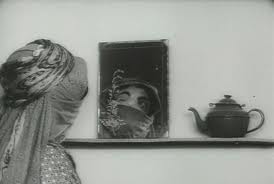
The House is Black is not just an ethnographic piece or rallying cry for better treatment of lepers. The only film of poet Forugh Farrokhzad, it is a really artistic piece that is very clever in the way it weaves poetry as well as excerpts from the Old Testament and the Qur’an in with the images onscreen. Early we see the lepers giving thanks to God, specifically thanking him (through reading from a text, not sure which one) for the physical attributes provided to them and what these attributes allow them to do. The lyrics of the poem especially mirror the images being shown. The poem evolves throughout the film, giving a range of different perspectives on what the screen is showing. The lyrics talk of the physical form, reflect on the treatment of those less fortunate in society and for a brief period express a longing to escape, both from one’s personal situation and also from an uncaring universe. The sense of hope that I referred to earlier is also seen in the increasing instances of kids featuring as the film progresses. It is horrible to see children caught up in a situation such as this and to ponder what their lives must have been like. But the children in the film are a source of hope, a splash of laughter from a child playing is probably the highlight of the film. Farrokhzad obviously saw this hope too as she went on to adopt one of the children that she connectd with at the colony.

The incredible Forugh Farrokhzad
Conronting, but necessary to see, The House is Black is a wonderful documentary. Like many great piences of art, it shines a light on those who have been marginalised, forgotten or neglected by the society in which they exist. I urge you all to check it out whch you can do just here. The subtitles are occasionally white on a white background, but aside from that it is a reasonable quality copy.
Verdict: Longneck of Melbourne Bitter
Progress: 68/1001
Like what you read? Then please like Not Now I’m Drinking a Beer and Watching a Movie on facebook here.
Singin in the Rain
Singin in the Rain (1952) is one of the all time great movies about the movies, as well as being a fantastic musical. I am not the biggest fan of musicals, but there is an undeniable joy about this film and the song & dance numbers that populate it are impossible not to love.
 The film charts that incredible revolutionary time in the film industry as it stumbled from the sound era to the era of the ‘talkie’. In real life there were artists who seamlessly made this transition like Charlie Chaplin as well as those who found this change a hard one to master for various reasons, like his close contemporary Buster Keaton. Singin in the Rain follows Gene Kelly’s Don Lockwood, a stuntman turned huge silent star as he struggles to move into this brave new world. Joining him for the ride are his newfound love interest ‘every girl’ Kathy Seldon played by Debbie Reynolds and his hilarious, all singing all dancing offsider Cosmo Brown played by Donald O’Connor.
It is a simple story well told, populated by great songs and great characters. The script does lag a little through the centre, especially when developing the central romance, but one of the good things about a musical is that a fantastic song can ratchet things back up a few levels and make you forget about all of that – something this film does on numerous occasions. The musical aspects of the film are nicely complemented by a rich vein of humour, especially for film fans. Try not to adore a scene where Kelly’s Lockwood is shooting a love scene for a silent film, whilst talking shit to his co-star who he cannot stand. Brilliant.
The performance by Debbie Reynolds is one of my favourites in all of film. She is brilliant, with her initial rapid fire dialogue putting the egotistical star Don Lockwood in his place. As good as the other two leads are, and they are very good, for me Reynolds steals the show with her charisma and ability to make the audience care very deeply about what happens to her character. As nice as the love story between Reynolds’ Kathy and Kelly’s Don is, the nicest relationship is that between Don and his best mate Cosmo. The early flashback sequence showing them rising up the ranks from dancing for coins in drinking dens, to vaudeville, all the way to Hollywood; instantly creates their lifelong bond that runs throughout the whole film. Both Kelly and O’Connor are wonderful dancers and bring an incredible verve to their routines. Individually O’Connor is an incredible physical, acting and singing talent, with his “Make em Laugh” routine possibly my favourite moment throughout the film. But there are a whole bunch of really fantastic songs that will be stuck in your head long after the film finishes. There is however one really major misstep in this regard, at least for me. It is the interminably long Broadway Medley Ballet sequence which is frankly absurdly out of place in this otherwise well structured narrative. This inexplicable sequence does cruel a lot of the film’s momentum, but luckily enough, the upbeat ending more than makes up for it.
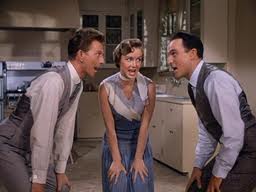
I think that if you are not a huge fan of musicals or someone you know is not, Singin in the Rain is a great place to start. Full of classic songs throughout, despite the occasional scripting misstep, Singin in the Rain comfortably sits in the realm of classic films. Predominately due to the wonderful central performances of Debbie Reynolds, Gene Kelly and Donald O’Connor.
Verdict: Pint of Kilkenny
Progress: 66/1001
Like what you read? Then please like Not Now I’m Drinking a Beer and Watching a Movie on facebook here.
Au Revoir Les Enfants
Rustling through my computer the other day, I came across this very short review which was originally intended as part of a compilation review. Dispensing with the others, here are some brief thoughts on a Louis Malle classic.

Louis Malle’s Au Revoir Les Enfants (1987) is a war film without a war. Its central concept explores World War II through its interjections upon normality. Unfortunately all too often the film gets bogged down in boarding school cliché, dampening the effect of what should be a very powerful core narrative. The story begins by following Julien, a young outsider soon joined by Jean, a quiet new student. Strangely this new arrival is refused communion when he tries to take it and also rejects any pork products no matter how malnourished he is. Strange then that it takes the otherwise extremely intelligent Julien most of the movie to figure out that Jean is a Jew who is being hidden in the school by the monks.
Lacking in a knockout emotional punch and/or message; not being particularly enjoyable and not being a technical or stylistic masterpiece this film made little impact on me. What this film is is pretty average. It is a well made picture made by a man who has a reputation as a master director. But this film is just ok. And it does not do justice to its premise or its subject matter. A disappointment.
Verdict: Schooner of Carlton Draught
Progress: 65/1001
Like what you read? Then please like Not Now I’m Drinking a Beer and Watching a Movie on facebook here.
Halloween Week: An American Werewolf in London
It is now 7 days until Halloween. Although I am not a huge celebrator of the holiday, it’s reach is not that huge in Australia, it is a damn fine excuse to watch some horror movies, both classical or new. So this is the first in a whole week of Halloween posts. Today’s blog is a review of one of my all time favourite horror flicks – John Landis’ classic An American Werewolf in London (1981). This is another one of those reviews that I wrote ages ago and for some reason never got around to posting. I have applied a little spit and polish though, so hopefully it reads ok. First of all, check out the awesome original preview I found on Youtube. They would never make a teaser like this today.
Everything I read about the John Landis film An American Werewolf in London before watching it emphasised the fact that it is a comedy-horror, a genre that does not sound particularly appealing to me. But besides some humorous flourishes in the script, I don’t think I would consider it particularly comedic at all really. Nor is it very dark atmospherically despite there being some touches of gore. All things considered though it is a very enjoyable 80s film.
The film opens in the English countryside where two young American men are backpacking. They stumble into a not overly welcoming village pub called The Slaughtered Lamb. There a fantastic array of locals offer very little hospitality, but do urge the tourists to “stay off the moors”. Anyone who has seen a film in their life will be able to guess that as soon as the guys leave the pub, they wander straight off the road and into the moors. The early scenery is fantastic, lots of beautiful rolling green hills that turn sinister when rain and fog come along in order to emphasise the utter isolation of the locales. The inevitable attack comes from a hair-laden beast and the result is that one of the backpackers, Jack, is killed whilst his mate David is left mauled, saved only when the locals from The Slaughtered Lamb come to his rescue (the rescue is prefaced by some interesting agonising by the patrons over whether or not they should go help them). Thus ends the film’s cool beginning which serves as a prologue really. It’s really well done, and sets up the rest of the story quite nicely without taking too much time.

Some of the rolling green hills that are the setting for the early part of the film.
Three weeks later David awakes in a London hospital, still recovering from the injuries he sustained in the attack. It has been explained away as the result of an escaped lunatic, but he knows that was not the case. Whilst in the hospital David begins to have dreams and visions. Some are of him running nude in a forest. The best of them are first person shots of something low to the ground (presumably a werewolf) racing through the forest at great pace. These sequences are fantastic with a great sense of tension and speed. Less engaging is a dream involving rubber masked hoodlums in a bizarre shootout. The other issue I had with this aspect of the film is that it is not always coherent, you’re not always sure what is a dream and what is not, what is real and what is a vision. This is a tactic that can definitely work in films, but here is just confusing. One of the recurring visions that David has is that of his dead mate Jack who now is one of the undead, roaming the earth in purgatory. He tells David that he will turn into a werewolf in two days and that he will not be released from his undead fate til David is killed. So he urges him to commit suicide. This is a strange dynamic, especially for a film that generally maintains a relatively n upbeat vibe. But it works, one mate begging another to commit suicide is an interesting plot point that is utilised well by Landis. Eventually, despite his still questionable health David is released and goes to stay with the cute nurse Alex who cared for him in hospital. Without giving the entire plot away, Jack’s warning comes to pass and David becomes one dangerous dude. The second half of the film involves Alex, and the curious Dr Hirsch attempting to save David, and the people of London. The ending of the film has been bagged. It is a little rushed, but there are plenty worse out there. And it manages to fit in the film’s emotional highpoint, which is really well done.
Much of the success of werewolf films (especially later ones) is dependent on the creature itself. An American Werewolf in London both passes with flying colours and fails this test. The creature itself is fierce and just the right size. It does not look too fake, and the decision for the creature to walk on all fours is a good one, enabling the audience to liken it to a dog… but the scariest dog you’ve ever seen by a long shot. Even better is David’s visceral transformation into the beast. Unlike in other werewolf films, the transformation from human to werewolf form is not an easy one. Landis shows David’s bone structure painfully stretching as he begs for help. The special effects are fantastic with the whole transformation shown onscreen. Nowadays no doubt CGI would be used for the transformation, but why bother when this looks so incredible. These sequences are one of the highlights of the film, and I doubt a werewolf transformation has been done better. Wisely Landis does not overplay the transformation, and the fact that it only occurs twice (I think) throughout the film makes it even more special. In a similar vein, the zombie makeup on Jack is incredible, clearly an inspiration for Cronenberg’s The Fly (1986) which followed five years later. I think the work in this film is just as impressive, with a combination of traditional makeup and latex used to spectacular effect. Just as in Cronenberg’s film, Jack’s appearance detiorates the longer he’s been dead, from initially almost human to nowhere near it. The story goes that Rick Baker’s work was so impressive, the Academy introduced the Oscar for best makeup just so they could award it to him.

A poster for the film.
Less impressive though are the attacks by the creatures, where blood compensates for special effects that range in quality from average to bad. The attacks are a lacklustre, scattershot affair, not particularly making sense or delivering tension. The one exception is the film’s best scene. It involves an attack in an underground station. The werewolf is not spotted til right at the end of the scene, and leading up to that the scene plays out through the horror of the victim, all shot from the werewolf’s point of view.
Performance wise, An American Werewolf in London is good across the board. David Naughton as David and Jenny Agutter as Alex Price give engaging turns as the two leads, and their sexual chemistry, despite occurring at lightning speed, is believable. The other standout is John Woodvine as Dr Hirsch who conveys a really resolute and interesting presence in his supporting part. I absolutely love the music in this film too. Rather than standard horror film fare, pop songs are used, and it fits the vibe of the film perfectly. There is a fantastic love scene between David and Alex set to Van Morrison’s “Moondance”. Even better is the deployment of the Creedence Clearwater Revival classic “Bad Moon Rising” to preface David’s initial transformation under a full moon into the werewolf. I think that when filmmakers manage to seamlessly weave pre-existing songs into their films and have it work, it is something to be admired, and this is one of the better (and more surprising) examples I have come across.
This was a really enjoyable film, much more so than I was expecting. There are some flaws, but they are vastly outshone by the film’s pluses. This is a borderline perfect beer and popcorn film. Fun, a couple of frights and some awesome effects make for wonderful viewing. Highly highly recommended.
Verdict: Pint of Kilkenny
Progress: 61/1001
Like what you read? Then please like Not Now I’m Drinking a Beer and Watching a Movie on facebook here.
Steamboat Bill Jr
Buster Keaton’s Steamboat Bill Jr (1928) takes place on the banks of the Mississippi River. Steamboat Bill funnily enough runs a steamboat on the river. His son, played by Buster Keaton, turns up following the arrival on the scene of a much larger steamboat, owned by the ‘big business’ cipher J.J. King who aims to render Bill’s boat obsolete. Father and son have not met since Jr was a small child. Bill, who happens to look a lot like Popeye, is downcast when he sees his son, considering him to be effeminate, weak and overall a bit of a dandy. Jr is keen to impress, but struggles with his father’s clear disapproval of various aspects of his persona, which he has formed far away from the river at school in Boston. The ashamed Bill attempts to get Jr to get a more suitable hat, rather than the beret that he chooses. This takes place in a rather humourous scene which self knowingly plays with the notion of Buster’s usual porkpie hat, continually making the audience believe that that is the hat he will end up in. It is a really very clever and modern scene actually.
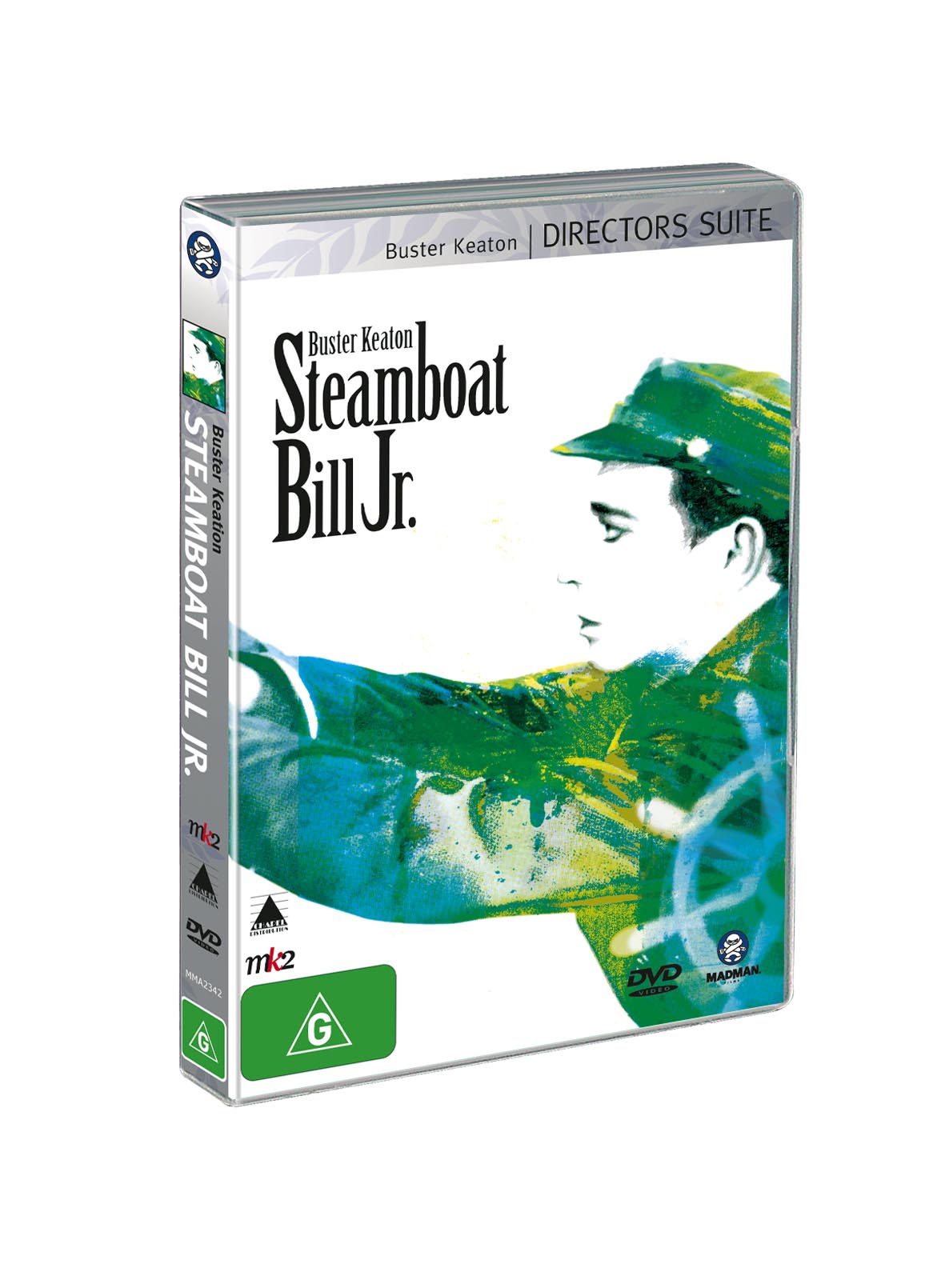
DVD cover of the Aussie release of Steamboat Bill Jr. Copyright Madman films.
The film is fast paced, even for a Buster Keaton film, zipping from one scene to another. Like another of Keaton’s famous features Our Hospitality (1923), the story is a classic Romeo and Juliet one. A lady friend of Jr’s from school happens to be the daughter of Bill’s arch rival King. Enter the star-crossed lovers and warring families with King and Bill banning their progeny from becoming involved with the others’. It is a little strange though because after a fair bit of early focus, this romantic narrative thread falls by the wayside as Bill is placed in jail (at the hands of King) and Jr has to attempt to help him escape. Through this period Jr does eventually earn the respect of his father, and the love story thread is picked up as he rescues Marion and her father King from the hurricane that rages at the film’s finale.
The story is a little slow, and it lacks the depth of The General (1927) or some of the nuanced comedic stylings of Our Hospitality. But thankfully, no one moves like Keaton. He is such a wondrous physical performer, the way he trips, falls and throws himself about. Rightly known for his big set pieces, Steamboat Bill Jrfeatures one that is very close to his greatest. In the middle of a hurricane, the entire front of a building falls on top of Buster. Luckily enough though, he is perfectly positioned and slips straight through the attic window as the building falls over him. It is a scene that has to be seen to be believed, and just reminds you how much films and stunts have changed over cinema’s 100 and a bit years. No doubting the safety improvements that have been made are incredibly important. But there is nothing like seeing a performer risking life and limb onscreen for your entertainment. These scenes of the hurricane destroying the township on the banks of the Mississippi are really impressive, utilising both miniature work and the destruction of full size sets. Also using some pretty powerful wind machines as well – Keaton has recounted how one of them blew a truck right into the river during filming.

Steamboat Bill Jr (Buster Keaton) and Sr (Ernest Torrence) lounging by the Mississippi.
There is a lot of joy in Steamboat Bill Jr and it is a very funny movie, but it lacks some of the panache and lasting resonance that characterises Keaton’s The General and many of his iconic short films. If this came from any other filmmaker I would no doubt rave about it. But it is unfortunate that despite being a fantastic film with a few utterly astounding Keaton stunts, Steamboat Bill Jr does live a little in the shade of his other work. By no means bad though, and still worth a little over an hour of your time.
Verdict: Stubby of Reschs
Progress: 58/1001
Like what you read? Then please like Not Now I’m Drinking a Beer and Watching a Movie on facebook here.
 Beermovie.net