A Week at Bernie’s Guest Post: Be Kind Rewind
I remember being so excited when I heard Jack Black and Mos Def were doing a comedy together, being a big fan of both men. Misty from the phenomenal Cinema Schminema (killer blog name) takes a look at the results.
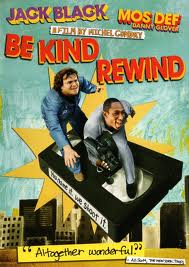
Be Kind Rewind (2008) features Jack Black doing what Jack Black does best – running around all crazy like in a feel good flick. The unfortunate part is that the feel good part wears off relatively quickly and the movie goes the way of tedium.
 So Jerry (Black) hangs out with his friend Mike (Mos Def) in the video store where Mike works. Jerry’s kind of klutzy and kind of paranoid. After attempting to sabotage a nearby electrical substation, believing its energy to be melting his brain, Jerry becomes magnetized, and when he enters the store the next day, he inadvertently erases all the VHS tapes in the store. Uh-oh! Mike quickly discovers the disaster, and is further pressed when Miss Falewicz (Mia Farrow), Mr. Fletcher’s friend, wants to rent Ghostbusters. To prevent her from reporting a problem to Mr. Fletcher, Mike comes up with an idea: as Miss Falewicz has never seen the movie, he proposes to recreate the film using himself and Jerry as the actors and cheap special effects hoping to fool her. They complete the movie just in time when another customer asks for Rush Hour 2. Mike and Jerry repeat their filming, enlisting the help of Alma (Melonie Diaz), a local woman, for some of the parts. Soon word spreads of their epic remaking adventures and everyone in the neighborhood has a request. Hilarity ensues. Or something like that.
I mean, sure it’s fun at first watching Black and Def redo Ghostbusters with only themselves but as time passes the schtick gets old. Then there’s another storyline about the video store being forced to move or go out of business and another storyline about a jazz musician and then Sigourney Weaver shows up as some government official claiming copyright infringement for all these remade flicks and proceeds to destroy them all with a bulldozer. That was obviously the simplest way to go about destroying them…
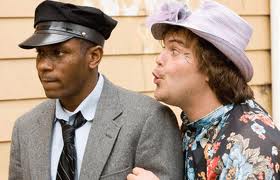
Not the best Jack Black flick ever made and certainly nothing noteworthy happening here. Mostly, after having watched I just want to gather up my friends and go remake some classic movies on the cheap. Simple fun for a rainy day?
Verdict: Schooner of Carlton Draught
Want to win a copy of Bernie thanks to Madman Entertainment? Check out the details here on how to enter.
Misty is the creator and writer of the wonderful Cinema Schminema, a blog focusing on fantastic B Movies and the odd classic. Be sure to check it out and like her page on Facebook here.
A Week at Bernie’s Guest Post: King Kong (2005)
I was super hyped to see Peter Jackson’s King Kong remake coming hot off the heels of his LOTR trilogy. Have to admit that I was a little dissapointed, so let’s see how Jon from The Film Brief felt about the film.

“No film has captivated my imagination more than King Kong. I`m making movies today because I saw this film when I was 9 years old. It has been my sustained dream to reinterpret this classic story for a new age.” – Peter Jackson, 2003
I’ve always thought that Peter Jackson’s King Kong – which barely broke even in 2005 despite being Universal’s fourth-highest grossing film ever at the time – would be a lot more popular if more people were familiar with Merian C. Cooper’s original 1933 film. This is, after all, a love letter to that movie. At every step of this lavish, three-hour production, Jackson harks back to not only the original, but the Hollywood that existed during the original’s production; the sleazy film producers, the ambitious but inherently dishonest and exploitative film-maker, the subservient heroine and a male actor who is a shining example of the sexist star system that existed at the time. Jackson makes his version of King Kong more subversive than the original in crafting a strong character out of Ann Darrow, who sees beauty in the giant ape Kong and in his eyes, a reflection of the shortcomings of the world she inhabits.
King Kong is a big picture in the old-school sense of the term. It is, of course, a signature Peter Jackson epic, and at three hours (three hours and twenty minutes extended) is too long. Narratively it’s a bit choppy – I appreciated the early focus on the life and times of these characters in 1933 Depression-era New York City, but as the film progresses there are so many strands that Jackson literally forgets about. The relationship between Hayes and Jimmy, for instance, begins to develop as a touching mentor-mentee before Hayes comes to a grisly end (the black guy is one of the first to go in this movie, disappointingly) and the story is forgotten.

In a way, you can forgive Jackson for giving most of his (human) characters short shrift. This is, after all, King Kong, not The Voyage of the Venture and those who Inhabit It. The world of Skull Island is the focal point of King Kong from the middle third on, and Jackson creates a land right out of a creative 8-year-old’s imagination. The action on Skull Island is detailed and intense, with the mystery of Kong – first as an entity, then as a character – an intriguing hook. Andy Serkis plays Kong in what remains, eight years on, a remarkable technical achievement. Kong himself is the most emotive character in the movie, expressive in his body language, vocalisations and (most surprisingly of all considering the inability of digital rendering to get it right) his eyes. Kong is a wounded and lonely creature, a wild animal that nonetheless has as much right to exist freely as the humans trying to capture him.
At three hours long, King Kong is perhaps a bit too long. Peter Jackson is far too sentimental about his own pictures, and I imagine wouldn’t have too many people close to him willing to tell him that swathes of the movie could do with editing. With regards to the action on the island, it’s a case of too much of a good thing. The hour-plus stretch on the island is everything one could want of a remake of King Kong, and as Jackson’s work tends to do, appeals to the eight-year-old in all of us. There are also plenty of evocations and nods to the original – a fight between Kong and a T-Rex that Merian C. Cooper could only dream of bringing to life, and a run-in with some massive spiders. I’m usually not a fan of throwing in references to old movies (particularly in remakes of said movies), but Jackson manages to strike a balance between appreciation of what things past, and carving a new and exciting way of presenting the material.
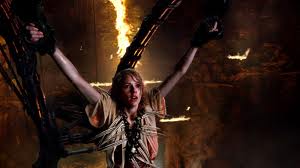
Eventually, as the tragedy demands, Kong is captured and returned to New York City. There is he is put on display humiliatingly as “The Eighth Wonder of the World” before escaping and being reunited with Ann Darrow. After chilling out in New York for a while (a stretch of the film that is surprisingly fun to watch and moving) they are hunted down, cornered on the roof of the Empire State Building, and finally Kong is brought down. The final half an hour of King Kong is where the real emotional heart lies, and Jackson treats it with a welcome delicacy that is in direct contrast with his rock-em sock-em treatment of the Skull Island section of the film. This is one part of the movie that he was right to leave as is. All of the film’s thematic chickens come home to roost, and the tragic finale is actually more satisfying than the conclusion of the 1933 original. King Kong is a story that needs to be treated with equal parts of boyish wonder and mature reverence. Peter Jackson is a director that is capable of evoking both of those moods. And while his boyishness is perhaps a reason why he has an aversion to cutting anything from his films, it also allows him to look at stories like King Kong from a unique perspective.
Here is another example of Jackson’s love for the original — a lost scene from the original that he recreated in Merian C. Cooper’s style:
Verdict: Pint of Kilkenny
Want to win a copy of Bernie thanks to Madman Entertainment? Check out the details here on how to enter.
Jonathan Fisher is the creator and writer of The Film Brief website and podcast. Be sure to check out his site as well as like his page on facebook here and follow along on twitter @thefilmbrief.
A Week at Bernie’s Guest Post: School of Rock
School of Rock was the film that first put Jack Black on the radar of many people (myself included). In this guest post, Chris from the fantastic Terry Malloy’s Pigeon Coop sees how it holds up.
Say what you want about Jack Black but when he finds a role that fits, he can give some pretty entertaining performances. School of Rock (2003) doesn’t just fit with him; it’s the perfect fit. When it came out in 2003, Black was at the height of his Tenacious D fame and so the combination of film and over the top music was a match made in heaven.
Granted, if you really can’t stand Jack Black then this film is probably not the one that’s going to change your mind. Black is his usual brash, in-your-face self which many (including myself if not in moderation) can find grating. Yet here it all seems appropriate.
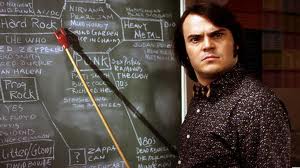
For the uneducated, Black plays Dewey Finn, a wannabe rockstar who essentially commits identity theft to work in a primary school under the guise of his best friend Ned Schneebly (Mike White). Whilst working at the school, Dewey makes the class take part in a ‘special project’, one long music lesson leading up to a Battle of the Bands competition which will allow him to fulfill his rock ‘n’ roll dream.
Yes it’s utterly ridiculous and it would never happen. First of all, there is no way a school would make such an idiotic mistake in letting him teach in the first place. Then, if he did actually manage to get the job, threaten to ruin several children’s education, then basically kidnap them when he takes them to the Battle of the Bands, he would be looking at a lengthy spell in prison – not open up his own music class and suffer no consequences whatsoever. But hey, that’s not really what they were going for so I think it’s fair to overlook all that.
I think the real reason I like this film is that I see myself in Dewey Finn (not like that, stop sniggering). My dream job is to be in a band and therefore I can empathise completely with Dewey and his failed ambition. I’ve been the one noodling away in my bedroom to my favourite bands pretending there are thousands of people looking on, swigging Jack ‘n’ Coke and giving it the devil horns. I’ve even played with actual real people at times but, alas, I’m no rock star and never will be. But I do get Dewey’s frustration and, after all, identification with a character often makes for a better film. However, I definitely wouldn’t have stolen someone’s identity and kidnapped some kids to live the dream. Just making that clear.
Of course, it’s important for a film with rock music as a theme to have a good soundtrack and School of Rock doesn’t disappoint. It has music from legendary rockers such as AC/DC, Black Sabbath, The Doors, Ramones, The Who, and more, which all just add to my enjoyment.
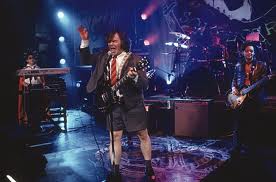
School of Rock is immensely silly but there are plenty of moments that make me laugh, probably more than I should. Is calling a fat kid ‘Turkey Sub’ offensive? Maybe. Is it childish? Definitely. But it still makes me chuckle. It’s a real guilty pleasure of mine but one that I’m happy to admit.
Verdict: Pint of Kilkenny
Want to win a copy of Bernie thanks to Madman Entertainment? Check out the details here on how to enter.
UK based Chris Thomson is the creator and writer of Terry Malloy’s Pigeon Coop. Be sure to visit his fantastic site and like his page on Facebook here to keep up with all his reviews.
A Week at Bernie’s: Kung Fu Panda
From the very first minute, two things are pretty clear about Kung Fu Panda (2008). First, the script delivers a wonderfully spot on pastiche and homage to classic kung fu film conventions. And secondly the voice of Po, the titular ass kicking panda, is one Jack Black was born to deliver.
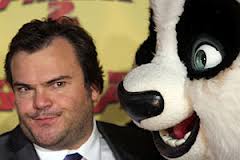
Mr Black and creepy looking alter ego
I’m a real lover of both traditional animation and the more contemporary computer generated stuff. So it is so fantastic to see the lovingly created traditional animation prologue to this film, narrated by Black’s expressive voiceover. In just a couple of minutes, Po is established as a dreamer, who yearns to be a kung fu master like those he idealises. The one criticism I would make of the film is that from this point, it is quite slow establishing the narrative. It is a fantastic, traditional ‘warrior’ journey that the character of Po takes in the film. But for me, it just took a little too long for the conflict to pick up. I think this somewhat ponderous opening half is probably whilst I slightly prefer the sequel over this film. Obviously it had the advantage of not having to set all of this backstory up and I think the resultant higher pace means I prefer that film slightly, over this still really quite good one. But when the conflict does start, so does one of the other great joys of the film – the fight sequences. These are some of the best choreographed in recent memory. All of the characters have their own specific styles which actually manifest themselves in the battles. I can only assume that The Furious Five are very much inspired by the wonderful Five Deadly Venoms (1978) and the fight scenes are similarly influenced by the wondrous martial arts in that movie. They are also ‘shot’ (can you say shot when talking about animation?) with awesome usage of slow motion and freeze frames to emphasise the big blows. I think the filmmakers should have been applauded for all this, because instead of fight scenes just slapped together and tacked on the end, we get intricate chopstick and dumpling battles and other such awesomeness.
 It is not often that I talk about performances when reviewing animated films. But Jack Black’s voice performance in this film is really wonderful. He brings so much enthusiasm to the role and uses the tonality of his voice well, but he is not endlessly over the top. Black is also able to convey the trials and tribulations that Po must face on his journey to possible greatness. I’m a big fan of Jack Black’s but he definitely gets too much for me sometimes. I think in many ways animation suits him for that reason. You still get a wonderfully bombastic comedic performance, but it is only channelled through one aspect of the film. The film looks decent enough. Even in just a couple of years though, animation has come a pretty long way. And I don’t think that Dreamworks have ever had the ambition to measure up to Pixar in the visual sense. But watching this film did get me to thinking about Dreamworks, and I think that overall they are actually a quite underrated animation outfit. Of course they (rightly) dwell in the shadow of Pixar. But we are pretty unlucky to have a crew putting out films the standard of Dreamworks, and have them still only be (at best) second best at it. I don’t think they get the credit they deserve though, for making films such as this one, Shrek (2001), Kung Fu Panda 2 (2011), Antz (1998), Megamind (2010), Puss in Boots (2011) and the Madagascar films.

Best. Merch. Ever.
Kung Fu Panda is a whole lot of fun and in a week celebrating the films of Jack Black, it is worth seeing for his turn as Po alone. The intricate and original fight sequences also definitely make this checking out, because they are just not what you would expect from a mainstream American animation film.
Verdict: Stubby of Reschs
Want to win a copy of Bernie thanks to Madman Entertainment? Check out the details here on how to enter.
Like what you read? Then please like Not Now I’m Drinking a Beer and Watching a Movie on facebook here.
A Week at Bernie’s: Intro and Competition
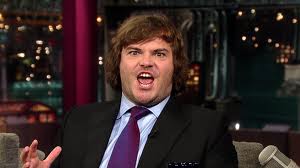
Jack Black, pulling a pretty Jack Blackesque face.
Jack Black is an actor that divides opinions sharply. His schtick infuriates some whilst winning the hearts and minds of others. This week will be a celebration of Mr Black’s films, from the inspired to the erm… less so. This post included, there will be eight posts in all, including a bunch from a few really great guest bloggers. So you won’t be subjected to too much of my writing without respite. However, I will be kicking things off later today with a review of Kung Fu Panda (2008).
To make things even better, thanks to Madman Entertainment I have a copy of Jack Black’s latest film, the inspired Bernie which featured in my top 5 of 2012 last week, on DVD to give away. The way to win is similar to the last few competitions I have run, but I have included the details for you below in case you weren’t reading then. Be sure to enter as many times as you want. Entry is open to you, no matter where in the world you live.
To enter, simply do the following:
- ‘Like’ the post on Facebook for one entry.
- Comment on the post on Facebook for two entries.
- Share the post on Facebook for two entries.
- Retweet the post on Twitter for two entries.
- Like the post on this site for one entry.
- Comment on the post on this site for two entries.
There will be double entries for the Bernie review that will close off A Week at Bernie’s on Saturday and entries will remain open until midnight on Thursday 17 January (Australian time). If you have any questions about the competition, ask me in the comments section or fire and email to drinkingbeerwatchingmovie@gmail.com.
To kick off some entries, tell me in the comments section your favourite and least favourite Jack Black flicks.
Like what you read? Then please like Not Now I’m Drinking a Beer and Watching a Movie on facebook here.
Hold Me While I’m Naked

Hold Me While I’m Naked (1966), directed by New Yorker George Kuchar is an avant-garde film that features on the 1001. The film is available on Youtube (the film is supposedly 17 minutes long, but the versions I could find were only 15), so check it out here before the review if you would like. Or read on for my thoughts before taking the plunge, though be warned I will be giving my own reading of what occurs in the film. Not spoilers as such, just what I took from the film.
Like any avant-garde film worth its salt, Hold Me While I’m Naked does not make a whole lot of narrative sense, at least not in conventional terms. It is up to the individual viewer to interpret the images presented in their own way. I found that the film was a comment on the filmmaking process itself and the manner in which a film is constructed. It is also the psychological journey of a filmmaker as he struggles with the troubles of finishing his movie. His obsessions and hang-ups are both affected by and affect his attempts to complete the film. Obviously, if you wish to watch the film with an open mind then that is the best way to approach it. But if you are looking for a way into the film, consider the aspects and even iconography (there is wonderful shot of a character literally drowning in film) of filmmaking on display. As well as the broader themes of filmmaking, the movie also comments on the specific role of the director as a ‘man apart’. There is a great sequence that shows this isolation as he showers alone, juxtaposed with images of a passionate, ecstatically lustful couple in the shower. This reading of the film is all my own of course and there are numerous other ones, about identity to give just one example.

Director George Kuchar
Technically the film is hyperkinetic. The sharp, jumpy editing (which is really well done) combined with the music gets the film racing along in a couple of different directions. This is no shoddy looking backyard production. When it wants to look fantastic, the film does so. Even the opening credits look fantastic. The film is disconcerting to look at though when one is desensitised from watching mainstream film. It all feels delightfully different, with hyperstylised colours and an abrupt manner of conveying the viewer from image to image.
Hold Me While I’m Naked worked for me as a mish mash of images that provoked thought. Be warned, that if you watch the film, you will need to put in some work to put the images in order and glean your own meaning from them. There is enough filmmaking panache here to make that a worthwhile exercise to invest your time in though.
Verdict: Stubby of Reschs
Progress: 72/1001
Like what you read? Then please like Not Now I’m Drinking a Beer and Watching a Movie on facebook here.
Trailer for your Weekend: The Sweeney
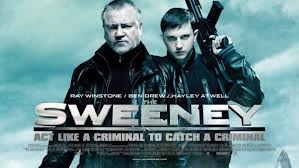
Everyone loves a good crime film and there have been some pretty good ones over the last couple of years. I think The Sweeney has already been released elsewhere but is still a little way off out here. I saw the trailer without really knowing anything about the film at all and was quite excited by it. It looks like this has some pretty dense procedural elements which hopefully will come through in the end. I am less excited by the rogueish cops vs establishment hints. But overall, this looks pretty cool to me.
Anyone already seen it, or have thoughts on the trailer?
Like what you read? Then please like Not Now I’m Drinking a Beer and Watching a Movie on facebook here.
2012 in Review
Another year has come and gone, bringing with it hundreds upon hundreds of films. What follows are my choices for my five least favourite, and five favourite films that were released in 2012. Bear in mind that release dates here in Australia are often quite delayed in comparison to the U.S. So many films on a lot of people’s year end best of lists were not released here in time for consideration.
Thanks to everyone who has stopped by to read anything I have written over the past year. It has been a pleasure sharing my love of film with you, and I look forward to doing it for the rest of 2013. My lists below focus on what were my most enjoyable film experiences of the year and least enjoyable. It is not about what is necessarily the ‘best’ or ‘worst’.
Share your thoughts in the comments below. Send me some love if you agree about a particular film and of course feel free to let me know, politely of course, why you disagree with my choices. I have to say that this year was overall, a slightly weak year. But there were still plenty of awesome films to whittle down to a top five.
Bottom Five
(dis)Honourable Mentions: The Five Year Engagement, Get the Gringo, One for the Money, Extremely Loud and Incredibly Close, Love, Moon, 50/50.
5. Iron Sky
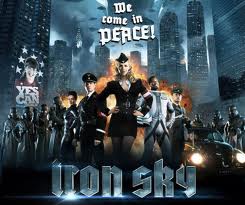
It’s pretty hard to botch a B-movie concept as brilliant as Nazis on the dark side of the moon. I mean that is gold standard material, could you have imagined what Roger Corman would have turned in with that kind of start. But Iron Sky achieves what I don’t think anyone thought was possible. It makes Nazis on the moon seem boring. What we end up with is Scary Movie in space. Only this is slightly worse written and has less wit, which is quite the achievement. Self knowing pastiche was what we were after and it would have no doubt led to hilarity. But this is just bad as comedy, bad as sci-fi, with bad acting, bad visuals, and a bad storyline. Tis just bad, bad, bad.
4. Prometheus
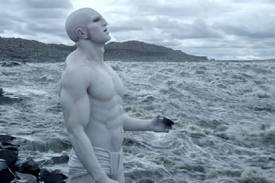
The further I get away in time from Prometheus, the angrier I get with the approach it took. Instead of using the mega budget and stunning design & special effects that it brings to entertain the audience, Scott is trying to ram a message down our throats (not that anyone knew what the fuck that message was) and ask ourselves life’s big questions. Messages and thought provoking are all well and good, but with this kind of film, entertainment comes first. It’s so disappointing, because the film has more truly original ideas than any film needs, but they do not transfer to the script which clunks badly. The film just did not work on any level for me. It succeeds neither as a sci-fi film or a horror film, despite having elements of both. For every good performance there is at least one or two decidedly average ones. Thankfully I am doubting we will never see the sequel that the ending of this film was so obviously setting up.
3. The Dictator

Sacha Baron Cohen continues to impress me in his more serious roles, I’m looking at you Hugo and Les Miserables, but I find his own creations far more difficult to stomach. Especially because he is such a talented guy, far too talented to be creating dross such as this. Criminally unfunny, attempting to be offensive but rarely eliciting enough care factor to do so, this was the worst comedy in what was a pretty decent year for the genre. Like all the worst comedy, there is a mean streak to The Dictator. Dedicating a film to Kim Jong Ill, a heinous murderer and oppressor is in no way funny. And whilst I am sure Baron Cohen would like to have you think otherwise, there is no subversion in this film. No witty examination of dictators and their delusions. There is only unfunny poo jokes. Looking back through my notebook, this film was situated right next to Iron Sky. Those were some dark film watching days.
2. Salmon Fishing in the Yemen
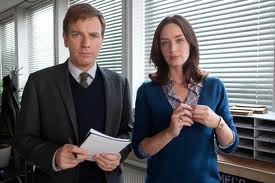
This was a pretty minor film, but it just rubbed me up totally the wrong way. The central love story is one of the worst crafted I can recall and let’s face it, crafting love stories is not exactly the strong suit of filmmakers these days. At no point does the spark between the two leads seem the least bit real, in fact very little of the film seems grounded in reality. It is a profoundly stupid film and whilst it seems to want to be a little indie or quirky, it has the most ham fisted and obvious characterisation you could possibly imagine. I can barely muster enough emotions to say I hated this film. But I definitely deeply disliked it. Just so tepid, more average than basically any film I can recall. I tell you what, it was a bad year for Emily Blunt. Her The Five Year Engagement was incredibly close to making this bottom 5.
The Third Ever Scott Pilgrim vs the World Award for Least Favourite Film of the Year: The Hobbit: An Unexpected Journey

I pondered whether or not to give this film the coveted number one spot. I didn’t want to be perceived as trying to be all cool and just hating on a big budget, flagship release. But the inescapable fact for me was that The Hobbit was easily the least enjoyable experience I had in a cinema in 2012. It is blatant hyperbole to term any film a catastrophe. This film however, is as close to a catastrophe as one can be though. I saw the film in 48 FPS 3D (HFR), because that is how Peter Jackson wished me to see it. But the HFR makes it look like a cheap BBC show from the 1980s and robs the film of any visual spectacle. It distances the audience to such an extent that there is no way into this world. Not helped by the fact that Martin Freeman, an actor I absolutely love, brings no soul to the character of Bilbo. The script is woeful, it babies you with its horrid expository dialogue and the attempted lighter moments fall utterly flat. And if I see one more image of a dwarf staring off into the sunset that is meant to convey the profundity of the situation at hand, I’m going to be forced to slap someone. At least Prometheus managed to look excellent, whereas this looks like garbage. The wide shots of Elrond (that is the Elf city yeah?) look animated. I’m not talking good CGI animated, this is some 2D Disney shit. Three and a bit hours is far too long to be in a cinema with a story that has failed to connect to or exhilarate you in any way shape or form.
Top Five
Honourable Mentions: Skyfall, Shame, A Separation, The Raid, Not Suitable for Children, Ted, Mirror Mirror, Les Miserables, Young Adult, Martha Marcy May Marlene, J. Edgar, 21 Jump Street, Hugo, The Best Exotic Marigold Hotel, The Dark Knight Rises, Tinker Tailor Soldier Spy, I am Bruce Lee, The Cabin in the Woods, Bully.
5. The Angel’s Share

Ken Loach is able to masterfully balance two very distinct tones in this film. The first half is the dark, pretty depressing social realism that the director is famous for. The second half flips this and turns into a delightful, though not without moments of tension, whiskey heist film. In many ways the film is an ode to whiskey and the way it transforms the life of the main character Robbie, played by non-actor Paul Brannigan. He is an actor now, because he is phenomenal in this. I think that using non-professional actors is a conceit that so often fails, but Brannigan ensures that it works. The relationship between he and John Henshaw’s Harry, who runs Robbie’s community service, is genuine and not forced when it so easily could be. The film is uproariously funny, but at the same time still manages to remain true to the tone of the film’s opening half, as one of society’s downtrodden attempts to walk the precarious path out of his situation. Not by the usual route though.
4. Bernie

Probably the most original film of the year. I generally think mockumentaries are a pretty tired structural device. But here that structure is reinvigorated by weaving interviews with real townsfolk into the storyline. Jack Black should take a bow, because his is one of the performances of the year – if those responsible for giving out awards actually paid any attention, he would be nominated for everything going. A tale of a small town assistant undertaker who befriends an elderly widow. Feeling imprisoned by her, he eventually kills her. Black manages to bring so much depth to a character that could have been caricature in what is undoubtedly a career best turn. The great thing about this film is that it leaves you thinking. About crime and justice. About domestic violence. This dark sorta comedy is one of the year’s best with the year’s best closing credits sequence the icing on the cake.
3. Lawless

For me, the most underrated film of the year. Hillcoat and Cave deliver once again. I really do not comprehend the average reviews this got. A fantastic ensemble cast – Tom Hardy (really was his year), Jessica Chastain, Mia Wasikowska and Guy Pearce are all extraordinary. Even Shia Lebouf ain’t too bad in this one. Props especially to Pearce. On the trailers his character looked like a leering caricature but here he grounds the character and he is a menacing presence. A prohibition era bootleggin tale, this really creates a sense of time and place. Incredible costuming and a bluegrass infused soundtrack, I believe courtesy of Mr Cave himself, definitely help in that regard. And it is just such an intriguing time in American history too. The stakes in the film just keep rising and rising, leaving you really unsure of when the explosion will come and how it will turn out. Just like The Proposition, Lawless is very bloody, uncompromisingly so. Nick Cave is such a talented guy. I think he has turned in the script of the year here with exceptional dialogue and notes of humour that come our unexpectedly. I highly recommend you check this one out.
2. Argo

For the second time in 3 years, Ben Affleck has directed my number two film of the year. I thought for quite a while that this was going to be my number 1. This supremely well made film is a borderline classic. Just like The Angel’s Share, this film manages to balance tone so well. Here it is even starker. A tense start, a borderline Hollywood comedy subplot through the centre starring Alan Arkin and John Goodman, then a white knuckle ending. There is barely a foot put wrong in this whole film. It is craftily shot, with the slightly low res appearance to make it look more like a period piece and the animated intro are both highlights. Ensemble cast is really good. The aforementioned Arkin and Goodman bring so much to their small roles, while the entire group of people stuck in Iran are all good as well. One of those stories that is so crazy it had to be true (well at least close to true).
1. The Sessions

On paper, this story could have so easily been trite cliché. A polio sufferer, played by John Hawkes, who spends most of his time in an iron lung, sets out to explore his sexuality. Enter a sex surrogate played by Helen Hunt who assists him in the exploration. William H. Macy is his priest who he shares the journey with. These three are all exceptional in their roles and bring such charm and realism to the story they are portraying. Not only is this a touching personal tale of one man’s sexual journey it is also about sexuality for everyone. It is amazing how the film and its script manages to weave both poetry and faith into the story too. This is probably the only film that made me both laugh and cry that was released in 2012. Instead of the clichéd meh it could have been, this is told with such boldness, intelligence and dare I say it brilliance, that I could not look past it for my favourite film of the year. I can’t wait to see it again.
Like what you read? Then please like Not Now I’m Drinking a Beer and Watching a Movie on facebook here.
The Cabin in the Woods

If you had of asked me two thirds of the way through The Cabin in the Woods (2012) what I thought of it, you would have gotten a positive answer. It was a good, not quite great and very clever experience. However then the film went and produced one of the most inspired and downright brilliant closing acts that I can recall.
The Cabin in the Woods is a very rare beast indeed in that it functions expertly as an example of both meta-horror and straight horror. Rare is the film that can subvert a genre in this way, whilst also being a fantastic example of the genre at the very same time. It looked like the film had revealed too much too soon. The meta-nature of the entire concept is revealed quite early on. The film is best seen without having too much spoiled. I will do my best to avoid any huge spoilers, but I make no promises. The setup is standard slasher fare. Five college students, each representing an obvious stereotype (stoner, jock etc), head to a creepy isolated cabin in the woods for a weekend of booze, weed and getting it on. Vicious murders ensue. However, basically from the get-go, we know this is not a standard slasher film. The cabin is set in some strange, The Simpsons Movie esque dome and is under constant surveillance by boffins. What initially appears to be a ‘big brother is watching you’ kind of thing soon evolves into something more nuanced than that. These boffins (two of them played brilliantly by Richard Jenkins and Bradley Whitford), also manipulate the situation, making the murders happen. It is kept delightfully obscure what master these folks are serving though, with hints smattered through the film. I first had the government pegged, then some sick and twisted billionaire who watched these murders for kicks. I’m not saying either of these assumptions is necessarily wrong, but it just shows that the film can take you down interesting thought paths.

The boffins at work
That summary gives you the first two thirds of the film, that I thought was really quite good. But I do not think I can sum up the brilliant final third without giving too much away. You simply just need to go and see the film, you really do. The closing act is a cacophony of incredible storytelling, effects and creature design. I know this is all a bit vague and I wish that I could go in to more details of what I thought, but it is impossible to do so without spoilers. The cast throughout the film are basically all really good. I love Richard Jenkins, he is one of my favourites, so it was so great seeing him in this. The five actors who make up the college party – Kristen Connelly, Chris Hemsworth, Anna Hutchison, Fran Kranz and Holden Williams – are all really good too. Chris Hemsworth is good here and continues to grow on me as an actor. I think he has a decent amount of talent to go with his physical presence. I sat down and watched the pretty dire Snow White and the Huntsman (2012) this morning and he was by far and away the best thing in it. Kristen Connelly, an unknown to me, plays the lead character and she is likewise very good, both playing up her slasher film stereotype and creating a multi dimensioned person behind that.
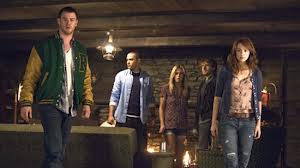
The excellent college student cast members
The Cabin in the Woods makes exceedingly interesting use of horror tropes, examining a genre in an exhilarating and enjoyable way. Too often genre examinations in films come out borderline academic and too self knowing. No such issues here. The connection of the contemporary horror film with mythological undertones is made; and shows the mark of a couple of really creative creators at work behind this film. Watch it. I can’t promise you will like it, but you will find an original film here.
Verdict: Longneck of Melbourne Bitter
Like what you read? Then please like Not Now I’m Drinking a Beer and Watching a Movie on facebook here.
Interview with Cynthia Piromalli from the National Film and Sound Archive
Living in Canberra, I am lucky enough to be very close to the National Film and Sound Archive. One of the best parts about this cultural institution is the Arc Cinema (more details here), which showcases an incredible array of films. From ongoing exposure of films that only get tiny cinematic releases with the ‘Blink and you Miss Them’ series, through to Japanese silents and everything in between.
Cynthia Piromalli, the Assistant Manager of the Arc Cinema Program, was kind enough to answer some questions for me, so check out the below interview, which I think is a pretty good read. Of course all opinions are Cyn’s alone and do not reflect the National Film and Sound Archive more broadly.
Thanks so much to Cyn for doing the interview. I think there is some really fantastic insight here into both the history of cinema and its future too.
Q: Your job title is … Could you give us an insight into a typical day at work for you? In my head, you probably go in to the archives, watch some old movies, maybe organise a dream program, and then watch some more old movies. But I am guessing I am a little way off.
I’m Assistant Manager of the Arc Cinema Program, which runs at the National Film and Sound Archive’s HQ in Canberra. There’s only two of us programming the cinema, so a typical day for me is quite simply madness. There are so many elements to administering the program (as well as programming it) and will generally involve anything from sourcing films and their prints and fees from distributors and private collectors over the world, doing financials, reporting statistics (as we are part of a Government organisation this is an integral part of the job), social media marketing, strategic and operational meetings, working on partnerships (we have long running ones with the US Embassy and the Canberra Film Festival, and lots more short term ones), answering lots of emails, writing calendar notes, scheduling … Sadly we don’t get to sit down and watch a lot of films during the day, so you can very often take the job home with you.
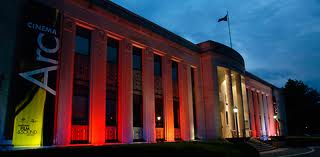
The awesome NFSA building in Canberra
Q: What was your path into this particular role? I.e. uni, other work experience etc.
I was already working at the NFSA when the cinema opened, and was administering the branch that the cinema was in, so it was an easy transition from one job to the other. Like many programmers, it just happens because of other skills you have (research and the like) and of course your interest in cinema.
Q: Why do you think it is important for institutions such as the NFSA to be maintained? And what, if anything, separates the importance of film preservation from the preservation of art and literature, as is achieved by other national, cultural institutions?
From the point of view of an exhibitor, the decline of the use of 35mm film in production is the example I’ll use: the recent introduction of DCP (digital cinema) has been embraced by both filmmakers and commercial exhibitors alike (including us, we had a 4K projector installed in July 2012). However it does create a problem for cinemas like ours: now when classic films are restored, they’re generally only re-released on DCP, and the film prints are getting destroyed as part of that process. However, 35mm film projection is still of great importance to archival and retrospective cinemas and, let’s face it, we already know it lasts 100 years. Because of the cost of storing the prints, distributors and filmmakers are happy to destroy them and move to digital cinema instead, but archives like ourselves are very happy to take them. It’s extra insurance in case files are corrupted or destroyed. We hope that this message reaches a lot of the industry – we are here to archive and preserve, in any format, but film is such an integral part of our cinema history. And it’s such a beautiful format to watch. Appreciation for it – on a global scale – will return, I have no doubt of that (such as the popular re-emergence of vinyl in recent years, and thank heavens for that). That’s when the collections of archives will be truly appreciated. Arc Cinema – using these resources already – already appreciate it.
As far as our importance compared to other cultural institutions: I won’t say we’re more important, but we would like to be on the same level, certainly. Audiovisual archiving doesn’t seem to have the exposure of other collecting institutions, and yet the history we hold is just as relevant. Arc Cinema is like an art gallery – we’re there to show off our collection and the collections of other archives around the world. It’s just a different format, a different way of viewing culture and history.
Q: What is the one thing at the Archives that people should make the time to see?
Everything! It’s not a huge building, so you can really take your time in our gallery. At the moment we have Goyte’s Fractured Heart as part of our exhibition, which has been very popular and very exciting for us. And of course our gorgeous cinema, both indoors and outdoors.
Q: Do you have a particular cinematic passion, i.e. Australian film, or French film, or do you have a broader interest in anything on the big screen?
Disaster films. There, I said it.
I’m also documentary person. Particularly contemporary documentaries because they really have refined the art of making a great doco: not just information, but multi-layered opinion. I especially love the ones that make me angry, because I know its done its job.
Q: Is there a particular Arc screening you are most proud of?
John Carpenter’s They Live. I wasn’t sure if anyone was going to come and see it – it was part of an overall Carpenter retrospective which included films like Halloween and The Thing which you already know people are going to come and see. But, for me, They Live encompasses so much of Carpenter as a filmmaker, and what he was trying to convey to the world through his art form. We had nearly 80 people there. It was my best day of 2011.
But in reality, we’re proud of all of them. They take so much work to get from our brains to the screen, and each one is an achievement. We’re not picking DVDs off a shelf, or signing up to 3 months of the latest blockbuster. It takes a lot of persistence to find the titles we put on, and each one is something to be proud of.
Q: Is there a dream film or program of films you would love to put on at Arc, but have not gotten the chance as yet?
Done and done, good sir, with the Carpenter films. I would also love to do a Cyborg series, to compare how different filmmaking cultures conceive the future via artificial intelligence (not to mention the various FX seeing as most of these films were made in the 80s). I wanted to do an homage to Stan Winston, but I think the time may have come and gone for that, we’ll see.
Q: I noticed that there is a fantastic line-up of Universal Monster films coming up soon at Arc. Could you tell us a little about the program, and perhaps why you think these films have managed to transcend their ‘B-movie’ origins, to become classics?
Sadly I was too swamped to return your questions in time, so that part of the series has passed. However we are continuing our series of Universal Films into 2013 to celebrate their 100th birthday. Early in the year we’ll be looking at the noir films, which is another fascinating part of their history. Retrospectively discussing the monster films, at the time of their release they were incredibly artful and showed great bounds in special effects. In some ways, they were the Terminator 2 and Avatar of their day – with new filmmaking and special effects methods being created to bring these stories to the big screen. Knowing those back stories (which is part of our aim at Arc Cinema, to give the audience context to each film) you can appreciate them for what they were then, rather than comparing them against the special effects of today. Either that, or the B-Grade has gone down a lot since then!
Q: Do you have a favourite old school monster flick (can be one that is not showing)?
You can’t go past the classic Godzilla films. And I still prefer the King Kong of the 30s than any of the ones that came after it. I do love a bit of stop-motion!
Q: Do you frequent mainstream cinemas outside of Arc? If so, what are your favourite kind of films to see?
I don’t get to commercial cinemas a lot, so if I do go, it’s to something I really want to spend the money on and see. I love escapism, so my taste is very mainstream when I’m watching movies in my spare time (I get exposure to very broad genres at work, so going to a cinema socially must involve intellectual chocolate). I was a child of the 80s, so anything with explosions will do me just fine. And where the good guy wins, because that very rarely happens in real life (and European cinema).
Q: Have you seen anything recently that you loved?
Expendables 2 was the movie of 2012. I’ll stand by that.
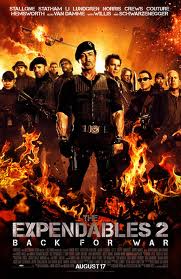
Cynthia’s favourite film of 2012
Q: Outside of cinema, do you have any other passions?
There is life outside of cinema? 😉 I have two brilliant kids who are also movie-mad, so our lives revolve around movies. And Mario Kart. And op-shopping.
I’ll finish up with 5 Quick Ones:
James Bond or Jason Bourne?
Bond. But only if it’s George Lazenby.
Terrence Malick: Utter genius or utter wanker?
Hahahaha – well, that could very well depend on your mood and how many grains of salt you have on you at any one time.
Buster Keaton or Charlie Chaplin?
Keaton.
Favourite film of all time?
Predator. It’s a rich tapestry, really it is.
Favourite director of all time?
John Carpenter.
Like what you read? Then please like Not Now I’m Drinking a Beer and Watching a Movie on facebook here and of course check out the National Film and Sound Archive Website.
 Beermovie.net